
ACM Panel How Core Material Affects Fire Safety

ACP vs ACM: What Is the Real Difference?

In most commercial architectural specifications, ACP (Aluminum Composite Panel) and ACM (Aluminum Composite Material) describe the exact same physical sandwich product: two 0.5 mm aluminum skins thermo-bonded to a 3.0 mm mineral-filled or thermoplastic core (5.5 kg/m²). The distinction is primarily a regional standards divide: North American specifiers mandate ACM under CSI MasterFormat Section 07…


Hyper-realistic photography of an engineer or designer reviewing technical specifications and blueprints for fire-rated composite panels on a digital tablet or large screen. Various panel samples and material swatches are laid out on a desk, with a focus on detailed data and certifications. Clean composition, no text, no brand logos.

How to Build an Effective ACP Color Chart

Arranging a professional ACP (Aluminum Composite Panel) sample color chart requires a systematic engineering workflow: categorizing swatches across 6 distinct finish taxonomies, embedding technical reverse-side metadata (resin type, gloss 60°, and RAL/Pantone mapping), and enforcing strict spectrophotometer color tolerances (ΔE ≤ 0.5 under ASTM D2244). Standardizing sample presentations eliminates metamerism failures and guarantees submittal approval…

acoustic ceiling panels Acoustic Ceiling Panels: Spec vs Weight Guide for Vehicle OEMs

Industrial Noise: Panels, Barriers, or Enclosures?

Industrial noise control requires a strict engineering distinction between sound absorption and sound transmission loss: Acoustic Panels dissipate internal reverberation (NRC 0.85–0.95), Noise Barriers block line-of-sight propagation (Insertion Loss 12–22 dBA), and Acoustic Enclosure Walls provide total boundary containment (STC 42–52 dB / Rw 40–50 dB). Selecting the correct acoustic architecture is mandatory to achieve…

ACM Panel How MCM and ACM Compare on Durability, Weight, and More

MCM vs ACM Panels: What Sets Them Apart?

The fundamental engineering distinction between MCM and ACM is architectural taxonomy: ACM (Aluminum Composite Material) is a specific sub-category of the broader MCM (Metal Composite Material) family. While ACM exclusively utilizes aluminum skins (5.5 kg/m²), MCM encompasses panels faced with exotic architectural metals including architectural zinc (EN 988), copper (C11000), stainless steel (SS316), and titanium…

ACM Panel Why ACM Panels Are Gaining Popularity

Why Modern Architects Are Choosing ACM Panels

ACM (Aluminum Composite Material) panels have revolutionized modern commercial architecture by combining lightweight composite sandwich physics (5.5 kg/m² for 4 mm panels) with 20-year AAMA 2605 PVDF fluoropolymer weatherability. Generating an installed cost reduction of up to 40% compared to heavy masonry and solid plate facades, ACM provides architects with mirror-flat planarity, continuous rainscreen energy…

Aluminum Core Composite Panel Understanding Aluminum Core Composite Panel

What Is an ACCP Panel and Why Choose It?

ACCP (Aluminum Core Composite Panel) is an advanced, 100% all-aluminum cladding panel engineered with a corrugated or profiled aluminum core in place of combustible polyethylene plastic. Certified to EN 13501-1 Class A2-s1, d0 and ASTM E84 Class A with an areal weight of just 4.2 kg/m² (4 mm thickness), ACCP delivers total fire safety, superior…

Aluminum Frame Cleanroom Door Selection for Modern Labs

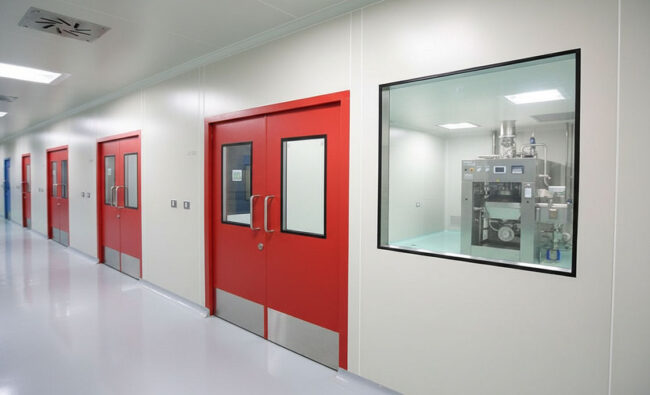
Maintaining sterile boundaries in modern pharmaceutical laboratories and hospital surgical suites requires strict airborne containment. When you design a cleanroom envelope, controlled air cascades maintain differential pressures between 15 Pa and 50 Pa across adjoining hygiene zones. Any leakage at perimeter barriers compromises particle cleanliness classes defined under ISO 14644-1. Every aluminum cleanroom door acts…