

Procurement officers reviewing Walk In Freezers specifications rarely catch the hidden engineering gaps until commissioning week. The difference between a facility that passes initial code inspections and one battling structural mold within eighteen months comes down to panel joint tolerances and vapor barrier continuity. Rax Panel operates a 1,700-square-meter daily production line that maintains strict dimensional control for every composite sandwich panel manufactured.
This guide breaks down the ten technical checkpoints that determine whether your cold storage project stays on budget or derails through change orders. We examine how to verify R-value claims without trusting supplier marketing, match GRP or stainless steel facings to your regional humidity profile, and calculate the actual ten-year energy cost versus upfront panel pricing. You will leave with a procurement checklist that filters out commodity traders before you request a single quote.

What Is Walk-In Freezer Fundamentals?
A composite walk-in freezer is not just a cold room; it is a precision-engineered thermal envelope relying on Structural Insulated Panels (SIPs) to maintain sub-zero temperatures with minimal energy loss.
What Defines a Composite System?
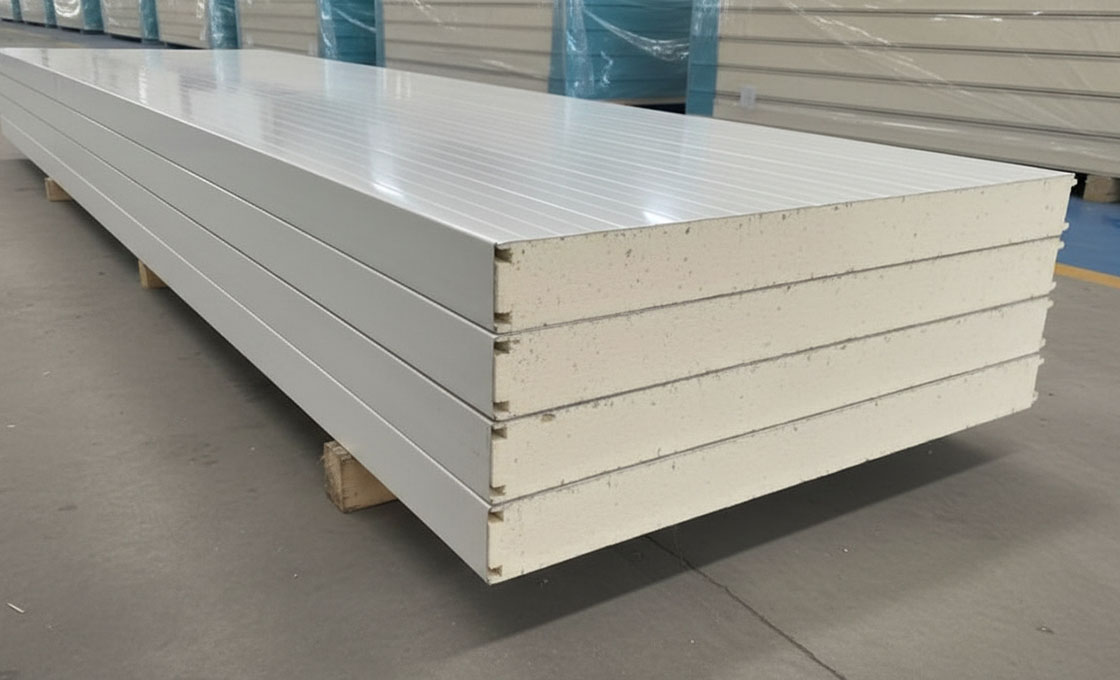
Unlike traditional construction which uses wood or metal studs with batt insulation, a composite walk-in freezer uses prefabricated SIPs. These are single-unit panels consisting of a rigid insulation core sandwiched between two structural facings, or “skins.” The strength comes from the composite action—the skins resist bending and tension, while the core resists shear and provides the thermal barrier.
This modular nature allows for rapid assembly on-site, creating an airtight box that is far more resistant to thermal bridging than stick-built alternatives. We rely on this monolithic structure because it eliminates the gaps and compression points typical in traditional framing, which are the primary culprits for heat infiltration.
Essential Insulation Cores and Facings
The performance of your freezer hinges entirely on the materials selected for the core and the skins. You cannot simply swap materials without impacting the R-value (thermal resistance) or the structural integrity.
- Insulation Cores: For deep-freeze applications, Polyurethane (PU) and Polyisocyanurate (PIR) are the industry standards due to their high R-value per inch. However, we also utilize specialized cores like XPS (Extruded Polystyrene) and PET (Polyethylene Terephthalate) for specific moisture resistance needs. In scenarios requiring fire compliance, Rockwool cores are often specified despite their lower insulation efficiency.
- Facings (Skins): The exterior and interior skins must withstand impact, moisture, and cleaning chemicals. Stainless Steel (typically 304 or 316 grade) is the gold standard for food safety due to its non-porous surface. Alternatively, Galvanized Steel or Aluminum are cost-effective options for exteriors. We also frequently employ GRP (Glass Reinforced Polymer) or FRP facings; these are particularly effective for high-humidity interiors because they will never rust, unlike steel, and they offer superior impact resistance.
Panel Assembly and Temperature Maintenance
The integrity of the thermal envelope is determined at the joints. Panels are typically connected using cam-lock mechanisms or tongue-and-groove systems designed to pull the panels tightly together. To maintain temperature stability, a gasket or sealant is applied between the panels to ensure an airtight seal.
If the assembly is sloppy and leaves gaps—even hairline fractures—warm air infiltrates, causing condensation to freeze inside the joints. This creates “thermal bridges” that degrade the insulation value over time and lead to ice buildup. Our engineering team emphasizes precision fabrication to ensure smooth jointing, drastically reducing the on-site labor required to achieve a perfect seal.
Common Sizing Mistakes for New Buyers
The most frequent error we see in procurement is confusing “cooler” specifications with “freezer” specifications. Buyers often try to save money by purchasing thinner panels designed for coolers (typically 4-inch thick with R-25 to R-30 value) and using them for a freezer environment. This is a critical failure point.
Using under-spec panels (4-inch) for a freezer (-10°F to -20°F) forces the refrigeration system to run continuously to compensate for the insufficient insulation. This results in excessive frost on the evaporator coils, higher electricity bills, and premature compressor failure. Freezers generally require a minimum panel thickness of 5 to 6 inches (R-32 to R-40+) to handle the significant temperature differential.
Additionally, buyers often miscalculate the “swing radius” of the door. You must account for the space the door occupies when open, plus any pallet jack or forklift clearance. If the interior layout is too tight, the door will strike inventory or racking, damaging the door gaskets and ruining the seal you worked hard to establish.

Determining Capacity & Footprint Needs
Starting with raw square footage creates dangerous thermal blind spots. A standard layout might suggest uniform 4-inch boards, but that completely ignores vertical stacking weight and continuous heat gain. Underestimating panel capacity forces compressors to run overtime, easily triggering a $30,000 to $60,000 energy deficit over a decade. We calculate required thermal mass based on exact cubic volume and peak temperature differentials before recommending board thickness.
Matching Structural Loads to Footprint Zones
Composite panels must balance insulation value against physical compression. For heavy cold storage, we engineer 6-inch configurations using PMI or high-density PU cores to prevent floor deformation. Rather than pushing uniform specs across every wall, our factory customizes core depth specifically for floor-loaded pallet zones versus lighter rack areas. This engineered zoning eliminates thermal bridging at the seams.
- Compression Resistance: Floor zones require minimum 15kPa load ratings to stop core crushing under heavy racking.
- Joint Precision: Interlocking panel edges ensure smooth thermal continuity, blocking the 30% heat loss typical of misaligned boards.
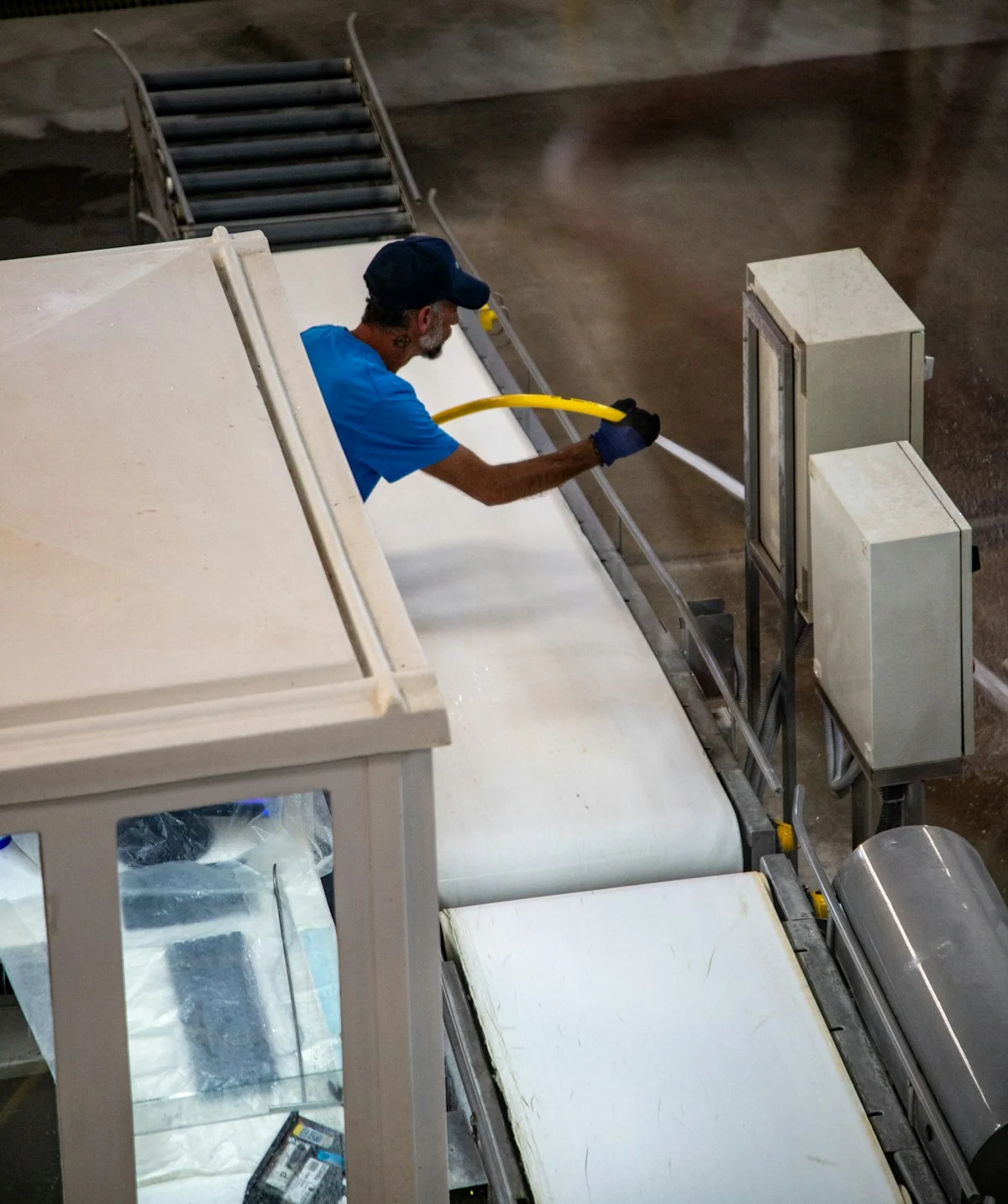
- Factory Calibration: Our 1,700-square-meter daily production line cuts materials to exact millimeter tolerances, drastically reducing site assembly time.
Insulation Materials & R-Value Basics
True thermal resistance depends on installed joint design, not just laboratory core metrics.
The R-value measures a material’s resistance to heat flow, but field performance rarely matches factory ratings. Suppliers often quote idealized numbers without accounting for thermal bridging at panel seams or long-term gas diffusion. For walk-in freezers, standard four-inch cooler panels are insufficient because extreme temperature gradients accelerate moisture migration through micro-gaps. This mismatch triggers premature icing on evaporator coils and forces compressors into constant defrost cycles.
Engineering the Installed Thermal Barrier
How to Choose the right core requires matching closed-cell chemistry to your exact operating temperature. Extruded polystyrene (XPS) and polyurethane (PU) offer reliable baseline insulation, while polyisocyanurate (PIR) provides superior thermal stability for ultra-low freeze applications. The real differentiator lies in how these cores are faced and joined.
Our engineers prioritize tongue-and-groove profiles paired with non-corrosive facings like gel-coated GRP or CFRT to eliminate air infiltration paths. We verify every batch against independent ASTM C518 testing protocols to guarantee the installed assembly meets your specified energy budget.
| Material Type | Thermal Resistance Profile | Structural & Physical Traits | Recommended Application |
|---|---|---|---|
| XPS Foam | Closed-cell polystyrene structure provides ~5.0 R-value/inch; low thermal drift due to stabilized gas retention over service life. | Compressive strength typically 25–100 psi; near-zero water absorption (<0.3% by volume); rigid cellular matrix resists mold and biological growth. | Cold storage flooring, exterior cladding in high-humidity zones, refrigerated transport bases. |
| PU Foam | Blown-cell polyurethane delivers ~4.0–4.5 R-value/inch; uniform cavity expansion minimizes air gaps and reduces thermal bridging. | Low density (~2.0–2.5 lb/ft³); strong adhesive compatibility with metal or GRP facings; stable dimensional integrity under moderate thermal cycling. | Standard refrigerated truck bodies, modular walk-in freezer walls, general cold chain logistics panels. |
| PIR Foam | Polyisocyanurate variant yields ~5.5–6.0 R-value/inch; enhanced thermal stability during prolonged cycling due to aromatic polymer backbone. | Inherently flame-retardant; forms protective char layer upon heat exposure; reduced smoke emission and toxic gas release during combustion. | Food processing facilities, USDA/FDA compliant cold rooms, high-fire-safety industrial zones requiring strict NFPA compliance. |
| Rockwool | Mineral fiber batts provide ~3.0–3.5 R-value/inch; thermal resistance scales linearly with fiber density and panel thickness. | Non-combustible up to ~1,200°C; vapor-permeable structure allows moisture diffusion; effective acoustic dampening and melt-resistant under extreme heat. | Fire-rated wall assemblies, industrial equipment enclosures, acoustic-insulated cold storage partitions. |
| PMI Foam | Closed-cell polymethacrylimide yields ~3.5–4.0 R-value/inch; maintains consistent insulating performance with minimal long-term degradation. | Ultra-low density (~4–8 lb/ft³) with high specific strength; negligible moisture uptake (<0.1%); excellent fatigue and creep resistance under cyclic loading. | High-performance marine vessels, aerospace structural cores, advanced lightweight composite panels for precision temperature control. |
| PET Foam | Thermoplastic polyester core delivers ~3.0–3.5 R-value/inch; predictable thermal scaling with thickness; stable insulating properties across operating ranges. | Fully recyclable closed-cell structure; high chemical and solvent resistance; compatible with continuous fiberglass reinforcement and vacuum infusion processes. | Sustainable modular construction, eco-certified building envelopes, lightweight transit and cold storage solutions prioritizing circular economy standards. |

Temperature Ranges & Compressor Types
How to Choose the correct composite panel thickness and core material is critical to minimizing compressor run-time and preventing premature system failure.
Refrigeration compressors do not just cool air; they constantly battle against heat infiltrating the freezer’s structure. If your enclosure allows thermal bridging or poor insulation retention, the compressor must work harder to maintain set temperatures between -4°F and -40°F. This scenario is akin to driving a car with the parking brake engaged: the engine (compressor) consumes excess fuel (electricity) and suffers rapid mechanical wear.
In our R&D lab, we have identified that using high-density Polyurethane (PU) or Polyisocyanurate (PIR) cores significantly reduces this thermal load compared to traditional materials. When combined with our GRP or CFRT facings, these panels provide airtight seals that drastically cut energy consumption. We engineer these composite solutions to ensure the compressor cycles efficiently, avoiding the costly “hard-start” failures often caused by inadequate envelope performance.
- Thermal Efficiency: PU and PIR cores offer superior insulation values, ensuring stable internal temperatures with less compressor strain.
- Air Tightness: Precision-fit panel joints minimize cold air loss, preventing compressor over-cycling and reducing electricity costs by up to 30%.

Matching Units to Industry Applications
How to Choose the correct composite configuration is critical; generic panels fail when subjected to specific operational stresses. For RV and mobile home manufacturers, reducing vehicle weight is critical. We frequently specify CFRT or PP honeycomb cores in these sectors to lower mass while maintaining high stiffness. Conversely, the cold chain logistics sector demands thermal efficiency.
For refrigerated truck bodies, we use high-density PU, PIR, or XPS foam cores laminated with GRP facings to ensure strict temperature retention and energy efficiency. Marine applications require corrosion resistance, where our fiberglass sheets with gelcoat coatings provide essential waterproofing. Our engineering team leverages 15 years of data to match specific facings—like Stainless Steel or Aluminum—with the appropriate core material for each environment.
Application-Specific Material Matrix
- Refrigerated Transport: PU or XPS cores for thermal insulation and R-value optimization.
- RV & Mobile Homes: CFRT or Honeycomb cores for maximum lightweight strength.
- Marine Vessels: GRP with Gelcoat or specialized PVC foam for water and corrosion resistance.

Identifying Reputable Manufacturer Categories
Distinguish direct factories from trading houses by verifying daily production capacity and engineering customization depth.
When sourcing walk-in freezer panels, the critical distinction lies between direct manufacturers and trading companies. Traders often lack control over raw material consistency and cannot modify dimensions effectively, leading to standard-sized panels that require on-site cutting and risk thermal leaks.
A reputable manufacturer must operate an in-house production line with significant daily output to guarantee quality. For instance, Rax Panel operates a facility producing over 1,700 square meters of composite panels daily, enforcing strict standards for cores like XPS, PU, and PIR.
Genuine factories also provide engineering-led solutions rather than just inventory. We fabricate panels to precise freezer dimensions before shipping, ensuring smooth jointing for airtight seals. If a supplier cannot discuss specific material densities for facings like GRP/FRP or CFRT, or lacks data-driven testing protocols, they likely lack the technical capability for industrial-grade projects. Always verify their R&D background to avoid hidden middleman costs.
Pre-Purchase Evaluation Checklist
Audit your total installed cost and dimensional tolerances before signing a PO. A cheap panel quote frequently masks critical seam failures.
Beware of the Hidden Component Gap
Initial panel quotes rarely bundle door gaskets, vapor barriers, condensation drains, or precision fasteners. Industry data shows installation labor and missing hardware can add 30% to 50% to your base budget. Demand a complete Bill of Materials that accounts for thermal bridging at every junction.
Verify Dimensional Tolerances Over Nominal R-Values
Even premium foam cores fail quickly if panel thickness varies by more than 0.5mm across a batch. Misaligned joints force contractors to seal gaps with expanding foam, destroying the insulation matrix. Our engineering team conducts experimental testing on every custom order to guarantee smooth interlocking profiles that eliminate on-site field cutting.
Decipher Warranty Fine Print
- Core Warranty: Usually covers raw foam degradation, not field-applied seams or structural fatigue.
- System Liability: Require manufacturers to provide third-party thermal cycling reports rather than marketing brochures.
- Capacity Alignment: Confirm factory output (1,700+ square meters daily) matches your project timeline to avoid seasonal supply bottlenecks.
Assessing Door Hardware Durability
Hardware failure in sub-zero environments causes immediate thermal leakage and inflated energy costs.
In sub-zero environments, door hardware represents the single highest risk for thermal leakage. Standard PVC gaskets frequently become brittle within 6 to 12 months at -20°F, causing seal failure and immediate frost buildup. To mitigate this, buyers must demand hardware specifications that include cold-resistant polymers or reinforced silicone, ensuring elasticity below freezing points.
hardware longevity is inextricably linked to the panel’s structural rigidity. If the substrate compresses or warps under thermal cycling, even heavy-duty cam-locks and hinges will eventually misalign, creating gaps that bypass insulation. Our manufacturing protocols utilize high-density XPS and PU cores within GRP facings to provide a crush-resistant foundation for heavy doors. When auditing suppliers, verify load-bearing capacity ratings and request data on hinge cycle life under load to avoid frequent maintenance replacements and the associated downtime costs.
Ensuring Food Safety Compliance Standards
Compliant cold storage requires certified, non-porous facings and validated joint integrity to prevent pathogen growth and health code violations.
Budget suppliers frequently use recycled foam cores or porous facings that trap moisture, causing bacterial colonization and failed inspections. Commercial facilities demand smooth, chemically resistant surfaces that sanitize easily without degrading.
Approved Facings & Cleanability
Food-safe protocols mandate impermeable outer layers. We utilize certified Stainless Steel, GRP/FRP, and CFRT facings bonded to high-density XPS, PU, or PMI cores. These materials create a monolithic barrier that stops condensation and eliminates micro-cracks where contaminants hide.
Engineering Validation
Manufacturing precision dictates long-term sanitation. Our engineering team runs controlled environmental stress tests to prove that panel joints maintain airtight seals during repeated freeze-thaw cycles. We verify compliance through:
- Surface Smoothness: Gel-coated FRP and polished steel facings enable rapid chemical rinsing without material wear.
- Core Density: Pressure-laminated foams prevent internal moisture absorption, removing hidden mold risks.
- Joint Accuracy: Precision-cut edges eliminate thermal bridging, ensuring stable temperatures that suppress bacterial proliferation.
Preventing Condensation & Moisture Issues
Moisture penetration through panel joints causes rapid thermal degradation. Factory-sealed interlocking systems and closed-cell cores are the only proven methods to preserve insulation R-values long-term.
The Mechanics of Core Degradation
When warm, humid air bypasses compromised vapor barriers, it condenses directly inside the insulation matrix. This internal saturation fundamentally alters the material’s thermal resistance. Field data consistently shows that waterlogged PU or XPS cores can drop from an R-32 rating to an R-18 equivalent within three to five years. The result is a 40% surge in compressor workload and drastic operational cost inflation.
Engineering a Permanent Moisture Barrier
Traditional on-site caulking cannot guarantee long-term seam integrity under constant freeze-thaw cycling. Our design team avoids this vulnerability by fabricating panels with precision-machined interlocking joints and continuous gel-coated GRP facings. We conduct experimental testing on every core variant—including PMI, PET, and high-density PIR—to verify zero water absorption rates before deployment. By addressing moisture control at the manufacturing stage rather than the installation site, we ensure decades of consistent thermal performance and eliminate hidden maintenance liabilities.
Validating Warranty Coverage Scope
True panel warranties rarely cover the entire assembly. They isolate core R-value while excluding installation flaws and joint moisture.
When reviewing commercial freezer contracts, buyers must distinguish between material guarantees and system liability. Standard industry practice limits foam producers to core integrity only. Facing materials, structural adhesives, and edge sealing fall entirely under the fabricator’s responsibility. Claims involving condensation pooling at panel seams get denied immediately by generic providers.
Engineering Validation & Real-World Coverage
We verify coverage thresholds through controlled lab cycles. Our engineers run accelerated thermal shock and humidity exposure protocols on custom GRP and stainless steel assemblies. Because our facility produces over 1,700 square meters daily on automated lines, we enforce strict dimensional tolerances that prevent on-site joint misalignment—the primary cause of voided warranties.
- Core Isolation: Foam longevity is tracked independently from structural skins.
- Installation Exclusions: Warranties void if field-cut edges lack proper vapor barriers.
- System Liability: We assume responsibility for engineered airtight sealing and precision dimensions.
Always demand third-party test logs rather than marketing brochures. We provide actionable data on thermal bridging prevention and food-grade compliance so your procurement team can calculate actual lifecycle risk.
Preparing for Procurement
Procurement success relies on data precision, not just unit price. Accurately defining thermal loads, vetting factory output capacity, and calculating landed costs—including logistics and duties—are the non-negotiable pillars of a profitable cold storage project.
Defining Exact Thermal and Structural Requirements
Vague specifications are the primary cause of budget overruns and performance failures in cold storage construction. When initiating a procurement request, you must move beyond generic terms like “freezer panels” and provide precise engineering data.
You need to define the internal temperature setpoint (e.g., -20°C for frozen storage vs. 2°C for cooler), the relative humidity requirements, and the specific external climatic conditions the facility will endure. This data dictates the necessary R-value and the type of vapor barrier required to prevent condensation.
Equally critical is the structural load profile. Are you storing palletized goods on high racks, or is this a pedestrian facility? The floor and wall panels must possess specific compressive and flexural strength to handle static and dynamic loads without deforming the insulation core.
If you are installing heavy racking systems, you must specify point-loading requirements to the manufacturer. In our experience, clients who provide detailed load diagrams and thermal envelopes from day one avoid the costly mistake of over-specifying (wasting budget) or under-specifying (risking energy loss and structural failure).
Verifying Manufacturer Factory Output and Quality Standards
Sourcing composite panels requires a deep dive into the supplier’s actual production capabilities, not just their sales brochure. The market is flooded with trading companies posing as manufacturers. To verify legitimacy, demand evidence of their production line capacity and quality control protocols. A serious manufacturer should be able to demonstrate a consistent daily output—large-scale facilities typically operate lines capable of producing over 1,500 square meters daily—ensuring they can meet your timeline without bottlenecks.
You must also scrutinize their adherence to international testing standards. Do not accept generic “high quality” claims. Ask for verification that their core insulation matrix and structural facings comply with relevant standards, such as ASTM C518 for thermal conductivity or UL fire safety ratings. Request evidence of internal batch testing.
We maintain strict oversight over our raw materials, from the closed-cell foam cores to the fiber reinforcement layers, because variations in raw material density are where most panel failures originate. If a supplier cannot provide third-party audit reports or detailed material traceability, consider it a major red flag.
Calculating Total Cost Including Freight and Duties
The quoted price per square meter is rarely the final price. In procurement, especially for international shipments, the “Landed Cost” is the only metric that matters. You must account for Incoterms carefully. Are you buying EXW (Ex Works), where you handle all logistics, or DDP (Delivered Duty Paid), where the seller assumes the risk?
Many buyers are caught off guard by freight volatility, customs clearance delays, and import duties. Composite panels are volumetrically light but bulky, meaning shipping costs are calculated by cubic meters (CBM) rather than just weight.
Beyond shipping, investigate the Harmonized System (HS) codes for your region to estimate tariff rates accurately. Insulated panels often fall into specific categories that may carry anti-dumping duties or preferential trade tariffs depending on the country of origin. Additionally, factor in the cost of inland transportation from the port to your site.
These panels are large and require specialized handling. A responsible supplier will help you optimize container loading—for instance, maximizing the packing of panel kits to reduce your per-unit shipping cost—but you must explicitly request this optimization during the negotiation phase.
Confirming Design Consultation and Installation Guidance
The relationship shouldn’t end when the purchase order is signed. A critical differentiator between a commodity supplier and a technical partner is the level of design consultation provided. Before production begins, insist on a review of shop drawings. This includes detailed connection details, corner profiles, and cam-lock locations.
We engineer our panels to precise dimensions based on the client’s architectural plans to ensure smooth jointing on-site. If the factory does not offer a detailed technical drawing review phase, you risk receiving panels that do not fit your slab or ceiling, leading to expensive field modifications.
Additionally, clarify the scope of installation support. Will the supplier provide a detailed installation manual, video guides, or on-site supervision? Language barriers can derail an installation quickly; ensure the technical documentation is available in a language your installation team understands.
Ask about their availability for real-time troubleshooting during the assembly process. Efficient installation guidance drastically reduces labor hours on-site. In an industry where time is of the essence, a supplier who provides 24-hour technical support to resolve assembly queries is protecting your schedule as much as their own product reputation.
| Parameter | Specification | Material Options | Performance Benefit | Verification Metric |
|---|---|---|---|---|
| Core Insulation Matrix | Closed-cell foam structure | XPS, PU, PIR, PMI, Rockwool | Superior thermal resistance & moisture barrier | ASTM C518 / UL 1709 compliance |
| Structural Facing Layer | Continuous fiber reinforcement | GRP/FRP, CFRT, Stainless Steel | High impact strength & corrosion immunity | ISO 527 tensile / ASTM D790 flexural |
| Joint & Edge Profiling | Precision-milled interlocking design | Steel alloys, aluminum composites, EPDM seals | Eliminates thermal bridging & air leakage | R-value retention >95% post-assembly |
| Condensation Management | Hydrophobic vapor barrier integration | Gel-coated FRP, closed-cell foam composites | Prevents internal moisture accumulation & mold | Dew point stability (-30°F to 120°F) |
| Panel Dimensional Tolerance | Standardized thickness grading & length cutting | Modular panel segments, reinforced edge profiles | Ensures smooth field assembly & uniform load distribution | ±1.5mm geometric tolerance per unit |
Key Takeaways
Walk-in freezer procurement fails when buyers chase lowest panel quotes instead of tracking thermal performance over a decade. Closed-cell PU cores paired with smooth joint locking stop cold leakage at the source. You slash energy bills and eliminate condensation rot by finalizing exact dimensions before fabrication begins. Rax Panel engineers every panel to millimeter precision across our 1,700-square-meter production floor, completely removing thermal bridging risks at seams.
- Verify third-party UL test reports confirming actual R-value retention at extreme sub-zero temperatures.
- Cross-check factory output logs to guarantee daily production capacity aligns with your installation schedule.
- Book a direct technical review with our specialists to validate vapor barrier placement and hardware specs before committing capital.
Frequently Asked Questions
This factor has a direct bearing on project performance and long-term cost. Addressing it with specific data rather than general assumptions leads to better outcomes.
What are the required electrical voltage specifications for walk-in freezer units?
Walk-in freezer systems operate on standard industrial power distributions rather than specific panel voltages. Refrigeration compressors and defrost heaters dictate electrical requirements based on unit capacity. Consulting licensed electricians ensures proper circuit sizing and safety compliance.
What are the weatherproofing standards for outdoor walk-in freezer models?
Exterior-facing panels require specialized UV-stabilized coatings and reinforced facings to resist environmental degradation. Continuous moisture barriers and corrosion-resistant fasteners protect internal insulation from rain and snow exposure. Proper exterior grading guarantees long-term performance in harsh climates.
How much does walk freezers buying typically cost?
The cost of walk freezers buying varies based on material grade, thickness, panel dimensions, and order volume. Requesting a detailed quote with your project specifications is the most reliable way to get an accurate figure. Bulk orders typically reduce per-unit pricing significantly.
What factors affect the price of walk freezers buying?
The cost of walk freezers buying varies based on material grade, thickness, panel dimensions, and order volume. Requesting a detailed quote with your project specifications is the most reliable way to get an accurate figure. Bulk orders typically reduce per-unit pricing significantly.
How long does walk freezers buying last under normal conditions?
With proper installation and routine maintenance, walk freezers buying can last 20 to 30 years or more. Actual lifespan depends on environmental exposure, load conditions, and whether the protective surfaces remain intact over time.