
Most facility planners estimate agricultural insulated metal panels based on the $7 to $14 per square foot material rate. They miss the line item that actually kills the budget: logistics. International shipping and customs clearance can add an unexpected $1.50 to $3.00 per square foot to your final invoice.
This guide dissects the actual variables driving those costs, comparing the thermal savings of 4-inch PIR cores against standard 2-inch panels and analyzing how regional steel volatility impacts your timeline. We also break down the specific durability trade-offs between Galvalume and GRP facings for corrosive livestock environments. You will leave with a framework for calculating total cost of ownership that accounts for freight, tariffs, and energy performance.
2026 Agricultural Panel Market Overview
Erratic steel pricing and new 2026 tariffs are inflating project costs, making supply chain resilience essential for protecting margins.
Steel Raw Material Volatility and Availability
Global steel indices are currently experiencing significant fluctuations driven by energy cost spikes and inconsistent ore supply. For agricultural construction, relying solely on steel-faced panels introduces substantial budget risk and potential delivery delays. When market access to galvanized steel tightens, standard manufacturing lead times extend immediately.
To counter this instability, we have expanded our production capacity for GRP and FRP facings. These composite materials provide superior corrosion resistance against ammonia and moisture in livestock housing while decoupling your project costs from the volatile steel market. Our engineers can substitute standard steel skins with high-durability fiberglass alternatives without compromising structural integrity, ensuring your build remains on schedule.
Impact of 2026 Global Trade Tariffs on Import Costs
The enforcement of updated trade tariffs in 2026 has specifically targeted raw steel and aluminum imports in key markets like North America and Europe. These duties can increase the landed cost of traditional metal panels by significant margins, often eroding contractor profits before installation even begins.
We actively navigate these barriers by optimizing the material composition of our panels. Many of our CFRT and Foam Core Sandwich panels utilize composite structures that frequently fall under different, more favorable tariff classifications than raw steel sheets. By structuring shipments as finished composite building materials rather than raw metals, we help our global partners reduce their total import tax liability and maintain competitive pricing.
Supply Chain Stabilization Timelines for Prefab Components
While general logistics have stabilized compared to previous years, lead times for heavy raw materials like steel coils remain unpredictable. In contrast, the supply chain for lightweight cores—including XPS, PET, and PU foam—has reached a high level of maturity and stability.
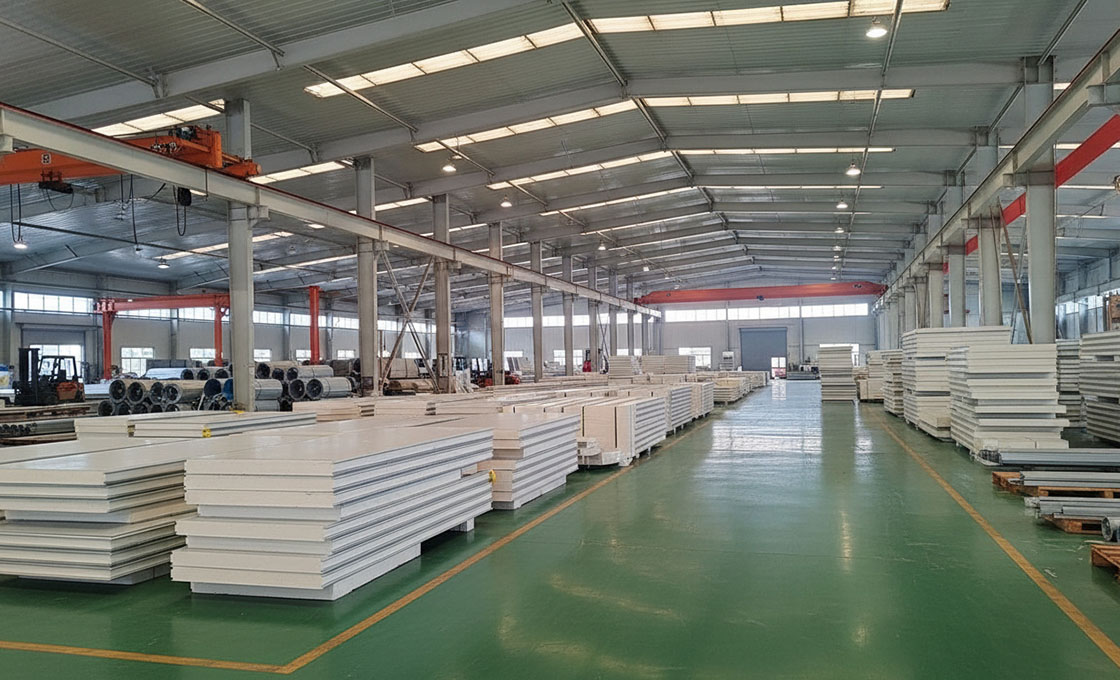
Our daily production area exceeding 1,700 square meters allows us to maintain a rolling stock of prefab panel cores and facings. This in-house buffer enables us to deliver finished composite panels significantly faster than steel-dependent competitors. We provide our partners with firm delivery dates for prefab components, ensuring agricultural projects proceed without the delays currently plaguing the traditional steel supply chain.
Base Material and Coating Price Variations
Focusing solely on the base steel price per square foot is a critical error in agricultural construction; the coating chemistry and facing material dictate the actual lifespan, not just the upfront capital expenditure.
The Steel Quality Spectrum: Galvalume vs. Stainless
In agricultural environments, the baseline material is rarely sufficient due to high humidity and corrosive agents like ammonia from animal waste. While standard Galvalume (55% aluminum-zinc alloy) is cost-effective for general storage, it typically succumbs to ‘white rust’ and corrosion within 5-7 years in confined livestock operations.
Buyers often struggle to justify the 2x to 3x price premium of Stainless Steel (grades 304 or 316), yet this material is the only traditional metal option that guarantees structural integrity over a 20+ year horizon without intensive maintenance.
Do not accept vague ‘stainless steel’ quotes without verifying the grade. Type 304 is standard for moderate corrosivity, but Type 316—containing molybdenum—is mandatory for coastal or high-chloride environments. Using 304 in a high-salt setting can result in rapid pitting corrosion, nullifying your investment.
Coating Chemistry: Polyester vs. PVDF vs. Gelcoat
Beyond the metal substrate, the paint system represents a significant variance in pricing. Standard Polyester coatings are the most economical but offer poor UV resistance and chalk quickly, fading in 2-3 years. Polyvinylidene Fluoride (PVDF) coatings, containing 70% fluorine resins, cost approximately 20-30% more but resist fading and chalking for decades. For composite solutions, specifically Glass Reinforced Plastic (GRP), the equivalent premium finish is a gelcoat.
We strictly apply high-performance gelcoats to our FRP sheets. Unlike simple paint layers, this gelcoat chemically bonds during the curing process to provide a waterproof, insulating, and smooth surface that is far more resilient against impact and chemical abrasion than spray-on paints.
Composite Alternatives: The GRP Advantage
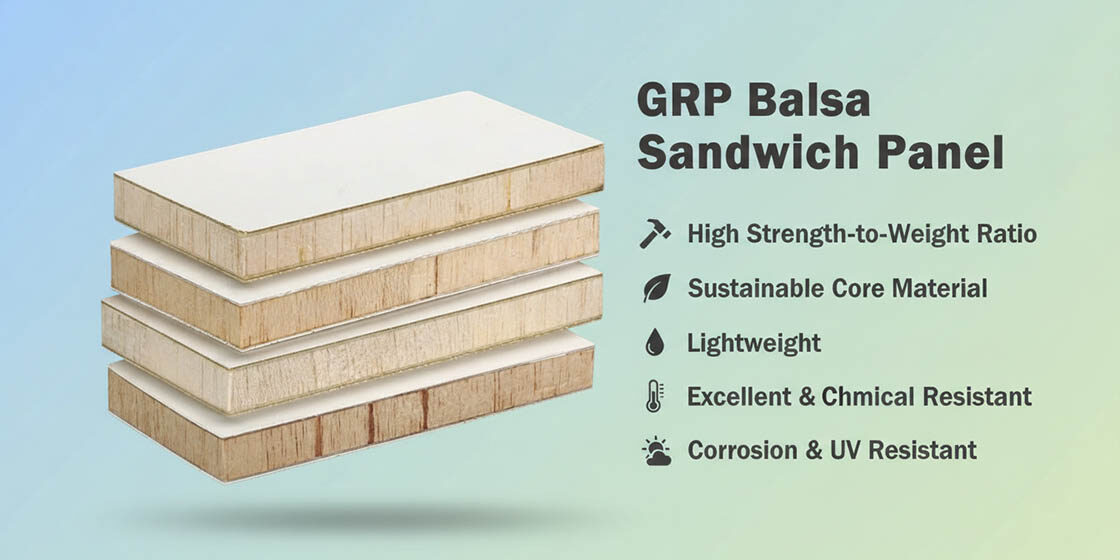
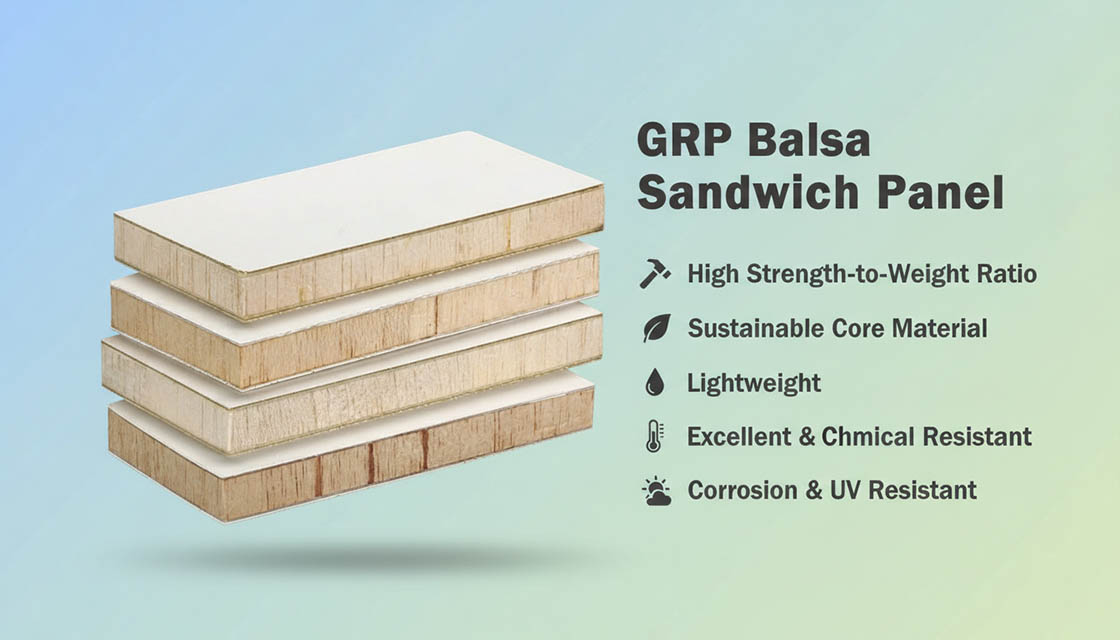
For projects where stainless steel pricing destroys the budget, Fiberglass Reinforced Polymer (FRP/GRP) sandwich panels offer a superior middle ground. While some competitors utilize basic polyester and fiberglass sheets, our manufacturing process integrates continuous fiberglass reinforced thermoplastic (CFRT) or high-grade GRP facings. These materials are inherently non-corrosive, meaning they never rust regardless of the acidic environment, effectively solving the core durability pain point without the weight and material cost of heavy gauge steel.
When comparing quotes for agricultural buildings, separate the ‘skin’ cost from the ‘core’ cost. A quote using XPS foam cores with basic steel skins may look cheaper initially than a panel with PET foam and GRP facings, but the GRP solution eliminates future replacement costs associated with rusted wall sections.
Insulation Thickness and R-Value Costs
The relationship between insulation thickness and R-value is the single largest variable in material cost. Buyers often face a pricing doubling from standard partitions to cold storage specs simply due to thickness increases, not just material choice.
In the agricultural and industrial construction sectors, the correlation between panel thickness and project budget is linear and unforgiving. As thickness requirements increase to meet specific thermal resistances, material consumption rises directly, often pushing base material costs from approximately $7 to $14 per square foot. However, focusing solely on thickness ignores the efficiency of the insulation core itself.
R-Value Efficiency vs. Raw Thickness
Engineering an efficient building envelope requires calculating the exact R-value needed rather than defaulting to the thickest available panel. High-performance cores like PIR provide superior thermal resistance per inch compared to standard alternatives. This efficiency allows project engineers to achieve compliance with potentially thinner panel profiles, which reduces structural load requirements and optimizes freight volume utilization.
We frequently encounter specifications that mandate excessive thickness to compensate for anticipated air leakage. Our team at Rax optimizes costs by engineering a continuous envelope design with precision tongue-and-groove joints that limits air leakage. By ensuring the panel system is airtight, we can often reduce the required core thickness while maintaining thermal performance, directly saving our clients money on both materials and shipping.
The Hidden Cost of Weight and Volume
How to Choose a thicker, lower-efficiency core to save on upfront material prices often backfires through increased logistics costs. Panels with greater thickness occupy more shipping space and add significant dead weight to the building structure. When sourcing composite panels for large-scale agricultural or cold storage facilities, the total landed cost must account for the density of the insulation solution.
Over-insulating by exceeding the necessary R-value threshold offers diminishing financial returns. Beyond a certain point, the energy savings over the lifecycle of the building do not justify the premium paid for additional millimeters of insulation thickness. Our engineers conduct experimental testing to identify the exact ‘break-even’ point for your specific climate zone and application.
| Core Material | Thickness Range | R-Value (Per Inch) | Cost Implication | Rax Advantage |
|---|---|---|---|---|
| PU & PIR Foam | 2″ – 6″ (50mm – 150mm) | Correcting the R-value calculation requires translating the per-inch thermal conductivity into total performance metrics across the full thickness range. This results in a total thermal resistance of R-12 to R-39. | Higher initial cost; optimal for minimizing long-term energy expenses in cold storage | Custom-engineered continuous envelope design to limit air leakage and reduce operational energy costs |
| PET & XPS Foam | 0.8″ – 4″ (20mm – 100mm) | R-4.0 to R-5.0 (Moisture Resistant) | Economical balance; ideal for agricultural and industrial wall applications | Factory-direct waterproof panels offering global competitive rates and durable thermal insulation |
| GRP/FRP with Foam Core | Custom specifications (Variable) | Variable (Dependent on Core Selection) | Variable cost based on facing; lightweight solution reducing structural support costs | 15+ years of R&D in lightweight composites for RVs and vessels, tailored to strict project standards |
| Optimized Hybrid Solutions | Project-specific (Variable) | Variable (Compliance Optimized) | Cost-effective optimization preventing overspending on unnecessary thickness | 24-hour one-to-one service to customize core materials and skins, ensuring budget adherence |
PU vs PIR Core Cost Analysis
While PIR cores command a 15-25% price premium over standard PU due to advanced fire retardancy, they are often the mandated cost-effective choice for high-stress refrigeration and industrial environments.
When analyzing the cost structure of sandwich panels, the choice between Polyurethane (PU) and Polyisocyanurate (PIR) cores represents the most critical chemical decision for your budget. PU, derived from a polyol and isocyanate reaction, is the industry standard baseline, offering excellent thermal insulation at a lower raw material price point.
PIR is essentially a chemical evolution of PU, modified to create a more complex molecular ring structure. This structural difference is the primary driver of the cost gap: PIR requires higher concentrations of isocyanates and specific catalysts to achieve its superior fire-resistant properties, driving up the Bill of Materials (BOM) significantly.
Performance-Based Cost Allocation
The cost variance between these two materials must be evaluated against the penalty of failure in specific applications. Standard PU cores typically perform adequately in general dry freight truck bodies or interior partitions where fire safety requirements are less stringent.
However, in refrigerated transport or high-temperature industrial settings, the lower ignition point of PU can become a liability. PIR’s ability to form a protective char layer when exposed to flame often justifies the higher upfront cost by reducing insurance premiums and meeting strict building codes without needing additional fire-retardant barriers.
Application Strategies for Cost Efficiency
To optimize your BOM, you should segregate your project zones by thermal load and safety requirements. For exterior wall cladding in agricultural buildings where ambient temperatures are controlled, PU Sandwich Panels offer a lighter weight, cost-effective solution.
Conversely, for vessel solutions or cold storage units where thermal stability is non-negotiable, PIR becomes the economically rational choice despite the higher sticker price. Mixing these cores within a single project—using PU for non-critical walls and PIR for high-risk zones—is a common strategy we employ to balance the budget.
Don’t pay for PIR chemistry if your operating environment doesn’t demand it. Our engineers at Rax Panel run experimental testing on your specific project data standards first. We often find that for standard dry freight applications, our high-density PU formulations offer the same structural integrity as competitors’ standard PIR, saving our clients roughly 15-20% on material costs without sacrificing safety.
Some manufacturers reduce PU costs by lowering the density of the foam core. This creates a ‘false economy’ where the initial savings are eroded by poor compressive strength and higher thermal conductivity (lambda value). Always verify that the PU core density meets or exceeds 40kg/m³ for structural applications to ensure long-term durability.
Logistics and overall project costs
The lowest FOB price is irrelevant if logistics erodes your profit margins. Factoring in shipping efficiency, duties, and risk mitigation is the only way to determine the true overall project cost of composite panels.
Container Optimization and Volumetric Efficiency
Lightweight materials like XPS, PET, or PU foam cores offer structural benefits but suffer from volumetric inefficiencies if not packed correctly. Paying for air inside a shipping container is a guaranteed loss. Advanced packaging engineering ensures that lightweight panels are stacked to maximize both weight limits and cubic capacity, reducing the per-unit freight cost significantly.
At Rax Panel, we engineer our packaging layouts as rigorously as our panel formulations. We calculate optimal pallet configurations for our CFRT and Honeycomb panels to maximize container utilization. This approach allows our partners to ship up to 15-20% more material per container compared to standard industry packing, directly lowering your overall project cost per square meter.
Mitigating In-Transit Damage Risks
Transportation risk is a frequently ignored cost factor. Composite panels with gelcoat finishes or delicate facings are vulnerable to surface abrasion, moisture ingress, and compression damage during long-haul ocean transit. A single damaged shipment can trigger site delays and expedited replacement shipping that costs multiples of the original material value.
Many standard warranties exclude damage resulting from ‘improper packaging’ or environmental exposure like salt spray during transit. Do not assume basic shrink wrap is sufficient for intercontinental logistics, especially for GRP/FRP sheets used in corrosive agricultural environments.
We utilize reinforced protective packaging specifically designed for our GRP and Aluminum Honeycomb panels to withstand rough handling and humidity. By ensuring zero damage upon arrival, we eliminate the hidden administrative and financial costs of filing claims and waiting for replacements.
Lead Time Stability and Inventory Costs
Unpredictable lead times force buyers to maintain excessive safety stock, tying up working capital and increasing warehouse storage costs. Consistent manufacturing throughput is vital for just-in-time supply chains, allowing for tighter inventory turns and reduced holding costs.
With a daily production capacity exceeding 1,700 square meters and a dedicated multilingual support team, Rax Panel provides guaranteed lead time visibility. We coordinate production schedules directly with your logistics teams to prevent demurrage charges and ensure materials arrive exactly when installation is ready to begin.
Installation and Accessory Estimates
Prefabricated sandwich panels reduce on-site assembly time by 30-50% compared to traditional stick-built methods, significantly lowering labor costs which frequently exceed material expenses.
Labor Efficiency and Timeline Compression
The primary financial advantage of using composite sandwich panels lies in the speed of installation. Unlike traditional construction requiring sequential steps of framing, insulation, and finishing, panels like our GRP/FRP and Foam Core units arrive ready for immediate mounting. This rapid installation reduces weather exposure risks and accelerates project turnover schedules for RV and mobile home manufacturers.
Maximize labor savings by ordering custom-cut panels. Our engineers optimize panel dimensions to match your specific framing layout, which drastically reduces on-site cutting and fitting time.
Essential Accessory and Fastener Estimates
Budgeting strictly for the square footage of panels is a critical error. Installers must account for the ‘envelope’ system: polyurethane sealants, thermal breaks, extruded aluminum or PVC connection profiles, and specialized fasteners. Standard self-tapping screws used for sheet metal are often insufficient for high-strength honeycomb or CFRT panels and may require structural rivets or bonded inserts.
Never substitute generic sealants for specified PU or MS polymers when installing FRP or Gelcoat sheets. Improper chemical compatibility leads to immediate bond failure and water ingress.
At Rax Panel, we integrate accessory planning into the initial design phase. We provide detailed bills of materials (BOM) for all connection profiles and fasteners to ensure compatibility with our diverse core materials, including XPS and PU foams.
📋 Actionable Steps
- Step 1: Calculate accessory costs at 15-20% of the total panel material budget.
- Step 2: Verify fastener pull-out strength ratings for specific core densities (e.g., PU vs. PMI foam).
- Step 3: Allocate budget for lifting equipment if panel dimensions exceed standard transport limits.
Regional Price Variations
National cost averages for insulated panels are a budgetary trap. Local labor rates, code compliance, and distribution logistics can create price variances of $2.00 to $5.00 per square foot depending on the destination.
Using a baseline price from a national index to estimate your agricultural building project is a rookie mistake. The material cost from the mill is often the only constant; everything else is dictated by the specific region where the panel is installed.
Labor and Logistics Multipliers
Regional price variations are rarely about the panel itself. They are driven by the cost of getting the panel installed and the speed of local supply chains. In high-demand zones with labor shortages, installation rates can double, significantly inflating the total project cost beyond the material unit price.
We have analyzed landed costs across our global network of over 50 countries. While a standard PU foam core panel might have a consistent FOB price, the final project cost fluctuates wildly. For instance, importing into regions with strict fire codes often necessitates switching from standard PU to PIR or Rockwool cores, which immediately alters the unit price structure.
Do not specify panel thickness solely based on national price trends. In colder regions like Northern Europe or Canada, the ROI calculation justifies spending more upfront on thicker PET or PU cores to meet aggressive R-value mandates. In temperate zones, that same thickness is wasted capital. Our engineering team designs specific core combinations for the climate zone to optimize this balance.
Market-Specific Variance Examples
What Is the specific economic drivers of your target region is essential for accurate bidding:?
📋 Actionable Steps
- Step 1: High-Code Regions (e.g., California, EU Nations): Expect premiums of 15-25% due to strict fire safety ratings requiring specialized PIR or Mineral Wool cores instead of standard XPS or PU.
- Step 2: Remote Logistics Zones (e.g., Central Asia, South America Inland): Transportation surcharges can add $1.50 to $3.00 per square foot to the landed cost, making lighter GRP/FRP panels a more economically viable choice than heavy steel-faced alternatives.
- Step 3: High-Volume Industrial Hubs (e.g., Southern US, Southeast Asia): Competition among local distributors is fiercer, often driving margin compression but requiring faster turnaround times than a standard 30-day production cycle.
Regional pricing is currently highly susceptible to sudden shifts in trade tariffs and anti-dumping duties. A panel price quoted for North America today may change next month if trade policies shift. Always build a contingency buffer of 5-10% for customs duties when dealing with cross-border procurement.
Calculating Total Cost of Ownership
In agricultural construction, the lowest sticker price is rarely the lowest final cost. True TCO analysis weighs energy stability and corrosion resistance against the initial material premium.
ROI Timeline for Energy Efficiency Gains
Stick-frame construction with traditional batt insulation suffers from inevitable thermal bridging and air leakage, which significantly drives up HVAC operational costs in climate-controlled storage. Composite panels using continuous foam cores like XPS or PU eliminate these thermal breaks entirely.
The return on investment timeline depends heavily on local energy volatility and usage intensity. However, the insulation integrity of composite panels remains stable over decades, unlike fiberglass which can settle, sag, or absorb moisture, degrading its R-value over time.
We engineer our core densities specifically to maximize R-value per inch. In our experience with climate-controlled poultry or swine facilities, the cumulative energy savings typically offset the material premium within 3 to 5 years.
Lifecycle Savings Comparison Against Traditional Stick-Frame
While stick-frame structures offer a lower initial entry price, their depreciation curve is steep due to biological threats. Rodents, insects, moisture, and mold are constant enemies of wood structures, necessitating frequent and expensive remediation.
Composite panels provide a hostile environment for pests and are impervious to moisture absorption. Over a 20-year lifecycle, the total avoidance of structural repairs, repainting, and interior cladding replacement represents a massive hidden saving that often exceeds the initial upfront difference.
Our GRP and FRP facings are specifically tested for high-humidity and corrosive environments. We see these panels maintaining structural integrity and hygiene standards decades after a comparable stick-frame structure would require significant retrofitting or total replacement.
Warranty Valuation and Long-Term Maintenance Reduction
A warranty is only as valuable as the financial stability of the entity standing behind it. Middleman warranties often disappear when a distributor changes hands or exits the market, leaving the asset owner exposed to full replacement costs.
Direct manufacturer warranties cover the material integrity of the facings and the core adhesion. In corrosive agricultural settings—where ammonia or animal waste accelerates oxidation—choosing a panel with valid chemical resistance documentation is critical to prevent premature voiding of coverage.
Many standard warranties exclude cosmetic issues like chalking, fading, or minor surface dents. While these do not affect structural performance, they can impact the resale valuation of the asset. Ensure your warranty defines ‘failure’ in terms of thermal and structural performance, not just aesthetics.
| Cost Factor | Industry Risk | Rax Panel Advantage | TCO Benefit |
|---|---|---|---|
| International Logistics | Hidden shipping and customs costs averaging $1.50-$3.00 per sq ft plus significant delivery delays. | Dedicated 24/1 logistics support across 50+ countries ensuring risk-free delivery and customs clearance. | Eliminates surprise budget overruns and reduces administrative overhead. |
| Specification Accuracy | Budget variance up to 100% ($7 vs $14 per sq ft) due to improper thickness or core selection. | Custom engineering of cores (XPS, PU, PET, PMI) and facings (Aluminum, Steel, GRP) to match specific needs. | Prevents over-engineering and optimizes initial material spend. |
| Environmental Durability | Corrosion in harsh or agricultural settings leading to premature failure and voided warranties. | Rigorous experimental testing and specialized materials (GRP, Rockwool) for high-corrosion resistance. | Extends asset lifespan and significantly reduces long-term maintenance costs. |
| Production Reliability | Supply chain shortages causing construction downtime and expensive contractor penalties. | In-house full-cycle production with daily capacity exceeding 1,700 square meters. | Guarantees on-time project completion and avoidance of operational losses. |
Key Takeaways
You cannot protect margins by simply guessing on landed costs anymore. Logistics and new tariffs are currently eating up budgets faster than raw material fluctuations. If your supply chain isn’t tight, you lose the project before breaking ground. You need a partner who understands total cost of ownership, not just the base panel price.
Our facility produces over 1,700 square meters daily, backed by 15 years of bespoke engineering experience. We handle the complex technical specifications and strict quality control so you don’t have to. Stop relying on generic price lists that miss the mark. Contact our engineers today for a custom quote and physical material samples to secure your next build.
Frequently Asked Questions
This factor has a direct bearing on project performance and long-term cost. Addressing it with specific data rather than general assumptions leads to better outcomes.
Do insulation types vary in price?
Different insulation materials carry varying costs, with PUR and PIR generally offering higher thermal efficiency per inch compared to traditional materials like XPS. While advanced foams may have a higher upfront cost, they can reduce long-term energy expenses in climate-controlled agricultural facilities. Selecting the right core material depends on the specific thermal resistance needed for the building.
How does core thickness affect cost?
Panel thickness directly correlates with material usage and insulation performance, impacting the price per square meter. Thicker cores provide better R-values but increase material costs and may require specialized fastening systems. Balancing thermal efficiency with budget constraints is essential for selecting the optimal thickness.
Are insulated metal panels a cheaper alternative to precast?
Sandwich panels with foam cores, such as PUR or PIR, offer a lighter and often more cost-effective alternative to precast concrete. These panels reduce structural foundation costs due to their lower weight while providing comparable thermal insulation. Additionally, the faster installation time of composite panels significantly lowers overall labor expenses for agricultural buildings.
Does installation impact project budget?
Lightweight composite panels significantly reduce installation costs compared to heavy traditional materials like concrete or thick metal sheeting. Their ease of handling allows for faster assembly, decreasing labor hours and equipment rental fees. Consequently, the total project budget is often lower even if the material cost per unit is slightly higher.
What are bulk discount thresholds?
Bulk discount thresholds vary by manufacturer but usually apply when orders exceed full truckload quantities or specific square footage milestones. Larger agricultural projects often secure better pricing per square meter by standardizing panel sizes to reduce waste. Purchasing materials and accessories as a complete package can also trigger volume pricing incentives.