
Cold room panel types comparison isn’t just about picking the cheapest core material; it’s about preventing the silent energy drain that kills your profit margins. We’ve seen facilities lose up to 30% of their cooling capacity to poor thermal envelope design, specifically where structural gaps let heat bypass the insulation entirely.
This guide cuts through the marketing fluff to show you exactly how to prevent thermal bridging in cold rooms and select the best insulation for cold storage that actually holds its R-value over decades, not just years.
Rax Panel manufactures composite solutions that undergo rigorous experimental testing to withstand extreme temperature fluctuations, ensuring that the core density matches the required structural load without sacrificing thermal integrity. We will walk you through the technical differences between EPS, PIR, and Neopor panels, evaluate fire safety certification nuances for global compliance, and explain why joint design matters more than foam thickness for long-term hygiene and energy efficiency.
You will leave with a clear framework for matching panel thickness to specific temperature zones, understanding how core density impacts long-term thermal drift, and identifying the installation details that separate a 10-year cold room from a 30-year asset. This is practical engineering advice for facility managers and procurement specialists who need to justify capital expenditure with measurable operational savings.
Comparing Core Insulation Materials
Closed-cell foam architecture determines whether a cold storage envelope holds its R-value for a decade or fails in year three. PUR, PIR, and XPS cores each occupy distinct performance tiers across thermal conductivity, density-to-rigidity ratios, and long-term aging resistance.
Closed-Cell Foam Performance Characteristics
The technical superiority of closed-cell foam cores stems from their cellular architecture. Unlike open-cell structures where gas pockets interconnect, closed-cell foams trap insulating gas—typically a low-conductivity blowing agent—within discrete sealed cells. This trapped gas phase is what delivers the exceptionally low thermal conductivity values that cold chain applications demand.
Polyurethane (PUR) foam functions as the industry workhorse for standard cold storage applications. It achieves thermal conductivity values between 0.018 and 0.022 W/m·K, supporting operational environments as cold as -40°C.
Polyisocyanurate (PIR) modifies the PUR polymer chemistry to produce a more thermally stable and fire-resistant matrix, making it the preferred selection for facilities navigating stringent fire safety compliance. Extruded polystyrene (XPS) occupies a different niche—its manufacturing process creates a homogeneous closed-cell structure with a continuous skin, yielding superior moisture tolerance compared to molded foam alternatives.
In our composite panel production line, we integrate PUR, PIR, and XPS cores alongside specialized options like PVC and PMI foams depending on the specific thermal and structural envelope a project requires. The key engineering decision is not simply choosing the lowest lambda value, but matching the foam’s performance profile to the operational temperature range, facing material, and expected service life of the finished panel.
Density Variations and Their Impact on Structural Rigidity
Foam density directly governs the mechanical performance of a sandwich panel. Within the cold storage market, PUR and PIR cores typically range from 35 to 45 kg/m³ for wall applications, while floor panels handling forklift traffic or heavy stored loads often require densities pushing 50 kg/m³ or higher. XPS cores generally run denser, from 30 to 50 kg/m³, reflecting their extruded manufacturing process.
The structural relationship is straightforward but frequently misunderstood by buyers comparing only R-values. Higher density yields greater compressive strength and panel rigidity, reducing deflection under sustained load and improving dimensional stability across temperature fluctuations. However, density increases also add weight and cost without proportionally improving insulation value—the thermal conductivity of PUR at 35 kg/m³ versus 45 kg/m³ differs marginally, yet the structural performance gap is significant.
Our engineering team conducts experimental testing to identify the optimal density threshold for each application—balancing compressive strength requirements against weight and material cost. For refrigerated truck bodies where weight translates directly to payload capacity and fuel consumption, we often specify a lighter-density PIR core with higher-strength facing materials to achieve the required rigidity without unnecessary mass.
Long-Term Thermal Stability and Aging Resistance Metrics
Thermal drift—the gradual increase in a foam core’s conductivity over time—remains one of the most under-discussed failure modes in cold storage engineering. The mechanism is gas diffusion. PUR and PIR foams initially achieve their low conductivity partly through heavy blowing agents trapped within the closed cells. Over years of service, atmospheric gases—primarily air components—slowly permeate the cell walls, displacing the insulating gas and raising the effective lambda value.
PIR demonstrates measurably superior long-term thermal stability compared to standard PUR. The isocyanurate molecular structure produces a more thermally robust polymer network that resists degradation at extreme temperatures, and the closed-cell structure of PIR typically retains its blowing agent longer. Field data consistently shows PIR cores maintaining their declared thermal performance beyond the 10-year mark more reliably than PUR equivalents under continuous low-temperature operation.
Aging resistance also encompasses dimensional stability—the foam’s ability to resist shrinkage, expansion, or internal delamination over thermal cycling. Panels installed in facilities cycling between deep-freeze and defrost modes face repeated mechanical stress at the core level. Through rigorous experimental testing, our engineering team verifies that every core formulation we composite meets stringent dimensional stability data standards before it enters production, ensuring the finished panel delivers consistent performance across the full operational temperature range and the expected facility lifespan.
Panel Thickness and R-Value Matching
Selecting the correct panel thickness is a strict mathematical equation balancing internal temperature targets against external ambient loads. Accurate R-value matching prevents compressor overwork and devastating long-term energy waste.
Specifying the right cold room panel thickness requires matching the insulation depth directly to the facility’s operational temperature zone. A walk-in beverage cooler demands vastly different thermal resistance than a blast freezer.
If the insulation is too thin, the refrigeration system runs continuously to compensate for heat infiltration, drastically shortening compressor lifespan. Conversely, over-specifying thickness wastes valuable storage volume and inflates the project budget unnecessarily. The goal is to achieve an optimal thermal envelope that locks in the specific climate required.
Aligning Insulation Depth with Temperature Zones
Thermal resistance scales with material depth, but the relationship isn’t purely linear when accounting for real-world thermal bridging at panel joints. Standard chill zones operating near freezing can achieve thermal equilibrium with moderate insulation depths. However, deep-freeze environments facing extreme temperature differentials—often a 50°C gap between interior and exterior—require maximum foam core density and thickness to prevent structural frost heave.
In our engineering practice at Rax Panel, we calculate the exact delta-T requirements for our clients, using high-performance PIR and PUR cores to ensure the insulation depth perfectly matches the thermal load without over-engineering the space.
Understanding U-Values for Energy-Efficient Design
While R-value measures a single panel’s resistance to heat flow, the U-value (overall heat transfer coefficient) dictates the performance of the entire assembled envelope. A lower U-value indicates superior insulation. U-values are particularly critical because they factor in thermal bridging at joints, air gaps, and the conductivity of the metal facings.
Even a thick, high-R-value panel will suffer a terrible U-value rating if the cam-lock connections are poorly engineered. To achieve true energy-efficient design, contractors must evaluate the system’s tested U-value, ensuring that the panel interface does not compromise the theoretical insulation capacity of the foam core.
Balancing Upfront Material Costs with Operational Efficiency
B2B procurement often falls into the trap of minimizing initial material costs by downsizing panel thickness. This is a false economy. Thinner panels increase the base heat load, forcing compressors to cycle more frequently and driving up daily electricity consumption. The minimal savings on the purchase order are quickly erased by exponential operational costs over a 10-year lifespan. When evaluating cost efficiency, buyers should run a basic lifecycle calculation:
By balancing these factors, B2B buyers can optimize their long-term ROI rather than just clearing a tight initial budget. A marginally higher upfront investment in appropriately matched panel depths secures decades of reliable, energy-efficient cold storage.
| Panel Thickness | Target Temp / R-Value | Best Application | Key Benefit |
|---|---|---|---|
| 25 mm | +10°C to +15°C | ~0.9-1.1 m²·K/W | Pre-cooling, Anterooms, Partition Walls | Economical space-saving for low-insulation zones |
| 50 mm | 0°C to +8°C | ~1.8-2.2 m²·K/W | Refrigerated Warehouses, Beverage Storage | Standard balance of cost and thermal performance |
| 75 mm | -10°C to 0°C | ~2.5-3.0 m²·K/W | Transition Zones, High-Traffic Doors | Reduces condensation and buffers temp swings |
| 100 mm | -18°C to -25°C | ~3.5-4.5 m²·K/W | Freezer Warehouses, Meat/Seafood Storage | Industry standard for deep freeze energy efficiency |
| 150 mm+ | < -40°C | > 5.0 m²·K/W | Ultra-Low Temp, Pharma, Blast Freezing | Maximum thermal resistance for extreme cold |
Fire Rating and Compliance Standards
Fire ratings define your panel’s legal viability and insurance eligibility. Our engineers ensure every batch meets strict B1 or Class A standards.
Evaluating Flame Spread and Smoke Density Ratings
When procuring composite panels for cold storage, the difference between a standard PUR core and a PIR (Polyisocyanurate) core is defined by fire safety performance. Industry standards like EN 13501-1 classify these materials rigorously. While standard polyurethane (PUR) panels generally achieve a B-s2-d0 classification, PIR panels consistently outperform them, reaching B1 ratings with superior flame retardancy.
Flame spread rating measures how quickly fire travels across the surface of the panel. Smoke density is equally critical because visibility is required for safe evacuation and firefighter access. PIR insulation naturally forms a protective char layer when exposed to heat, which physically blocks oxygen and slows the spread of flames significantly compared to standard foams.
Our testing protocols at the Rax Panel facility validate these claims. We subject our PIR cores to rigorous thermal stress tests to ensure the char layer remains stable even under intense heat exposure. This ensures that our panels maintain structural integrity longer during a fire event, protecting the contents of your cold room.
Meeting Local Building Code and Insurance Requirements
Building codes vary drastically by region. In Europe, you must comply with EN 13501-1. In North America, the focus shifts to ASTM E84 (Steiner Tunnel Test) for flame spread and smoke developed indices. Using panels that do not meet these specific regional codes can lead to failed inspections, delayed project handovers, and voided insurance policies.
Insurance providers assess risk based on these fire ratings. A facility built with lower-grade PUR panels in a high-risk area may face substantially higher premiums or outright denial of coverage. Selecting PIR panels with verified Class A or B1 ratings demonstrates due diligence, often resulting in lower insurance costs and faster claim processing in the event of an incident.
Our international sales team works directly with local certifiers to ensure our documentation matches the specific requirements of your jurisdiction. We provide the necessary test reports and certificates of conformity, eliminating the administrative burden on your procurement team and ensuring your project stays on schedule.
Certification Verification for Food Safety Zones
For cold rooms storing food, pharmaceuticals, or chemicals, fire safety certifications must be paired with hygiene compliance. Regulatory bodies like the FDA (USA) or EFSA (Europe) require that materials in contact with food zones do not leach harmful substances. Fire-resistant coatings and core materials must be non-toxic and easy to sanitize.
Verification involves checking for dual compliance: fire safety (e.g., UL, EN) and food safety (e.g., NSF, FDA). Some standard fire retardants can complicate cleaning or leave residues. Our PIR panels are engineered to meet both stringent fire codes and food-grade hygiene standards, ensuring that your facility passes both building inspections and health department audits.
Our engineers carefully select additives for our foam cores that do not compromise food safety. This attention to detail allows our clients to operate cold storage facilities for grocery chains and pharmaceutical warehouses with confidence, knowing that every aspect of the panel meets regulatory demands.
Joint Systems and Thermal Bridging
The mechanical precision of eccentric cam-locks and overlapping edge geometry dictate thermal envelope integrity, as pressurized air infiltration defeats high-performance insulation cores.
Cam-Lock Mechanisms and Seal Integrity Analysis
Concealed locking systems eliminate through-fasteners, which are primary thermal bypass pathways in cold room construction. When an installer uses a hex wrench to engage the cam-lock, the mechanism forces the adjacent panels together, compressing the internal gaskets. The engineering challenge lies in the applied torque. Over-tightening crushes the core material and warps the metal skin, creating micro-gaps. Under-tightening leaves the gaskets uncompressed, allowing warm, moist air to enter the envelope.
In our factory, we often see field failures not because the foam failed, but because the lock receivers were misaligned during rough handling. If the hook strikes the edge of the receiver during assembly instead of dropping cleanly into the pocket, it bends the internal hardware. To counter this, we enforce strict core density tolerances during foam injection. A rigid core ensures the lock housing remains perfectly seated, preventing the mechanical shift that compromises gasket compression during installation.
Preventing Heat Infiltration at Panel Connections
Heat infiltration is rarely a failure of the insulation itself; it is a failure of the joint. When warm air forces its way through a micro-gap in a panel connection, it hits the freezing interior surface and condenses. Because water expands by roughly 9% when it freezes, this accumulated frost acts as a wedge. Over thousands of defrost cycles, this frost jacks the panels apart, widening the gap and accelerating air leakage in a compounding failure loop.
Breaking this cycle requires interrupting the kinetic energy of the infiltrating air. This is why joint geometry matters. By utilizing deep overlapping profiles, the airflow is forced to change directions multiple times before reaching the interior cavity. This labyrinth effect drops the velocity and pressure of the incoming air, effectively neutralizing the pressure differential that drives the moisture into the freezer space.
Impact of Joint Design on Overall Thermal Envelope
A facility’s thermal envelope operates on the weakest-link principle. A microscopic metal-to-metal contact at a joint bypasses the thick insulation core, allowing interior cold to migrate directly to the exterior skin. This lateral thermal bridging drops the surface temperature of the external metal, triggering immediate condensation on the outside of the freezer room—a clear diagnostic sign of a compromised joint geometry.
Our engineering team consistently stresses to general contractors that upgrading panel thickness is a flawed strategy if the joint design allows skin-to-skin contact. We engineer our panel edges to ensure the metal facings physically break away from each other at the connection point, forcing the structural load through the insulated core itself. This isolation is what allows the refrigeration system to cycle efficiently, rather than fighting a constant battle against thermal leakage at the seams.
| Component | Specification | Benefit |
|---|---|---|
| Joint System | Tongue-and-groove or dovetail interlocking edges with continuous EPDM or silicone gaskets | Eliminates air infiltration and prevents thermal bridging at panel seams |
| Fastening Method | Concealed eccentric locks or insulated clips using non-penetrating, thermally broken fasteners with integrated vapor seals | Prevents condensation formation and structural stress points caused by metal-to-metal contact |
| Core Material Density | 40–42 kg/m³ for PIR/PUR foam cores | Ensures long-term thermal stability and minimizes thermal drift under extreme cold (−30 °C to −40 °C) |
| Panel Thickness | 100 mm to 150 mm+ selectable per temperature zone requirement | 150 mm panels can reduce energy consumption by 40–45% versus standard 100 mm units |
| Sealing & Vapor Barrier | Continuous low-permeance vapor barriers with airtight joint sealants | Blocks warm, humid air migration to prevent ice buildup, mold, and insulation degradation |
Moisture Resistance and Mold Prevention
Closed-cell cores resist water, but edge sealing and vapor barriers are required to prevent structural degradation from condensation.
Water Absorption Rates Across Different Panel Cores
When designing cold storage facilities, the choice of insulation core dictates how the panel handles ambient moisture. Open-cell materials act like sponges, absorbing water and losing thermal capacity rapidly. In contrast, closed-cell foams create a hydrophobic barrier that effectively repels liquid water.
Polyisocyanurate (PIR) stands out as the industry benchmark for moisture resistance. It exhibits an extremely low water absorption rate—typically less than 1% by volume—even after prolonged exposure to humid environments. This stability ensures that the insulation does not swell or degrade over time.
Polyurethane (PU) cores also provide excellent moisture protection, though they require rigorous manufacturing controls to maintain consistent cell structures. If the foaming process is rushed, microscopic open cells can form, creating pathways for moisture migration. We strictly enforce multi-stage curing cycles to eliminate this risk.
Expanded Polystyrene (EPS) presents a higher risk profile for wet environments. While cost-effective, its bead-bound structure allows capillary action to draw moisture into the panel over years of operation. For high-humidity zones like meat processing plants, relying on EPS for structural integrity is generally discouraged.
Sealing Strategies for High-Humidity Processing Areas
A high-performance panel is only as good as its weakest joint. In processing areas where washdowns and steam cleaning are routine, the perimeter seals are the primary defense against water intrusion. Even a millimeter gap can allow warm, moist air to penetrate the insulation layer.
Cam-lock joint systems are the standard solution for maintaining tight seals. These mechanical interlocks compress the EPDM rubber gaskets embedded within the panel edges, creating a continuous barrier against water and air. The compression must be uniform across the entire length of the joint to prevent localized failure.
Sealant selection is equally critical. Acrylic-based sealants tend to crack under thermal cycling, leaving the joint exposed. Silicone or polyurethane sealants remain flexible across wide temperature ranges, accommodating the expansion and contraction of the panel skins without breaking the seal.
Preventing Structural Degradation from Condensation
Condensation occurs when warm, moisture-laden air contacts a surface below the dew point. In cold rooms, this typically happens on the exterior of the panel skin or within the joint gaps if the vapor barrier is compromised. Once water enters the core, it can freeze, expand, and cause permanent delamination.
To prevent this, a continuous vapor barrier is essential. Our engineering team recommends integrating vapor-retardant facings, such as foil laminates or specialized coatings, directly onto the warm-side panel skin. This barrier stops water vapor from migrating into the insulation matrix in the first place.
Thermal bridging accelerates condensation by allowing heat to bypass the insulation. Metal fasteners and structural supports can create cold spots where moisture accumulates. Using thermal breaks or insulated mounting hardware isolates these conductive paths, keeping the panel skin temperature closer to the ambient air.
Regular inspection of the facility’s envelope is necessary to catch early signs of failure. Look for discoloration, soft spots, or rust on exterior surfaces. Addressing minor seal breaches promptly prevents the cycle of moisture intrusion and structural decay from escalating into costly repairs.
Hygiene Compliance and Sanitization
Hygiene compliance relies on eliminating bacterial reservoirs through seamless surfaces and flush joints, ensuring facilities pass rigorous food safety audits.
Designing Seamless Surfaces for Easy Cleaning
The foundation of a compliant cold room lies in the panel facing. Standard painted steel or aluminum skins can degrade under aggressive chemical cleaning, leading to micro-cracks that harbor bacteria. To mitigate this, many high-specification industrial facilities opt for composite panels with stainless steel or specialized gel-coated GRP facings. These materials provide a non-porous, chemically resistant barrier that withstands daily sanitization without degrading the surface integrity.
From a manufacturing perspective, surface continuity is critical. Our engineering team prioritizes panel dimensions that minimize vertical seams in high-traffic processing zones. Fewer seams mean fewer opportunities for biofilm accumulation. When specifying materials for food processing or pharmaceutical storage, the goal is to select facings that are smooth, impervious to moisture, and compatible with harsh industrial disinfectants.
Avoiding Debris Traps in Panel Joints
Even the best panel faces can fail if the connection system creates debris traps. Traditional butt-joint connections leave visible gaps that collect dust, water, and organic matter. To achieve a truly hygienic environment, the industry has shifted toward interlocking tongue-and-groove designs with integrated sealing mechanisms. These systems ensure that when panels are joined, the transition between them is virtually invisible and gap-free.
We strictly enforce tolerance levels during production to ensure these joints fit together tightly. A loose joint is a hygiene violation waiting to happen. By maintaining tight manufacturing tolerances, we ensure that the final assembly presents a continuous, cleanable surface that meets the highest standards of sanitary design.
Meeting Strict Sanitary Standards for Food Storage
Compliance is not optional in food storage. Facilities must adhere to standards such as HACCP, FDA regulations, and local health department codes. These regulations mandate that cold room interiors be constructed of materials that are smooth, durable, and easily cleaned. The use of PIR or PUR cores is common, but the exterior finish is what dictates hygiene compliance.
For B2B buyers in the food and beverage sector, selecting panels with appropriate certifications is vital. This includes verifying that the facing materials do not off-gas harmful chemicals and that the structural integrity remains intact under thermal cycling.
Our panels are designed to withstand the rigorous demands of commercial kitchens and distribution centers, ensuring that your facility remains audit-ready at all times. By focusing on material purity and surface quality, we help you avoid costly retrofits and ensure long-term operational compliance.
Durability and Handling Best Practices
Protecting panel surfaces and ensuring structural integrity requires strict handling protocols, precise joint sealing, and proactive maintenance to prevent thermal bridging and long-term degradation.
Protecting Panel Surfaces During Transport and Installation
Composite panels are engineered for longevity, but their protective finishes—such as polyester, PVDF, or gel coats—are vulnerable to mechanical damage during the handling phase. The most common cause of premature surface failure is not environmental wear, but physical abrasion during transit and erection. For panels with delicate facings like stainless steel or polished aluminum, even minor scratches can compromise the corrosion barrier, inviting rust or chemical degradation over time.
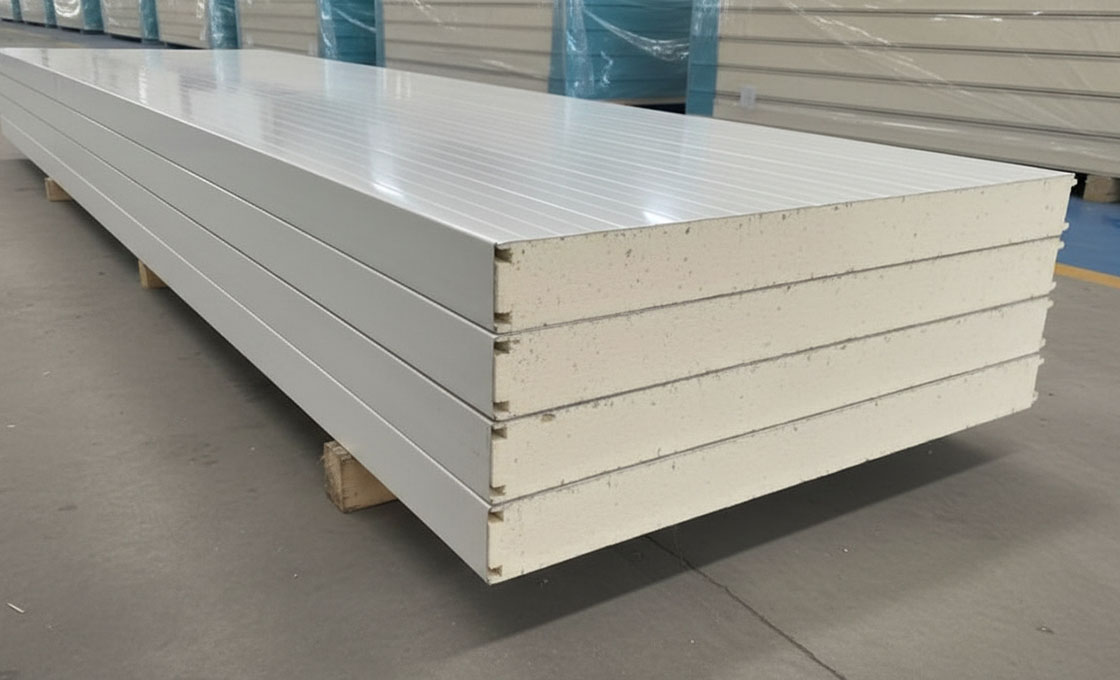
To mitigate this, strict logistical protocols must be enforced. During transport, panels should always be stacked horizontally on flat, padded surfaces, never vertically, to prevent warping. When stacking, high-density foam spacers must be placed between each panel to distribute weight evenly and eliminate friction points. In our experience, skipping these spacers is the primary reason we see “ghosting” marks on finished installations, which are nearly impossible to remove without refinishing.
Installation crews must also be trained in proper lifting techniques. Use wide, soft-sling straps rather than wire ropes or chains, which can slice through protective films and dent the core. Furthermore, the protective film on the panel surface should remain intact until the very last moment of the installation process. Removing it too early exposes the material to construction site hazards, including cement splashes, welding sparks, and general dirt accumulation that can bond to the finish.
Ensuring Long-Term Structural Integrity Under Load
Structural integrity in cold storage and industrial environments is dictated by two factors: the bonding strength of the core and the precision of the joint system. A panel might have high compressive strength, but if the cam-lock mechanism is not seated correctly, the entire assembly becomes structurally weak. Improperly tightened bolts or loose cam-locks create micro-movements under wind or thermal load, eventually leading to fatigue fractures at the connection points.
It is critical to understand that mechanical fasteners do not compress the insulation core to improve its thermal performance; rather, their primary role is to maintain the geometric alignment of the panel edges. Over-tightening can strip threads or distort the panel edge, creating gaps that allow air infiltration. Conversely, under-tightening leaves the seal vulnerable to pressure changes. We recommend using torque-controlled wrenches for critical structural joints to ensure consistent clamping force across the entire wall or roof assembly.
For heavy-load applications, such as roof walkways or suspended storage racks, additional reinforcement is often necessary. While our GRP and CFRT panels offer exceptional inherent strength, adding internal stiffeners or increasing the panel thickness is the only way to guarantee deflection limits are met under point loads. Never assume a standard wall panel can support significant concentrated weight without engineering verification.
Maintenance Tips to Extend Panel Lifespan
The single biggest threat to a cold room’s operational efficiency is not the panel itself, but the failure of its seals. Thermal bridging and energy waste often originate from degraded gaskets or loose joints, allowing warm, moist air to penetrate the insulation layer. This leads to condensation inside the wall cavity, which can freeze, expand, and permanently delaminate the core from the facing. Regular inspection of joint seals is therefore more important than inspecting the panel surface.
Routine maintenance should focus on keeping the exterior surfaces clean and the drainage systems unobstructed. Dirt and salt deposits can accelerate corrosion, particularly on metal facings. Use only pH-neutral cleaners; acidic or alkaline solvents can degrade PVDF coatings and gel coats, leaving the underlying material exposed to UV radiation and moisture. For GRP panels, periodic washing helps maintain the hydrophobic properties of the gel coat, preventing biofilm buildup that can be difficult to remove later.
Mitigating Thermal Bridging and Waste
Effective thermal management requires isolating structural penetrations and selecting low-conductivity cores to eliminate energy leaks.
Identifying Weak Points in the Insulation Envelope
Thermal bridges form where high-conductivity materials bypass the insulation layer, creating localized cold spots that drive condensation and mold growth. Our engineers frequently observe failure at structural tie-backs, floor interfaces, and door jambs where standard framing contacts the interior surface. These conductive pathways allow heat to migrate rapidly, undermining the R-value of the surrounding panels.
Joint integrity is equally critical. Gaps between panels allow warm, moist air to infiltrate the cold room, causing frost accumulation within the insulation matrix. Over time, this degrades the core material and reduces overall thermal efficiency. We analyze these weak points during the design phase to ensure the envelope remains airtight and thermally continuous.
Strategies to Minimize Conductive Heat Transfer
Eliminating conductive heat transfer requires strategic material selection and specialized joint engineering. Cam-lock mechanisms are industry standard for creating continuous air barriers, but the core material dictates long-term performance. We utilize closed-cell foam cores like PIR and PUR because their cellular structure traps gas molecules, significantly reducing thermal conductivity compared to open-cell alternatives.
To further mitigate heat loss, we incorporate thermal breaks at structural connection points. This involves using non-conductive spacers or low-conductivity polymers between metal facings and structural supports. Our testing confirms that these breaks reduce heat flow by over 40% at critical junctions, preventing the formation of ice dams and maintaining consistent internal temperatures.
Optimizing System Efficiency Through Proper Panel Selection
Selecting the right panel configuration depends on the specific temperature zone and operational demands. For blast freezing or ultra-low temperature storage, thicker panels with high-density PMI or XPS cores are necessary to withstand extreme thermal gradients. Our team conducts experimental testing to validate that selected materials maintain structural integrity under these stresses without compromising insulation values.
We also consider hygiene and compliance when recommending panel types. Smooth, non-porous facings like gel-coated GRP resist bacterial growth and simplify sanitization, which is vital for food processing facilities. By aligning panel specifications with both thermal requirements and regulatory standards, we ensure that the cold room operates efficiently throughout its lifecycle, minimizing energy waste and maintenance costs.
Conclusion
Thermal bridging represents a critical vulnerability in cold room efficiency, often manifesting as unexpected energy losses at structural weak points. Conductive heat transfer frequently occurs at panel joints where seal integrity is compromised, leading to significant thermal leakage.
To mitigate this, it is essential to use cam-lock mechanisms paired with intact EPDM or silicone gaskets, which maintain a robust barrier against cold air infiltration. Rax Panel leverages its expertise in designing advanced joint systems that effectively minimize thermal bridging, ensuring long-term operational efficiency and reduced energy consumption for your facility.
Frequently Asked Questions
This factor has a direct bearing on project performance and long-term cost. Addressing it with specific data rather than general assumptions leads to better outcomes.
What is the best insulation for cold rooms?
Polyisocyanurate (PIR) and polyurethane (PUR) foams are widely considered the top choices due to their low thermal conductivity and structural stability. PIR generally offers superior fire resistance and higher R-values per inch compared to traditional PUR. At , we often recommend PIR for facilities requiring strict compliance with modern fire safety codes while maximizing space efficiency.
How do I choose panel thickness?
Panel thickness is determined by the target operating temperature and the desired energy efficiency level. Lower temperature zones, such as deep freeze rooms, require thicker insulation to reduce heat transfer and compressor load. Engineers typically calculate the required R-value based on ambient conditions and local energy costs to select the optimal thickness.
What facing materials are available?
Common facing materials include galvanized steel, stainless steel, aluminum, and fiberglass reinforced plastic (FRP). Stainless steel is preferred for high-hygiene areas like food processing due to its corrosion resistance and ease of cleaning. Galvanized steel offers a cost-effective solution for general storage, while FRP provides excellent durability in humid or corrosive environments.
Are panels customizable in size?
Yes, most composite sandwich panels can be manufactured to specific length and width requirements to minimize joints and improve installation speed. Standard thicknesses typically range from 50mm to 200mm depending on the required thermal performance. Custom dimensions ensure a tighter seal, which is critical for maintaining consistent temperatures in cold storage environments.
Do cold room panels require maintenance?
Sandwich panels are designed to be low-maintenance, primarily requiring periodic inspection of seals and joints. Cleaning the exterior surfaces with mild detergents helps preserve the integrity of the facing material. Ensuring that locking mechanisms remain tight prevents air leakage, which is essential for long-term energy efficiency and system reliability.