
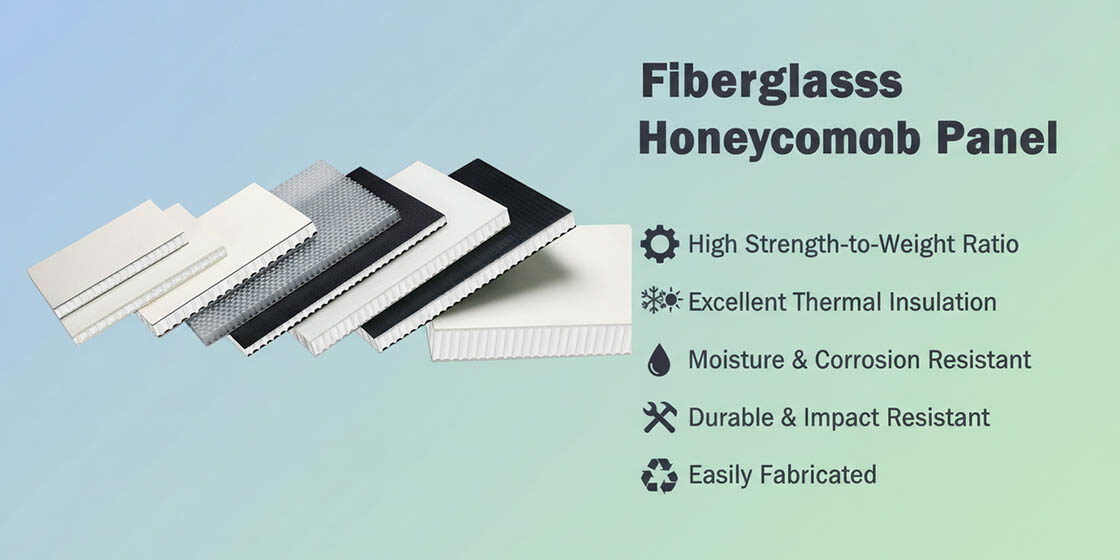
Last year, a refrigerated truck builder in the Midwest swapped 18mm marine plywood flooring for what their supplier called an “equivalent” lightweight PP panel. Eight months later, the floors were delaminating across an entire fleet run. The supplier had shipped a PP honeycomb core rated at 40 kg/m³ — roughly half the density the spec sheet claimed. The recall cost $280,000 and three lost fleet contracts.
That one bad material decision wiped out two years of margin. I have seen variations of this story play out across truck body shops, RV manufacturers, and marine fabricators on three continents. The core issue is always the same: a buyer trusted a spec sheet without demanding independent test data, and production kept running until the field failures forced a hard stop.
We pulled our own lab data from 15 years of manufacturing composite panels — compressive strength tests, water absorption rates, thermal cycling results — and stacked the numbers against plywood, aluminum honeycomb, and XPS foam on the metrics vehicle engineers actually use. The gap between what most spec sheets promise and what happens after 80,000 km of road vibration is wider than procurement teams expect. This article lays out those test results straight, no sales gloss. You will see exactly where polypropylene honeycomb delivers real weight savings, where it does not, and what skin and core configurations actually survive impact loading and constant moisture exposure.
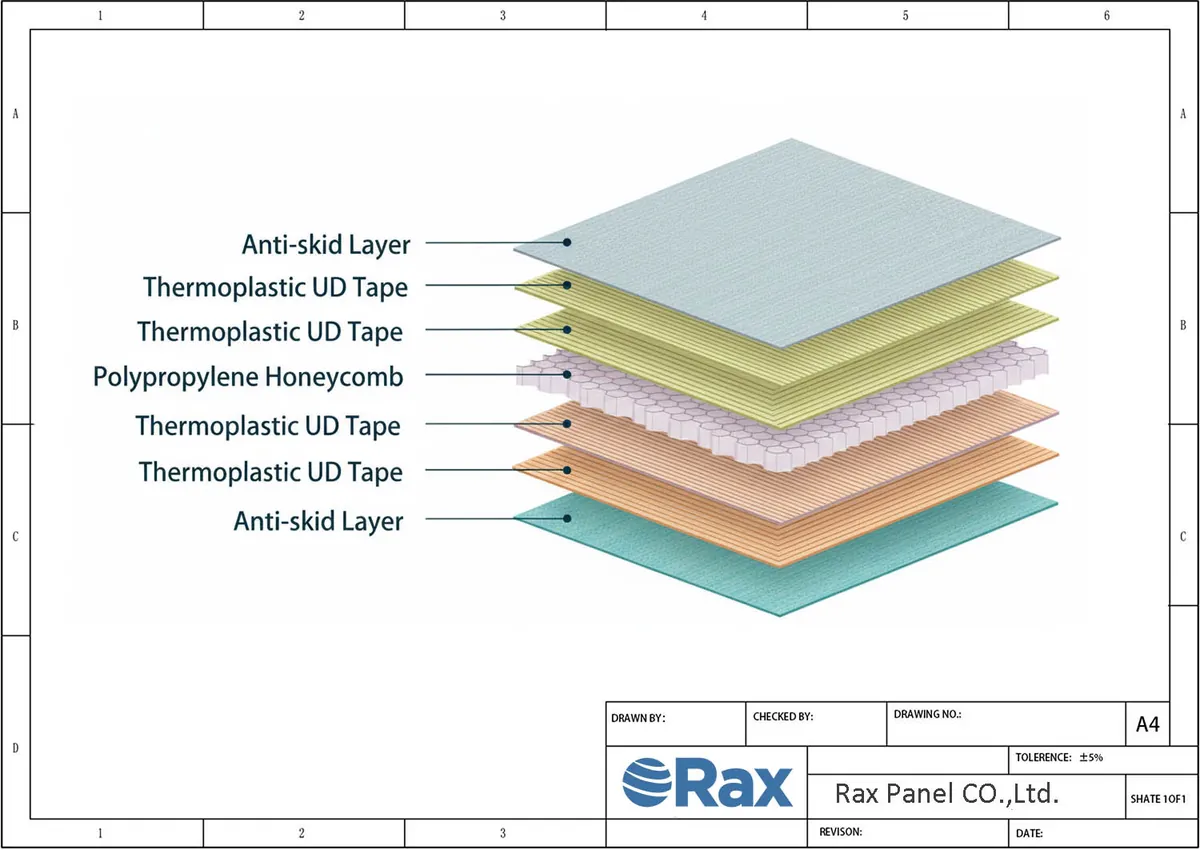
PP Honeycomb vs. Traditional Materials
Polypropylene (PP) honeycomb cores deliver a massive weight reduction over plywood and aluminum while maintaining the structural integrity required for demanding commercial vehicle and marine applications.
Density and Compressive Strength Comparison
When engineering lightweight truck body panels or marine structures, the density-to-strength ratio is your primary metric. We regularly see procurement teams hesitate to drop plywood because they fear losing load-bearing capacity. Our engineers have run the numbers: a PP honeycomb core operates at a fraction of the weight while successfully handling immense compressive loads without permanent deformation.
To understand the performance gap, we compare our standard PP honeycomb specifications against the traditional materials commonly used in vehicle manufacturing and structural builds:
- PP Honeycomb Core: Density ranges strictly from 60 to 120 kg/m³, yielding a compressive strength of 0.8 to 3.0 MPa depending on the specific cell size and density chosen for the project.
- Traditional Plywood: Pushes the scale at roughly 500 to 700 kg/m³. It also absorbs ambient moisture over time, which silently degrades its structural integrity and adds dead weight to the vehicle.
- Solid Aluminum: While inherently strong, solid aluminum sheeting brings significant mass and thermal transfer issues that require secondary insulation layers.
- XPS Foam: Often used for thermal insulation, but standard XPS simply cannot achieve the high shear and compressive strength (up to 3.0 MPa) required for high-impact vehicle flooring without drastically increasing panel thickness.
Water Resistance and Real-World Weight Savings
Moisture intrusion is a leading cause of premature failure in transport vehicles. Wood rots, and metals corrode. Polypropylene, however, is a closed-cell thermoplastic that is inherently 100% waterproof. When we composite this core with standard 1.5mm to 2.5mm FRP skins featuring a protective gelcoat, the resulting sandwich panel is completely impervious to water ingress, mold, and mildew.
This waterproof composite wall panel technology directly translates to massive, measurable weight savings. For example, when our clients replace standard 18mm plywood flooring in a 6-meter dry freight or refrigerated truck body with a comparable-strength PP honeycomb panel, they routinely drop over 150 kg from the vehicle’s curb weight. For fleet managers tracking ROI, shedding that dead weight immediately increases legal payload capacity and reduces fuel consumption across the entire lifespan of the vehicle.
| Material | Density (kg/m³) | Compressive Strength (MPa) | Water Resistance | Key Advantage |
|---|---|---|---|---|
| PP Honeycomb (FRP Skin) | 60 – 120 | 0.8 – 3.0 | Excellent – Fully waterproof, zero rot | Highest strength-to-weight ratio; saves 150+ kg per 6m truck body vs plywood |
| Marine Plywood | 500 – 700 | Variable; degrades when wet | Poor – Absorbs moisture, swells and rots | Low upfront cost; familiar to fabricators but heavy and short-lived |
| Solid Aluminum | ~2,700 | High as solid; low as thin sheet | Good – Corrosion resistant but oxidizes | High rigidity; significantly heavier with higher material cost |
| XPS Foam Core Panel | 30 – 45 | 0.15 – 0.50 | Moderate – Closed cell but can trap moisture long-term | Best thermal insulation; lower load-bearing capacity limits structural use |
RV & Motorhome Panel Applications
Replacing traditional plywood and heavy metals with PP honeycomb sandwich panels in RVs directly increases payload capacity and reduces fuel consumption without sacrificing structural integrity.
Walls and Roofing Specs
RV walls and roofs demand a delicate balance: they must be structurally sound enough to withstand highway wind shear and constant road vibration, yet light enough to keep the vehicle’s center of gravity low. Our engineers specify FRP skin PP honeycomb panels as the baseline for modern RV construction.
By utilizing a polypropylene honeycomb core with a density of just 60 to 120 kg/m³, compared to traditional plywood at roughly 500 to 700 kg/m³, you immediately strip dead weight from the chassis. We bond these cores with standard 1.5mm to 2.5mm FRP (Fiberglass Reinforced Plastic) skins. Specifying a gelcoat finish on these FRP skins provides a critical waterproof barrier and UV resistance, ensuring the roofing won’t degrade under sustained sun exposure.
- Core Material: Polypropylene (PP) Honeycomb
- Core Density: 60 kg/m³ to 120 kg/m³
- Outer Skins: 1.5mm to 2.5mm FRP with UV-resistant Gelcoat
- Operating Temperature: -40°C to +80°C
Flooring and Subflooring Integrity
The floor is the highest-stress area in any motorhome. It absorbs constant dynamic loads, impacts from road debris, and heavy foot traffic. If a floor fails, the warranty claims follow immediately. Unlike wood, polypropylene does not rot when moisture inevitably penetrates the undercarriage.
When we test FRP facing polypropylene panels for flooring, the compressive strength consistently ranges from 0.8 MPa to 3.0 MPa, depending on the specific cell size and core density engineered for the project. Let’s translate that technical spec into business reality.
Replacing standard 18mm plywood flooring in a typical 6-meter RV with a comparable-strength lightweight PP panel removes over 150 kg of dead weight. That is 150 kg of payload capacity you can give back to the customer for cargo or water systems, directly increasing the vehicle’s marketability and ROI.
Interior Cabinetry & Partitions
Every kilogram counts in the interior layout. Heavy wooden cabinetry is the enemy of fuel efficiency. By utilizing lightweight structural panels for RV interiors, you can build overhead lockers, dividing walls, and furniture bases that maintain high rigidity while drastically cutting the vehicle’s curb weight.
Because Rax Panel operates an advanced production line capable of outputting over 1,700 square meters daily, we supply custom size PP honeycomb sheets directly to your assembly line. This custom CNC cutting solves a major production bottleneck. Your fabrication team receives consistent, ready-to-install partitions that require no further trimming on the factory floor, keeping your assembly times predictable and labor costs low.
Commercial Truck Body Applications
Replacing traditional plywood with lightweight PP honeycomb panels directly increases legal payload capacity while reducing long-term fuel consumption.
Dry Freight Body Construction
When manufacturing dry freight truck bodies, the structural goal is maximizing internal volume and payload while surviving constant vibration and cargo impact. For decades, plywood and heavy metal sheets served as the default, but they introduce severe rot and weight penalties. We engineer our polypropylene honeycomb panels specifically to eliminate these liabilities.
Our engineers found that replacing an 18mm plywood floor in a standard 6-meter truck body with a comparable strength PP honeycomb panel reduces the floor weight by over 150 kg. This translates directly to increased revenue per trip. Because the PP core density ranges strictly between 60 kg/m³ and 120 kg/m³—compared to plywood at roughly 500 to 700 kg/m³—you strip dead weight without sacrificing load-bearing capacity.
- Core Density: 60 – 120 kg/m³ (Customizable)
- Compressive Strength: 0.8 MPa to 3.0 MPa, handling high point-loads from forklifts and heavy pallets.
- Skin Options: 1.5mm to 2.5mm FRP or CFRT skins with gelcoat for UV and water resistance.
Unlike organic materials that degrade when exposed to moisture, the closed-cell polypropylene structure remains completely waterproof. It handles operating temperatures from -40°C to +80°C, ensuring the panels will not warp or delaminate across extreme climates.
Refrigerated Truck Insulation Cores
Refrigerated truck bodies operate on a different mathematical model. Here, thermal bridging and moisture infiltration are your primary enemies. If the core absorbs water, the insulation value plummets, forcing the compressor to work overtime and burning through fuel. We manufacture composite panels with high-performance foam cores to lock in thermal efficiency.
For reefer applications, we utilize XPS, PET, PU, and PVC foam cores. When combined with GRP or FRP facing sheets—specifically those treated with a gelcoat finish—the resulting panel creates an impenetrable vapor barrier. The gelcoat provides a flat, smooth surface that is easy to clean and highly resistant to the harsh chemicals used in food-grade sanitation.
- Core Materials: XPS, PET, PU, and PVC foams for optimal thermal resistance.
- Facing Skins: Continuous fiberglass reinforced thermoplastic (CFRT) or standard FRP for structural integrity.
- Vapor Barrier: Closed-cell structure prevents ice formation within the wall cavity during deep-chill operations.
By specifying custom CNC-cut panels, your production line avoids the inconsistencies of field-fitting bulky materials. Precise tolerances mean tighter seams, less thermal leakage, and faster assembly times for your CKD refrigerated truck kits.
Key Fabrication & Sourcing Factors
Precision CNC fabrication and proper lamination dictate whether a lightweight PP panel survives the assembly line and delivers long-term ROI for your fleet.
CNC Cutting & Edge Sealing
Inconsistent panel dimensions will bottleneck your vehicle production line and drive up labor costs. We eliminate this variability by utilizing advanced CNC routing to custom-cut PP honeycomb sheets to your exact specifications. Whether you are fabricating complex RV furniture panels or exact-fit truck body walls, our CNC tolerances ensure a direct drop-in fit, removing the need for manual trimming on your factory floor.
Edge treatment is just as critical as the cut itself. Leaving the polypropylene honeycomb core exposed leaves it vulnerable to moisture ingress and delamination from road vibrations. We apply specialized closed-edge sealing techniques to protect the core perimeter. This step is mandatory for waterproof composite panels for boat building and commercial truck bodies, ensuring the panel maintains its structural integrity even in relentlessly wet or corrosive environments.
Lamination and Skin Options
The PP honeycomb core handles shear stress and keeps the panel ultra-light, but the skins dictate its resistance to impact, weather, and daily wear. We bond a variety of high-performance facing materials to the core using strict temperature and pressure controls to prevent delamination. For most specialized vehicle manufacturers, FRP (Fiberglass Reinforced Plastic) provides the best balance of durability and cost.
- FRP (with Gelcoat): Our standard FRP skins range from 1.5mm to 2.5mm thick. We specify a high-quality gelcoat finish that provides a smooth, flat, and UV-resistant surface. This eliminates the need for secondary painting and provides excellent waterproof composite wall panels for vehicle exteriors.
- CFRT (Continuous Fiber Reinforced Thermoplastic): For engineers looking to push weight savings even further without sacrificing puncture resistance, CFRT offers higher strength-to-weight capabilities than traditional fiberglass.
- Aluminum: Ideal for applications requiring maximum rigidity, high heat deflection, or specific aesthetic architectural requirements, while still leveraging the lightweight PP core.
By strategically matching the right skin to our 60 to 120 kg/m³ core density range, we optimize the frp skin pp honeycomb panel strength specifically for your load requirements. This calculated engineering is what allows us to replace heavy 18mm plywood in a standard 6-meter truck body and reliably save over 150 kg of curb weight, directly translating into higher legal payload capacity and increased revenue per trip.
Conclusion
If you’re building truck bodies or RV walls in 2026, spec the PP honeycomb core with FRP skins at 80 kg/m³ density. That single swap saves over 150 kg per 6-meter truck body—weight you redirect straight to legal payload capacity. On a fleet running 300 days a year, the fuel savings alone recover your material premium within four months.
Request a CNC-cut sample panel at your exact wall thickness from Rax Panel’s engineering team. Run your own side-by-side compression test against the plywood spec you’re currently using. The raw numbers will close your internal approval process faster than any product sheet.
Frequently Asked Questions
This factor has a direct bearing on project performance and long-term cost. Addressing it with specific data rather than general assumptions leads to better outcomes.
Where can I find a technical data sheet or PDF for lightweight PP panels?
Technical Data Sheets (TDS) are available on our product pages. They provide detailed specifications on density, compressive strength, thermal conductivity, and available skin options. You can view these directly online or download a PDF for your engineering team.
What is the typical weight saving using PP panels in an RV?
In a typical 7-meter RV, replacing traditional plywood and aluminum construction in walls, floor, and roof with PP honeycomb composite panels can reduce the vehicle’s total curb weight by 200-300 kg. This significantly improves fuel economy and towing options.
Are lightweight PP panels resistant to water and delamination?
Yes. The polypropylene core is hydrophobic and does not absorb water. When laminated with waterproof skins like gel-coated FRP using high-quality adhesives, the resulting panel is highly resistant to water ingress and delamination, making it ideal for marine and all-weather vehicle applications.
Can you supply PP panels cut to custom sizes for my production line?
Absolutely. We provide CNC cutting services to deliver panels to your exact dimensions and tolerances, including cut-outs for windows, doors, and utilities. This ‘kit’ approach can significantly speed up your assembly line and reduce on-site waste.
How much does lightweight panel applications typically cost?
The cost of lightweight panel applications varies based on material grade, thickness, panel dimensions, and order volume. Requesting a detailed quote with your project specifications is the most reliable way to get an accurate figure. Bulk orders typically reduce per-unit pricing significantly.