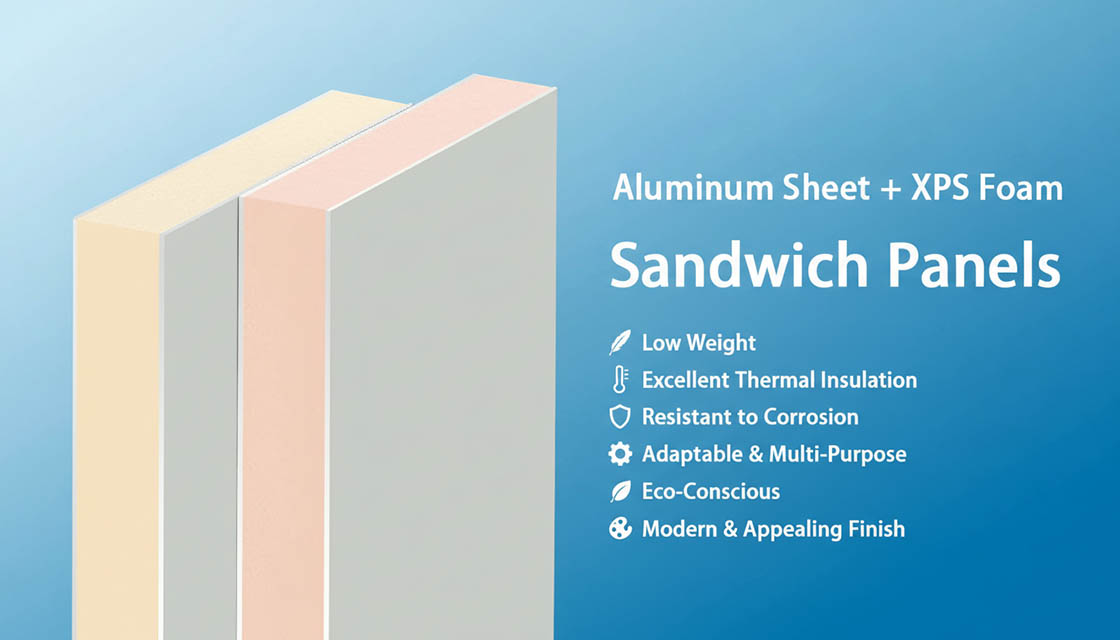
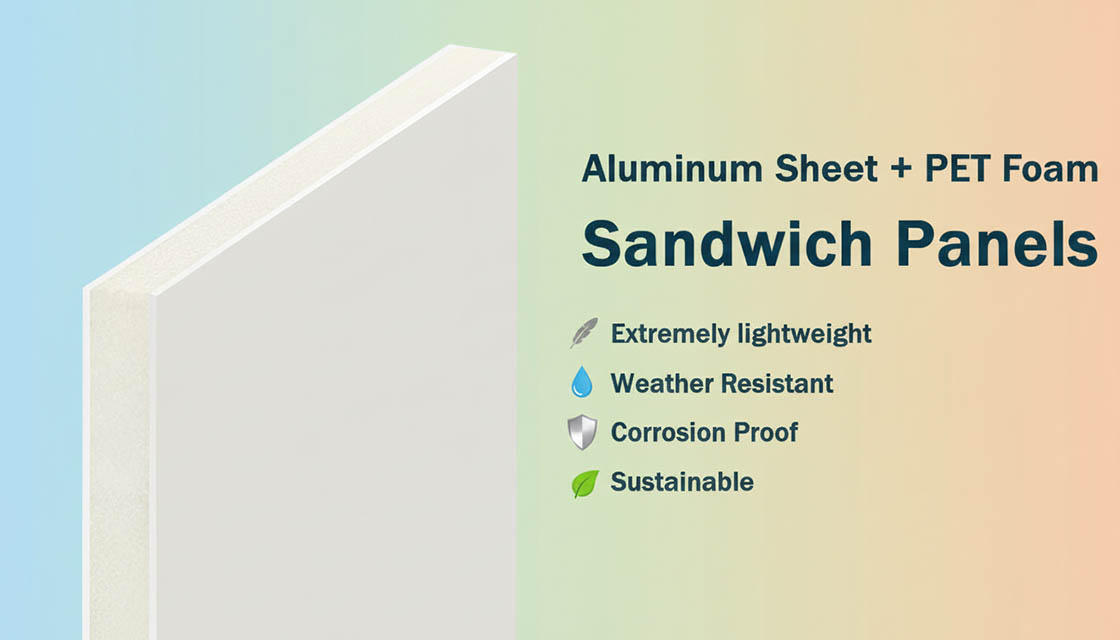
Aluminum PET Sandwich Panel

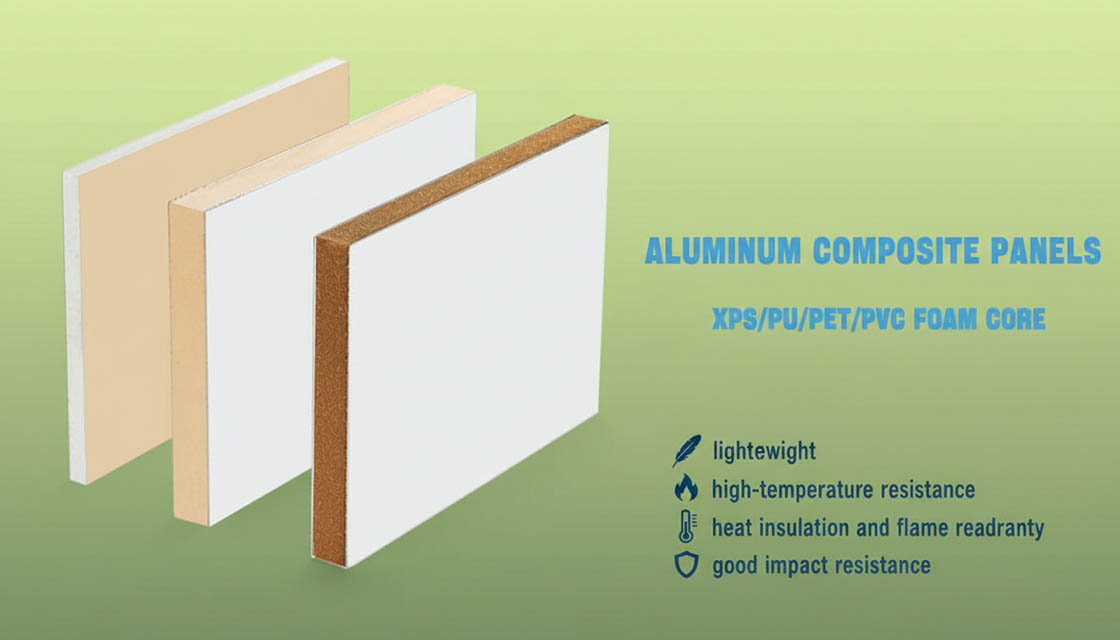
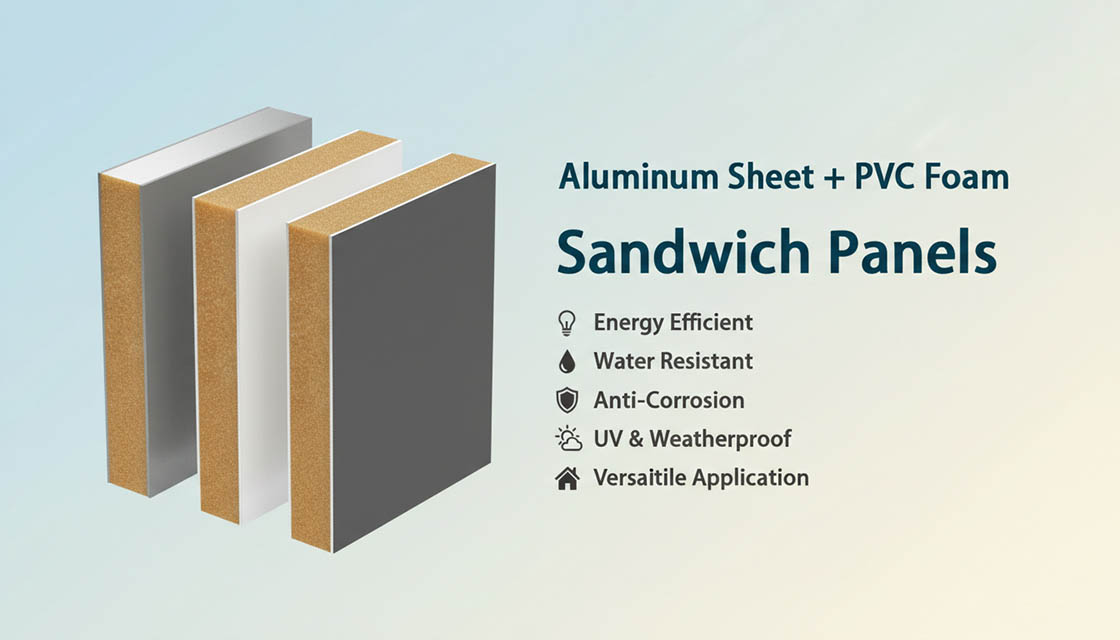
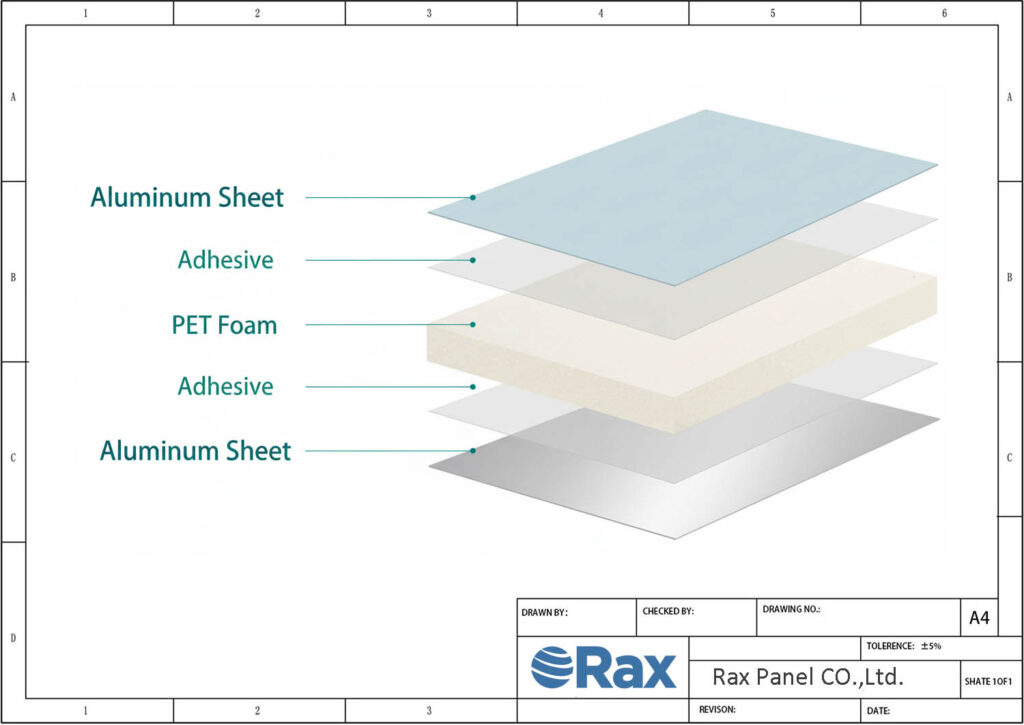
The aluminum PET sandwich panel bonds two aluminum sheets to a polyethylene terephthalate (PET) foam core, delivering structural performance with reduced weight. The aluminum skin uses alloys such as 1050, 1060, 3003, 5052, or 6061 in thicknesses from 0.1 mm to 6.0 mm, while the rigid, closed-cell PET foam core ranges from 80 kg/m³ to 300 kg/m³ density in virgin or recycled forms.

The aluminum provides corrosion resistance, moisture protection, and chemical stability. Softer alloys suit energy absorption applications, while harder grades meet high-strength structural demands. The closed-cell PET foam exhibits very low water absorption for stable performance in humid environments, delivers high compressive strength and bending resistance, and contributes thermal insulation through low thermal conductivity. Both aluminum and PET foam are recyclable materials.

Surface treatments including anodizing, painting, embossing, brushing, sandblasting, and polishing enable varied colors and textures while maintaining physical and chemical stability.

Transportation applications include dry cargo truck and trailer bodies, fire trucks, ambulances, buses, subway cars, and recreational vehicles, reducing weight to improve fuel efficiency and payload capacity. Building applications encompass exterior wall cladding, roofs, interior panels, ceilings, and partitions. Additional uses span marine structures, aviation interiors, modular buildings, cold storage, and industrial enclosures.
RaxPanel: Global Aluminum PET Sandwich Panel Supplier with Expert Solutions

RaxPanel is a sandwich panel manufacturer based in Hebei, China, producing Aluminum PET Sandwich Panels for structural and lightweighting applications. We bond aluminum alloy skins to recyclable, closed-cell PET foam cores using controlled vacuum lamination, yielding panels that combine low weight with the stiffness and corrosion resistance required by transportation and building projects.

Each order is built to specification. Customers can select the aluminum alloy and skin thickness, the PET foam density, the total panel dimensions, and the surface finish, with CNC cutting and grooving available for ready-to-install delivery. Our engineering team reviews every project to match the core density and skin grade to the intended load and service environment.

Whether the panels are destined for truck and trailer bodies, marine structures, rail interiors, or architectural cladding, we focus on consistent bonding quality, dimensional accuracy, and dependable lead times. Contact us with your specifications to receive a tailored quotation.

Parameter Specification / Value
Aluminum Skin
Alloy Grades 1050, 1060, 3003, 5052, 6061
Thickness Range 0.1 – 6.0 mm
Surface Treatments Anodizing, painting, embossing, brushing, sandblasting, polishing
PET Foam Core
Material Polyethylene Terephthalate (PET) Foam
Density Range 80 – 300 kg/m³
Variants Available in virgin and recycled forms
Structure Rigid, closed-cell thermoplastic foam
Composite Panel
Composite Method Adhesive bonding (e.g., unsaturated polyester, polyurethane)
Total Thickness Range 10 – 150 mm
Maximum Length ≤ 12000 mm
Maximum Width ≤ 2600 mm
Key Performance Properties
Thermal Conductivity (Core) ~ 0.03 W/m·K
Water Absorption (Core) Very low (Closed-cell structure)
Compressive Strength (Core) High
Bending Resistance High
Service Life Long-lasting with low maintenance
General Characteristics
Primary Advantages Lightweight, High Strength-to-Weight Ratio, Corrosion Resistant, Recyclable
Fire Performance Can be treated for flame retardancy
Workability Good; can be cut, drilled, and machined (CNC services available)
Typical Applications Transportation (Truck/Trailer bodies, Buses, RVs), Building Cladding & Partitions, Marine & Aviation interiors


    This site is protected by reCAPTCHA and the Google Privacy Policy and Terms of Service apply.

    Related Products

    Aluminum PET Sandwich Panel Selection & Engineering Guide

    As vehicle body builders and commercial contractors strive for lightweighting, structural fatigue resistance, and environmental sustainability, PET (Polyethylene Terephthalate) foam cores have emerged as a premier composite choice. Aluminum PET Sandwich Panels bond durable aluminum alloy skins onto a 100% recyclable, closed-cell thermoplastic PET foam core. At RaxPanel, our engineering team manufactures these panels to combine high shear modulus, shock absorption under dynamic highway vibration, and robust thermal insulation for transportation fleets and sustainable architecture.

    💡 Pro Tip: 100% Recyclable Thermoplastic Core for Circular Economy
    Unlike conventional thermoset foams that cannot be re-melted or recycled at end-of-life, PET foam is manufactured from recycled polymer stock and remains 100% recyclable. Choosing Aluminum PET composite panels helps fleet OEMs and green building projects comply with strict ISO 14001 and circular economy mandates without compromising structural strength.

    1. How to Choose the Right Aluminum Alloy and Skin Thickness

    The pre-painted outer aluminum skins (0.3mm to 2.0mm thickness) provide outer structural impact resistance and surface protection:

    • 3003 Alloy (Al-Mn): High tensile strength and impact resistance; specified for commercial trailer walls, RV bodies, and truck side-panels.
    • 5005 / 5052 Marine Alloy (Al-Mg): Superior anti-corrosion barrier against salt spray; recommended for marine enclosures and coastal transport.
    • 1100 / 1050 Alloy: High ductility; ideal for interior decorative wall partitions and indoor equipment housings.

    2. Why PET Foam Core Is the Top Choice for Vehicle Weight Reduction

    Closed-cell thermoplastic PET structural foam delivers high mechanical strength and dynamic fatigue endurance:

    Performance Property RaxPanel PET Core Standard Engineering Advantage
    PET Core Density Range 80 kg/m³ to 300 kg/m³ Tailored options from vehicle sidewalls to heavy-duty sub-flooring
    Environmental Recyclability 100% Recyclable Thermoplastic Fulfills automotive end-of-life recycling and green building standards
    Thermal Conductivity (λ) ~ 0.030 – 0.035 W/m·K Effective R-value insulation for refrigerated bodies and RV walls
    Dynamic Fatigue Resistance High Dynamic Shear Modulus Absorbs severe road shock and highway vibration without internal delamination

    3. Which Surface Finish Will Protect Your Panels Against Harsh Weather?

    Factory roller-coated surface finishes protect against harsh weather conditions and solar exposure:

    • PVDF Coating (70% PVDF Fluorocarbon Coating): 20+ Year exterior warranty against UV fading, chalking, and industrial pollutants on exterior facades.
    • FEVE Coating: High gloss retention and vivid color durability for architectural landmarks.
    • PE Coating: Cost-effective finish for indoor wall partitions, available in wood grain, stone, and solid metallic tones.

    4. How Fire-Safe and Soundproof Are These Panels?

    🛡️ Safety & Acoustic Performance:

    • Fire Ratings: Flame-retardant PET core formulations meet EN 13501-1 Class B-s1,d0 and EN 13501-1 Class B1 fire performance standards.
    • Acoustic Attenuation: Structural PET foam dampens road vibration and attenuates sound transmission by 24 dB to 30 dB relative to solid metal sheets.

    5. Where Are Aluminum PET Panels Most Commonly Installed?

    🚚 Truck Bodies, RVs & Commercial Trailers

    Replaces heavy metal bodywork in refrigerated trailers, RV side-walls, and dry freight boxes to maximize payload capacity.

    🏢 Sustainable Building Cladding & Enclosures

    100% recyclable composite panels for exterior architectural facades, modular partitions, and equipment housings.

    6. How to Cut, Groove, and Seal Edges During Installation

    Aluminum PET panels machine smoothly on-site using CNC machinery or standard woodworking tools:

    • V-Groove Corner Folding: Cut 90° V-grooves into the reverse aluminum skin to fold clean architectural corners without paint cracking.
    • Edge Protection: Edge sealing options include open edges, folded skin edges, or aluminum extrusions to prevent moisture ingress.
    🏭 Factory-Direct Supply & Custom Fabrication
    RaxPanel supplies custom-sized composite panels directly to project sites worldwide, with daily output exceeding 1,500 m² and strict pre-dispatch quality control on every batch.

    Frequently Asked Questions (FAQS)

    1. What are the standard panel thicknesses, maximum lengths, and width options available for Aluminum PET panels?
    Standard panel thicknesses range from 10mm up to 150mm. Standard widths include 1000mm, 1220mm, and 1500mm (with custom widths up to 3200mm), with maximum single-sheet lengths up to 5800mm (5.8m) to fit ocean freight container shipping dimensions.
    2. What makes PET foam cores environmental and 100% recyclable?
    PET (Polyethylene Terephthalate) is a thermoplastic structural foam derived from recycled polymer stock that can be fully melted down and recycled at end-of-life, supporting automotive OEM recycling mandates and green building certification.
    3. How do Aluminum PET panels perform under continuous vehicle road vibration?
    The closed-cell thermoplastic PET core features high dynamic shear modulus and fatigue strength, absorbing road shock and highway vibration without core shear failure or skin delamination in commercial trucks and RV bodies.
    4. What fire safety ratings and quality certifications do these composite panels meet?
    Flame-retardant PET core formulations meet EN 13501-1 Class B-s1,d0 and EN 13501-1 Class B1 fire performance standards. Manufacturing quality is governed under ISO9001 management systems, with raw material performance verified under SGS, CE, and REACH testing for international compliance.
    5. What is the difference between PVDF, FEVE, and PE coatings for outdoor weatherability?
    70% PVDF Fluorocarbon Coating-based PVDF (Polyvinylidene Fluoride) coating provides a 20+ year weatherability warranty against UV fading, chalking, and acid rain on exterior building facades. FEVE delivers high gloss retention for architectural landmarks, while PE (Polyethylene) coating is cost-effective for interior wall partitions and signage.
    6. Can Aluminum PET panels be CNC grooved, bent, or edge-sealed on-site?
    Yes. The pre-painted aluminum skins can be V-grooved at 90° or 135° on the reverse skin using standard CNC routers or hand tools, allowing manual edge folding into architectural cassettes without surface paint cracking. Edge sealing options include open edges, folded skin capping, or interlocking aluminum extrusion profiles.
    7. How are large panel shipments packaged to prevent freight damage during ocean transit?
    Panels are packed with protective PE film on both aluminum skins, separated by inter-sheet foam layers, and secured on heavy-duty export wooden pallets or CKD (Completely Knocked Down) steel crates. This prevents surface scratching or edge impact damage during 20ft and 40ft container shipping.


    Sandwich Panel Manufacturer

    Custom Core & Skin • Tailored Dimensions


      This site is protected by reCAPTCHA and the Google Privacy Policy and Terms of Service apply.