
RV floor panels are structural composite sandwich assemblies designed to replace traditional plywood subfloors in motorhomes, travel trailers, and expedition vehicles. Each panel bonds a high-density PET foam core between continuous-fiber reinforced thermoplastic (CFRT) or GRP skins, creating a rigid platform that supports concentrated furniture loads, occupant weight, and cargo without flexing or fatigue.
Unlike roof or wall panels where thermal insulation is the priority, floor panels are engineered for compressive and shear strength. The PET core (density 75–100 kg/m³, shear strength ≥ 1.2 MPa) resists crushing under cabinet legs, jack points, and wheelchair wheels. Embedded aluminum or structural PU inserts provide solid bolt-through mounting for furniture rails, seat pedestals, and tie-down anchors.
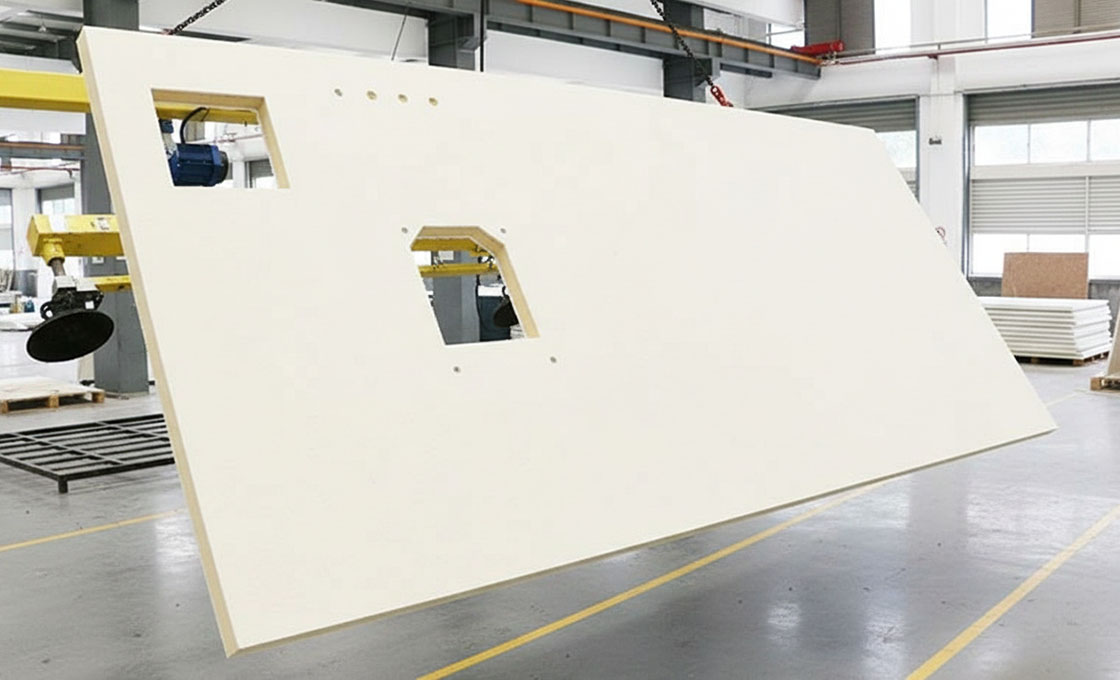
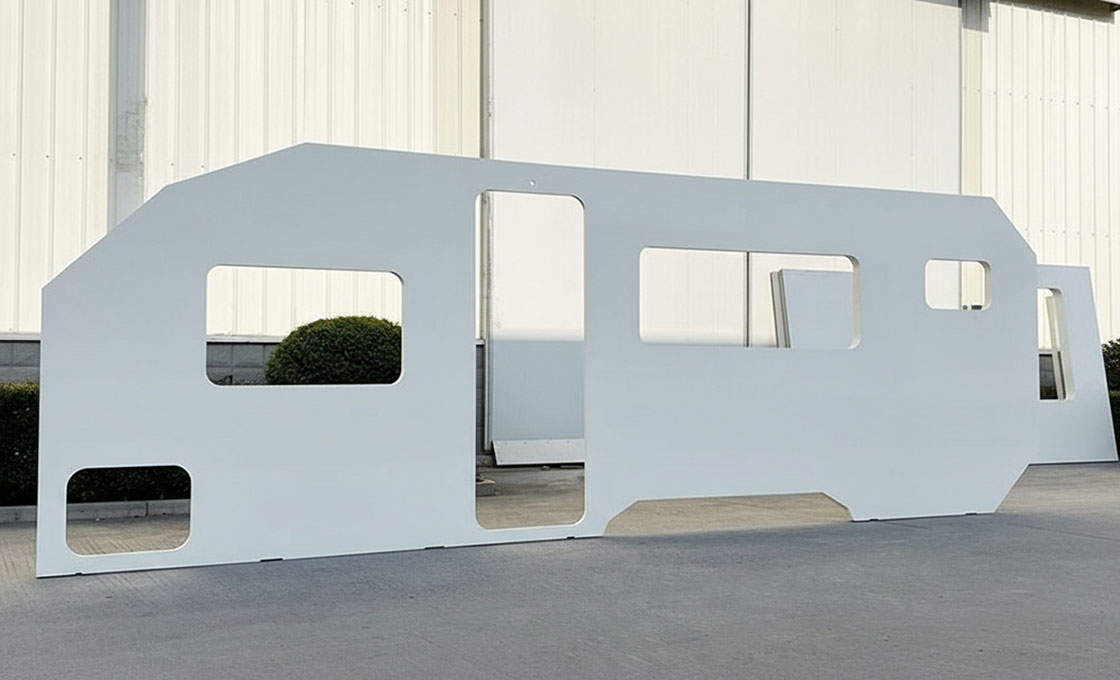
Panels are supplied CNC-cut to vehicle floor plans with pre-drilled mounting holes and routed channels for plumbing and electrical runs. The composite construction is impervious to moisture, eliminating the rot and delamination that plague plywood floors exposed to condensation and spillage over years of use.
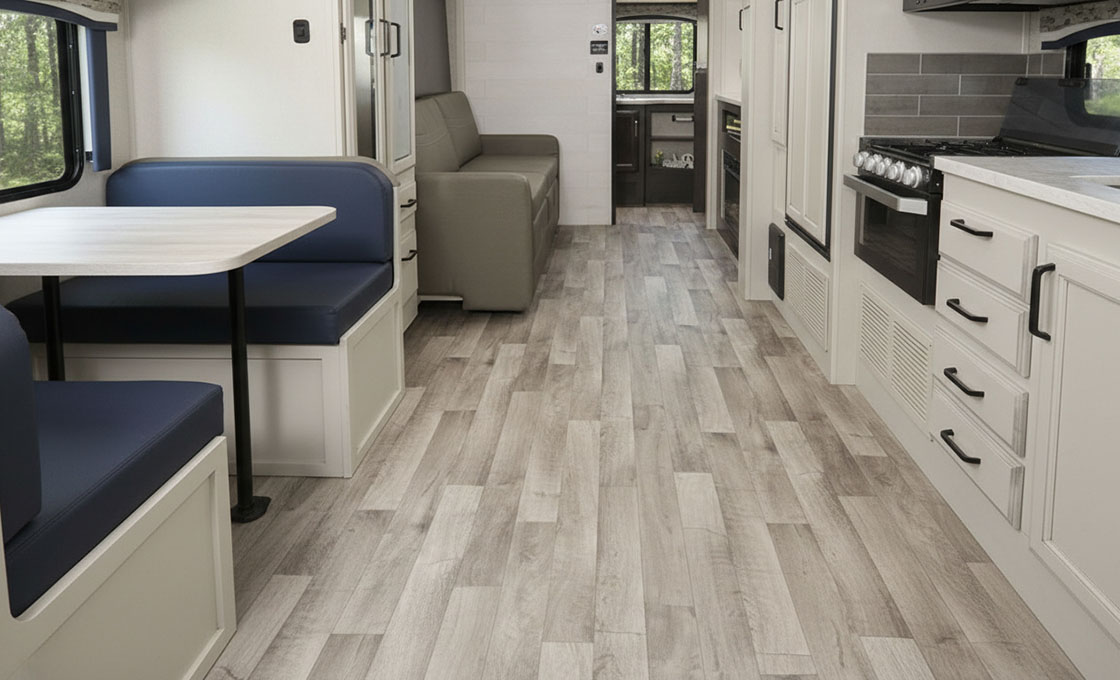
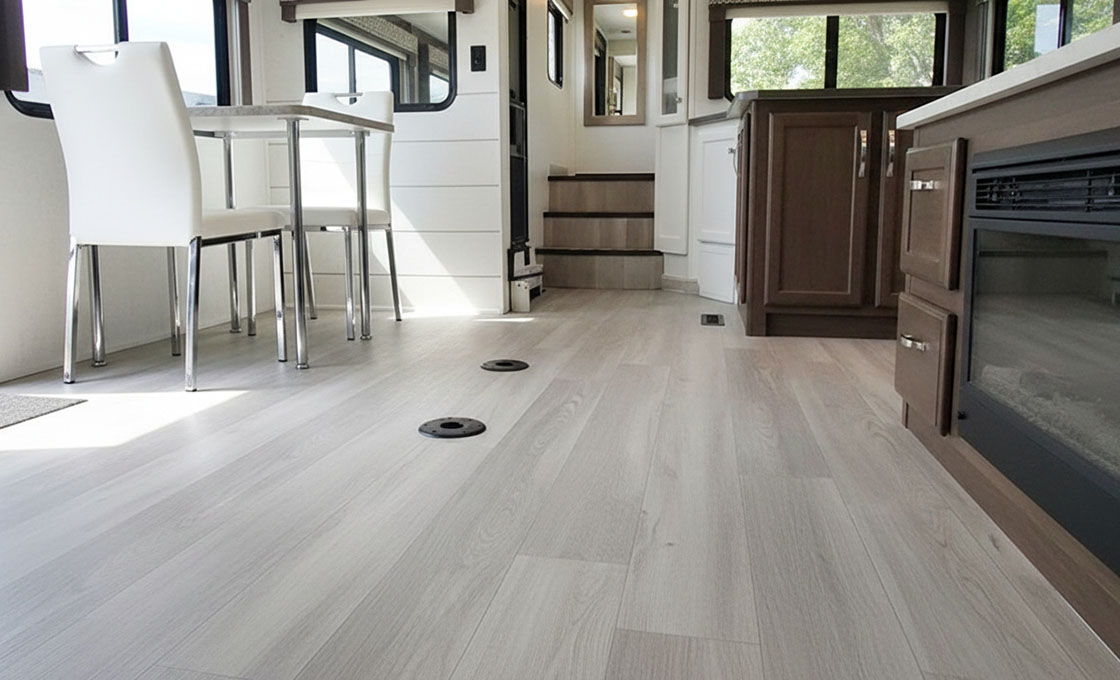
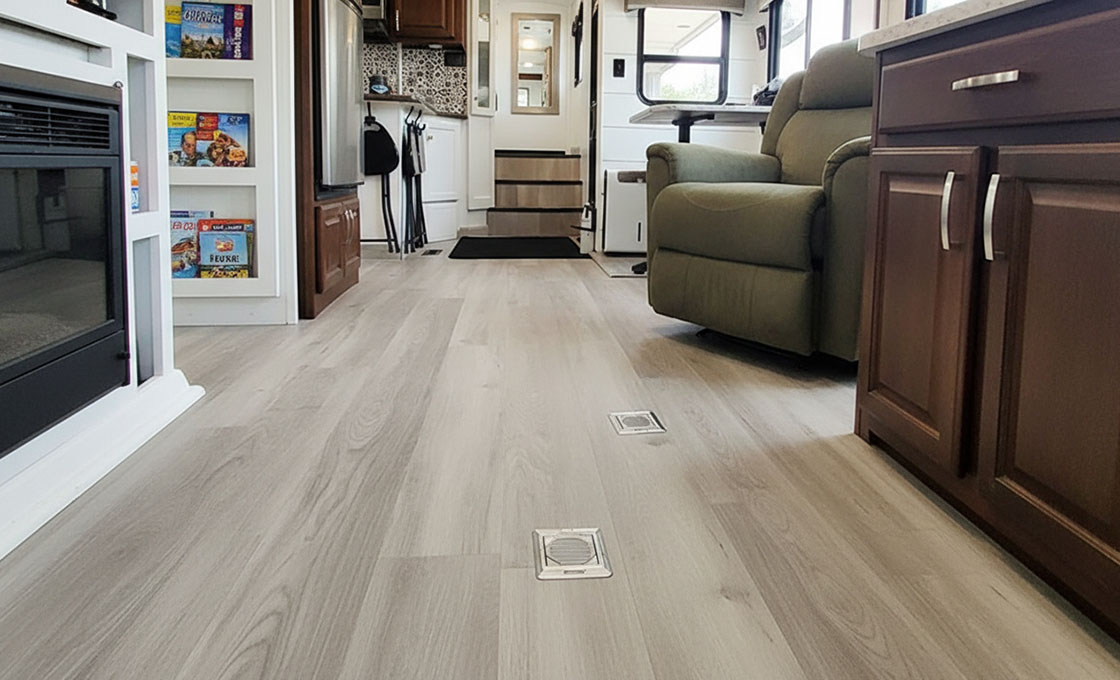
The Authority in RV Floor Panel Solutions Since 2002
RaxPanel manufactures structural composite floor panels at our facility in Hebei, China, supplying RV builders, conversion specialists, and fleet operators across multiple export markets. Floor panels require a different material approach than roof or wall panels: the core must resist repeated point loading without permanent deformation, and the skins must provide high tensile stiffness for span performance between chassis cross-members.
Our production process for floor panels begins with PET foam core selection at 75–100 kg/m³ density, verified for compressive strength before layup. CFRT or multi-axial GRP skins are positioned on both faces, and embedded reinforcement blocks (aluminum or structural PU) are placed at customer-specified furniture mounting coordinates. The assembly passes through a heated press at controlled pressure and cure time to achieve full adhesive cross-linking.
Every floor panel batch is sampled for flatness tolerance (≤ 1.5 mm/m), bond peel strength, and dimensional accuracy against the customer CAD drawing before packing. Panels ship on flat export pallets with corner protection and PE film wrapping to prevent surface scoring during container transit.
| Parameter | Specification |
|---|---|
| Core Material | PET (Polyethylene Terephthalate) structural foam |
| Core Density | 75–100 kg/m³ |
| Core Shear Strength | ≥ 1.2 MPa |
| Thermal Conductivity (λ) | 0.032–0.040 W/m·K |
| Skin Options | CFRT (Continuous Fiber Reinforced Thermoplastic) or GRP |
| Panel Thickness | 20 mm – 40 mm (custom available) |
| Maximum Panel Length | Up to 12,000 mm |
| Maximum Panel Width | Up to 2,500 mm |
| Surface Weight | Approx. 5.0–8.0 kg/m² (depending on thickness and skin) |
| Embedded Inserts | Aluminum or structural PU blocks at furniture/seat mounting points |
| CNC Machining | 5-axis cutting, ±0.5 mm; pre-drilled holes and routed channels |
| Moisture Absorption | < 1% by volume (closed-cell PET core) |
| Flatness Tolerance | ≤ 1.5 mm per meter |
Related Products
RV Floor Panel Engineering Guide: Load Capacity, Mounting & Moisture Protection
An RV floor carries concentrated loads that no other vehicle surface experiences: cabinet legs pressing down at 4–6 points per square meter, occupants walking and shifting weight dynamically, and cargo secured by tie-down anchors under highway vibration. The floor panel must resist all of these without permanent deflection, core crushing, or fastener pull-through over thousands of travel cycles.
💡 Pro Tip: Why PET Foam Outperforms XPS in Floor Applications
XPS foam excels at thermal insulation but compresses permanently under sustained point loads. PET structural foam (75–100 kg/m³) maintains its shape under repeated furniture and occupant loading, with shear strength ≥ 1.2 MPa that prevents core failure at bolt-through mounting points.
XPS foam excels at thermal insulation but compresses permanently under sustained point loads. PET structural foam (75–100 kg/m³) maintains its shape under repeated furniture and occupant loading, with shear strength ≥ 1.2 MPa that prevents core failure at bolt-through mounting points.
1. Structural Load Design: Point Loads vs. Distributed Loads
RV floor panels must handle two distinct load cases. Distributed loads (occupants walking, cargo spread across the floor) are managed by the panel’s bending stiffness between chassis cross-members. Point loads (cabinet legs, jack stands, wheelchair wheels) require embedded reinforcement blocks that transfer concentrated force into the surrounding panel area without crushing the foam core.
2. Furniture Mounting: Embedded Inserts and Bolt-Through Design
Standard wood screws cannot hold in foam cores. RaxPanel embeds aluminum plates or structural PU blocks at customer-specified coordinates during the lamination process. These inserts provide solid material for M6–M10 bolt-through connections, securing furniture rails, seat pedestals, table legs, and tie-down anchors without risk of pull-through under dynamic loads.
3. Moisture and Rot Elimination
Plywood RV floors fail because condensation from temperature differentials accumulates at the floor-to-frame interface, causing progressive rot over 5–10 years. PET foam has less than 1% water absorption by volume, and CFRT/GRP skins are non-porous. Spilled liquids, condensation, and humidity cannot penetrate the panel, making composite floors maintenance-free for the vehicle’s service life.
4. Weight Comparison: Composite vs. Plywood Floor
⚖️ Floor Weight Comparison (per m²):
- Traditional plywood (18 mm) + aluminum frame: 12–15 kg/m²
- RaxPanel composite (25 mm PET + CFRT skins): 5.5–7.0 kg/m²
- Weight saving: 50–60% reduction, lowering vehicle curb weight and improving fuel efficiency
5. CNC Machining for Floor Plans: Cutouts, Channels, and Drain Holes
RaxPanel machines floor panels to customer CAD drawings using 5-axis CNC routers. This includes perimeter profiling to match the vehicle chassis shape, routed channels (10–20 mm deep) for plumbing and electrical runs, pre-drilled holes for chassis bolt patterns, and drain holes in wet-area zones (bathroom, kitchen). All machining holds ±0.5 mm tolerance.
6. Anti-Slip Surface Options
The top skin can be specified with textured GRP (grit-embedded gelcoat) or a bonded anti-slip vinyl layer for areas where occupants stand. This is particularly relevant for entry steps, bathroom floors, and kitchen zones where wet feet create slip hazards on smooth surfaces.
Frequently Asked Questions (FAQS)
1. What is the maximum unsupported span between chassis cross-members?
For standard 25 mm PET-core panels with CFRT skins, unsupported spans up to 500 mm are typical for occupant loading. For heavier cargo zones or wheelchair access, 30–40 mm panels or additional cross-member support is recommended. Our engineering team can calculate deflection limits for your specific chassis geometry.
2. How are heavy cabinets and appliances secured to the floor?
During manufacturing, we embed aluminum or structural PU reinforcement blocks at your specified mounting coordinates. These inserts accept M6–M10 bolts directly, providing solid anchorage without relying on the foam core for holding strength. Provide your furniture layout drawing and we position inserts accordingly.
3. Will the floor panel rot if water leaks from the bathroom or kitchen?
No. The PET foam core absorbs less than 1% water by volume, and the CFRT/GRP skins are completely non-porous. Unlike plywood, composite floor panels cannot rot, swell, or delaminate from moisture exposure, making them suitable for wet-area installations without additional waterproofing membranes.
4. Can plumbing and electrical runs be integrated into the panel?
Yes. We CNC-route channels (10–20 mm deep) into the core underside for water lines, grey water pipes, and electrical conduit. Drain holes can also be machined in bathroom and kitchen zones. This eliminates the need for separate sub-floor raceways and reduces overall floor build-up height.
5. What weight savings can I expect compared to a plywood floor?
A typical 18 mm plywood floor with aluminum framing weighs 12–15 kg/m². Our 25 mm composite floor panel weighs 5.5–7.0 kg/m², representing a 50–60% reduction. On a 12 m² motorhome floor, this saves approximately 70–100 kg of vehicle curb weight.
6. Is the floor surface suitable for wheelchair or mobility scooter use?
Yes, when specified with appropriate thickness (30–40 mm) and embedded reinforcement at wheel-track zones. The PET core resists the concentrated wheel loads without permanent indentation. Specify anti-slip textured surface for safe wheelchair traction in wet conditions.
7. How is the floor panel attached to the vehicle chassis?
Floor panels are bonded to chassis cross-members using structural PU adhesive supplemented by mechanical fasteners at pre-drilled locations. The adhesive provides continuous load transfer and vibration damping, while bolts at perimeter and cross-member intersections prevent peel-under during extreme road events.

Sandwich Panel Manufacturer
Custom Core & Skin • Tailored Dimensions