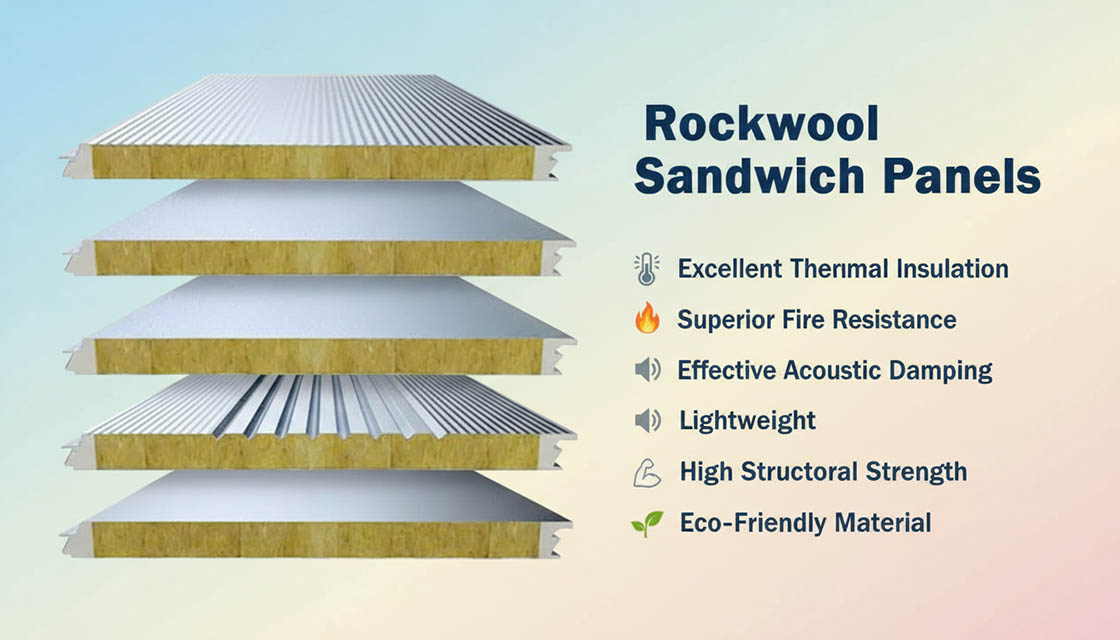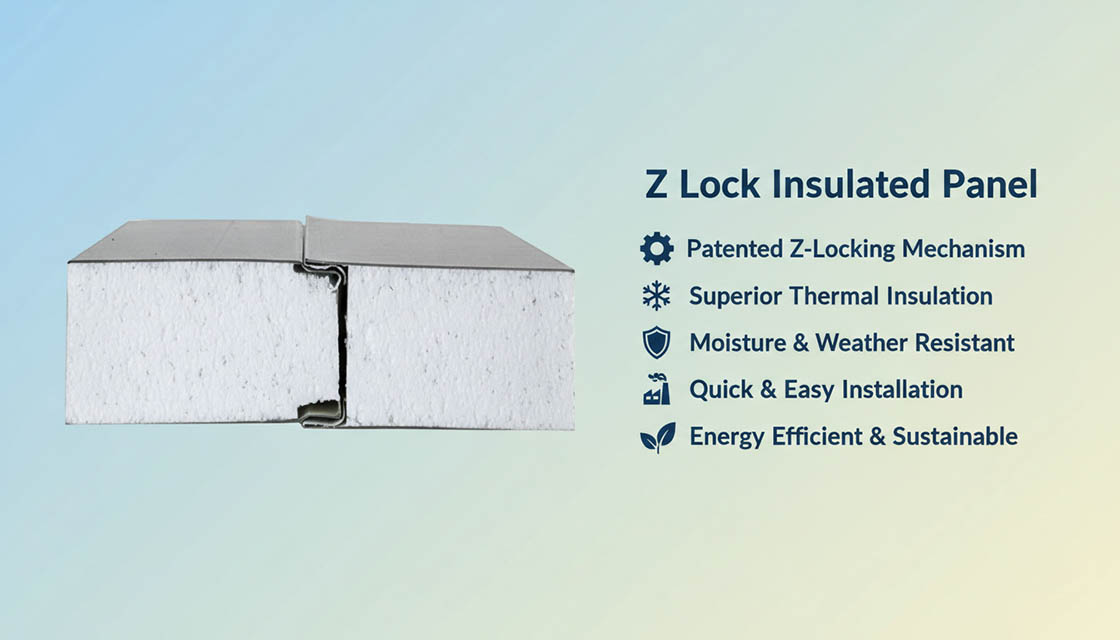
Snap N Lock Insulated Panel

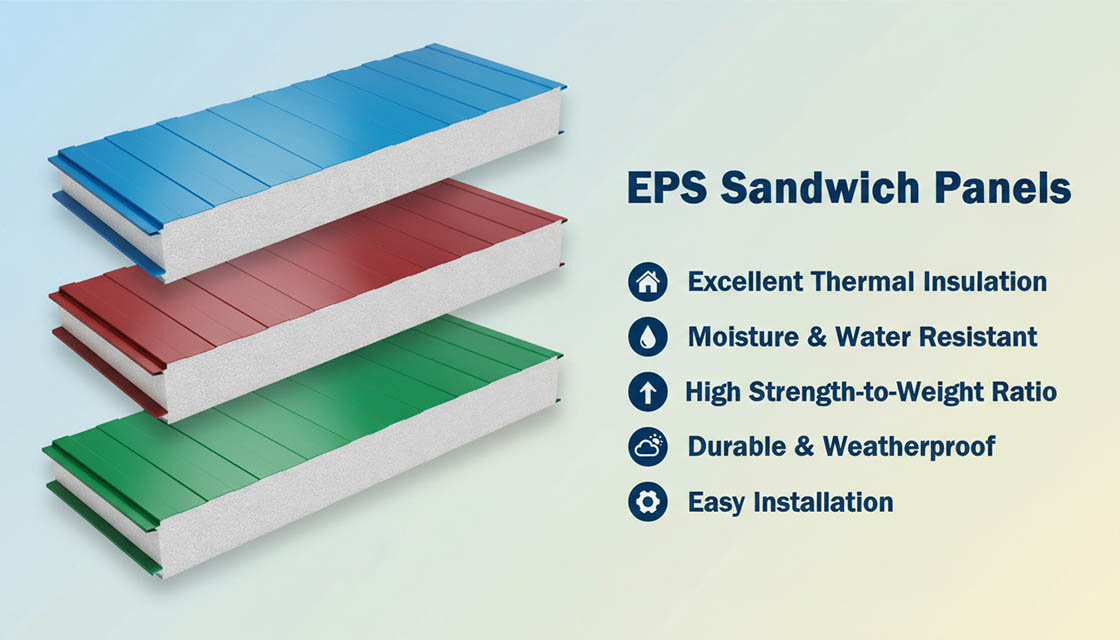
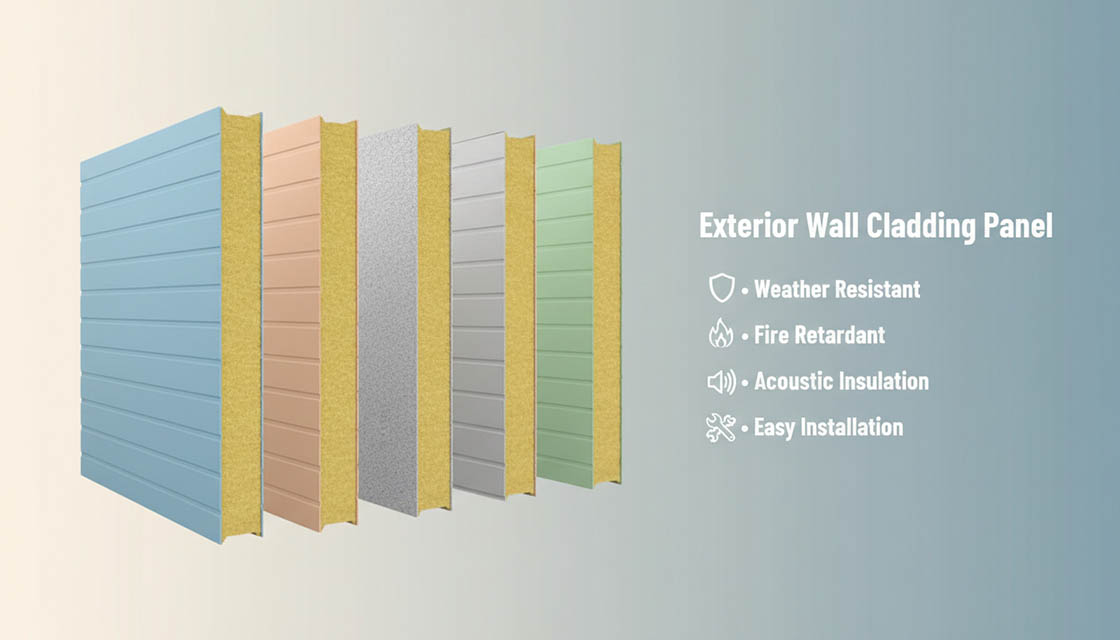
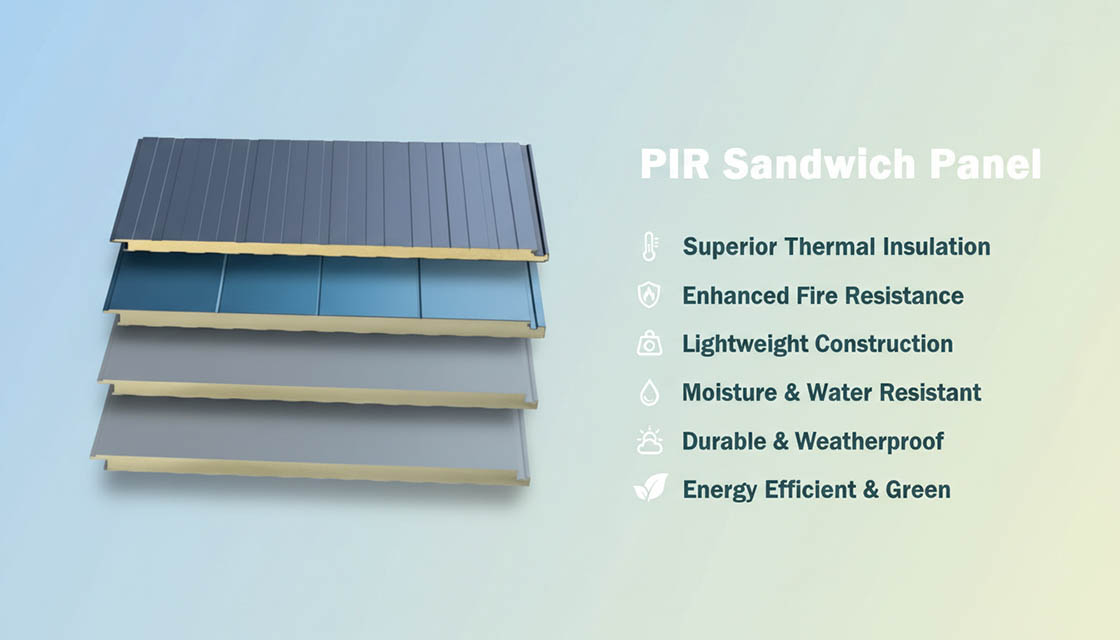
The Snap N Lock insulated panel uses a zero-ODP polyurethane foam core — either PUR or PIR — bonded between metal cladding layers of stainless steel or pre-painted galvanized steel. The key differentiator of this product is its cam-lock joint system: instead of relying solely on tongue-and-groove friction, each panel edge houses an integrated cam-lock fastener that is engaged with an Allen key to mechanically pull adjacent panels together and compress the joint seal. This creates an airtight, thermal bridge-free connection that is faster and more reliable than conventional lapping methods.

The metal cladding offers resistance to moisture, corrosion, and chemicals while meeting international hygiene standards including EC and United States Department of Agriculture (USDA) requirements. This makes the Snap N Lock system well suited for modular cold-room assembly where panel-to-panel air leakage directly affects temperature stability and operating cost.

The panels construct walls, ceilings, and partitions for cold storage facilities operating from +10°C to -40°C. Applications include walk-in cold rooms, freezer rooms, food processing plants, distribution warehouses, and blast freezing tunnels for storing fruits, vegetables, dairy products, meat, seafood, and pharmaceuticals.

Customizable lengths accommodate specific project requirements. Metal cladding options include various RAL chart colors and surface finishes such as flat, narrow rib, or wide rib profiles, with mixed interior and exterior specifications available.
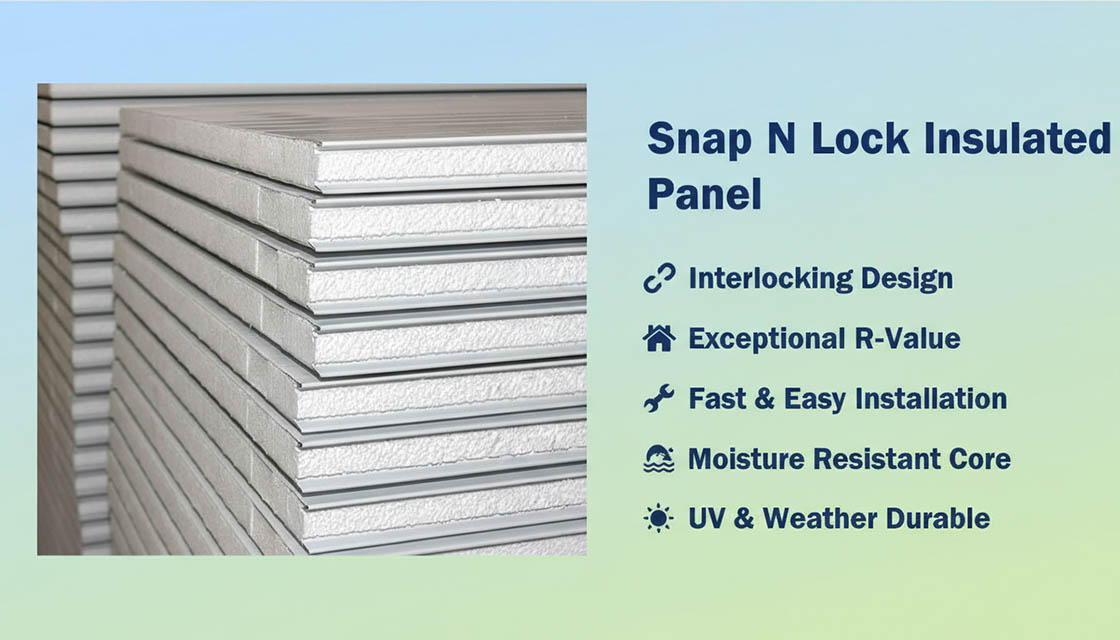
The Leading Snap N Lock Insulated Panel Manufacturer

As the industry leading insulated panel manufacturer for cold storage, RaxPanel provides multiple cold storage panel types for different applications. With over 20 years of experience, our expertise in custom composite panel solutions ensures that every Snap N Lock insulated panel is built to guarantee:

  • Optimal thermal efficiency
  • Superior durability
  • Long-lasting performance

Based in Hebei, China, we leverage our full production capabilities to manufacture panels that meet rigorous international standards.

The Snap N Lock design incorporates a robust tongue-and-groove interlocking system with cam-lock reinforcement, ensuring airtight seals that minimize thermal bridging and maximize energy savings. Our panels are available in a range of thicknesses and surface finishes, all customizable to project specifications.

Trust RaxPanel for precision-engineered, high-performance cold room solutions tailored to your needs. Get High-Quality Snap N Lock Insulated Panels From RaxPanel Today!

Parameter Value
Core Insulation Material Zero-ODP polyurethane (PUR/PIR) foam
Panel Thickness 50mm, 75mm, 100mm, 120mm, 150mm, 200mm
Standard Panel Width 1120mm
Panel Length Customizable (typically up to 12m for shipping)
Cladding Materials Stainless steel, Pre-painted galvanized steel
Surface Finish Options Flat, Narrow rib, Wide rib
Joint System Tongue and groove with integrated cam-lock fasteners
Fastening Tool Allen key
Thermal Conductivity (λ-value) ≤ 0.024 W/(m·K)
Core Density 42 ±2 kg/m³
Compressive Strength ≥ 160 kPa
Bonding Strength > 0.1 MPa
Fire Resistance Rating B1 / B2 (depending on specification)
Operating Temperature Range +10°C to -40°C
Hygiene Standards EC, USDA (food-safe)
RAL Color Options Available
Installation Method Snap-together cam-lock system
Typical Applications Cold rooms, freezer rooms, food processing plants, pharmaceutical storage, blast freezing tunnels


    This site is protected by reCAPTCHA and the Google Privacy Policy and Terms of Service apply.

    Related Products

    Snap N Lock Cam-Lock Insulated Panel Engineering Guide

    Pro Tip: Cam-Lock Compression Seal vs Friction Fit
    Each panel edge houses an internal cam-lock fastener. Inserting an Allen key and rotating 90 degrees engages hooks that pull adjacent panels together with measurable compressive force, crushing the EPDM gasket into a continuous airtight vapor seal. Unlike tongue-and-groove friction joints that rely on panel tolerance, cam-locks actively compress the joint regardless of minor dimensional variation.

    1. How the Cam-Lock Joint System Works

    Each panel edge contains a steel cam-lock mechanism cast into the foam core during manufacturing. One side has a cam with a hook; the mating side has a receiver loop. After aligning the tongue-and-groove edges, an Allen key (typically 5mm hex) is inserted into the access hole and turned 90 degrees. The cam rotates, drawing the hook into the receiver and pulling the two panel faces tight against the internal gasket.

    2. PUR vs PIR Core: Which Insulation for Your Temperature Zone?

    Core Type Thermal Conductivity Best Suited For
    PUR (Polyurethane) 0.020 – 0.022 W/m-K Deep freezers (-40 C), blast tunnels, maximum insulation per thickness
    PIR (Polyisocyanurate) 0.022 – 0.024 W/m-K Food processing plants, facilities requiring stricter fire reaction ratings

    Both cores use zero-ODP cyclopentane blowing agents and closed-cell structure. PUR offers the lowest lambda values in the catalog; PIR trades a small thermal penalty for improved char-forming behavior under heat exposure, meeting B1 reaction-to-fire classification per DIN 4102.

    3. Panel Thickness Selection by Temperature Zone

    Selecting the correct thickness keeps conductive heat gain through walls below 10 W/m2, the threshold most cold storage design engineers use for energy-efficient operation:

    Application Internal Temp Recommended Thickness
    Walk-in cooler (vegetables, dairy) +2 to +10 C 50 – 75 mm
    Chiller room (meat processing) -5 to +2 C 75 – 100 mm
    Freezer room (frozen storage) -20 to -10 C 100 – 150 mm
    Blast freezer / deep storage -40 to -20 C 150 – 200 mm

    4. Cladding Selection for Hygiene-Critical Environments

    Cladding Options by Application:

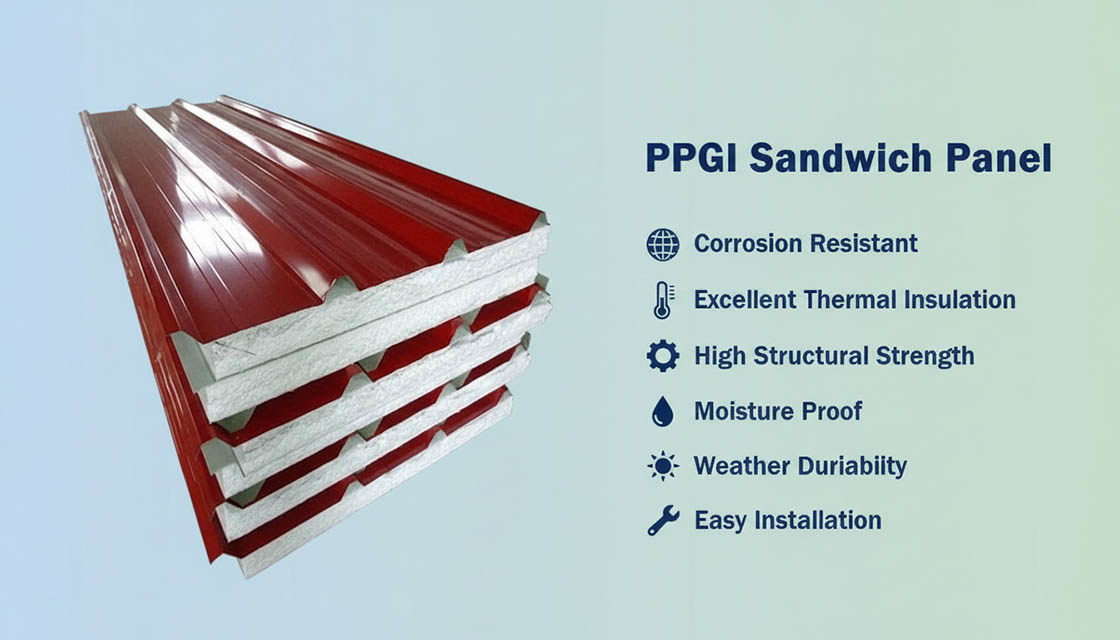
    • Pre-painted galvanized steel (PPGI): Standard for dry storage, distribution warehouses, and cost-sensitive cool rooms. Available in RAL colors with polyester or PVDF coatings.
    • Stainless steel 304: Required in food processing areas subject to daily washdown, meat and dairy handling zones, and clean rooms where surface bacteria control is mandatory.
    • Stainless steel 316: Coastal installations, pharmaceutical storage, and areas exposed to chemical cleaning agents or salt spray.

    5. On-Site Assembly with Cam-Lock: Sequence and Sealants

    Panels arrive cut to length with cam-lock receivers pre-installed. The installation sequence: position the first panel plumb and level, bring the second panel into the tongue-and-groove alignment, insert the Allen key into each cam port along the joint, rotate 90 degrees to lock. Apply a continuous bead of cold-room silicone sealant (rated to remain flexible at -30 C) along the groove before engaging each cam. For freezer applications below -20 C, a secondary seal on the warm side of the joint prevents vapor infiltration that causes condensation and ice formation in the joint.

    6. Where Are Snap N Lock Cold Room Panels Most Commonly Installed?

    Walk-In Coolers and Freezer Rooms

    Modular cold rooms for supermarkets, restaurants, and convenience stores operating at +5 C to -25 C.

    Food Processing and Pharmaceutical

    Hygiene-regulated facilities with USDA and EC compliance, requiring SS304 cladding and washdown-resistant surfaces.

    Frequently Asked Questions

    1. How does the cam-lock joint differ from a standard tongue-and-groove panel?
    Tongue-and-groove panels rely on friction fit and manufacturing tolerances. The cam-lock adds an internal steel fastener that, when engaged with an Allen key, actively pulls the two panel edges together and compresses the gasket, creating a more reliable airtight seal regardless of minor panel dimension variation.
    2. Should I choose PUR or PIR core for my cold room?
    PUR offers slightly lower thermal conductivity (0.020-0.022 W/m-K) and is the standard choice for deep freezers. PIR has marginally higher lambda but better fire reaction performance, making it preferable for food processing plants or facilities where local building codes require B1-classified materials.
    3. What panel thickness do I need for a -20 C freezer room?
    For freezer rooms operating at -20 C with an ambient of +25 C (45 C temperature differential), 120mm to 150mm thickness keeps conductive heat gain below the 10 W/m2 design threshold. A 150mm panel is recommended if the freezer has high door-traffic frequency.
    4. When is stainless steel cladding required instead of PPGI?
    SS304 is required in food processing areas subject to daily washdown with water and chemical disinfectants, in meat and dairy handling zones, and where USDA or EC hygiene regulations mandate non-corroding surfaces. PPGI is adequate for dry storage coolers and general cold rooms without washdown requirements.
    5. Can cam-lock panels be disassembled and relocated?
    Yes. By reversing the Allen key, the cam-locks release and panels separate without damage. This allows cold rooms to be expanded, reconfigured, or relocated entirely, which is a significant advantage over permanently bonded or welded panel systems.
    6. What is the standard panel width and maximum length?
    Standard effective widths are 1000mm or 1120mm after joint overlap. Custom lengths are available up to 12 meters for ocean container shipping (40ft HC). Longer lengths reduce the number of joints but require special transport arrangements.
    7. What sealant should be used at panel joints for freezer applications?
    Use a cold-room grade silicone sealant that remains flexible at -30 C and is food-safe certified. Apply a continuous bead in the tongue groove before cam-lock engagement. For freezers below -20 C, add a secondary vapor seal on the warm side of the joint to prevent condensation migration.