Stainless Steel Sandwich Panel

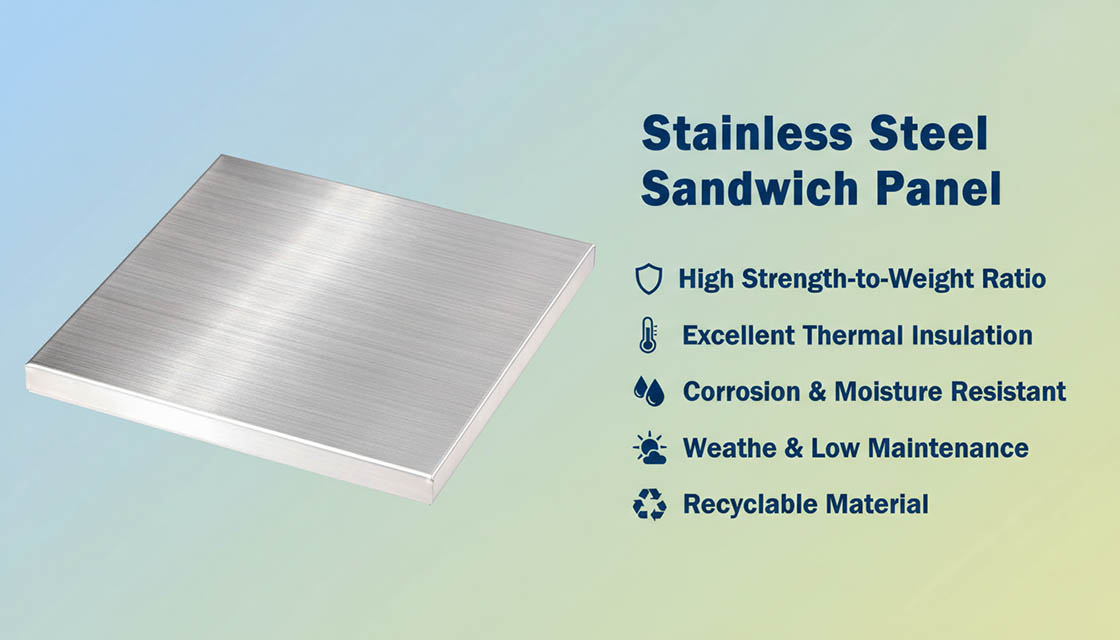
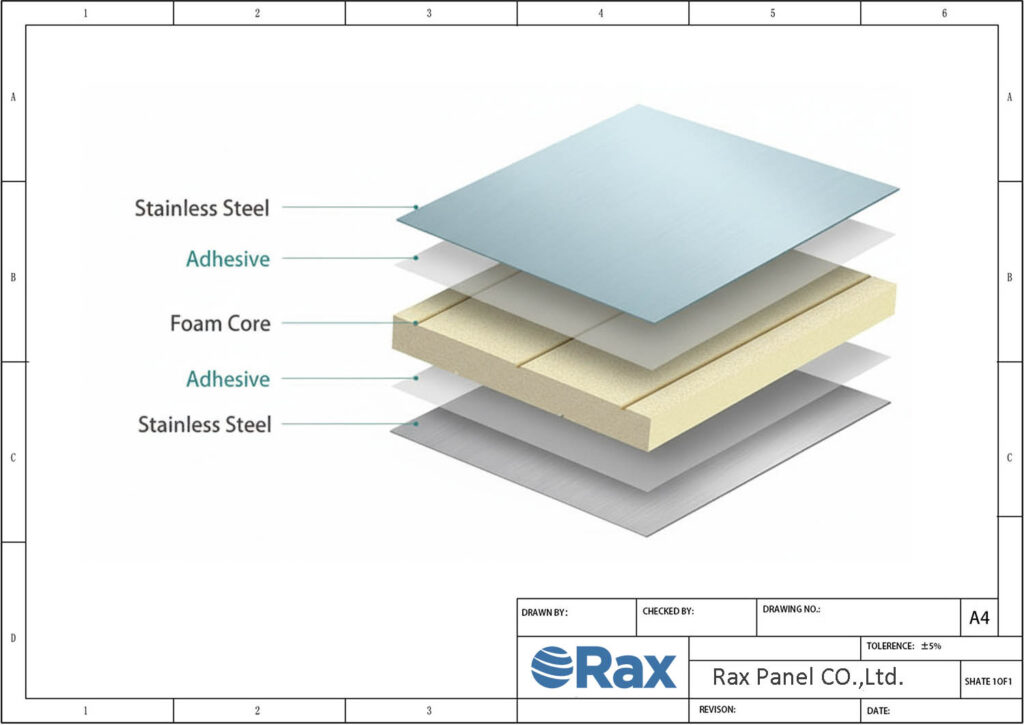
Stainless steel sandwich panels use SS304 or SS316 as the facing material instead of standard pre-painted steel. The facing material is the defining feature of this product — the core can be PIR foam, rockwool, or EPS depending on the fire rating and insulation required.

SS304 (18% chromium, 8% nickel) is the standard grade for food processing, dairy, and pharmaceutical facilities. SS316 (with 2-3% molybdenum) provides better resistance to chloride corrosion and is specified for marine environments and chemical plants. Stainless steel facings can be supplied with brushed, mirror, or 2B mill finishes.

The non-porous stainless surface is hygienic, easy to clean, and resistant to most cleaning chemicals and disinfectants. This makes these panels the standard choice for cleanroom walls, food processing rooms, and hospital operating theaters where surface hygiene is regulated.

Panel thicknesses range from 50mm to 200mm with effective widths of 950mm, 1000mm, and 1150mm. Standard facing thickness spans 0.4mm to 0.8mm. The materials contain zero ozone-depleting substances and are fully recyclable at end of life.
Global Supplier of Custom Stainless Steel Composite Panels

We supply SS304 and SS316 faced sandwich panels from our Hebei facility, primarily for food processing, pharmaceutical, and chemical industry clients. Both 2B mill finish and brushed (#240/#320) surfaces are available.

For core materials, we offer PIR foam (for temperature-controlled rooms), rockwool (for fire-rated envelopes), and EPS (for budget partitions). Panels can be supplied with cam-lock edges for modular cleanroom assembly or standard tongue-and-groove for wall and roof installation.

Each stainless coil delivery is verified for grade composition (via spectrometer) and surface finish before lamination. Panel edges are sealed with silicone to prevent core moisture ingress during washdown cycles.

Typical applications include:

  • Food and dairy processing room walls and ceilings
  • Pharmaceutical cleanrooms and laboratories
  • Hospital operating theaters and sterile areas

Contact us with your project hygiene and fire rating requirements.

Parameter Category Parameter Value
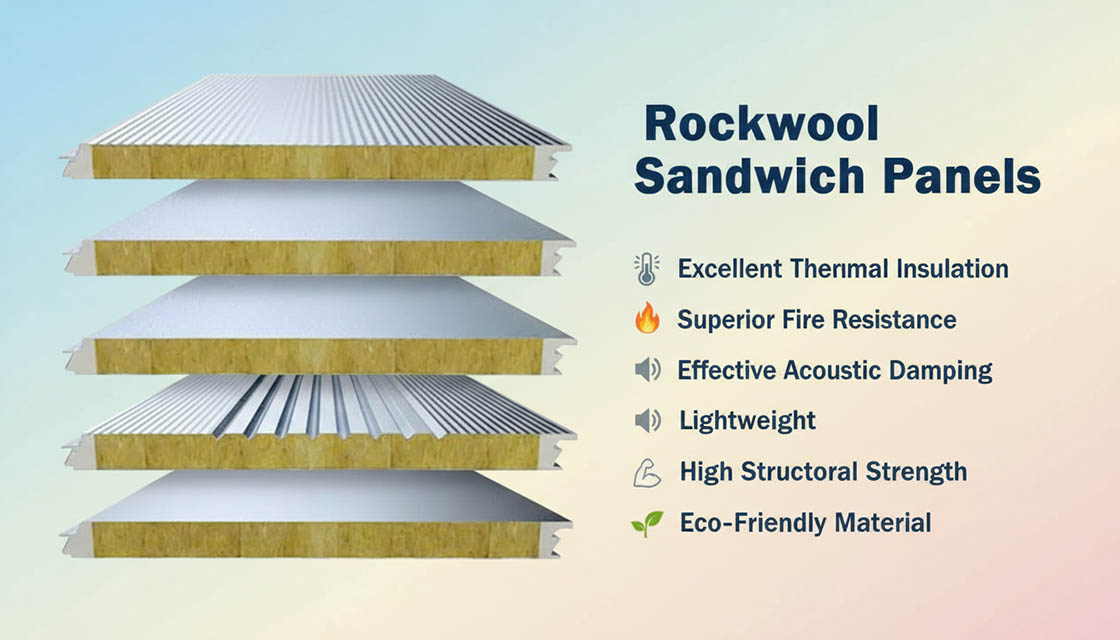
Core Insulation Core Material Rock Wool (Basalt)
Core Density 100 – 140 kg/m³
Thermal Conductivity (λ) 0.043 W/mK
Fire Resistance Classification Class A1 (Non-combustible)
Fire Resistance Rating (EI) Up to EI 120
Acoustic Insulation Up to 35 dB
Water Absorption (by mass) ≤ 0.5%
Panel Construction Facing Material Stainless Steel
Steel Sheet Thickness 0.4 – 0.8 mm
Available Panel Thickness 50, 75, 100, 125, 150, 200 mm
Standard Panel Width 950, 1000, 1150 mm
Maximum Panel Length 12,000 mm
Panel Areal Weight (approx.) 15.5 – 36.5 kg/m²
Performance & Certification Thermal Transmittance (U-value) 0.20 – 0.63 W/m²K
Corrosion Resistance C1, C2, C3
Environmental Certifications Free from CFCs, HCFCs, Asbestos
Service Life 25+ years


    This site is protected by reCAPTCHA and the Google Privacy Policy and Terms of Service apply.

    Related Products

    Stainless Steel Sandwich Panel Engineering & Hygiene Guide

    Stainless steel sandwich panels are engineered for strict sterile facilities, food processing plants, pharmaceutical laboratories, and marine bulkheads requiring 100% rust-free longevity and resistance against harsh chemical washdowns. Featuring Grade 304 or Grade 316L stainless steel facings bonded to structural PIR, Rockwool, or Honeycomb cores, these composite panels comply with GMP, FDA, HACCP, and ISO 14644 cleanroom hygiene mandates.

    💡 Pro Tip: 304 vs 316L Molybdenum Chloride Resistance
    At RaxPanel, we recommend Grade 316L stainless steel facings for facilities utilizing daily chlorine-based disinfectants or vaporized hydrogen peroxide (VHP) sterilizers. The 2-3% Molybdenum content in 316L prevents microscopic pitting corrosion that can harbor bacterial colonies.

    1. Should You Choose Grade 304 or Grade 316L Stainless Steel Facings?

    Selecting the correct stainless steel alloy ensures your wall and ceiling panels resist continuous sanitation without surface dulling, staining, or pitting:

    Feature / Alloy Grade 304 Stainless Steel Grade 316L Marine/Pharma Stainless
    Chemical Composition 18% Chromium, 8% Nickel 16% Cr, 10% Ni, 2-3% Molybdenum
    Corrosion Resistance High resistance against moisture & mild soaps Superior immunity against chlorides & acids
    Sanitation Protocol Daily hot water & detergent washdowns VHP, caustic soda, & acidic sterilization
    Primary Environments Bakeries, dairy, beverages, cleanroom walls Meat processing, offshore vessels, pharma labs

    2. Which Surface Finishes Maximize Cleanroom Hygiene and Cleaning Ease?

    Available surface finishes include 2B smooth mill finish, 240-grit brushed satin (No.4 finish) for low reflection, or 8K mirror polish for specialized optical cleanrooms.

    3. How Do Core Options Impact Fire and Thermal Performance?

    🔥 Core Selection Matrix:

    • Rockwool Core: A1 Non-Combustible firewalls for hazardous chemical cleanrooms.
    • PIR Core: Maximum R-value thermal efficiency for sub-zero food processing lines (-30°C).
    • Aluminum Honeycomb Core: Ultra-flat structural rigidity for modular cleanroom ceiling grids.

    4. Where Are Stainless Steel Sandwich Panels Most Commonly Installed?

    🥩 Meat & Seafood Processing Facilities

    High-pressure washdown areas subjected to salt brine and animal fat exposure.

    💊 ISO 5 / Class 100 Pharmaceutical Cleanrooms

    Flush, non-particle shedding wall partitions and walk-on ceiling systems.

    5. How Flush-Joint Gaskets Ensure Zero Dust Accumulation

    Panels utilize flush-fitting tongue-and-groove joint profiles filled with food-grade silicone sealant or continuous PVC coving profiles, eliminating 90° sharp corners where dust or mold could harbor.

    Frequently Asked Questions (FAQS)

    1. Why is Grade 316L recommended over Grade 304 for meat and pharmaceutical processing?
    Grade 316L contains 2-3% Molybdenum, providing superior resistance against pitting corrosion caused by salt, brine, and aggressive chemical sterilizers (VHP/chlorine).
    2. What hygiene certifications do RaxPanel stainless steel sandwich panels satisfy?
    Our stainless steel panels comply with FDA, GMP, HACCP, and ISO 14644 cleanroom sanitation and non-particle-shedding standards.
    3. What stainless steel skin thickness options are manufactured?
    Standard stainless steel skin gauges range from 0.4mm to 0.8mm, with 0.5mm being the industry standard for cleanroom wall partitions.
    4. Can stainless steel sandwich panels withstand high-pressure steam washdowns?
    Yes. Stainless steel skins bonded with high-temp polyurethane adhesives resist continuous 100°C steam and 100 bar high-pressure water jetting without skin delamination.
    5. What core options are available for stainless steel sandwich panels?
    Core options include PIR (for cold storage insulation), Rockwool (for A1 firewalls), or Aluminum Honeycomb (for ultra-flat cleanroom ceilings).
    6. What surface finishes are available for stainless steel skins?
    Available finishes include 2B smooth mill finish, No.4 brushed satin, embossed anti-scratch pattern, and 8K mirror finish.
    7. How are panels packaged to prevent scratches during transport?
    Each stainless skin is covered with a heavy-duty laser-cut protective PE film, separated by foam interleaving, and shipped in rigid wooden crates.


    Sandwich Panel Manufacturer

    Custom Core & Skin • Tailored Dimensions


      This site is protected by reCAPTCHA and the Google Privacy Policy and Terms of Service apply.