
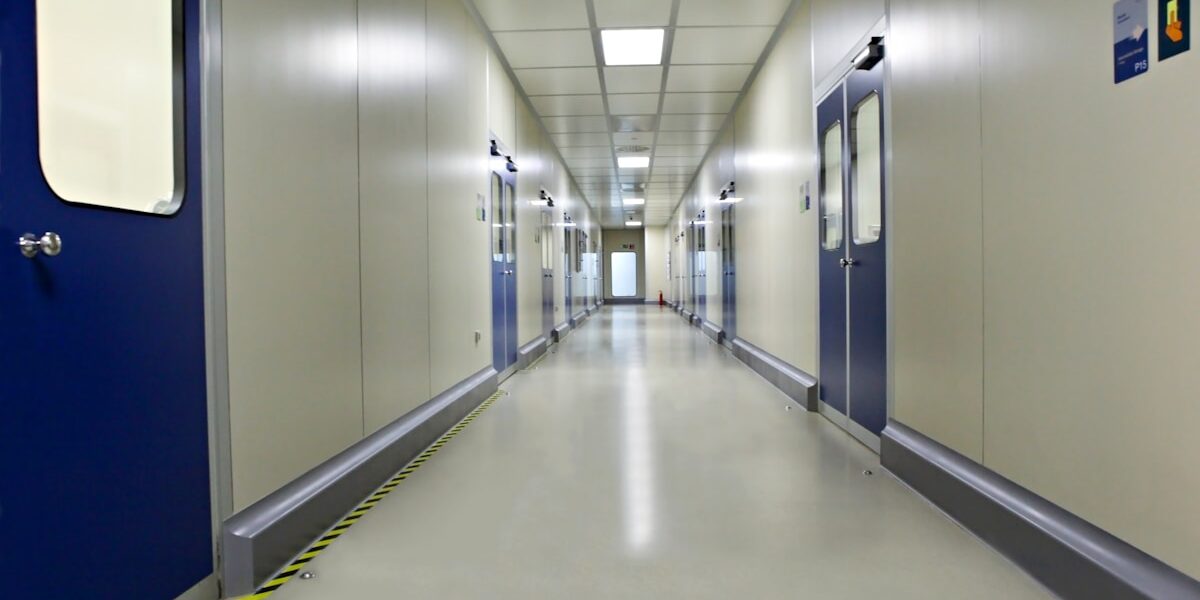
Every pharma manufacturer I’ve worked with has faced the same nightmare: spec sheet says ISO 7, auditor reads ISO 6. The difference between those two classes isn’t just a number on a report. It’s the cost of retrofitting HVAC mid-project or restarting validation after a failed audit. A clean room’s class number follows a logarithmic scale defined by ISO 14644-1 — an ISO class 5 room permits no more than 10^5 particles per cubic meter, and each step down multiplies that limit by ten. One wrong digit on your specification and you’re looking at six figures in rework.
This article cuts through the confusion between ISO, Fed-Std, and EU GMP grading systems — the three frameworks that most facility planners struggle to reconcile. We break down exactly which class each industry actually requires, from pharma and biopharma to medical devices, semiconductors, and food processing. You’ll also see the four most common selection mistakes that drive cost overruns, including the trap of over-specifying beyond what your process truly demands. At RaxPanel, we’ve seen projects derailed by every one of them. Pick the right class on the first pass, and you’ll pass certification without retrofitting a single panel.
What Is a Clean Room Class?
What a Class Number Actually Measures
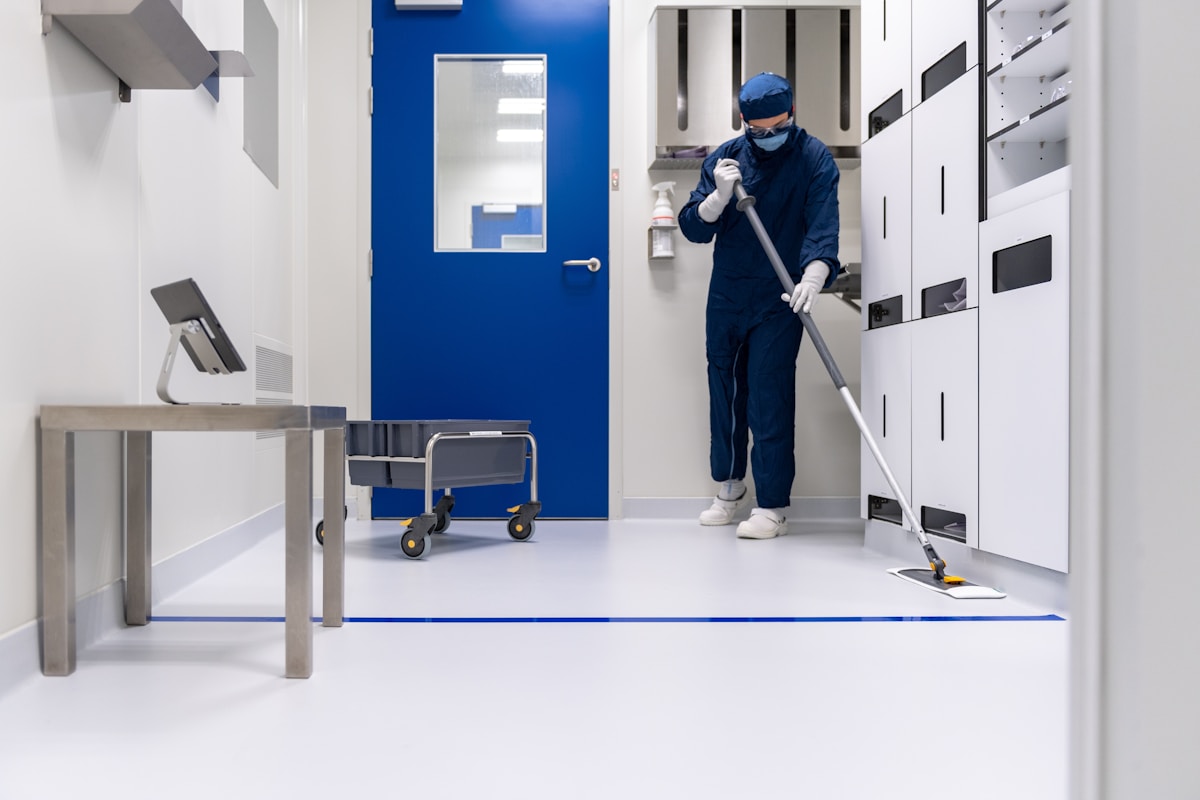
A clean room class number is a concentration limit, not a description of the room’s construction. Under ISO 14644-1, each class defines the maximum allowable count of airborne particles of specified sizes per cubic meter of air. The number itself is a logarithmic index: ISO 8 permits more particles per cubic meter than ISO 7, which permits more than ISO 6, and so on.
The measurement is size-specific. Standards track particles in multiple size bins — typically ≥0.1 µm, ≥0.2 µm, ≥0.3 µm, ≥0.5 µm, ≥1.0 µm, and ≥5.0 µm. A room can pass one bin and fail another. That is why a class number alone is never sufficient for a specification; the full particle-size table must be declared, and the test state (at rest or operational) must be stated alongside it.
We see this confusion in pre-tender conversations constantly. A buyer will say, “I need an ISO 7 room,” without specifying which particle sizes are controlled or whether the requirement is at rest or during active production. Both states are valid under ISO 14644-2, but they carry very different HVAC and envelope implications. The certification state you declare first determines everything that follows — airflow design, filtration, and yes, the panel specification.
How Cleanliness Levels Scale with Class Numbers
ISO 14644-1 uses a base-10 logarithmic scale. Each increase of one class number allows approximately ten times more particles in the controlling size bin. So ISO 7 is roughly ten times cleaner than ISO 8, and ISO 6 is roughly ten times cleaner than ISO 7. This is fundamentally different from the old Fed-Std 209E system, where “Class 100” and “Class 1,000” also stepped by factors of ten, but the naming convention was based on particles per cubic foot rather than per cubic meter.
The practical consequence for facility planners is steep. Moving from ISO 8 to ISO 7 is not a marginal upgrade — it is a tenfold reduction in permitted particle concentration. In HVAC terms, that typically means increasing air changes per hour by a factor of three to five, enlarging HEPA filter banks, and redesigning return-air layouts. The energy and capital cost delta between adjacent ISO classes is where most first-time clean room budgets fail.
Our engineers see this in pre-tender budgets almost every quarter. A planner will specify ISO 7 “to be safe” for a process that only requires ISO 8, and the HVAC system sized for that over-specification runs at 30–60 air changes per hour instead of the 10–25 that ISO 8 demands. The room passes certification, but the lifetime energy cost is roughly doubled for no operational benefit. We always advise clients to declare the minimum class their process actually requires before any envelope or HVAC design begins.
Clean Room Class Versus Ordinary Room Standards
An ordinary office, warehouse, or production floor has no controlled particle limit. Ambient particle concentrations in such spaces typically fall in the range of ISO 9 to ISO 11 territory for the ≥0.5 µm bin, but this is never measured, certified, or maintained. HVAC in these spaces is designed for thermal comfort and basic ventilation, not for particulate control or pressure differentials.
The distinction matters because some buyers assume that adding a few HEPA filters to an existing room will “make it a clean room.” It will not. ISO classification requires a defined envelope, controlled airflow patterns, pressurization relationships between adjacent spaces, monitored particle counts, and documented operating procedures. The wall and ceiling panels are one component of that system — they provide a smooth, non-shedding surface that reduces particle generation and simplifies cleaning — but they cannot substitute for the HVAC and procedural controls that actually define the class.
We manufacture GRP-faced sandwich panels with gelcoat skins that are smooth, non-porous, and designed to minimize particle shedding. In our experience, rooms built with properly specified sealed-joint panel systems hold their certified class more consistently between recertification cycles than rooms built with traditional stick-built methods. But the panel system does not certify the room. Your HVAC designer and your validation engineer do that. The panels simply give you a better envelope to work with.
ISO, Fed-Std, and EU GMP: How Clean Room Classes Compare
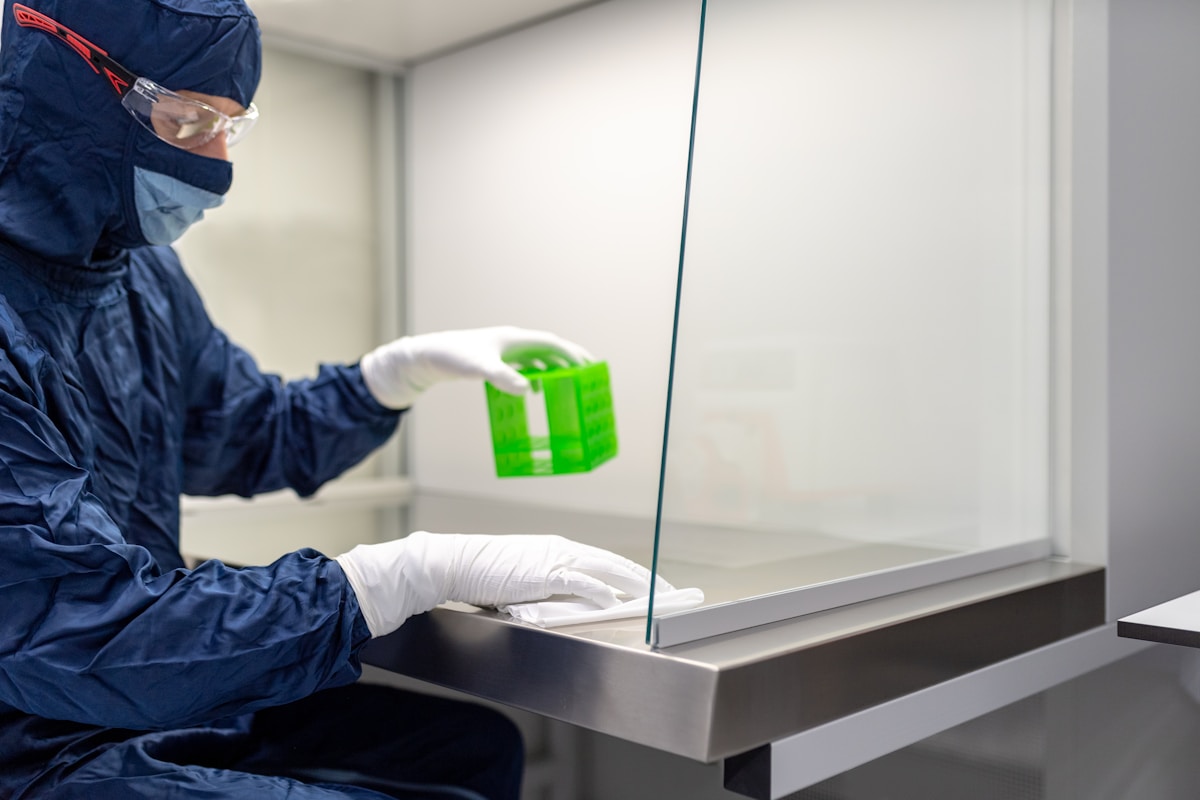
Three separate classification systems govern clean room design worldwide. Understanding how ISO 14644-1, Fed-Std 209E, and EU GMP grades translate into one another is essential for compliance, facility planning, and avoiding costly misclassification.
ISO 14644-1 Classification System Explained
ISO 14644-1 is the current international standard for clean room classification. Published by the International Organization for Standardization, it replaced fragmented national standards with a single, scientifically grounded framework. The system defines cleanliness by measuring the concentration of airborne particles per cubic meter of air, using a logarithmic scale where each class number represents a tenfold reduction in particle count.
The classification ranges from ISO 1 (the cleanest environment, used in advanced semiconductor fabrication) to ISO 9 (the least stringent, suitable for general manufacturing support areas). Each class specifies maximum allowable particle concentrations for specific size thresholds, typically measured at 0.5 micrometers and 5.0 micrometers. The standard also defines testing methods, sampling protocols, and reclassification intervals to ensure ongoing compliance.
One of the most important aspects of ISO 14644-1 is that it decouples classification from airflow metrics. Earlier standards tied cleanliness directly to air changes per hour, but ISO recognizes that particle removal depends on multiple factors including room geometry, filter efficiency, occupancy patterns, and process-generated contamination. This means two rooms with identical air change rates can fall into different ISO classes depending on their actual particle performance.
When specifying an ISO class, always clarify whether the requirement applies to “at rest” conditions (equipment installed, no personnel) or “in operation” conditions (full production running). The permissible particle counts differ significantly between these states, and regulatory bodies increasingly require both measurements.
Fed-Std 209E Legacy Standards Overview
Federal Standard 209E was the United States’ national clean room classification standard until it was officially withdrawn in 2001. Despite its retirement, the standard remains deeply embedded in industry practice. Many existing facilities, certification documents, and regulatory references still cite Fed-Std 209E classifications, and professionals frequently use its terminology in casual conversation.
The key difference between Fed-Std 209E and ISO 14644-1 lies in their measurement units. Fed-Std 209E defined classes based on the maximum number of particles equal to or larger than 0.5 micrometers per cubic foot of air. The class number itself corresponded directly to that particle limit, which is why you will encounter designations like “Class 100” or “Class 10,000” in legacy documentation.
Understanding Fed-Std 209E remains practically important for several reasons. First, many regulatory agencies and quality auditors still accept or request compliance with this standard for facilities undergoing inspection. Second, existing clean room certifications may reference 209E classes, and converting between systems requires accurate cross-referencing. Third, some equipment manufacturers and filter suppliers continue to rate products using 209E nomenclature, making familiarity with both systems necessary for procurement and specification work.
Never assume that a Fed-Std 209E class number and an ISO class number represent identical cleanliness levels. While they correlate closely, the conversion is not always one-to-one, and misalignment between the systems can lead to non-compliance during regulatory audits. Always verify the applicable standard with your certification body before specifying or certifying a facility.
EU GMP Clean Room Grade Requirements
EU GMP, or European Union Good Manufacturing Practice, establishes grade-based cleanliness requirements specifically for pharmaceutical and biopharmaceutical manufacturing. Unlike ISO 14644-1, which provides a universal framework, GMP grades are risk-based and tied directly to the severity of the manufacturing process. The system was significantly revised under EU GMP Annex 1, which was updated in 2022 to align more closely with ISO classification while introducing stricter operational requirements.
The four GMP grades—A, B, C, and D—represent a descending hierarchy of contamination control. Grade A designates the highest risk zone where aseptic processing occurs, such as filling operations or open vessel exposure. Grade B serves as the background environment for Grade A areas. Grades C and D cover progressively less critical operations, including component preparation, media preparation, and packaging activities that carry lower contamination risk.
A critical distinction between GMP grades and ISO classes is that GMP requirements extend beyond particle counting. The European Medicines Agency and national competent authorities also mandate monitoring for viable microorganisms, surface contamination, personnel monitoring, and environmental trend analysis. A facility might meet ISO particle limits but still fail GMP compliance if microbial controls are inadequate. This is why pharmaceutical manufacturers often design to both ISO standards and GMP requirements simultaneously.
Cross-Reference Guide Between ISO, Fed-Std, and GMP Grades
Navigating between ISO, Fed-Std 209E, and EU GMP classifications requires understanding that these systems were developed independently for different regulatory and geographic contexts. The relationships between them are approximate rather than exact, and the most reliable cross-references are those established by official standards bodies and recognized in regulatory guidance documents.
The foundational correspondence links ISO 5 with Fed-Std 209E Class 100 and EU GMP Grade A. This represents the threshold where particle concentration reaches levels suitable for aseptic processing and high-sensitivity manufacturing. Similarly, ISO 7 aligns with Class 10,000 and Grade C, while ISO 8 corresponds to Class 100,000 and Grade D. These equivalences form the backbone of most facility specification documents and compliance matrices.
However, professionals must recognize important nuances in these correlations. The GMP Annex 1 revision introduced the concept that Grade B should meet ISO 5 conditions “at rest,” which differs from the continuous dynamic monitoring requirements for Grade A. Additionally, Fed-Std 209E classified cleanliness based on a single particle size threshold, while ISO 14644-1 evaluates multiple size ranges simultaneously. This means a room that appears equivalent under one system may reveal different performance characteristics under the other.
📋 Actionable Steps
Frequently Asked Questions
Which classification system should I use for a new pharmaceutical facility in the European Union?
EU GMP grades are mandatory for pharmaceutical manufacturing within the European Economic Area. However, GMP Annex 1 explicitly references ISO 14644-1 as the measurement methodology, meaning your facility must comply with both systems simultaneously. GMP defines the required grades based on process risk, while ISO 14644-1 provides the technical framework for testing and classification. Most EU-based manufacturers specify their clean rooms using GMP grades with ISO class equivalents documented in technical files.
Can I use ISO 14644-1 classifications for FDA-regulated facilities in the United States?
The FDA accepts ISO 14644-1 as a valid classification standard for clean room certification. While the FDA formerly referenced Fed-Std 209E in its guidance documents, it has increasingly aligned with ISO standards in recent regulations and inspection practices. Many pharmaceutical and medical device manufacturers now specify ISO classes in their facility designs and quality systems. However, some FDA inspectors may still use 209E terminology during inspections, so maintaining familiarity with both systems remains prudent for US-based operations.
Why do ISO 7 and ISO 8 clean rooms have such different cost profiles?
The cost difference between ISO 7 and ISO 8 primarily stems from the tenfold reduction in allowable particle concentration. Achieving ISO 7 requires more aggressive filtration, higher air change rates, tighter pressure control, and more frequent monitoring compared to ISO 8. HVAC systems sized for ISO 7 conditions typically consume significantly more energy and require larger air handling units. Additionally, ISO 7 facilities demand more rigorous personnel gowning protocols and environmental monitoring programs, which increase both capital and operational expenditures.
What ISO clean room class is required for medical device manufacturing?
Medical device classification drives clean room requirements more than any single regulatory standard. ISO 13485, the quality management standard for medical devices, references clean room needs but does not prescribe specific classes. Instead, the required classification depends on whether the device is sterile, the risk classification of the device itself, and the manufacturing processes involved. Sterile medical devices typically require ISO 7 or better for assembly areas, while non-sterile devices may only need ISO 8 or controlled general manufacturing environments. The FDA and Notified Bodies evaluate clean room adequacy based on the device’s intended use and risk profile.
How do air changes per hour relate to ISO clean room classes?
ISO 14644-1 does not specify air changes per hour as a classification criterion, which represents a fundamental shift from older standards. While higher ISO classes generally require more air changes to achieve lower particle concentrations, the actual number depends on room volume, filter efficiency, occupancy, and process-generated contamination. A well-designed ISO 8 room might operate effectively with 15 to 20 air changes per hour, while an ISO 7 room could require 40 to 60 or more. However, these are design guidelines rather than standard requirements, and actual performance is validated through particle counting rather than airflow measurements alone.
Is Fed-Std 209E still relevant for clean room specifications today?
Fed-Std 209E was officially withdrawn in 2001, but it remains relevant in practical terms. Many existing facilities were designed and certified to 209E standards, and legacy documentation, equipment specifications, and supplier catalogs still reference it extensively. Regulatory bodies in some jurisdictions continue to accept 209E classifications during inspections, and professionals frequently translate between the systems when evaluating existing facilities. However, new facility designs and certifications should use ISO 14644-1 as the primary standard, with 209E equivalents provided only for historical comparison and stakeholder communication.
Table data unavailable.
What Determines Your Clean Room Class?
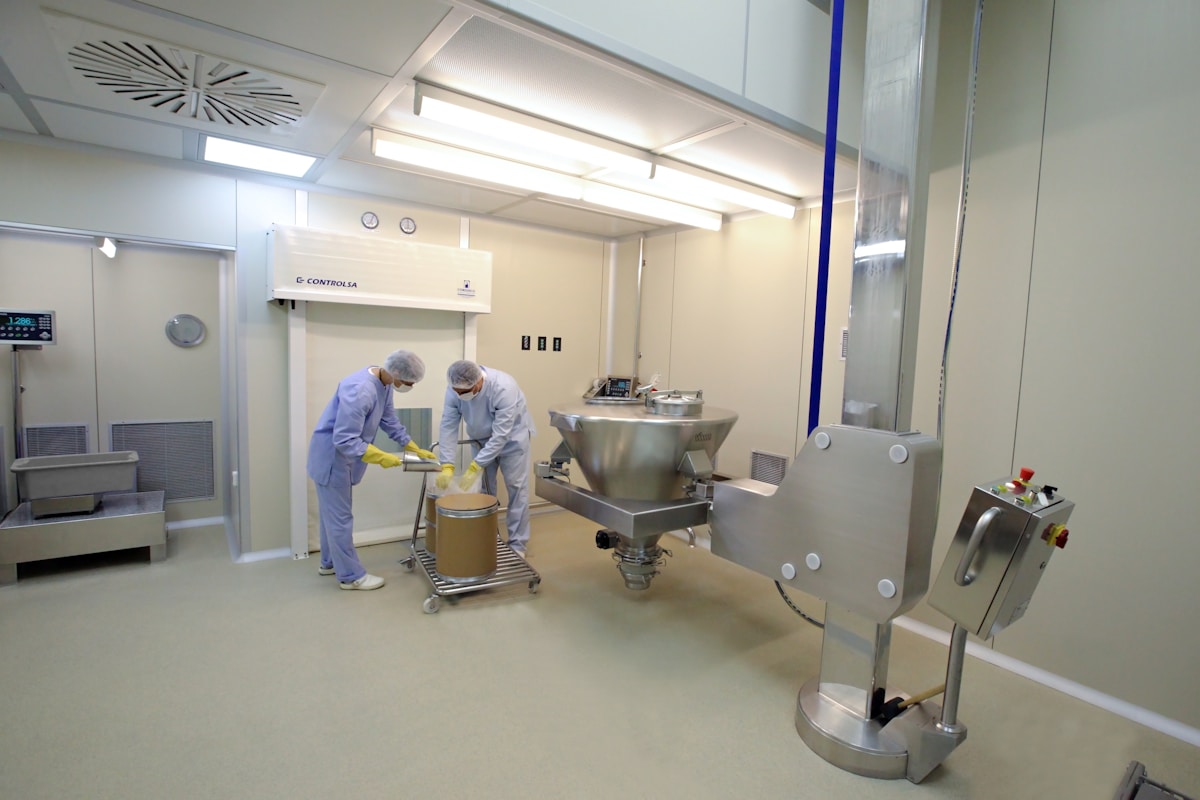
Clean room class is not picked from a chart — it is calculated. Four inputs determine it: how sensitive the process is to particle contamination, where contamination originates inside the facility, which regulations bind the industry, and how production is expected to grow. Answer those four questions first and the correct class falls out of the analysis; skip them, and every benchmark table becomes a guessing game. Below is a reusable decision framework that works before any classification table is opened, followed by a detailed breakdown of each input.
📋 The Pre-Benchmark Decision Framework
- Step 1: Define the “critical particle” — the smallest particle size and quantity that would cause a product defect, a patient risk, or a measurement error. This single answer anchors everything else.
- Step 2: Separate the facility into zones — the critical point (where product is exposed), the background room around it, and support areas. Never assign one class to the entire footprint based on the most sensitive step.
- Step 3: Inventory every contamination source and rank each one by proximity to the critical point and emission rate.
- Step 4: Identify the binding authority — a government regulator, a customer’s quality agreement, or the facility’s own yield economics.
- Step 5: Stress-test the assumption against operating reality: headcount per shift, gowning discipline, material flow, and products planned over the next five years.
- Step 6: Only now open the benchmark tables — to verify the conclusion, not to make it.
Process Requirements That Drive Class Selection
The controlling question is deceptively simple: what is the smallest particle that can ruin the product, and how many can the process tolerate? For a semiconductor lithography step, features are far smaller than a speck of dust, so even trace contamination destroys yield. For an injectable drug, particles above a certain size can harm the patient directly. For precision optics, one embedded speck turns a finished lens into scrap.
Pharma and Biopharma: Which Clean Room Class?
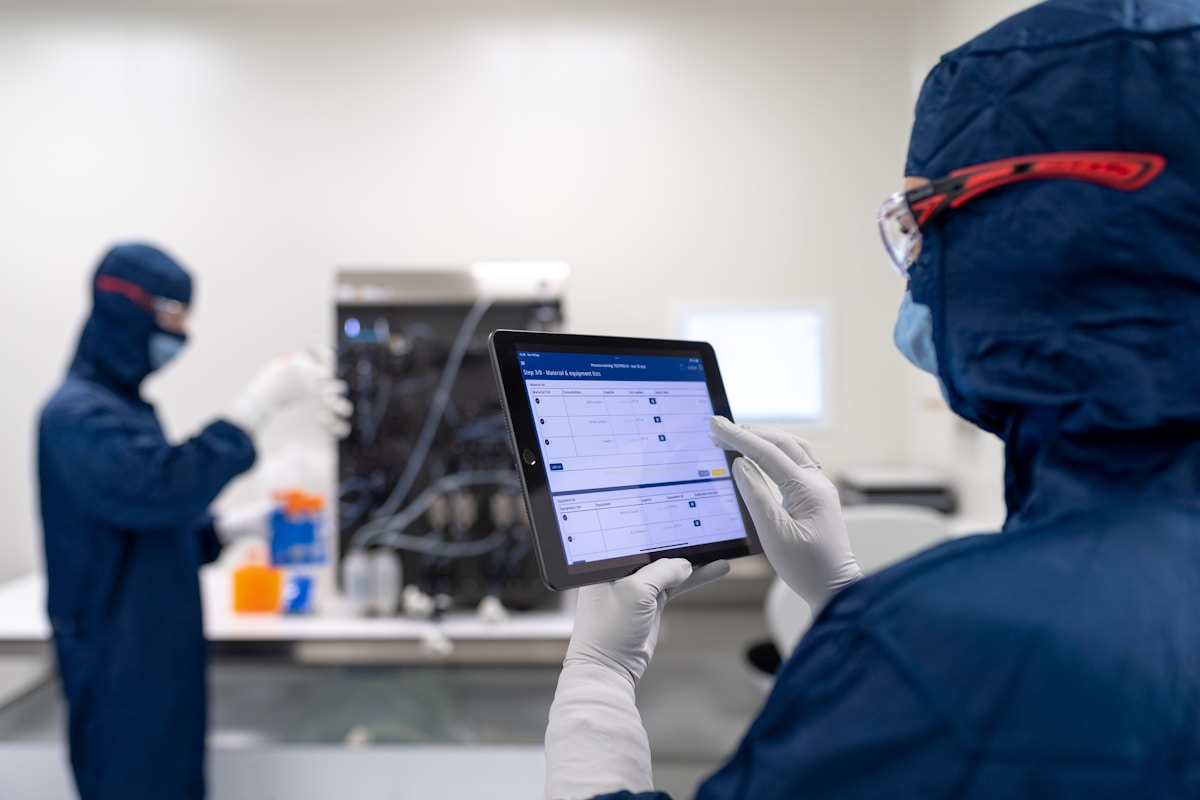
Pharma and biopharma facilities require a tiered classification system—from ISO 5 (Grade A) for aseptic zones down to ISO 8 (Grade D) for support areas—each mapped to EU GMP standards with distinct particulate and microbial limits.
Understanding the GMP Grade Hierarchy
Pharmaceutical and biopharmaceutical manufacturing operates under one of the most stringent regulatory frameworks in industrial cleaning. The EU GMP system divides cleanroom environments into four grades—A, B, C, and D—while the international ISO 14644-1 standard uses numerical classes from 1 to 8. The critical insight most buyers miss is that these systems overlap but aren’t interchangeable. Grade A aligns with ISO 5, while Grade B spans ISO 6 to ISO 7 depending on the operational context. Understanding this mapping isn’t academic—it determines whether your facility passes inspection or faces costly remediation.
Mapping Grades to Real-World Operations
The classification you assign to each zone directly impacts your capital expenditure, operational complexity, and compliance burden. Aseptic filling lines—the heart of biopharma manufacturing—demand ISO 5 conditions within restricted access barrier systems (RABS) or isolators. These are the zones where product is most exposed, and where a single particulate event can compromise an entire batch. The surrounding background environment must maintain Grade B standards, creating a controlled buffer that prevents contamination migration.
Downstream processes like component preparation, tablet manufacturing, and medical device assembly typically operate in ISO 7 (Grade C) environments. These areas handle product indirectly, but still require rigorous control because contamination introduced at this stage can propagate upward through the supply chain. Grade D or controlled not classified (CNC) zones serve as airlocks, gowning areas, and utility corridors—transition spaces that manage the directional flow of personnel and materials between clean and non-clean environments.
One of the most persistent pain points for pharma buyers is the gap between regulatory guidance and practical implementation. EU GMP Annex 1, revised in 2022, introduced significant changes to cleanroom classification expectations, particularly around media fill testing, environmental monitoring, and the definition of Grade A zones. Facilities designed to older interpretations may find themselves non-compliant without obvious visual indicators. The challenge isn’t just meeting particle count thresholds—it’s demonstrating consistent control across dynamic operational conditions.
FDA inspections focus heavily on data integrity and trend analysis. Inspectors don’t simply check whether your cleanroom passes at a single point in time; they examine whether your monitoring program captures real-world variability. This means understanding how class boundaries shift during operational transitions, how personnel movement affects particle counts, and whether your HVAC system can recover within specified timeframes after disturbances. The difference between a compliant facility and a citation-ready facility often comes down to how well you’ve validated these transitional states.
Particulate Control Versus Microbial Management
A fundamental misconception in cleanroom design is treating particulate and microbial control as interchangeable. They’re not. ISO classifications measure particulate matter only—there’s no microbial requirement baked into the standard. EU GMP grades, however, impose separate microbial limits that vary by zone. Grade A environments typically require fewer than one CFU per cubic meter for settle plates, while Grade B allows up to ten CFU. These microbial standards demand different design considerations: surface materials that resist bioburden accumulation, HVAC strategies that minimize recirculation of contaminated air, and gowning protocols that address both particle shedding and microbial load.
The intersection of these two control systems creates specific challenges for facility designers. A room might pass ISO 5 particulate standards but fail GMP Grade A microbial requirements if the surface materials or cleaning protocols aren’t aligned. This is why material selection for wall panels, flooring, and ceiling systems matters just as much as airflow design. Non-shedding, seamless, and chemically resistant surfaces aren’t luxury upgrades—they’re compliance necessities in Grade A and B environments.
Audit Readiness and Documentation Requirements
Preparation for regulatory inspection begins long before the auditor arrives. The documentation burden for pharma cleanrooms is substantial: calibration records for monitoring equipment, qualification reports for HVAC systems, trend analysis of environmental data, and corrective action logs for any excursions. Buyers often underestimate how much of their classification strategy depends on defensible records rather than just physical infrastructure.
A common audit finding involves inadequate justification for class assignment. Inspectors look for evidence that your classification decisions were based on actual process risk assessments, not historical precedent or cost considerations. If you’re operating an ISO 7 area for a process that could reasonably require ISO 6, you need documented risk analysis explaining why the lower classification is sufficient. This documentation should reference product sensitivity, exposure duration, and mitigation measures in place.
Practical Considerations for Class Selection
When determining which cleanroom class your operation requires, start with the product and process, not the other way around. Aseptic fill-finish operations for sterile biologics will almost always require Grade A/ISO 5 conditions at the point of product exposure. Fill-finish for non-sterile products might only need Grade C or D depending on the product’s risk profile. Solid dose manufacturing typically operates in ISO 7 or ISO 8, while raw material handling and packaging might fall into controlled not classified zones.
The cost implications of class selection are significant but often poorly understood. Moving from ISO 8 to ISO 7 can increase HVAC capital costs by 40 to 60 percent and operational costs by 30 to 50 percent due to higher air change requirements and more sophisticated filtration. ISO 5 conditions within RABS or isolators can multiply those costs further. The key is matching class rigor to actual process risk—over-specifying creates unnecessary expense, while under-specifying creates regulatory and quality risk.
Bridging the Gap Between Standards and Reality
The transition from theory to practice in pharma cleanroom classification often reveals gaps that aren’t obvious on paper. An ISO 5 zone might meet particle count requirements during static testing but fail during dynamic operation when personnel are present. This is why requalification under operational conditions is essential, and why your facility design should account for the difference between static and dynamic classifications from the outset.
Pressure differentials are another critical factor that bridges classification systems. ISO standards don’t mandate pressure cascades, but EU GMP requires them to prevent cross-contamination between zones of different grades. A Grade A area must maintain positive pressure relative to Grade B, which must be positive relative to Grade C, and so on. Typical differential requirements range from 10 to 15 pascals between adjacent grades. These pressure relationships must be maintained continuously, not just during qualification testing, which places additional demands on your HVAC control systems and monitoring infrastructure.
Airflow patterns represent another area where classification expectations exceed minimum standards. While ISO 5 can technically be achieved with turbulent airflow if particle counts remain within limits, GMP Grade A environments require unidirectional (laminar) airflow. This distinction matters for both design and validation. Laminar airflow systems require different diffuser configurations, higher air change rates, and more rigorous certification protocols than turbulent systems. Understanding this difference prevents costly redesigns after initial installation.
Common Classification Mistakes in Pharma Facilities
Several recurring mistakes appear across pharma cleanroom projects, many of which stem from treating classification as a one-time decision rather than an ongoing operational consideration. The first is assuming that a single classification applies to an entire room. In reality, a Grade B room might contain Grade A zones (within RABS or laminar flow hoods), creating a mixed-classification environment that requires separate monitoring and control strategies.
Another frequent error is neglecting the classification of support areas. While Grade C and D zones face less scrutiny during inspections, deficiencies in these areas can trigger broader compliance questions. Poor gowning room design, inadequate material airlocks, or insufficient environmental monitoring in support areas often lead to findings that cast doubt on the integrity of the entire facility’s quality system.
The final common mistake involves insufficient consideration of future flexibility. Biopharma processes evolve—new modalities, different sterilization approaches, and changing regulatory expectations can all alter your classification requirements. Designing facilities with modularity in mind, such as adaptable HVAC zoning and scalable monitoring infrastructure, provides insurance against these changes without requiring complete renovation.
| ISO Class | EU GMP Grade | Typical Application | Air Changes/hr | Max Particles ≥0.5 µm/m³ |
|---|---|---|---|---|
| ISO 5 | Grade A | Aseptic filling, open-product zones, RABS/isolator environments | 240–600 (unidirectional/laminar) | 3,520 |
| ISO 6 | Grade B (upper range) | Background support for Grade A, compounding, some biotech fill-finish | 60–100 (turbulent) | 35,200 |
| ISO 7 | Grade B (lower) / Grade C | Component preparation, tablet/capsule manufacturing, medical-device assembly | 30–60 (turbulent) | 352,000 |
| ISO 8 | Grade D | Washing, staging, packaging, general pharma support areas | 10–25 (turbulent) | 3,520,000 |
| ISO 8 (controlled not classified) | Grade D / CNC | Material entry airlocks, gowning anterooms, utility corridors | 10–20 (turbulent) | 3,520,000 |
Medical Devices: Which Clean Room Class Fits?
ISO 7 is the industry default for medical device assembly and packaging. ISO 8 suffices for non-sterile, low-risk processes. EU GMP Grades C and D map directly to these ISO classes for regulatory compliance.
Medical device manufacturers face a persistent classification puzzle. The same facility may handle sterile implants, non-sterile instruments, and packaging lines—each demanding different cleanliness levels. Misalignment between process requirements and cleanroom class selection is one of the most common sources of audit findings, particularly under FDA oversight and EU GMP inspections.
ISO 7: The Standard for Device Assembly and Packaging
ISO 7 (equivalent to former Fed-Std 209E Class 10,000) is the most frequently specified cleanroom class for medical device manufacturing. The classification permits a maximum of 352,000 particles equal to or larger than 0.5 micrometers per cubic meter of air. This threshold provides sufficient particulate control for the majority of device assembly, labeling, and packaging operations.
Sterile medical devices that enter the body or contact compromised tissue require ISO 7 as their baseline processing environment. Air changes per hour in an ISO 7 facility typically range from 30 to 60, depending on layout, occupancy, and HVAC design. Laminar airflow is often employed over critical workstations to maintain unidirectional particle displacement during aseptic operations.
- Device assembly areas: ISO 7 is standard for assembling sterile catheters, syringes, surgical instruments, and implantable devices prior to final packaging.
- Packaging and labeling zones: ISO 7 controls particulate contamination during sterile barrier system assembly, where exposure to ambient particles directly threatens product integrity.
- Component preparation: Cleaning and handling of device components before sterilization typically occurs within ISO 7 or tighter environments.
When ISO 8 Suffices: Non-Sterile and Lower-Risk Processes
ISO 8 (formerly Class 100,000) permits up to 3,520,000 particles ≥0.5μm per cubic meter. While this is an order of magnitude looser than ISO 7, it remains significantly cleaner than ordinary commercial spaces and is entirely appropriate for non-sterile medical device manufacturing.
The cost differential between ISO 7 and ISO 8 construction and operational expenses is substantial, making proper classification a significant factor in facility economics. Air changes per hour in ISO 8 facilities typically range from 10 to 25. This class is commonly specified for processes where the device does not contact intact skin and carries no sterility requirement.
- Non-sterile external devices: Orthopedic braces, surgical drapes, and diagnostic equipment housings often qualify for ISO 8 classification.
- Raw material handling: Receiving and staging areas for components that will undergo downstream sterilization can operate at ISO 8.
- Non-critical packaging: Outer packaging and shipping preparation for devices already in sterile barrier systems may fall within ISO 8 parameters.
- Component manufacturing: Sub-assembly operations for parts that receive terminal sterilization can often be designed to ISO 8 standards.
EU GMP Grades and FDA Alignment for Medical Devices
Medical device manufacturers operating in or exporting to the European Union must align with EU GMP Annex 1 cleanliness classifications. These grades map directly to ISO classes and provide the regulatory framework for aseptic processing.
- EU GMP Grade A: Equivalent to ISO 5—required for high-risk aseptic operations such as filling and stopper handling. This is the most stringent classification and demands laminar airflow at all critical points.
- EU GMP Grade B: Equivalent to ISO 5 at rest—serves as the background environment for Grade A zones in aseptic processing areas.
- EU GMP Grade C: Equivalent to ISO 7—appropriate for medium-risk aseptic operations and many sterile device assembly processes.
- EU GMP Grade D: Equivalent to ISO 8—suitable for lower-risk operations where devices are not sterile or where terminal sterilization follows.
The FDA does not use EU GMP grades but enforces equivalent cleanliness expectations through 21 CFR Part 820 (Quality System Regulation) and guidance documents for specific device types. FDA inspections focus on whether the chosen cleanroom class is scientifically justified by the manufacturing process and product risk profile. Documentation demonstrating this justification is essential for audit readiness.
Microbial control is equally critical alongside particulate management. EU GMP Annex 1 establishes actionable microbial limits for each grade: Grade C areas typically require monitoring for non-pathogenic microorganisms with defined thresholds, while Grade D areas have higher permissible limits. Medical device manufacturers must implement environmental monitoring programs that track both particle counts and microbial levels to maintain compliance and demonstrate control during inspections.
Practical Classification Decision Framework
Selecting the appropriate cleanroom class for medical device manufacturing requires a systematic assessment of product risk, process requirements, and regulatory obligations. The following framework guides this decision-making process.
- Sterility requirement: Devices intended for sterile use or contact with internal body tissues generally require ISO 7 or tighter classification.
- Process criticality: Operations involving open exposure of sterile components, final assembly of sterile barriers, or aseptic processing demand the highest cleanliness levels.
- Regulatory market: Products destined for the EU market must satisfy EU GMP grade requirements, while US-market products must meet FDA expectations under QSReg.
- Material and surface considerations: High-shedding materials or processes generating significant particulate require tighter classification or additional engineering controls regardless of the base classification.
📋 Actionable Steps
- Step 1: Map every manufacturing process step to its contamination risk level and determine the minimum cleanroom class required for each zone.
- Step 2: Cross-reference your classification choices against EU GMP Annex 1 grades and FDA guidance documents for your specific device type.
- Step 3: Validate your selected classifications through qualified testing, including particle counting, microbial monitoring, and airflow visualization studies.
- Step 4: Document the scientific justification for each classification decision to support future regulatory inspections and internal quality audits.
What ISO cleanroom class is required for medical device manufacturing?
ISO 7 is the standard requirement for sterile medical device assembly and packaging. ISO 8 is acceptable for non-sterile devices and lower-risk processes. The specific classification depends on device risk level, sterility requirements, and target regulatory markets.
What is the difference between ISO 7 and ISO 8 cleanroom costs?
ISO 7 cleanrooms typically cost 30% to 50% more to construct and operate than ISO 8 facilities. The higher cost reflects increased HVAC capacity, more frequent filter replacement, greater air change requirements, and more rigorous monitoring systems. However, over-specifying beyond actual process needs wastes resources that could be allocated elsewhere.
How many air changes per hour does an ISO 7 cleanroom require?
ISO 7 cleanrooms typically require 60 to 90 air changes per hour, depending on room size, occupancy, and layout. ISO 8 cleanrooms generally require 20 to 40 air changes per hour. These values are minimums; actual design should account for heat loads, personnel movement, and process-generated contamination.
What are the particle count limits for ISO 7 and ISO 8?
ISO 7 permits a maximum of 352,000 particles ≥0.5μm per cubic meter and 20,200 particles ≥5.0μm per cubic meter. ISO 8 permits a maximum of 3,520,000 particles ≥0.5μm per cubic meter and 293,000 particles ≥5.0μm per cubic meter. These limits are defined in ISO 14644-1 and serve as the baseline for classification testing.
How do EU GMP grades relate to ISO classes for medical devices?
EU GMP Grade D corresponds to ISO 8, Grade C corresponds to ISO 7, Grade B corresponds to ISO 5 at rest, and Grade A corresponds to ISO 5 at operating conditions. Medical device manufacturers targeting the EU market should design their cleanrooms to meet or exceed these grade equivalencies.
Semiconductors and Electronics: Which Clean Room Class?
Semiconductor manufacturing demands ISO Class 3–5 for most production lines, with leading-edge nodes requiring ISO Class 1–2. The driving factor is sub-micron feature size: smaller chips cannot tolerate larger particles.
Why Sub-Micron Features Dictate ISO 3–5 as the Baseline
A single particle larger than a semiconductor node’s critical dimension can short a circuit, kill a die, or cause a yield loss that costs thousands of dollars per wafer. Modern semiconductor fabrication operates at feature sizes measured in nanometers. This is why the industry anchors at ISO Class 5 (3,520 particles ≥0.5µm per cubic meter) or tighter for active fabrication zones.
Leading-Edge Nodes Push Toward ISO Class 1–2
The most advanced logic and memory manufacturing—think 5nm, 3nm, and below—requires environments approaching ISO Class 1 or ISO Class 2. At these nodes, particle counts must be driven down to single digits per cubic meter at 0.1µm or 0.5µm. This is achieved through a combination of extreme air exchange rates (often 400–600+ air changes per hour), laminar airflow, and ultra-high-efficiency filtration.
ISO Class 1 allows only 10 particles ≥0.1µm per cubic meter. ISO Class 2 allows 35. These numbers sound abstract until you consider that a standard particle counter sampling just 1 liter of air would detect only a handful of particles in an ISO Class 2 environment. That’s the level of precision required at the bleeding edge of electronics manufacturing.
Contamination Control Beyond Particle Count
Semiconductor cleanrooms face a unique dual threat: particulate contamination and chemical vapor contamination. Unlike pharmaceutical environments where microbial load is the primary concern, electronics fabs must control ionic contaminants, photoresist residues, and process chemistry vapors that can corrode circuit patterns or alter deposition rates.
Temperature and humidity control are equally critical. A drift of just 1°C can cause thermal expansion in wafer substrates, misaligning photolithography layers by several nanometers—enough to ruin a full wafer. Relative humidity is typically maintained between 40% and 55% to prevent static discharge (which attracts particles) while avoiding condensation on sensitive equipment.
Practical Classification by Semiconductor Process Step
Not every area of a semiconductor fab requires the same classification. A typical facility segments its space by process sensitivity:
- Photolithography bays: ISO Class 3–4. The most sensitive step, where light patterns are projected onto wafers. Even sub-visible particles can block or distort the exposure pattern.
- Deposition and etch rooms: ISO Class 4–5. Chemical vapor deposition and plasma etching require tight particle control but can tolerate slightly higher counts than lithography.
- Wafer handling and transport: ISO Class 5–6. Areas where wafers are moved between processes need moderate cleanliness to prevent cross-contamination between steps.
- Assembly and packaging: ISO Class 7–8. Once the die is cut and packaged, the sensitivity drops significantly. These areas align more closely with general electronics assembly standards.
- Cleanroom support areas (airlocks, corridors): ISO Class 7–8. These buffer zones maintain pressure cascades that protect the higher-classified process areas.
The Pressure Cascade and Airflow Strategy
Semiconductor fabs rely on a unidirectional pressure cascade: each successive class zone is at a slightly lower pressure than the previous one, ensuring that air flows from clean to less-clean areas. A typical cascade might run from +15 Pascals in an ISO Class 3 room down to +5 Pascals in an ISO Class 7 corridor.
This pressure differential, combined with HEPA or ULPA filtration, means that even if a door is opened briefly, contaminated air from a lower-class area cannot surge into a higher-class space. The airflow is engineered like a waterfall—smooth, directional, and impossible to reverse without active intervention.
Food and Beverage: What Clean Room Class?
Food and beverage cleanrooms typically target ISO 7 to ISO 8, prioritizing microbial control and hygiene discipline over the extreme particulate thresholds required in pharmaceutical or semiconductor environments.
Why Food and Beverage Cleanrooms Differ
Food processing cleanrooms operate under a fundamentally different contamination approach than pharma or electronics. The primary threat is not sub-micron dust but microbial organisms—bacteria, molds, and yeast—that thrive in moist, protein-rich environments. This shifts the design priority from ultra-low particle counts to effective surface hygiene, thorough sanitation protocols, and reliable humidity management.
While ISO 14644-1 provides the particle-count framework, food industry compliance often references additional standards such as FDA 21 CFR Part 110, EU Regulation EC 852/2004, and BRC Global Standards. These focus heavily on allergen control, pathogen prevention, and sanitation verification rather than strict class adherence alone. A facility can meet ISO 8 particle limits and still fail a food safety audit if microbial controls are inadequate.
Typical ISO Class Assignments by Food Process Zone
Cleanroom classification within a food facility is rarely uniform. Different zones carry different risk profiles, and the ISO class assigned should reflect the actual exposure and sensitivity of each operation. Below are the typical ranges used across the industry.
- ISO 8 (Class 100,000): General packaging areas, dry ingredient handling, and finished-product staging. These zones handle low-moisture, low-risk products where primary concern is protecting against visible contamination and basic microbial load.
- ISO 7 (Class 10,000): High-risk food zones including ready-to-eat (RTE) product handling, aseptic filling lines, dairy processing, and meat or poultry packaging. These areas require controlled HVAC, positive pressure relative to adjacent spaces, and rigorous sanitation schedules to prevent Listeria, Salmonella, and other pathogens.
- ISO 6 (Class 1,000): Specialized applications such as infant formula production, probiotic encapsulation, or sterile food packaging where product sterility is critical and the consequence of contamination is severe. These are less common in standard food facilities.
Hygiene Discipline Over Extreme Particle Counts
A common mistake in food cleanroom design is over-specifying the ISO class. An ISO 6 environment costs significantly more to build and operate than ISO 7 or 8, yet offers no meaningful food safety advantage for most applications. The cost per square meter of ISO 6 can be two to three times that of ISO 8, driven by higher air change rates, more intensive filtration, and stricter operational controls.
What actually drives food safety outcomes is not the class number itself but the hygiene discipline surrounding it. This includes validated cleaning and sanitization procedures, controlled personnel gowning, proper allergen segregation, and environmental monitoring programs that track both particulate and microbial indicators such as ATP swabs and settle plates.
For most RTE food operations, an ISO 7 environment with a validated environmental monitoring program delivers better food safety outcomes than an ISO 6 space managed with weak sanitation practices. Class matters, but discipline matters more.
Key Design Parameters for Food Cleanrooms
Beyond ISO classification, several engineering parameters determine whether a food cleanroom will perform reliably over time. These are the factors that separate a functional food-grade facility from one that struggles with recurring contamination issues.
- Air Changes per Hour (ACH): ISO 8 food zones typically require 15–25 ACH, while ISO 7 zones need 25–40 ACH. Higher ACH improves particulate removal but must be balanced against humidity control capacity, which is critical in food environments where excess moisture promotes mold growth.
- Pressure Cascading: Positive pressure differentials of 10–15 Pa between progressively cleaner zones prevent cross-contamination. In food facilities, this is especially important when separating allergen-containing areas from allergen-free production zones.
- Humidity Control: Relative humidity should be maintained between 40% and 60% in most food cleanrooms. Below 40%, static electricity increases and particle resuspension rises. Above 60%, microbial proliferation accelerates and condensation risk on cold surfaces becomes a contamination vector.
- Surface Materials: Wall and ceiling panels must be non-porous, chemically resistant, and compatible with aggressive cleaning agents including quaternary ammonium compounds, peracetic acid, and chlorine-based sanitizers. Seamless joints and coved corners eliminate microbial harborage points.
- Drainage and Wet Zones: Any area involving washdown or liquid processing requires floors with proper slope and sealed drainage. Wall panels in these zones must resist continuous wet exposure without delamination or surface degradation.
Material Selection for Food-Grade Cleanroom Panels
The panel system chosen for a food cleanroom must meet three competing demands: hygiene performance, durability under sanitation cycles, and cost efficiency. Not all composite panels are suitable for food-grade environments, and material selection should be driven by the specific zone’s risk profile.
Foam core sandwich panels with non-porous facings are widely used in food cleanrooms. Core materials such as XPS (extruded polystyrene), PET (polyethylene terephthalate), PU (polyurethane), and PVC (polyvinyl chloride) foams provide moisture resistance and thermal insulation—important for temperature-controlled food environments. The facing material, typically GRP (glass-reinforced plastic) or aluminum, must have a smooth, gel-coated surface that resists chemical attack and allows effective sanitization.
- XPS Core Panels: Closed-cell structure provides excellent moisture resistance and is compatible with frequent washdown. Suitable for ISO 8 and ISO 7 food zones with moderate humidity.
- PET Core Panels: High thermal stability and low outgassing make PET foam cores suitable for temperature-sensitive food processing. They maintain structural integrity under repeated sanitation cycles.
- PU Core Panels: Good thermal insulation properties benefit refrigerated and cold-chain food environments. Must be specified with appropriate fire ratings for the jurisdiction.
- Aluminum Facing: Provides a non-porous, easily sanitized surface that resists corrosion from food acids and cleaning chemicals. Commonly used in high-hygiene RTE zones.
- Stainless Steel Facing: The gold standard for washdown areas and direct food contact zones. Higher cost but unmatched durability under aggressive cleaning regimes.
Using standard PU foam panels with open-cell characteristics in high-humidity food zones can lead to moisture absorption, delamination, and hidden microbial growth within the panel core. Always verify the core material’s water absorption rating before specifying for wet processing areas.
Allergen Control and Zoning Strategy
One of the most consequential decisions in food cleanroom design is allergen zoning. Facilities producing both allergen-containing and allergen-free products must physically separate these operations to prevent cross-contact. This requires dedicated HVAC systems, separate airlocks, and positive pressure differentials that direct airflow from allergen-free zones toward allergen-containing zones.
The ISO class for an allergen-controlled zone should match the product risk level, not the allergen status alone. A peanut-containing facility operating at ISO 8 with proper negative pressure and HEPA filtration may pose less cross-contact risk than an allergen-free RTE zone operating at ISO 7 with poor pressure management. The key is that pressure cascading and air direction control are as important as the classification number itself.
Validation and Ongoing Compliance
Achieving the correct ISO class is only the starting point. Food cleanrooms require ongoing validation through environmental monitoring, periodic reclassification testing, and documentation that supports regulatory audits. ISO 14644-2 provides the validation and monitoring guidelines, while food-specific standards such as SQF, BRC, and FSSC 22000 require documented hygiene performance evidence.
- Particulate Monitoring: ISO 14644-1 requires classification testing at installation and periodically thereafter. For food facilities, quarterly or biannual retesting is common practice.
- Microbial Monitoring: Settle plate and active air sampling should be conducted in production areas on a routine schedule. Target levels depend on the ISO class and product risk, with ISO 7 RTE zones typically targeting fewer than 10 CFU per settle plate per 4 hours.
- ATP Swab Testing: Surface hygiene verification using ATP bioluminescence provides rapid feedback on sanitation effectiveness. This is a practical operational tool that complements, rather than replaces, formal microbial monitoring.
- Pressure Differential Logging: Continuous monitoring with alarmed thresholds ensures that pressure cascades are maintained. Deviations can indicate HVAC failure, door left open, or filter degradation.
Balancing Cost and Performance
The most effective food cleanroom strategy matches the ISO class and engineering controls to the actual product risk, not to a perceived industry standard. Over-specifying to ISO 6 for a dry snack packaging line wastes capital and increases operational costs with no safety benefit. Under-specifying an ISO 8 zone for a sterile infant formula line creates regulatory and consumer safety risk.
A practical approach is to conduct a contamination risk assessment for each process step, assign an ISO class based on that assessment, and then design the HVAC, panel system, and sanitation protocols to support the assigned class. This ensures that every dollar spent on cleanroom construction and operation is directed toward the areas where it actually reduces risk.
Four Common Mistakes in Clean Room Class Selection
Selecting the wrong clean room class is one of the most costly errors in facility design. The four mistakes below account for the majority of rework, compliance failures, and operational budget overruns in new clean room installations.
1. Over-Specifying Beyond Actual Process Needs
One of the most frequent and expensive errors is specifying a clean room class that is tighter than what the actual manufacturing or laboratory process requires. A common scenario involves a facility designer selecting an ISO 5 (Class 100) environment for a process that only needs ISO 7 (Class 10,000). The result is a facility that is 3 to 5 times more expensive to construct and operate than necessary, with no measurable improvement in product quality or regulatory compliance.
The root cause often traces back to classification system confusion. Buyers frequently conflate ISO 14644-1 standards with EU GMP grades or the legacy Fed-Std 209E system. An ISO 7 clean room is not equivalent to a GMP Grade D environment in every operational parameter, and a GMP Grade A area has different airflow and particle requirements than an ISO 5 space. This terminology overlap leads many organizations to default to the highest class they are familiar with, rather than the class that matches their actual process needs.
The correct approach requires a process-driven classification strategy. Begin by identifying every contamination-sensitive step in your workflow. Map each step to its required particle count limits using ISO 14644-1 tables. Then identify the loosest class that still satisfies every critical process step. The areas between those critical steps can often operate at a lower class, reducing both construction cost and long-term energy consumption. For example, a medical device assembly line may require ISO 7 for the final packaging area but only ISO 8 for the component preparation zone. Specifying ISO 7 throughout the entire facility would represent a 40 to 60 percent increase in annual HVAC operating cost with zero quality benefit.
2. Ignoring Airflow and Pressure Differential Requirements
Class selection and airflow design are inseparable. A clean room classified as ISO 7 under one airflow pattern may fail to maintain that classification under a different pattern, even with identical filtration. The most common mistake is treating the class number as a standalone specification and then designing the HVAC system around it, rather than designing the airflow first and verifying that it achieves the target class consistently.
Airflow pattern determines how contaminants are removed from the workspace. Unidirectional (laminar) airflow moves air in parallel streams at a specified velocity, typically 0.45 meters per second plus or minus 20 percent, as defined in ISO 14644-3. Non-unidirectional (turbulent) airflow relies on dilution through multiple air changes per hour. An ISO 5 space in pharmaceutical manufacturing typically requires unidirectional airflow, while an ISO 8 space in medical device assembly may function adequately with 200 to 240 air changes per hour using turbulent flow. Selecting the wrong airflow type for your target class is a fundamental design error that no amount of additional filtration can correct.
Pressure differential management is equally critical and equally overlooked. Each clean room class boundary should maintain a positive pressure cascade relative to the adjacent lower-class area, typically 10 to 15 Pascals per boundary. This pressure gradient prevents contaminated air from migrating into tighter-class spaces through door openings and minor envelope leaks. In pharmaceutical aseptic processing, the pressure cascade from GMP Grade D through Grade A is a regulatory requirement under EU GMP Annex 1. A failure to maintain this cascade does not change the nominal class rating of the space, but it renders the classification functionally invalid during production.
- Airflow velocity: Unidirectional flow must maintain 0.45 m/s ±20% at the work surface for ISO 5 grade environments.
- Pressure cascade: Each boundary between classes should sustain a 10 to 15 Pascal differential to prevent cross-contamination.
- Air changes per hour: ISO 8 typically requires 200 to 240 ACH with turbulent flow, while ISO 7 requires 240 to 360 ACH.
- Ventilation validation: Airflow visualization and smoke studies must confirm pattern integrity before occupancy.
3. Neglecting Material and Surface Particle Shedding
A clean room class rating describes the particle count in the air, but it does not account for the particles that the room itself generates. Interior surfaces, work surfaces, furniture, and even lighting fixtures all shed particles through abrasion, off-gassing, and air turbulence. When these sources are ignored during class selection, the facility may pass initial certification but fail to maintain its classification during routine operations. This is one of the most common reasons for recertification failures and unexpected compliance audits.
The ISO 14644-2 standard addresses this gap by establishing cleanliness classification for surfaces, but many facility planners treat it as optional rather than essential. Wall panels, ceiling tiles, flooring materials, and gasket seals all have different particle emission rates. A polyurethane foam gasket may emit significantly more airborne particulates over time than a closed-cell silicone gasket, for example. Interior paint finish, seam sealing quality, and the porosity of floor coating materials all contribute to the ongoing particle load that the HVAC system must continuously remove.
When selecting a clean room class, planners must account for the total particle budget, which includes both external contamination from processes and internal generation from the facility envelope. For ISO 5 and ISO 6 environments, surface shedding becomes a dominant factor. A facility targeting ISO 5 must specify low-shedding materials across every interior surface, including workbenches, storage racks, and even the clothing of personnel. The cost difference between standard construction materials and clean room-rated materials is real, but it is typically far lower than the cost of redesigning a facility after certification failure.
4. Selecting Class Without Considering Maintenance Access
The final and perhaps most overlooked mistake is selecting a clean room class without planning for how the facility will be maintained, serviced, and modified over its operational life. A tightly classified space with no access to HVAC components, filter banks, or ceiling plenums may achieve excellent certification results on day one, but it becomes a liability within months as filters require replacement, sensors need calibration, and ductwork demands inspection.
Maintenance access affects every aspect of clean room operations. HEPA filter replacement in an ISO 5 space requires controlled removal and installation procedures that cannot be performed if access panels are inadequate or positioned incorrectly. Filter integrity testing, or DOP testing as defined in ISO 14644-2, requires test port access at every supply and exhaust point. Without properly sized and positioned access doors, test ports, and service corridors, these routine maintenance activities become impossible without dismantling parts of the clean room envelope, which introduces contamination risk and extends downtime.
The financial impact of poor maintenance access is substantial. Facility downtime during filter replacement or HVAC servicing can cost a pharmaceutical or semiconductor operation thousands of dollars per hour in lost production. In some cases, the inability to perform routine maintenance forces a complete shutdown of a classified area, affecting multiple production lines. Planning for maintenance access is not a secondary consideration, it is a primary design requirement that should be addressed during the class selection phase, not after construction is complete.
- Filter access: Ensure all HEPA filter banks have dedicated access doors with minimum 600 millimeter clearance for removal and installation.
- Test port placement: DOP test ports must be accessible at every supply and return air point without entering the classified zone.
- Sensor calibration: Temperature, humidity, and pressure sensors should be positioned for tool access without compromising the envelope seal.
- Future modification: Plan for at least 15 percent spare capacity in HVAC infrastructure to accommodate future class upgrades or process changes.
Conclusion
Match the class to the process, not to the fear of getting it wrong. ISO 8 covers most food and medical-device packaging; ISO 7 earns its keep in aseptic filling and sterile barriers; semiconductor lines push into ISO 5 and below. Every air change you don’t need is a permanent line on your energy bill.
Before locking in a spec, verify three things: the particle limit your dirtiest process step requires, the air changes and pressure cascade each zone needs, and how maintenance crews reach filters without contaminating the room. Cross-check the result against ISO 14644-1 and the governing GMP grade. When a decision stalls on panel details — wall corners, walkable ceilings, flush glazing — bring it to our engineering team early. Treat them as a technical sounding board, zero obligation.
Frequently Asked Questions
Does ISO 14644 classification cover microbial contamination?
No. ISO 14644-1 counts only non-viable particles per cubic metre — 352,000 particles ≥0.5 µm is the defining limit for ISO 8, for example. Microbial limits come from separate frameworks such as EU GMP Annex 1 and USP <797>, which set colony-forming-unit limits on settle plates and contact plates. That is why a GMP Grade C room may be built to ISO 8 particle limits yet audited against a stricter bioburden standard.
How often must a cleanroom be re-certified?
ISO 14644-2 recommends requalifying particle counts every 6 to 24 months depending on class and use, with airflow velocity and pressure differential tests on a defined schedule between them. GMP Grade A/B zones require continuous monitoring rather than periodic sampling alone. Plan test ports and sampling points into the layout at design stage, because access for instrumentation often decides whether requalification takes hours or days.
Which classes need ULPA instead of HEPA filtration?
HEPA filters capturing 99.97% of particles at 0.3 µm serve most ISO 8 through ISO 5 rooms. ULPA filters capturing 99.999% at 0.12 µm are specified for ISO 4 and cleaner, typical in semiconductor lithography and optics. ULPA carries a higher pressure drop and fan energy penalty, so the filter choice should follow the class calculation, not precede it.
Do cleanroom classes specify temperature and humidity?
No. ISO 14644-1 classifies airborne particle concentration only; temperature and humidity are process specifications you set separately. Most controlled environments hold 20–22 °C and 40–60% relative humidity, tightened where static discharge or moisture-sensitive products demand it. Your HVAC engineer needs those setpoints early, because they — not the ISO class — size the cooling and dehumidification loads.
Do gowning requirements change with cleanroom class?
Yes, and the difference is significant. ISO 8 and ISO 7 typically require hair covers, beard covers, and frocks; ISO 6 adds dedicated footwear and gloves; ISO 5 and cleaner generally demand full coveralls, goggles, and layered gloves under a written gowning protocol. Garment fabric is rated for particle shed, so audit your gowning procedure whenever you audit your air — people remain the largest contamination source in most rooms.
Can one facility hold multiple cleanroom classes?
Yes, and most regulated facilities do. A common layout runs ISO 8 in the gowning room, ISO 7 in the corridor and background zone, with ISO 5 achieved locally inside laminar-flow hoods or Grade A work zones. Each class applies to a defined area, protected by cascading pressure differentials of roughly 10–15 Pa between adjacent rooms. Define each zone’s class and its certification state before HVAC is sized.
Does cleanroom size change the required class?
No. Classification measures particles per cubic metre, so a 20 m² assembly cell and a 2,000 m² production hall can hold the same ISO 8 rating. Size changes the airflow volume, filter count, and energy consumption, not the concentration limit you must meet. That is why right-sizing the footprint — and sealing the envelope properly — is the cheapest class-protection decision available to a facility planner.