
Modular cabin panels are lightweight prefabricated sandwich panel systems engineered for portable cabins, guard booths, site offices, and security rooms, delivering fast assembly and reliable thermal performance under frequent relocation. The outer skins use color-coated galvanized steel sheet at 0.35-0.5mm thickness with PE or HDP coatings in standard RAL colors, balancing corrosion resistance with the low weight required for transportable units.
The EPS foam core delivers cost-effective insulation at density of 14-18 kg/m³, keeping panel weight from just 6.5 kg/m² for two-person handling on remote sites. PU/PIR polyurethane cores at 38-42 kg/m³ offer enhanced thermal conductivity of 0.022-0.026 W/(m·K) for cabins deployed in extreme climates. Closed-cell EPS structure resists moisture, sagging, and settling, ensuring consistent insulation over the cabin service life.
Standard total panel thickness ranges from 50mm to 100mm, with effective widths of 950mm and 1000mm and lengths customized to project requirements. Skins are joined to the core through continuous high-pressure lamination, with tongue-and-groove interlock profiles enabling fast modular assembly without complex auxiliary materials, significantly shortening construction cycle and labor cost on site.
These modular cabin panels serve portable cabins, guard booths, ticket booths, parking booths, site offices, and compact operational facilities. They meet relevant prefab building standards, achieving wind speed resistance of 102 km/h, snow load capacity of 80 kg/m², and seismic grade 8 resistance, with furnace-painted or coil-coated metal surfaces resistant to UV degradation and weathering during outdoor service.
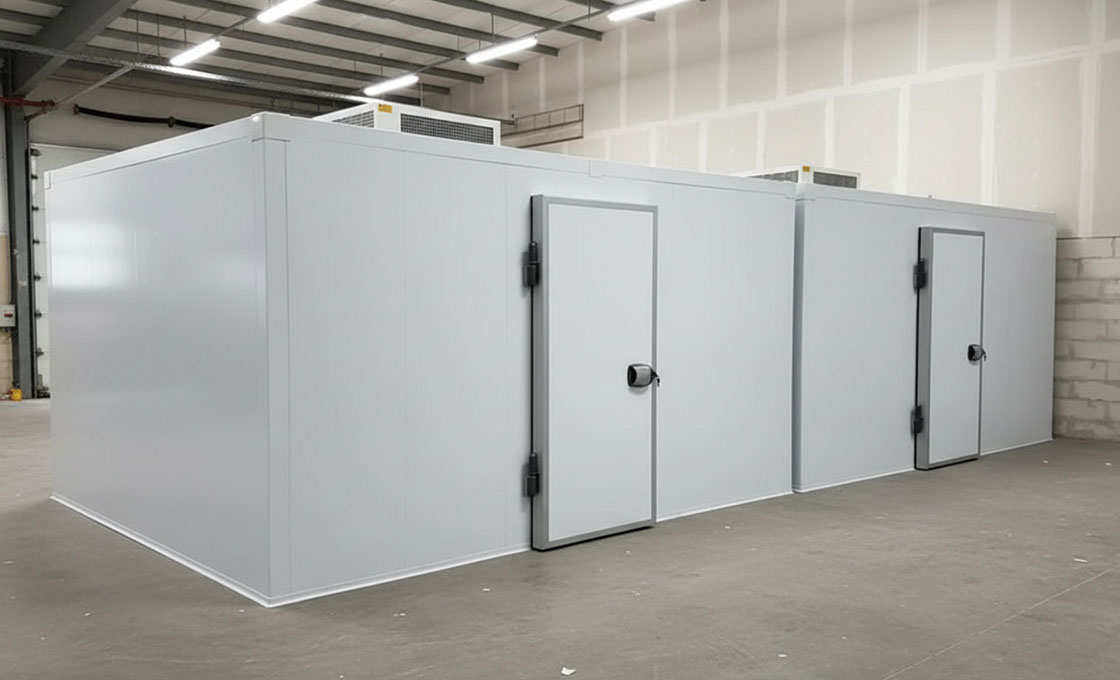
Your Trusted Manufacturer for Modular Cabin Panel
RaxPanel is a direct manufacturer of prefabricated sandwich panels based in Hebei, China, with over 15 years of continuous production experience. Our in-house R&D, design, and production capabilities deliver consistent bonding strength, dimensional accuracy, and structural integrity for modular cabin builders and portable accommodation suppliers operating worldwide.
With a daily production capacity exceeding 1,700 m² and exports to more than 50 countries and regions, RaxPanel combines scale with strict quality control to meet prefab building standards. Every panel undergoes verified continuous lamination to support reliable thermal and structural performance across repeated cabin relocation cycles.
- Color-coated galvanized steel skins at 0.35-0.5mm with PE or HDP coatings in RAL colors.
- EPS foam core at 14-18 kg/m³ with panel weight from 6.5 kg/m² for easy handling.
- Tongue-and-groove interlock joints for fast modular assembly without auxiliary materials.
- Wind speed resistance of 102 km/h and snow load capacity of 80 kg/m² for outdoor service.
| Parameter | Value |
|---|---|
| Skin Material | Color-coated galvanized steel |
| Skin Thickness | 0.35-0.5 mm |
| Core Material | EPS / PU / PIR |
| Core Density | EPS: 14-18 kg/m³; PU/PIR: 38-42 kg/m³ |
| Total Panel Thickness | 50 / 75 / 100 mm |
| Effective Width | 950 / 1000 mm |
| Panel Weight | From 6.5 kg/m² (50mm EPS) |
| Thermal Conductivity | EPS: 0.038 W/(m·K); PU/PIR: 0.022-0.026 W/(m·K) |
| Fire Rating | EPS: B1/B2; PU/PIR: B1/B2 |
| Wind Speed Resistance | 102 km/h |
| Snow Load Capacity | 80 kg/m² |
| Seismic Resistance | Grade 8 |
| Joint Type | Tongue & Groove Interlock |
| Surface Coating | PE / HDP in RAL colors |
| Process | Continuous high-pressure lamination |
| Applications | Portable cabins, guard booths, site offices, security rooms |
Modular Cabin Panel Buying Guide & FAQ
Selecting the right modular cabin panel requires understanding core weight, skin thickness, joint design, and structural load ratings. This guide answers the most common questions from modular cabin builders, security booth suppliers, and site office contractors evaluating lightweight sandwich panels for portable and relocatable cabin applications.
1. What is the difference between EPS and PU cores for modular cabins?
EPS foam at 14-18 kg/m³ delivers the lightest panel weight from 6.5 kg/m², ideal for portable cabins requiring frequent relocation and two-person handling on remote sites. PU/PIR polyurethane at 38-42 kg/m³ offers superior thermal conductivity of 0.022-0.026 W/(m·K), suited for cabins deployed in extreme hot or cold climates where energy efficiency and occupant comfort are the priority over weight reduction.
2. What steel skin thickness do I need for my modular cabin?
Steel skin thickness ranges from 0.35mm to 0.5mm depending on cabin size and service environment. Light-duty portable cabins and guard booths use 0.35mm skins to minimize weight for transport. Larger site offices and cabins deployed in corrosive or high-wind environments use 0.5mm skins with HDP or PVDF coatings for enhanced durability and 15+ year outdoor service life.
3. How do modular cabin panels achieve fast on-site assembly?
Tongue-and-groove interlock profiles enable fast modular assembly without complex auxiliary materials, significantly shortening construction cycle and labor cost. The joint design allows panels to slot together with simple tools, supporting cabin installation in hours rather than days. This makes the system ideal for remote deployments where skilled labor and heavy equipment are limited.
4. What wind and snow loads can modular cabin panels withstand?
Panels are engineered to withstand wind speeds of 102 km/h and snow loads of 80 kg/m², with seismic resistance up to grade 8. The galvanized steel structural frame at 2.5-3.0mm thickness provides the load-bearing backbone, while the sandwich panel envelope contributes thermal insulation and weather-tight performance. These ratings support reliable outdoor service across diverse climate zones.
5. Are modular cabin panels suitable for repeated relocation?
Yes. The lightweight sandwich panel system, combined with demountable tongue-and-groove joints and galvanized steel framing, is specifically engineered for cabins that require repeated transport and relocation. The continuous laminated skin-to-core bond resists delamination under transport vibration, ensuring the cabin maintains thermal and structural integrity across multiple deployments without performance degradation.