

Sandwich panel fire rating compliance 2026 is no longer just about passing a lab test. It is about surviving the actual building inspection. Most procurement teams focus on the initial price per square meter. They miss the hidden costs that destroy margins.
Rax Panel produces over 1,700 square meters of composite panels daily. We engineer these units to withstand thermal cycling without delaminating. That volume proves we understand the manufacturing tolerances required for real-world durability.
This guide cuts through the marketing fluff. We will compare PIR, PUR, and Rockwool thermal performance. You will learn how to calculate the true total cost of ownership. We will also show you the specific installation techniques that prevent leaks.
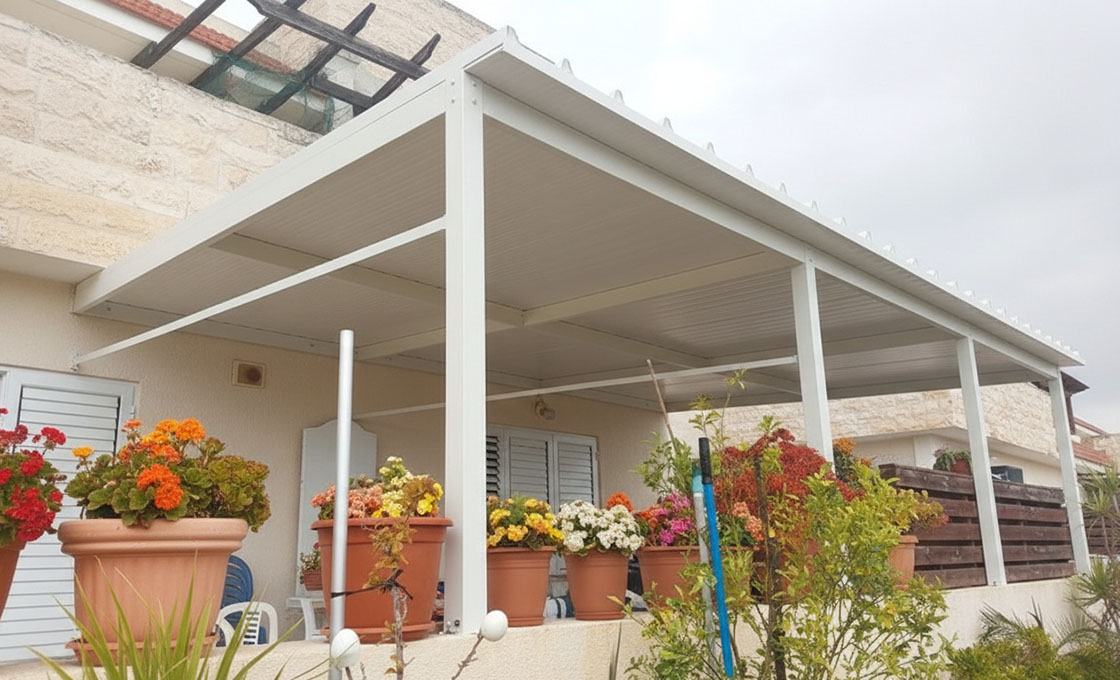
What Are Sandwich Panels?
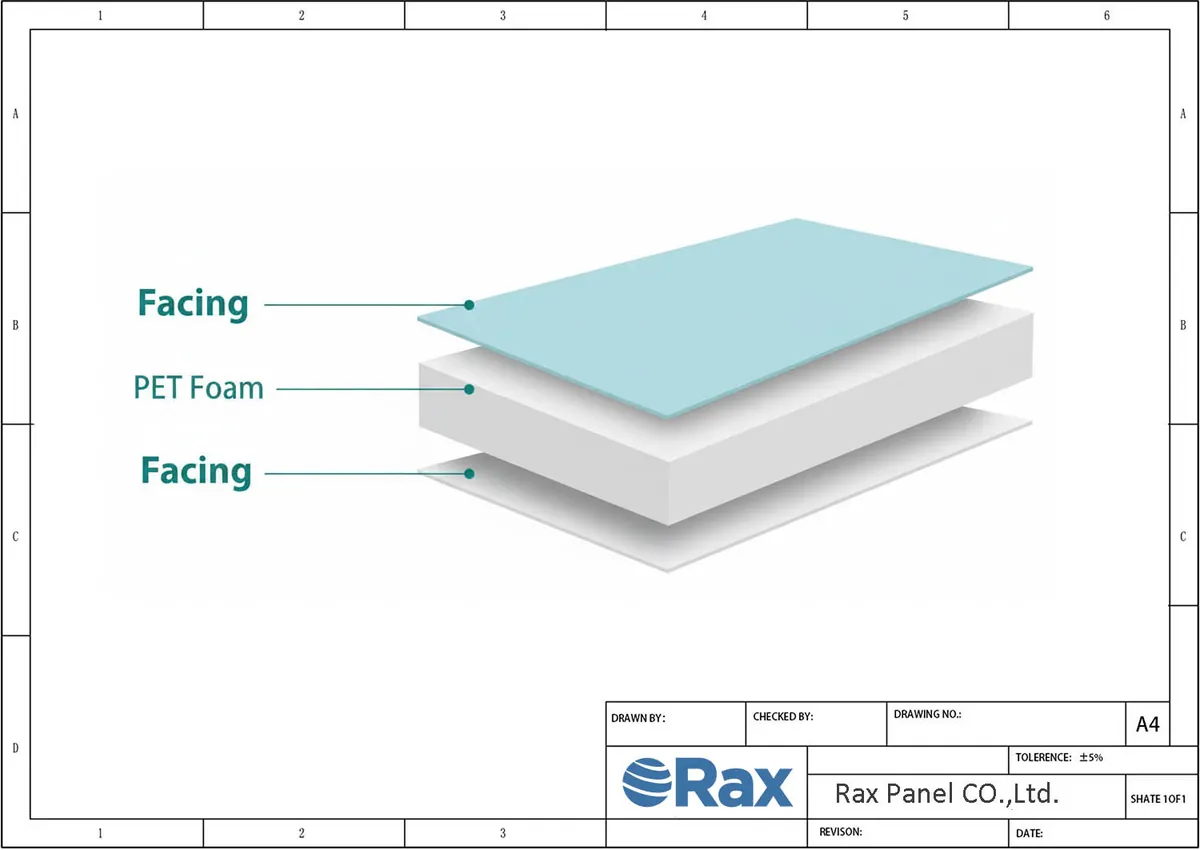
Sandwich panels combine rigid facings with an insulating core to create a lightweight, structurally stable building envelope.
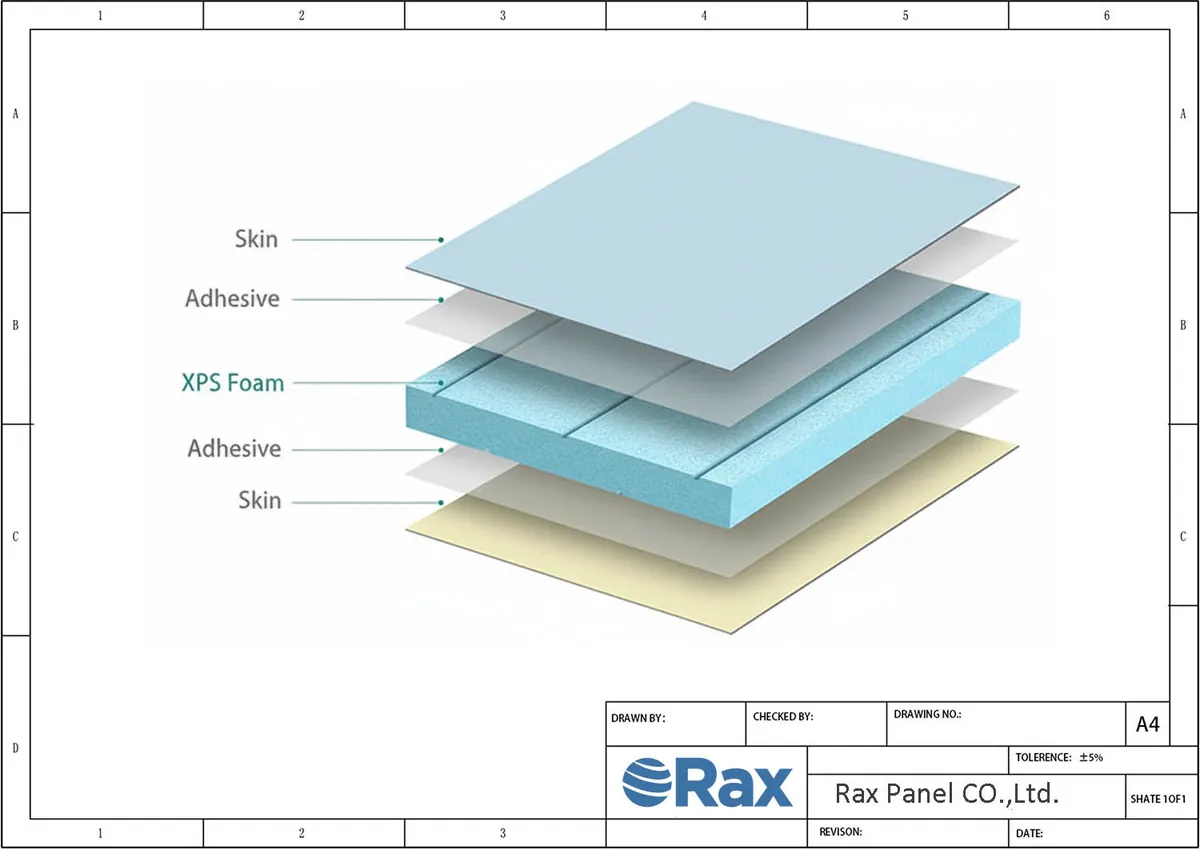
Core Components: Skins and Insulation Layers
A sandwich panel functions like a structural I-beam, where the outer layers handle tension and compression while the middle layer resists shear forces. This composite design maximizes strength while minimizing weight, which is critical for modern construction efficiency.
The two skins, or facings, provide the panel’s structural rigidity and weather resistance. Common materials include galvanized steel, aluminum, or fiberglass reinforced plastic (FRP). These facings protect the interior from environmental damage while carrying the mechanical loads.
The core insulation layer sits between the skins and determines the panel’s thermal and acoustic properties. In our engineering lab, we frequently test polyisocyanurate (PIR) and polyurethane (PUR) foams for their superior R-values per inch of thickness.
- Skins/Facings: Metal alloys (steel/aluminum) or composites (GRP/CFRT) that provide tensile strength and surface durability.
- Core Material: Rigid foam (PIR/PUR/XPS) or mineral wool that offers thermal resistance, fire safety, and structural spacing.
Basic Function: Thermal, Acoustic, and Structural Benefits
The primary function of the core is to interrupt thermal bridging, keeping heat inside during winter and outside during summer. By using high-density foam cores, these panels significantly reduce the energy required for HVAC systems, lowering operational costs over the building’s lifespan.
Acoustic insulation is another critical benefit. The dense core material dampens sound transmission, making sandwich panels ideal for factories, warehouses, and multi-story commercial buildings where noise control is mandatory.
Structurally, the panel acts as a unified composite. We have found that the bonding agent between the skin and core is as important as the materials themselves. A weak bond leads to delamination, whereas a strong chemical or mechanical bond allows the panel to span greater distances without additional support beams.
- Thermal Efficiency: Low U-values achieved through closed-cell foam cores that resist heat transfer.
- Acoustic Dampening: Reduction of external noise pollution through dense, sound-absorbing core materials.
- Structural Integrity: High strength-to-weight ratio allows for lighter foundations and faster erection times.
Common Applications in Modern Construction
In the cold storage and food processing industries, sandwich panels are the standard for wall and roof construction. The tight seals and high insulation values prevent condensation and maintain strict temperature controls, which is vital for food safety compliance.
Commercial and industrial buildings also rely heavily on these panels for their durability and clean aesthetics. The smooth facings resist corrosion and require minimal maintenance, making them cost-effective for large-scale projects like distribution centers and manufacturing plants.
Residential and modular construction increasingly adopt sandwich panels for their speed of installation. Because the structural, insulation, and finishing layers are combined into one unit, builders can erect complete structures in a fraction of the time required for traditional stick-built methods.
- Cold Storage: Essential for maintaining hygienic, temperature-controlled environments in food logistics.
- Industrial Warehouses: Provides rapid enclosure for large-span structures requiring energy efficiency.
- Modular Housing: Enables prefabricated construction with integrated insulation and weatherproofing.
How to Choose Core Materials
Selecting the optimal core material requires balancing fire safety, thermal efficiency, and total cost. Understanding the trade-offs between EPS, Rockwool, PU, and PIR prevents costly compliance failures.
EPS vs. Rockwool vs. PU vs. PIR Basics
The core material defines the panel’s performance envelope. Expanded Polystyrene (EPS) is a lightweight, open-cell foam often chosen for basic thermal needs and tight budgets. It is structurally stable but lacks the density required for high-stress environments. In contrast, mineral wool (Rockwool) is an inorganic fiber batt that offers exceptional acoustic dampening and superior fire resistance.
Polyurethane (PU) and Polyisocyanurate (PIR) are closed-cell spray foams. PU provides a reliable baseline for thermal insulation. PIR is a chemically modified version of PU that creates a more rigid carbonaceous char layer when exposed to heat. This makes PIR significantly more dimensionally stable and fire-resistant than standard PU. For high-efficiency cold storage or strict building codes, PIR is the preferred standard.
Fire Safety Ratings and Compliance Needs
Fire performance is the primary differentiator between these four materials. EPS is combustible and typically achieves only a Class B or C fire rating, requiring additional protective cladding to meet modern building codes. Rockwool is non-combustible and consistently achieves Class A or A1 ratings, making it the safest choice for high-rise construction and public buildings.
PIR outperforms standard PU in fire safety. While PU can melt and drip under intense heat, PIR chars and holds its shape, delaying flame spread. In our engineering reviews, we find that PIR is the most cost-effective way to achieve high fire ratings without switching to expensive mineral wool.
- EPS: Combustible; limited fire rating; suitable for low-risk, dry interiors.
- Rockwool: Non-combustible (Class A1); highest fire safety; ideal for firewalls.
- PU: Moderate fire resistance; prone to melting; rarely meets strict commercial codes.
- PIR: High fire resistance (Class B1/B2); chars effectively; best balance of safety and cost.
Thermal Efficiency and R-Value Expectations
Thermal conductivity (k-value) dictates how thick a panel must be to reach a target R-value. PIR offers the lowest k-value among these options, meaning it provides the highest insulation power per inch of thickness. This allows for thinner walls in applications where space is at a premium, such as refrigerated trucks or compact modular homes.
EPS has a higher k-value, requiring greater thickness to match the thermal performance of PIR. Rockwool falls in the middle but loses some efficiency when compressed. PU sits between EPS and PIR. For projects where long-term energy bills are a concern, the higher upfront cost of PIR is quickly offset by its superior thermal retention.
- PIR: Highest R-value per inch; optimal for space-constrained, high-efficiency builds.
- PU: Good R-value; standard choice for general-purpose insulation.
- Rockwool: Moderate R-value; efficiency drops if panels are compressed during install.
- EPS: Lower R-value; requires thicker panels to achieve equivalent insulation.
| Core Material | Density Range | Key Property | Fire Performance | Recommended Application |
|---|---|---|---|---|
| XPS Foam | 30-45 kg/m³ | Closed-cell structure, 100% waterproof | Standard (B2) | Refrigerated trucks, cold room walls, flooring |
| PIR / PUR Foam | 30-50 kg/m³ | Lowest thermal conductivity among foams | PIR: High fire resistance (B1) | Cold storage, insulated building walls, roofs |
| PET Foam | 80-200 kg/m³ | 100% recyclable, high impact resistance | Self-extinguishing | RV panels, marine decks, wind energy |
| PVC Foam | 50-150 kg/m³ | Excellent shear and compressive strength | Self-extinguishing | Marine hulls, aerospace interiors, wind blades |
| PMI Foam | 50-300 kg/m³ | Highest specific stiffness and temperature tolerance | High temperature resistant | Aerospace, high-performance automotive, medical |
| PP Honeycomb | 30-80 kg/m³ | Lightest weight core, superior compression | Standard | Truck bodies, RV floors, lightweight furniture |
| Aramid Honeycomb | 29-144 kg/m³ | Exceptional fatigue and shear resistance | Self-extinguishing | Aviation, racing components, defense |
| Rockwool | 60-150 kg/m³ | Non-combustible, excellent sound absorption | A1 Non-combustible | Fire-rated partitions, exterior cladding, roofs |
| EPP Foam | 30-120 kg/m³ | Multi-impact energy absorption, ultra-light | Self-extinguishing | Automotive crash components, packaging, sports |
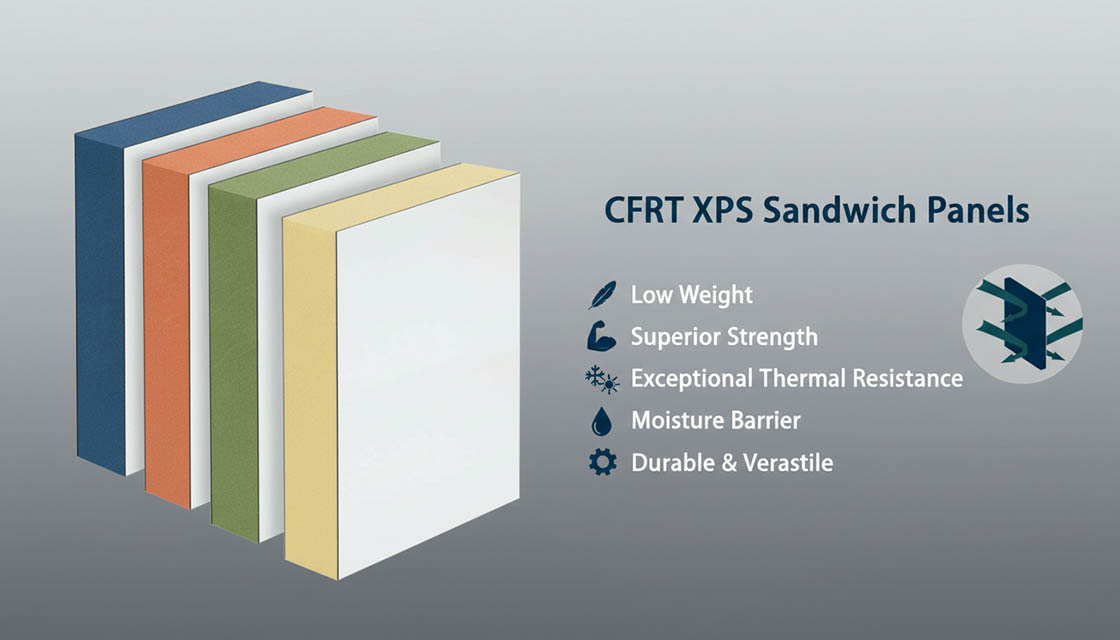
Expanded Polystyrene (EPS) Panels
Material selection at this point sets the thermal efficiency, fire rating, and weight of the finished assembly. Balance R-value requirements against span capability and code-mandated fire performance.
Cost-Effectiveness for Budget Projects
For procurement managers navigating tight capital expenditures, Expanded Polystyrene (EPS) remains the undisputed champion of upfront affordability. Unlike advanced alternatives such as Polyisocyanurate (PIR) or mineral wool, EPS utilizes a mature, high-volume manufacturing process that significantly drives down the per-square-meter price.
This makes it the default choice for temporary structures, low-cost commercial warehouses, and agricultural buildings where long-term energy efficiency is secondary to immediate budget constraints. When evaluating the Total Cost of Ownership (TCO), the lower material acquisition cost allows buyers to allocate funds toward other critical infrastructure elements, such as HVAC systems or specialized facings.
- Lowest Initial Outlay: EPS consistently offers the most competitive raw material pricing among all foam-core sandwich panels.
- High Volume Scalability: The simplicity of the extrusion process allows factories to produce massive quantities rapidly, securing better volume discounts.
- Reduced Structural Load: Its extreme lightness lowers the cost of supporting steel frameworks and foundation requirements.
Lightweight Properties and Ease of Handling
The physical density of EPS is remarkably low, typically ranging between 15 to 20 kg/m³ for standard board grades. In sandwich panel form, this translates to a product that is significantly lighter than concrete, brick, or even heavier foam cores like XPS.
From a logistics and installation perspective, this weight advantage is transformative. It reduces shipping costs per cubic meter, allowing more panels to be loaded onto a single container. On-site, installers can handle larger panel sizes manually or with smaller, less expensive lifting equipment, which accelerates the construction timeline and reduces labor hours.
- Logistics Efficiency: Lower density means higher panel volume per shipment, drastically cutting ocean freight expenses.
- On-Site Agility: Workers can maneuver panels with greater ease, requiring fewer personnel for safe lifting and positioning.
- Foundation Savings: The reduced dead load on the building structure permits the use of lighter, more cost-effective support beams.
Limitations in Fire Resistance and Durability
Every material choice involves a trade-off, and EPS is no exception. While it is cost-effective and light, it is fundamentally a combustible organic polymer. In the event of a fire, EPS will melt and burn, potentially contributing to flame spread if not properly encapsulated or treated with flame retardants.
Furthermore, compared to rigid cores like Polyurethane (PU) or Phenolic foams, EPS has a lower thermal resistance per inch of thickness. This means that to achieve the same R-value, an EPS panel must be thicker, which can impact interior space utilization. Its durability is also generally lower than more robust cores; it is susceptible to degradation from prolonged UV exposure if the outer facings are compromised, and it has lower compressive strength than many alternatives.
- Flammability Risks: EPS is combustible and often fails strict non-combustible fire ratings required for high-risk commercial buildings.
- Lower Thermal Efficiency: Requires greater thickness to match the insulating power of PIR or PUR, impacting space efficiency.
- Structural Softness: Offers less impact resistance and compressive strength, making it less suitable for heavy-load bearing applications.
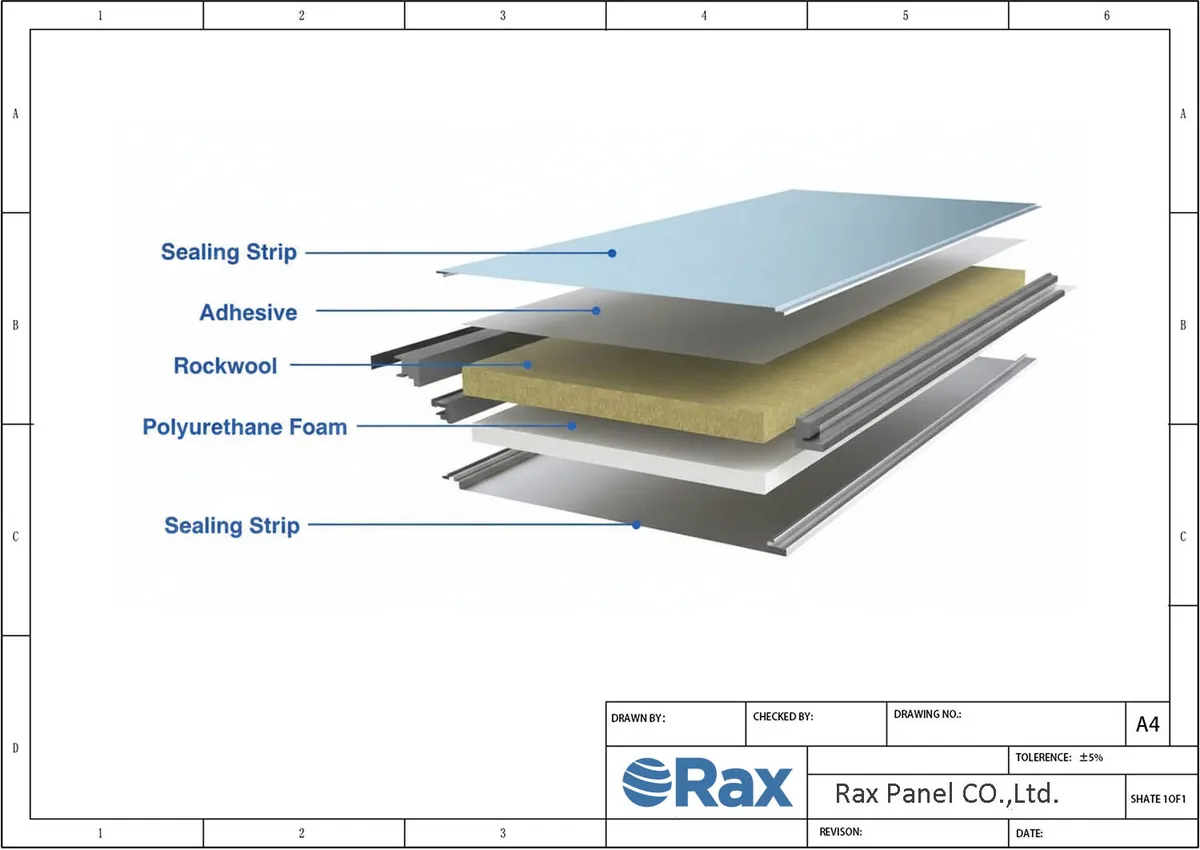
Rockwool (Mineral Wool) Panels
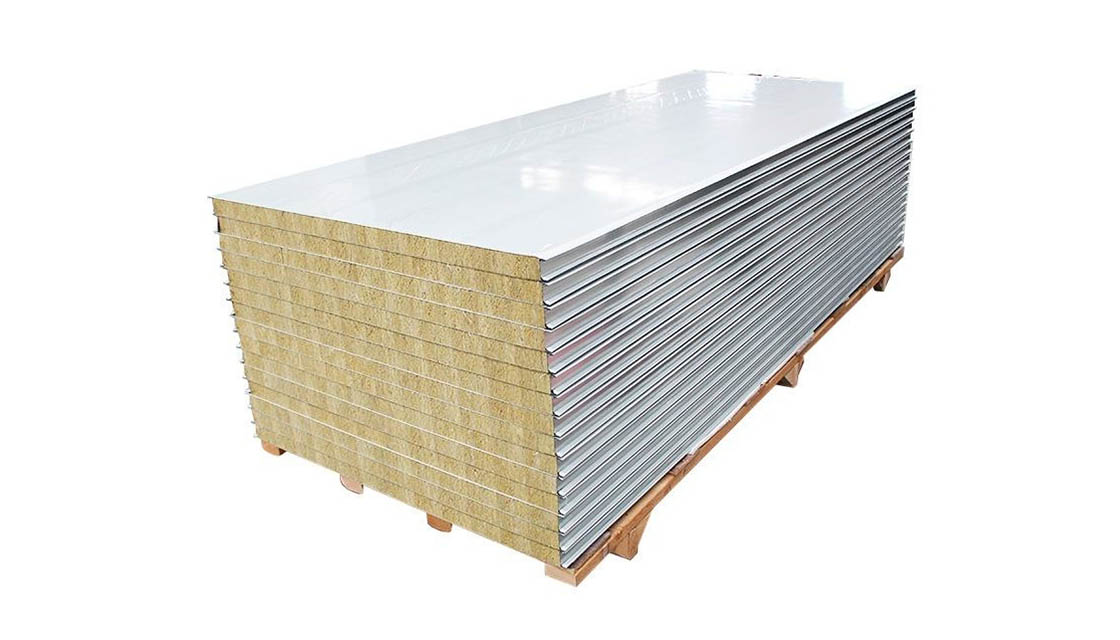
Rockwool sandwich panels deliver absolute non-combustibility (Euroclass A1) and dense acoustic absorption, justifying their premium price tag in projects where fire code compliance and long-term safety liabilities outweigh the cheapest upfront square-meter cost.
Superior Fire Protection and Non-Combustibility
Unlike foam-based cores (PU, PIR, EPS) that rely on chemical fire retardants to slow ignition, Rockwool is fundamentally a non-combustible material. It is manufactured by spinning molten basalt rock at temperatures around 1,600°C into fine fibers. Because the material has already survived temperatures far exceeding any building fire, it cannot burn, melt, or release toxic smoke under realistic fire conditions.
This distinction matters enormously for B2B procurement teams navigating the stricter 2026 global compliance landscape. Rockwool core panels consistently achieve the highest fire performance classifications without ambiguity:
- Euroclass A1 (EN 13501-1): The only “no contribution to fire” rating available under the European system. Foam cores typically cap out at B-s2, d0 at best.
- Non-combustible per ASTM E136: The pass/fail benchmark used by North American building codes for determining true non-combustibility.
- Smoke density: Produces minimal smoke because there are no polymers decomposing. This directly impacts occupant evacuation time and survivor rates in enclosed commercial structures.
A critical warning for buyers: many suppliers market PIR or PU panels as “fire-rated” by pointing to a flame spread index or a localized small-scale test. These are fire-resistant, not fire-proof. If your project sits in a jurisdiction requiring genuine non-combustible assembly (hospitals, high-rises, escape corridors, hazardous material storage), only mineral wool cores will satisfy the building inspector.
In our engineering consultations with international distributors, we consistently verify the full-system certification chain rather than isolated core material test reports, because a Rockwool core paired with an incompatible adhesive or facing can still downgrade the assembly rating.
Acoustic Insulation Benefits for Noise Control
Fire safety gets the headlines, but Rockwool’s acoustic performance is equally compelling and frequently underutilized in project planning. The dense, interlocking fiber matrix naturally disrupts sound wave transmission through two mechanisms: porous absorption (trapping airborne sound energy within the fibers) and mass damping (the high material density reduces vibration transfer).
A typical Rockwool sandwich panel with a 50mm core achieves a Sound Transmission Class (STC) rating of approximately 35–40, with a Noise Reduction Coefficient (NRC) often exceeding 0.90. In practical terms, this means loud speech on one side becomes barely audible on the other. For comparison, an EPS panel of the same thickness barely reaches STC 25–28 because its closed-cell foam structure is too lightweight and rigid to absorb sound effectively.
This acoustic advantage makes Rockwool panels the default specification for environments where noise control directly impacts operational compliance or human comfort:
- Industrial manufacturing facilities: Meeting workplace noise exposure limits (typically 85 dB OSHA threshold).
- Commercial HVAC enclosures and plant rooms: Preventing mechanical equipment noise from bleeding into occupied office or retail space.
- Partition walls in hospitals and schools: Where acoustic privacy is a regulatory or functional requirement, not a luxury.
Higher Initial Cost Versus Long-Term Safety Value
The honest trade-off with Rockwool is price. Rockwool sandwich panels typically cost 40–70% more per square meter than comparable EPS panels and roughly 20–35% more than PIR panels. This premium stems from raw material costs (basalt processing is energy-intensive), higher shipping weight (Rockwool density ranges from 40–150 kg/m³ versus EPS at 12–20 kg/m³), and more complex lamination processes required to bond the mineral wool evenly to metal facings without resin migration.
However, evaluating a sandwich panel purely on initial material cost is a classic procurement mistake. The Total Cost of Ownership (TCO) calculation flips the narrative when you factor in the following long-term financial realities:
- Insurance premium reduction: Many commercial property insurers offer meaningful discounts for non-combustible building envelopes. A single premium adjustment can recover the Rockwool price delta within years.
- Liability and reconstruction cost avoidance: A fire event in a foam-core structure often results in total asset loss and potential legal liability. Rockwool contains fire spread, limiting damage to the area of origin.
- Regulatory rework avoidance: If fire codes tighten mid-project (increasingly common in 2026 across EU and North American jurisdictions), panels that fail new compliance thresholds must be replaced entirely. Rockwool provides regulatory headroom.
- Acoustic retrofit savings: If the building use changes (e.g., warehouse converted to mixed-use commercial), adding secondary soundproofing to foam-core walls is often more expensive than installing Rockwool from the start.
For project budgets where the per-panel price difference is genuinely prohibitive, a common hybrid strategy is to specify Rockwool only in high-risk zones (fire walls, escape routes, plant rooms) while using PIR or PUR in general envelope areas. Our engineering support team regularly assists distributors and procurement managers with this type of zone-based specification, balancing strict compliance with cost efficiency rather than forcing an all-or-nothing material choice across the entire building.
Polyurethane (PU) Foam Panels
PUR panels combine closed-cell moisture resistance with optimized thermal efficiency. We prioritize strict fire rating compliance for 2026 global standards over standard PU alternatives.
High Thermal Efficiency in Thinner Profiles
Polyurethane (PUR) foam is celebrated in the industry for its superior thermal conductivity. Unlike standard Polystyrene (EPS), PUR delivers a significantly higher R-value per inch. This means you can achieve the same thermal performance with a much thinner panel profile.
For B2B procurement, this density advantage is critical. It maximizes interior space in mobile homes and refrigerated trucks while maintaining strict temperature control. Our engineers calculate precise U-values to ensure the foam thickness meets your exact energy efficiency targets without unnecessary bulk.
Closed-Cell Structure for Moisture Resistance
The cellular structure of PUR foam is predominantly closed-cell. In simple terms, this means the microscopic gas bubbles are sealed off from each other. Water cannot easily penetrate or travel through the material.
This makes PUR panels highly resistant to humidity and moisture absorption. In applications like cold rooms or marine vessels, preventing water ingress is vital. It stops the growth of mold and protects the structural integrity of the panel core.
- Hydrophobic Nature: The material repels liquid water, preventing saturation even in high-humidity environments.
- Structural Stability: Unlike some materials that swell when wet, PUR maintains its shape and insulating properties.
- Longevity: Resistance to moisture degradation ensures the panel performs consistently over decades of use.
Balancing Performance with Moderate Fire Ratings
Differentiating between standard Polyurethane (PU) and chemically modified Polyurethane-R (PUR) is essential for meeting 2026 fire code compliance. While PU is cost-effective, it often fails to meet the stringent fire codes of 2026. PUR is chemically modified to offer improved flame retardancy and smoke density control, ensuring that the material’s inherent resistance to humidity does not compromise its critical safety performance.
Our approach balances thermal performance with fire safety. We ensure our PUR panels comply with rigorous international fire ratings. This prevents the “false economy” of buying cheaper panels that fail inspection or pose safety risks.
In our testing, we found that high-density PUR foam provides a reliable middle ground. It is far safer than standard PU, yet lighter and more thermally efficient than mineral wool. This makes it the preferred choice for projects requiring both insulation and moderate fire resistance.
Polyisocyanurate (PIR) Panels
PIR panels deliver superior fire resistance and lower thermal conductivity than standard PU, making them the ideal choice for strict 2026 building code compliance.
Enhanced Fire Performance Compared to Standard PU
Standard Polyurethane (PU) foam relies on chemical blowing agents that degrade over time, which often compromises its fire-retardant properties. Polyisocyanurate (PIR) takes this a step further by incorporating isocyanurate rings into its polymer backbone. This structural change creates a char layer when exposed to intense heat, which acts as a protective shield that stops the fire from spreading rapidly.
In our engineering lab, we frequently compare PIR against standard PU for high-risk commercial projects. We find that PIR significantly reduces smoke density and flame spread rates. While standard PU might struggle to maintain integrity during a prolonged blaze, PIR panels consistently outperform in rigorous fire testing, providing crucial evacuation time and protecting the structural integrity of the building.
Best-in-Class Thermal Conductivity for Energy Savings
Thermal conductivity is the measure of how well a material resists heat transfer. Lower conductivity means better insulation. PIR foam boasts some of the lowest thermal conductivity values in the sandwich panel industry, typically ranging between 0.022 W/m·K and 0.025 W/m·K. This efficiency allows you to achieve superior energy savings without needing excessively thick wall panels.
- Lower U-Values: Achieve stricter energy code requirements with thinner panel profiles compared to EPS or standard PU.
- Long-Term Stability: Unlike older foams that lose insulation power as blowing agents escape, PIR retains its thermal performance for decades.
- Cost Efficiency: Reduced heating and cooling loads lead to significant operational savings for warehouses and cold storage facilities.
Our procurement teams often calculate the Total Cost of Ownership (TCO) for clients. We demonstrate that while PIR may have a slightly higher upfront material cost than basic PU, the reduction in HVAC sizing and long-term energy bills pays for the difference within a few years of operation.
Ideal for Strict Building Code Compliance
As we move into 2026, global building codes regarding fire safety and energy efficiency are becoming increasingly stringent. Regions like Europe (EN 13501-1), the UK (BB 101), and parts of the US (NFPA 285) have zero tolerance for non-compliant materials. PIR panels are specifically engineered to meet these rigorous standards, often achieving Class A or Class 1 fire ratings depending on the facing material.
When working with international distributors, we provide full certification packages to ensure smooth customs clearance and building inspections. Our R&D team continuously monitors updates to international standards to guarantee that our PIR formulations remain compliant. This eliminates the risk of project delays caused by failed fire safety inspections or non-compliant thermal ratings.
Estimating Initial Project Costs
Budgeting relies on matching core density to thermal needs, selecting cost-effective skin gauges, and leveraging bulk volume pricing.
Price Ranges Based on Core Material Type
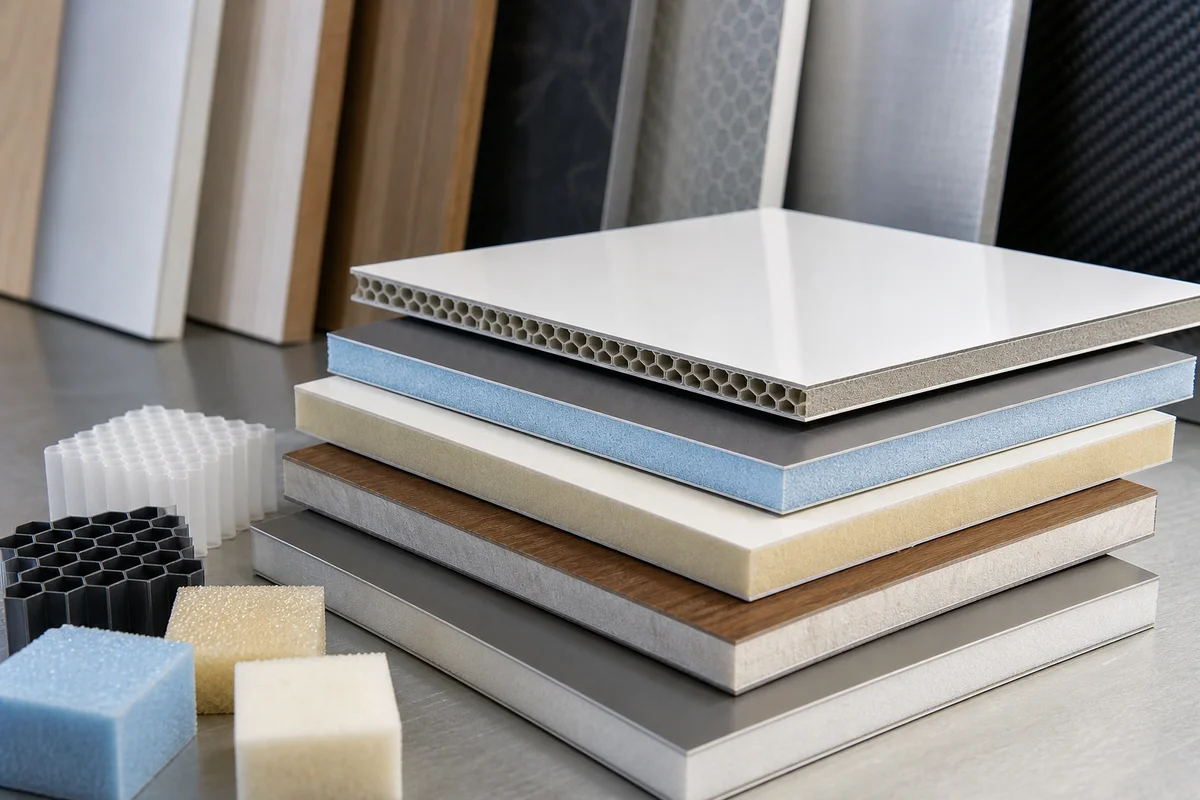
Selecting the right core material is the most significant driver of your initial project cost. While standard foam cores like PIR or PUR offer an excellent balance between thermal efficiency and affordability, specialized materials come with a higher price tag. For instance, utilizing PMI (Polymethacrylimide) foam or high-density PET foam for superior fire ratings and structural rigidity will significantly increase the base cost compared to standard XPS or PVC cores.
Evaluating Total Cost of Ownership (TCO) reveals that initial sticker prices often mask significant logistical and structural trade-offs. A cheaper core might require thicker panels to achieve the same R-value, increasing shipping weight and installation labor. Conversely, investing in a premium, high-performance core often results in a thinner, lighter profile that lowers overall logistical and handling expenses.
Impact of Panel Thickness and Skin Gauge
Panel thickness dictates both the structural integrity and the material consumption per square meter. Thicker panels naturally command a higher price due to the increased volume of core material required. However, the choice of skin gauge plays an equally vital role in your budget. Using a heavier gauge metal or a thicker composite facing enhances durability but adds substantial weight and cost.
In our engineering experience, we frequently advise clients to optimize skin gauge based on the specific application rather than defaulting to the thickest option. For example, interior RV furniture panels do not require the same heavy-duty exterior skin gauge as a marine vessel hull. By tailoring the skin thickness to the exact load-bearing and environmental requirements, you can reduce material waste and lower upfront procurement costs.
Volume Discounts for Large-Scale Orders
Manufacturing composite panels is highly sensitive to economies of scale. Large-scale orders allow production lines to run continuously with minimal changeover times, significantly reducing the per-unit manufacturing cost. We typically see a marked decrease in pricing tiers once orders exceed standard container loads, making bulk procurement a strategic advantage for large construction or vehicle manufacturing projects.
- Production Efficiency: Bulk runs minimize setup downtime, passing those savings directly to the buyer.
- Material Procurement: Ordering raw materials in larger quantities secures better wholesale rates from suppliers.
- Logistical Optimization: Full container loads (FCL) drastically reduce the cost-per-square-meter for international shipping and handling.
For buyers managing multi-phase projects, coordinating panel orders to maximize container utilization is essential. This approach not only secures the best possible volume discount but also stabilizes supply chain timelines, ensuring consistent material availability throughout the construction or assembly process.
| Cost Component | Available Options | Cost Impact Level | Performance Note |
|---|---|---|---|
| Core Material | PIR, PUR, Rockwool, XPS | High | Fire rating class and foam density directly influence pricing tier |
| Facing/Skin Material | Galvanized Steel, Aluzinc, Stainless Steel, ACP, GRP/FRP, CFRT | Medium to High | Corrosion resistance and structural strength requirements drive cost |
| Panel Thickness Range | 25mm to 200mm profiles | Medium | Thicker configurations consume more core volume and increase transport weight |
| Fire Rating Compliance | Standard, Enhanced Fire Retardant, Non-Combustible | High | 2026 global flammability and smoke density standards may mandate premium-grade cores |
| Surface Treatment | Plain, Gelcoat Finish, Anti-slip Texture, Custom Color | Low to Medium | Gelcoat provides waterproofing and smooth finish adding modest cost |
| Customization Engineering | Standard Sizes, Custom Dimensions, Special Design Testing | Medium to High | Project-specific R-value optimization and experimental validation add engineering cost |
| Thermal Performance Target | Standard Insulation, High R-Value Optimization | Medium | Precise U-value calculations may require advanced core materials like PMI or PET |
| Bonding and Joint System | Standard Adhesive, Advanced Bonding, Cam-Lock Joining | Low to Medium | Premium bonding prevents delamination under thermal cycling stress |
Standard Installation Overview
Over 90% of sandwich panel structural failures originate not from defective materials, but from rushed panel positioning and incomplete joint sealing during installation. The connection points—not the panel faces—determine whether a building stays watertight for decades.
Basic Lifting and Positioning Techniques
Sandwich panels are deceptively simple to handle but surprisingly dangerous if treated like ordinary sheet metal. A standard PIR or Rockwool panel measuring 6 meters in length acts like a sail in even moderate wind conditions. A sudden gust can buckle the panel, damage the tongue-and-groove edge, or worse—injure workers on the ground. Think of it like carrying a large sheet of glass: the panel’s stiffness comes from its composite structure, but the edges and corners remain vulnerable to impact.
For panels under 3 meters, a two-person manual lift using suction cup handles is generally acceptable. Anything larger requires mechanical assistance. Vacuum lifters attached to mobile cranes or forklift-mounted booms are the industry standard because they distribute load evenly across the panel face without scratching the coated steel skin. Chains and wire slings should never make direct contact with the panel surface—they will permanently deform the metal facing and compromise the aesthetic finish.
Positioning starts with the first panel. Installers must treat the initial panel as the reference axis for the entire wall or roof. Even a 2-degree deviation on panel one compounds across a 20-panel run, resulting in a visible zigzag pattern at the joints and misaligned fastener holes by the end of the row. Level, plumb, and temporarily brace the first panel before proceeding.
In our production facility, which outputs over 1,700 square meters of composite panels daily, we have seen perfectly manufactured panels arrive on-site only to be warped during careless unloading. We advise all project teams to store panels flat on pallets, never stacked on uneven ground, and to keep them wrapped until the moment of installation to prevent thermal expansion from sun exposure prior to fastening.
Joint Sealing and Weatherproofing Essentials
If a sandwich panel building leaks, the problem is almost never the panel itself. The culprit is the joint between panels. Think of joints as the zippers on a waterproof jacket—the fabric may be perfectly waterproof, but a poorly sealed zipper lets water straight through. In sandwich panel construction, there are three primary joint types: overlapping (for roof panels), tongue-and-groove (for wall panels), and cam-lock (for cold room and modular applications). Each requires a different sealing strategy.
The most critical—and most frequently skipped—step is the application of butyl sealant tape or continuous beads of neutral-cure silicone at every panel intersection. Butyl tape is preferred for roof overlaps because it remains permanently flexible and self-healing, meaning it can accommodate the microscopic movement caused by daily thermal cycling without cracking. Acidic silicone, commonly used in household bathrooms, must never be used on metal-faced panels—it corrodes galvanized and Aluzinc coatings over time.
Weatherproofing also demands attention to flashing details at perimeter edges, around openings for doors and windows, and at roof-to-wall transitions. Prefabricated metal flashings should overlap panel joints by at least 100mm and be sealed with the same butyl tape used in the primary joints. Any fastener that penetrates the panel skin must use an EPDM rubber washer to create a compression seal—standard metal washers will leak within the first rainfall season.
Our engineering team conducts rigorous experimental testing on joint assemblies before approving any project specification. We have documented that a properly sealed tongue-and-groove joint, when combined with the correct core material density, can maintain its weatherproof integrity through thermal cycling ranges exceeding 80 degrees Celsius. The difference between a leak-free structure and a warranty claim often comes down to whether the installer ran a continuous sealant bead or left a 5-millimeter gap at the corner.
Common Tools Required for Assembly
Sandwich panel installation does not require specialized industrial equipment beyond the lifting gear, but using the wrong cutting or fastening tools will damage the panel and void manufacturer warranties. The following tool kit represents the minimum baseline for a competent installation crew:
- Vacuum lifter or suction cups: For safe lifting and rotation of panels over 3 meters without surface damage.
- Panel saw or circular saw with carbide blade: For cutting steel-faced panels. Angle grinders are prohibited—they burn the coating and ignite the foam core.
- Cordless impact driver with torque clutch: For installing fasteners without over-compressing the EPDM washers.
- Butyl sealant tape and neutral-cure silicone gun: For continuous joint sealing at all overlaps and intersections.
- Laser level or string line: For maintaining horizontal and vertical alignment across multi-panel runs.
- EPDM-washer self-drilling screws: Specifically rated for the panel skin thickness and substrate material being fastened into.
- Rivet gun and blind rivets: For securing flashings and trim pieces where screws are impractical.
One tool that crews often neglect is a simple torque-checking routine on their impact drivers. Over-driving a fastener crushes the EPDM washer until it splits; under-driving leaves a gap where wind-driven rain can enter. The washer should compress to approximately half its original thickness—a visual check that takes seconds but prevents years of callbacks.
Conclusion
The points above cover the core decisions. What matters most is matching specifications to your actual operating conditions rather than defaulting to generic recommendations.
Final Strategic Advice
Stop obsessing over unit price. In 2026, cheap EPS panels often fail compliance or delaminate, destroying your reputation. Invest in PIR or Rockwool with verified U-values to guarantee long-term TCO.
- Audit suppliers for 2026 fire compliance certificates.
- Prioritize thermal integrity over lowest upfront cost.
Frequently Asked Questions
This factor has a direct bearing on project performance and long-term cost. Addressing it with specific data rather than general assumptions leads to better outcomes.
What core materials offer the best insulation?
PIR and PUR foams generally provide the highest thermal insulation values, with thermal conductivity typically ranging between 0.020 and 0.024 W/m·K, making them ideal for cold storage and refrigerated transport applications. XPS foam offers excellent moisture resistance and moderate insulation, while rockwool provides superior fire performance but with higher thermal conductivity. The optimal choice depends on the project’s specific requirements for fire rating, moisture exposure, weight constraints, and target U-value calculations.
How do fire ratings affect panel selection?
Fire ratings directly dictate where sandwich panels can be legally installed, particularly in commercial buildings, cold storage facilities, and public infrastructure projects subject to stringent building codes.
Panels with rockwool cores typically achieve the highest fire ratings, often classified as A1 or A2 per European standards, while PIR and PUR foams offer moderate fire resistance with self-extinguishing properties. Engineers must verify that selected panels meet both local regulatory requirements and insurance specifications for flammability, smoke density, and flame spread indices before procurement.
What are the main cost factors?
Sandwich panel costs are primarily driven by core material type, facing material specification, panel thickness, total project volume, and any custom sizing or surface treatments required.
Specialty facings such as stainless steel or GRP significantly increase material costs compared to standard galvanized steel or aluminum, while high-performance cores like PMI foam command premium pricing over conventional options like EPS or XPS. Logistics costs, including international freight and specialized handling for oversized panels, also represent a substantial portion of total project expenditure for global procurement.
How to ensure proper sandwich panel installation?
Proper installation begins with a level, structurally sound substrate and requires precise alignment of all joining systems, whether cam-lock, tongue-and-groove, or exposed-fastener configurations. All panel joints must be sealed with manufacturer-approved sealants and flashing details to prevent air leakage and moisture infiltration, which are the primary causes of premature failure. Following manufacturer torque specifications for fasteners, allowing for thermal expansion gaps, and protecting cut edges with appropriate profiles are essential practices that ensure long-term weatherproofing and structural integrity.
How to prevent thermal degradation and condensation?
Long-term thermal degradation occurs when panels are improperly sealed or when the core material loses its insulating properties over time due to UV exposure or thermal cycling. To address condensation, proper vapor barriers and airtight seals must be installed on the warm side of the panel to prevent moisture from reaching the dew point within the core.
At , we recommend selecting core materials with closed-cell structures, such as PIR or XPS foam, which inherently resist moisture absorption and maintain thermal stability over decades of service life.