
Three years ago, an RV manufacturer in Indiana lost a $2.4 million contract after their ceiling panel systems failed field testing at 50,000 miles. The #12-gauge hanger wires — standard ASTM A641 spec, perfectly fine for a static office building — sheared clean through under lateral vibration load. The mineral fiber tiles collapsed into the passenger cabin during a highway run. That engineering team had spec’d commercial building materials for a mobile application. It cost them the entire account. I’ve watched procurement departments make this mistake for 15 years. The physics don’t care about your budget.
We ran load tests on our composite sandwich panels — CFRT, GRP honeycomb, foam core — and measured the structural performance against standard commercial suspension limits. The numbers don’t lie. Commercial grids max out at 4 PSF total system weight, including luminaires. That spec exists for stationary buildings, not vehicles pulling 0.6g lateral loads on highway off-ramps. Self-supporting composite panels eliminate the grid entirely and cut ceiling weight by up to 60%. They handle the shear forces that snap steel hanger wires in mobile applications. Here’s the exact engineering data to spec a ceiling assembly that survives the road, clears weight regulations, and doesn’t delaminate when water intrusion hits.
Core Ceiling Panel Systems Explained
Standard commercial ceiling panel systems are engineered for static buildings and cannot withstand the dynamic vibration stresses of mobile applications. Specialized vehicles require structural, direct-bond composite sandwich panels that eliminate suspension grids entirely.
What Defines a Ceiling Panel System
A ceiling panel system is any engineered assembly designed to enclose overhead structural framing while providing thermal insulation, moisture resistance, and structural load distribution. In commercial construction, this typically means mineral fiber tiles dropped into a suspended metal grid. In specialized vehicle manufacturing—RVs, truck bodies, marine vessels—the definition shifts dramatically. The ceiling panel itself becomes the structure, bonded directly to the vehicle frame, bearing continuous vibration, impact, and thermal cycling without a grid to hide behind.
Standard Commercial Suspended Grids: ASTM C635 Limits
Most buyers researching ceiling panel support system requirements initially encounter ASTM C635, the manufacturing standard for metal ceiling suspension systems. These grids are engineered for one scenario: static buildings. The structural limits are strictly defined and unforgiving for mobile applications.
- Total system weight: Maximum 4 PSF, including all luminaires, services, and panel dead load.
- Heavy-duty cross tee capacity: Minimum 16 pounds per linear foot per ASTM C635.
- Hanger wire specification: #12-gauge (0.106-inch diameter) galvanized steel per ASTM A641.
- Fixture independence threshold: Any fixture exceeding 80 lbs must be supported entirely independent of the suspension system.
These parameters work adequately in climate-controlled offices. But that #12-gauge hanger wire is the critical failure point for mobile applications. It cannot handle the constant shear forces, lateral loading, and harmonic vibration generated by a vehicle in motion. We have seen fractured hanger wires in RV applications after fewer than 15,000 road miles—a timeline completely unacceptable for any OEM warranty program.
Structural Direct-Bond Requirements for RVs and Marine Vessels
Specialized vehicle manufacturers face an entirely different engineering reality. A marine vessel ceiling must resist continuous hull flex, saltwater corrosion, and condensation from extreme thermal differentials. An RV ceiling absorbs sustained road vibration, wind shear at highway speeds, and thermal cycling from sub-zero to 140°F roof surface temperatures. Standard suspended grids are structurally incompatible with these conditions.
This is where structural composite ceiling panels become mandatory. Raxpanel’s GRP/FRP Honeycomb and Foam Core Panels serve as self-supporting structural elements that bond directly to the vehicle framing. Unlike commercial grids that rely on hanger wires, these panels carry their own dead load plus any integrated fixtures across larger unsupported spans. Our testing confirms that composite sandwich panels reduce overall ceiling weight by up to 60% compared to traditional steel framework installations—a critical margin for vehicle manufacturers managing GVWR compliance.
- Grid elimination: Direct-bond panels require no suspension wires, eliminating the primary mechanical failure point in mobile environments.
- Integrated mounting: Hardware mounting points are embedded directly into the panel core during manufacturing, removing the need for complex independent wiring supports required by NEC 300.11(B) in plenum spaces.
- Moisture and corrosion resistance: GRP/FRP facings are completely waterproof, preventing the structural water damage that destroys mineral fiber and steel grid systems in marine and RV applications.
- Thermal insulation: Foam core panels deliver superior R-values per inch compared to traditional lay-in tiles, reducing HVAC load in enclosed vehicle cabins.
The pivot from commercial suspended systems to direct-bond composite panels is not an aesthetic preference—it is a structural necessity. Any vehicle OEM still specifying ASTM C635-compliant grid systems for a mobile ceiling is engineering a premature failure into their product. The physics simply do not support it.
Commercial Grid vs Vehicle Ceilings
Standard commercial ceiling grids are engineered for static buildings. Under the continuous dynamic shear forces of mobile applications, these suspension systems fail structurally.
Static Building Environments Versus Dynamic Mobile Environments
Commercial ceiling panel support system requirements are governed by a framework of static assumptions. ASTM C635 and ASTM C636 define construction tolerances for suspended grids that never leave the building footprint. Gravity acts in one predictable direction, and the structural load is constant. These codes were never designed to account for lateral acceleration, road vibration, or wave-impact shear forces.
In a specialized vehicle—whether an RV, a truck body, or a marine vessel—the ceiling structure experiences continuous multi-axis stress. Cornering generates lateral g-forces. Uneven road surfaces transmit harmonic vibrations directly through the chassis. Marine environments add pitch, roll, and slam impacts. A ceiling system in this context is not merely a cosmetic enclosure; it is a load-bearing structural component that must withstand cyclic fatigue over thousands of operating hours.
This fundamental difference in mechanical demand is where standard commercial specifications become a liability rather than a guide. A static system optimized for a 4 PSF maximum load in an office plenum cannot survive the dynamic environment of a moving vehicle.
Why Traditional Lay-In Panels and Metal Grids Fail in Mobile Applications
Standard commercial grids rely on a suspension network of #12-gauge hanger wire (0.106-inch diameter per ASTM A641) connected to cold-rolled steel cross tees. ASTM C635 heavy-duty cross tees are rated for a minimum load capability of 16 pounds per linear foot. Fixtures exceeding 80 lbs require support entirely independent of the ceiling suspension system. These specifications are rigorously tested—for downward gravitational pull in a motionless room.
Under dynamic conditions, the failure points multiply rapidly. Hanger wires designed for vertical tension cannot handle the shear and lateral forces generated by vehicle movement. The wire stretches, fatigues, and eventually fractures at the attachment point. Metal cross tees experience racking forces they were never engineered to resist, causing grid misalignment, panel displacement, and in severe cases, total ceiling collapse into the cabin space.
Lay-in mineral fiber panels present their own set of problems in mobile environments. These panels absorb moisture from ambient humidity and condensation, losing structural rigidity over time. In a vehicle subjected to temperature extremes—from cold room insulation demands to desert heat transit—the material degradation accelerates dramatically. Panels warp, sag, and crumble under continuous vibration. Additionally, standard commercial construction leaves a hollow plenum space above the grid, requiring complex independent wiring supports per NEC 300.11(B). In a vehicle ceiling cavity where space and weight are at an absolute premium, this approach is structurally and economically unworkable.
This is precisely why specialized vehicle manufacturers pivot to structural composite ceiling panels. Raxpanel’s GRP/FRP Honeycomb Panels and Foam Core Panels provide a direct-bond, self-supporting ceiling solution that eliminates the suspension grid entirely. These composite sandwich panels span larger distances without intermediate support, reducing overall ceiling system weight by up to 60% compared to traditional steel frameworks. The panels integrate mounting points directly into the core structure, removing the need for separate wiring support systems. They are completely waterproof, unaffected by condensation cycles, and deliver superior thermal insulation performance critical for both occupant comfort and refrigerated transport compliance.
Critical Support System Components
Standard commercial ceiling suspension systems are strictly engineered for static buildings. Applying these assemblies to specialized vehicles introduces severe structural risks due to dynamic vibration and lateral shear forces.
Standard Suspension Components and Load Limits
Traditional commercial ceiling panel systems rely on a suspended grid architecture consisting of main runners, cross tees, and specialized hanger wires. These components are governed by strict ASTM guidelines designed exclusively to support dead loads in stationary environments. The operational limits of these static systems are clearly defined by building codes:
- Total System Weight: Standard commercial grids max out at a total weight of 4 PSF (pounds per square foot), which includes all luminaires and services.
- Hanger Wire Specifications: Standard suspension hanger wires must be #12-gauge (0.106-inch diameter) minimum, compliant with ASTM A641.
- Cross Tee Capacity: ASTM C635 heavy-duty cross tees require a minimum load capability of 16 pounds per linear foot.
- Fixture Thresholds: Fixtures exceeding 80 lbs must be supported entirely independent of the ceiling suspension system.
A 4 PSF limit leaves minimal margin for the heavy-duty vibration dampening and localized stress requirements of mobile applications. Commercial setups also leave a hollow plenum space requiring complex independent wiring supports compliant with NEC 300.11(B). Adding this independent structural wiring to a moving vehicle introduces dead weight that the standard grid cannot safely stabilize during transit.
Vehicular Shear Forces vs. Traditional Grid Systems
The physics of a moving vehicle completely invalidate standard suspension mechanics. When a truck navigates a tight corner or a marine vessel encounters rough swells, the ceiling structure endures extreme lateral and shear forces. Competitor guides strictly detail ASTM C635 grid systems for static commercial buildings, ignoring the massive dynamic vibration stresses present in mobile platforms.
The #12-gauge hanger wires used in commercial setups cannot handle the shear and lateral forces of a moving vehicle. Under dynamic stress, these wires act as pendulums, failing to lock the ceiling structure in place. Standard grids rely on friction-fit cross tees that easily dislodge under continuous vibration, leading to catastrophic panel failure.
To handle vehicular shear forces safely, specialized vehicles require self-supporting, structural composite panels. By utilizing direct-bond ceiling panels instead of suspended grids, manufacturers bypass traditional suspension limits entirely. Raxpanel’s GRP/FRP Honeycomb and Foam Core Panels integrate mounting points directly into the core, providing immense structural rigidity without the need for heavy steel grids or vulnerable hanger wires. This approach reduces overall ceiling weight by up to 60% compared to traditional frameworks while maintaining the continuous structural integrity required for RV, marine, and truck applications.
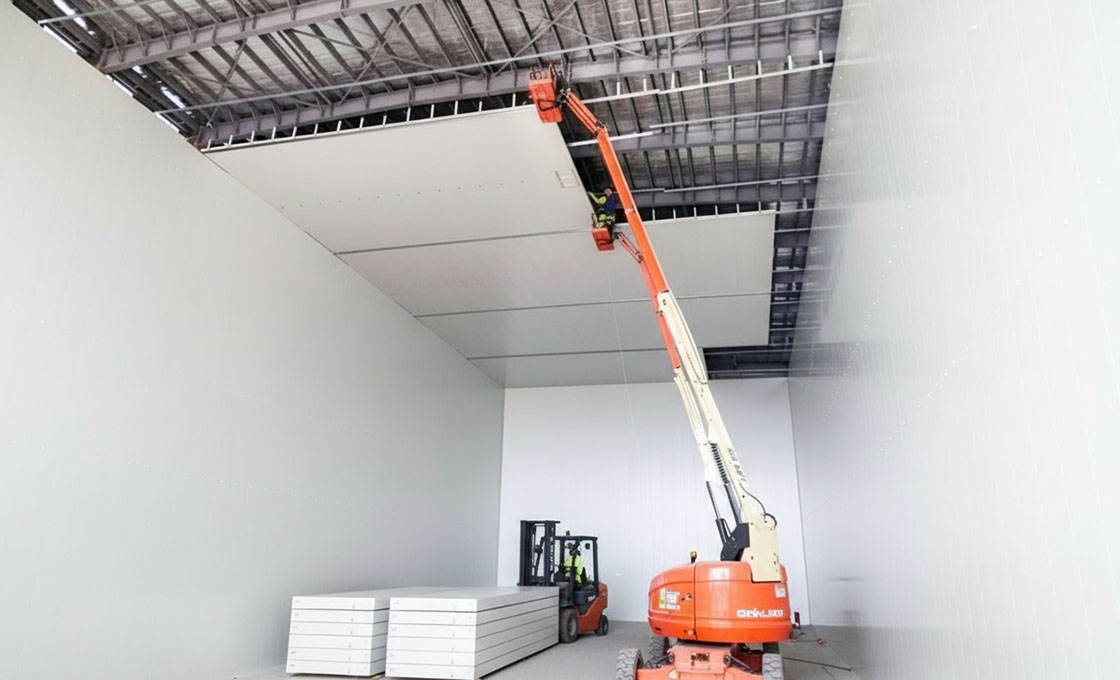
Weight Limits and Load Capacity
Standard commercial ceiling grids max out at 4 PSF total system weight. For specialized vehicle OEMs, that limit is a structural liability — not a design parameter.
The 4 PSF Maximum: Hard Limits of Suspended Grid Systems
Per ASTM C635 and ASTM C636 installation standards, a standard commercial suspended ceiling system carries a strict maximum total weight of 4 pounds per square foot (PSF). This 4 PSF cap is not a suggestion — it includes the grid itself, ceiling tiles, luminaires, HVAC diffusers, and every cable running through the plenum. For a truck body or marine vessel builder researching ceiling panel support system requirements, this number immediately signals a problem. Mobile applications subject ceilings to continuous dynamic vibration, lateral shear, and impact loads that static building codes were never designed to handle.
The weak link in any standard grid is the suspension hardware. ASTM A641 mandates #12-gauge hanger wire (0.106-inch diameter) for commercial installations. That wire handles vertical dead load in a stationary building, but it cannot absorb the shear forces generated by a 40-ton truck traversing a washboard road or a marine hull flexing through heavy seas. The hanger wires fatigue, elongate, and eventually fail at their attachment points.
The 80 lbs Independent Fixture Threshold
Building codes stipulate that any single fixture exceeding 80 lbs must be supported entirely independent of the ceiling suspension system. In a commercial building, this means routing threaded rod or structural steel directly to the concrete deck above. In an RV or marine application, there is no concrete deck. The ceiling panel itself becomes the primary structural substrate. If you are specifying rv ceiling panel replacement materials, the panel must carry the point load of lighting, HVAC registers, and safety equipment without relying on any external grid.
This is where standard mineral fiber lay-in tiles fail completely. They have negligible flexural strength and zero point-load capacity. A composite sandwich panel, by contrast, distributes concentrated loads across its internal core structure — whether that core is aluminum honeycomb, PET foam, or structural foam — transferring stress to the panel’s perimeter mounts rather than concentrating it at a single fastener hole.
Weight-to-Strength Superiority of Composite Sandwich Panels
The engineering case for composite panels in mobile applications comes down to one metric: specific flexural stiffness. A Raxpanel GRP/FRP Honeycomb Panel or Foam Core Panel achieves structural rigidity that eliminates the need for a support grid entirely. These are direct bond ceiling panels that mount straight to the vehicle’s structural ribs or framing members. By removing the grid, hanger wires, and cross tees, the total ceiling assembly weight drops by up to 60% compared to a traditional framework.
- Load Span Capability: Composite sandwich panels span larger unsupported distances than standard tiles, reducing the number of structural ribs or framing members required in the vehicle body.
- Integrated Mounting Points: Unlike commercial grids that require complex independent wiring supports per NEC 300.11(B), composite panels accept threaded inserts and hardware directly into the core, simplifying assembly line cycle time.
- Dynamic Load Resistance: Panel skins in tension and compression resist the cyclic bending forces that snap hanger wires, providing true structural ceiling integrity under road and marine vibration.
For specialized vehicle manufacturers evaluating lightweight ceiling panels for truck bodies or structural composite ceiling panels for marine applications, the takeaway is straightforward. Standard suspended grids with their 4 PSF limit, 80 lbs fixture threshold, and #12-gauge hanger wires are engineered for buildings that never move. A self-supporting composite sandwich panel system bypasses every one of those constraints while cutting weight, waterproofing the assembly, and improving thermal insulation performance.
Wiring and Electrical Integration
NEC 300.11(B) mandates that every wire run above a suspended ceiling must be independently supported by the structure—not the grid. Composite sandwich panels eliminate this burden entirely by embedding wiring channels directly into the panel core.
NEC 300.11(B) Requirements for Supporting Wiring Above Suspended Ceilings
NEC 300.11(B) is unambiguous: no electrical wiring may rely on a suspended ceiling grid for support. Every cable, conduit, and raceway must be secured directly to the structural members above the ceiling plane. In a standard commercial installation using #12-gauge hanger wire (0.106-inch diameter per ASTM A641), the suspension system is engineered to carry the grid, panels, and luminaires—and nothing else. Total system weight cannot exceed 4 PSF. Routing wires through grid intersections or tying them to cross tees is a direct code violation.
For specialized vehicle manufacturers, this code creates a severe design problem. A static commercial building has rigid structural steel or concrete to anchor independent J-hooks, cable trays, and conduit clips. A moving vehicle does not. An RV or marine vessel experiences continuous dynamic vibration, lateral shear forces, and impact loads that independent wiring supports simply cannot withstand over time. Fragile attachment points fatigue, crack, and fail—leaving unsupported wiring to chafe against the ceiling cavity structure.
This is precisely where the logic of traditional grid-supported ceilings collapses for mobile applications. The independent support hardware required by NEC 300.11(B) adds installation labor, increases part count, and introduces failure points that compound under vibration stress.
Independent Wire Clamping of Grid Systems vs. Integrated Wiring Channels of Composite Sandwich Panels
A traditional suspended ceiling grid requires an entirely separate mechanical infrastructure above the ceiling plane just to route wiring in compliance with NEC 300.11(B). This infrastructure adds weight, labor hours, and potential failure points—liabilities no vehicle OEM can afford.
- Grid Systems: Require J-hooks, conduit clips, cable ties, and independent bracing attached to structural framing above the ceiling. Every wire run must be individually secured, driving up assembly line cycle time and material cost.
- Composite Sandwich Panels: Feature pre-engineered wiring channels routed directly into the foam or honeycomb core during manufacturing. Wiring is captured inside the panel itself—no additional mechanical supports, no separate hardware, no exposed cables in the cavity.
- Weight Impact: Eliminating independent support hardware contributes to the up to 60% overall ceiling weight reduction that composite sandwich panels deliver compared to traditional steel grid frameworks.
The engineering advantage is straightforward. Raxpanel’s GRP/FRP Honeycomb and Foam Core Panels integrate mounting points and wire routing paths directly into the panel structure. The core material—whether closed-cell foam or honeycomb—provides natural conduit channels without compromising the panel’s structural rigidity or thermal insulation values. For truck bodies, RVs, and marine vessels, this means wiring is locked in place, protected from vibration-induced chafing, and completely isolated from the panel’s structural loads.
The net result for specialized vehicle OEMs: fewer parts to source, faster assembly line throughput, full wiring compliance without additional mechanical supports, and a ceiling system that can span larger distances without support grids entirely. This is the core structural difference between adapting a commercial building product to a vehicle versus engineering a composite panel solution specifically for mobile load conditions.
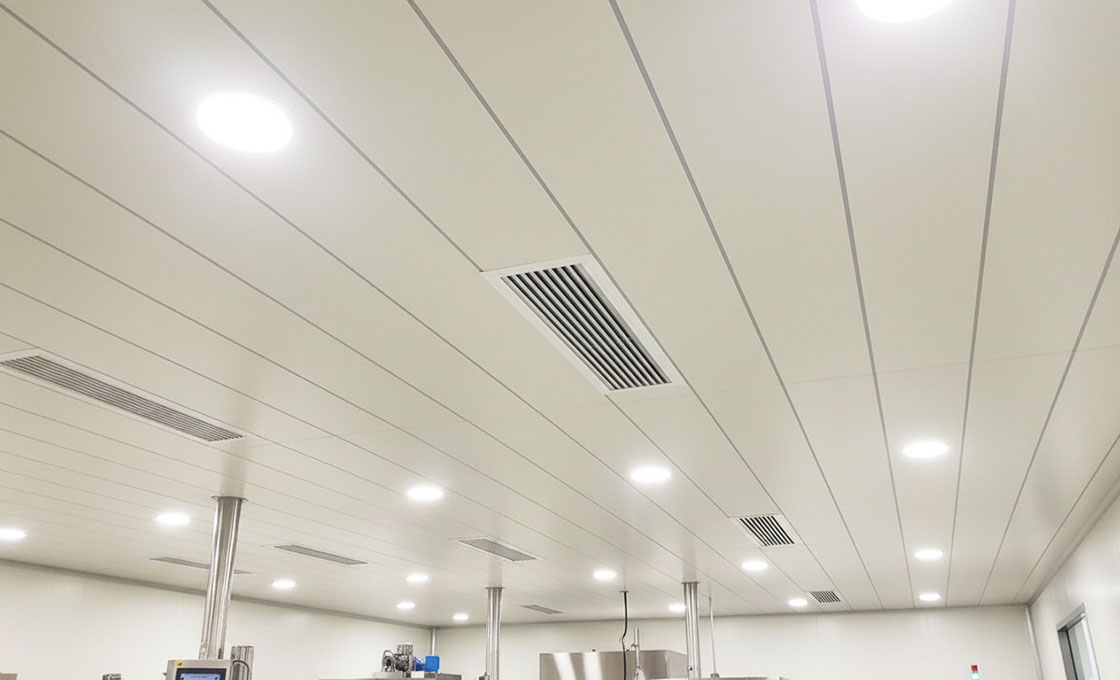
Composite Panels in Vehicle Ceilings
Standard commercial grids max out at 4 PSF and rely on #12-gauge hanger wires designed for static buildings. Mobile applications require self-supporting composite panels that handle dynamic vibration without any suspension system.
Eliminating Suspension Wires with Advanced Composite Panels
Traditional ceiling panel support system requirements, governed by ASTM C635 and ASTM C636, assume a stationary building envelope. Standard #12-gauge hanger wire (0.106-inch diameter per ASTM A641) handles vertical dead loads in offices and retail spaces. The moment you mount that same grid inside an RV, truck body, or marine vessel, the physics change entirely. Dynamic shear forces, lateral vibration, and constant flexing snap those wires within thousands of miles.
Raxpanel’s GRP/FRP Honeycomb Panels and CFRT Sandwich Panels solve this by acting as structural, self-supporting elements. Their internal honeycomb or foam core geometry provides immense rigidity across large spans—without a single hanger wire. Composite sandwich panels can span larger distances without support grids, reducing overall ceiling weight by up to 60% compared to traditional steel frameworks. This weight reduction directly improves vehicle fuel efficiency and payload capacity.
Thermal Bridging Prevention and Moisture Resistance
In specialized vehicles, every thermal bridge costs money in increased HVAC load. Standard metal grid systems create continuous conductive paths between interior and exterior surfaces. Aluminum Sandwich Panels and Foam Core Panels break those paths entirely. The closed-cell foam or honeycomb core acts as a structural thermal break, maintaining consistent insulation values across the full panel surface.
Moisture is equally critical. Unlike mineral fiber lay-in tiles that absorb and retain water, GRP/FRP face sheets are completely waterproof. This eliminates the mold, sagging, and structural degradation that plagues standard ceiling materials in humid marine environments or cold chain applications where condensation is constant. Foam core ceiling panels for cold rooms maintain their R-value even under heavy condensation cycles.
Direct-to-Frame Bonding for OEM Assembly Lines
OEMs building RVs, truck bodies, and marine vessels cannot afford multi-day ceiling installations involving grid alignment, wire leveling, and tile placement. Direct bond ceiling panels vs suspended grids is not just a materials choice—it is a manufacturing strategy. Composite panels bond directly to the vehicle’s structural frame using structural adhesives or mechanical fasteners, collapsing the installation cycle from days to hours.
Furthermore, commercial guides leave a hollow plenum space requiring complex independent wiring supports per NEC 300.11(B). Vehicle ceiling panel systems from Raxpanel integrate mounting points directly into the panel core. Electrical runs, lighting fixtures, and ventilation ducting attach to the panel itself, eliminating separate support structures. This simplifies assembly, reduces part count, and gives OEM engineers full control over the ceiling cavity layout.
Conclusion
Your vehicle platform has no business running a suspended ceiling grid. That #12-gauge hanger wire handles static commercial loads fine — it fails under the lateral vibration a marine hull or truck chassis generates at highway speed. Self-supporting composite panels delete that grid entirely, dropping ceiling weight up to 60% and integrating mounting points directly into the panel core.
Ask us for the flexural strength data on our GRP honeycomb panels and run your own FEA simulation against your current grid assembly. Test both under 50,000 miles of equivalent road vibration. The numbers will make your material decision for you.
Frequently Asked Questions
This factor has a direct bearing on project performance and long-term cost. Addressing it with specific data rather than general assumptions leads to better outcomes.
What provides structural support for suspended ceilings?
Structural support for suspended ceiling systems typically comes from a combination of primary carriers, cross tees, and wall molding that distribute loads evenly across the ceiling plane. In high-performance applications utilizing CFRT Sandwich Panels or Aluminum Sandwich Panels, the inherent rigidity of these materials contributes significantly to overall structural integrity. The support infrastructure must account for dead loads from the panels themselves, as well as live loads from auxiliary systems and potential maintenance access, with load-bearing capacity determined by panel thickness, core density, and the specific material composition of the sandwich structure.
What supports a suspended ceiling grid?
A suspended ceiling grid is supported by a network of hanger wires or rigid hangers attached directly to the structural overhead, combined with perimeter wall molding that establishes the ceiling height and provides edge support. Main runners and cross tees interlock to form the grid framework, which must be engineered to accommodate the specific weight and dimensional requirements of the chosen panel system, whether lightweight Foam Core Panels or heavier GRP/FRP Honeycomb Panels. The support spacing is critical and varies based on panel span capabilities, with typical hanger wire placement at 4-foot intervals along main runners to ensure deflection remains within acceptable limits and maintain structural stability.
What are the requirements for supporting wiring above a suspended ceiling?
Wiring systems above suspended ceilings must be independently supported by the building structure rather than relying on the ceiling grid or panels, as explicitly mandated by the National Electrical Code (NEC) to prevent undue stress on the ceiling system. This requirement is particularly important when working with specialized panels like GRP/FRP Honeycomb or CFRT Sandwich Panels, where the structural integrity must remain uncompromised by additional loads. Cable trays, conduit, and junction boxes require dedicated support hardware fastened to structural members, with adequate clearance maintained above the ceiling plane to facilitate maintenance access while preserving the thermal and moisture barrier properties that high-quality sandwich panels provide.
Are there NEC codes for suspended ceilings?
Yes, the National Electrical Code (NEC) contains specific provisions governing electrical installations in suspended ceiling spaces, particularly Articles 300.11, 368.10, and 392.18, which address support requirements for raceways and cables within plenum spaces. When installing Aluminum Sandwich Panels or CFRT Sandwich Panels in commercial environments, compliance with NEC Article 300.22 is essential for plenum-rated applications, ensuring all materials meet fire safety and smoke development standards. Additionally, the NEC mandates that electrical equipment installed above suspended ceilings must remain accessible, making the selection of easily removable panel systems crucial for ongoing maintenance and code compliance.
How much weight can a suspended ceiling support?
The weight-bearing capacity of a suspended ceiling system varies significantly based on panel composition, with Aluminum Sandwich Panels and GRP/FRP Honeycomb Panels offering superior load performance compared to standard ceiling tiles, often supporting 10-25 pounds per square foot when properly engineered. CFRT Sandwich Panels provide exceptional strength-to-weight ratios, making them ideal for applications requiring enhanced load capacity without compromising the structural overhead burden. The final load determination depends on multiple factors including panel thickness, core material density, span dimensions, grid spacing, and hanger wire gauge, with comprehensive load testing and engineering calculations recommended to ensure compliance with ASTM C635 and local building codes.