
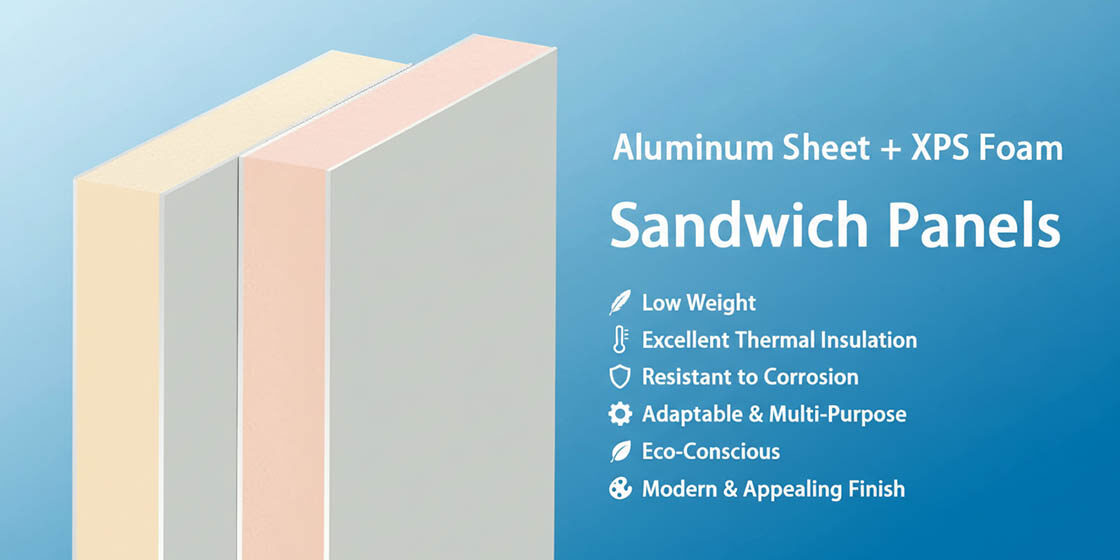
Reviewing facade options for a cold-storage warehouse usually ends with architects vaguely specifying “aluminum composite panels.” Trust that wording blindly and you can end up with decorative ACM where the project actually called for a load-bearing sandwich panel, a mismatch that only surfaces at inspection. Real aluminum sandwich panels are not decorative cladding; they are heavy-duty engineered systems where precise core density and fire ratings determine if your build passes winter inspections.
Most salesmen will just pitch you brochures, but we are dissecting real lab test reports on PIR-core performance and EN 13501-1 compliance. Knowing the actual impact of a ±1mm flatness tolerance on installation speed is what separates a panel that saves you rework from one that creates it. If you want zero rework on your next project, these are the exact specifications and suggestions we hand directly to structural engineers.
What Are Aluminum Sandwich Panels?
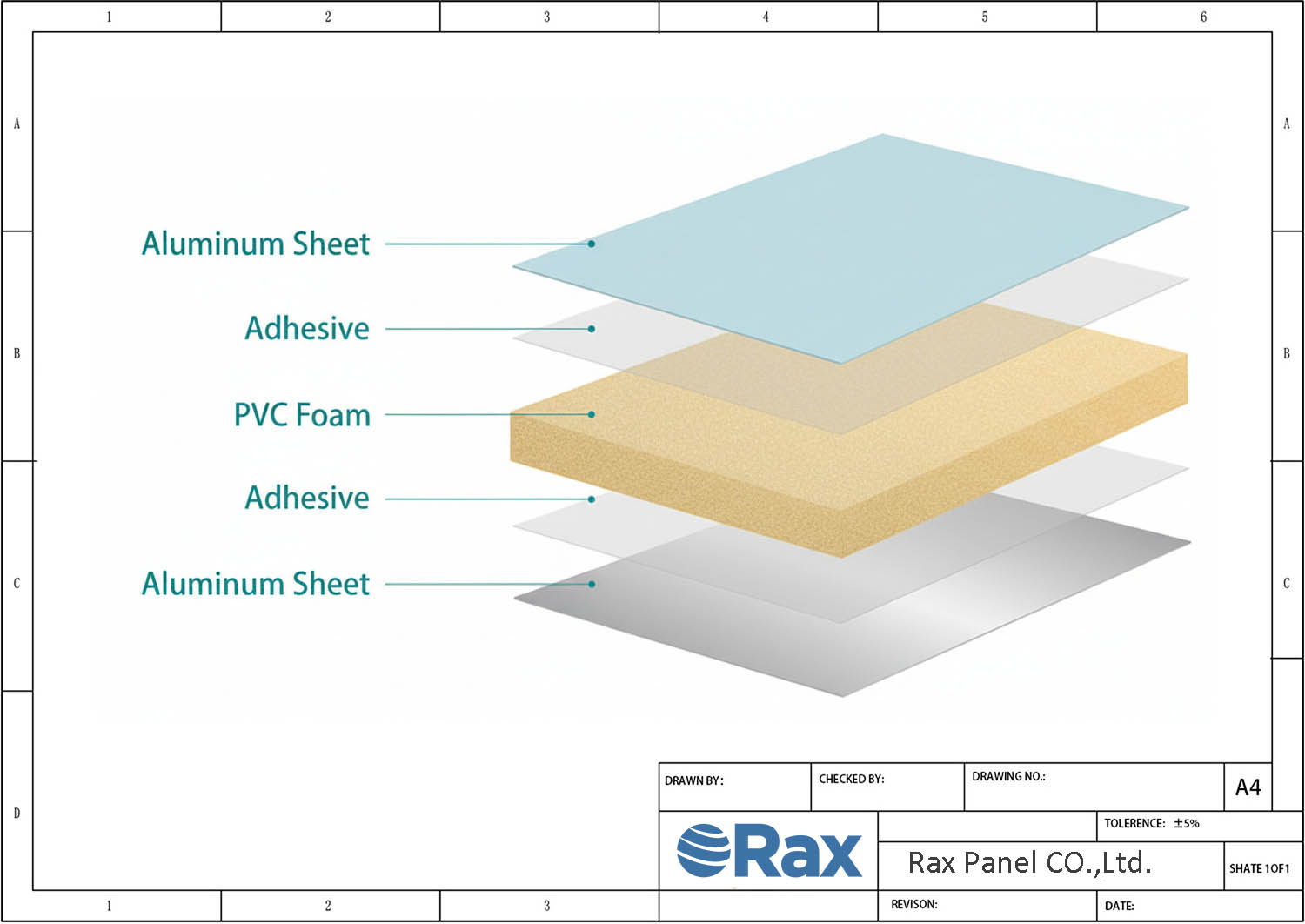
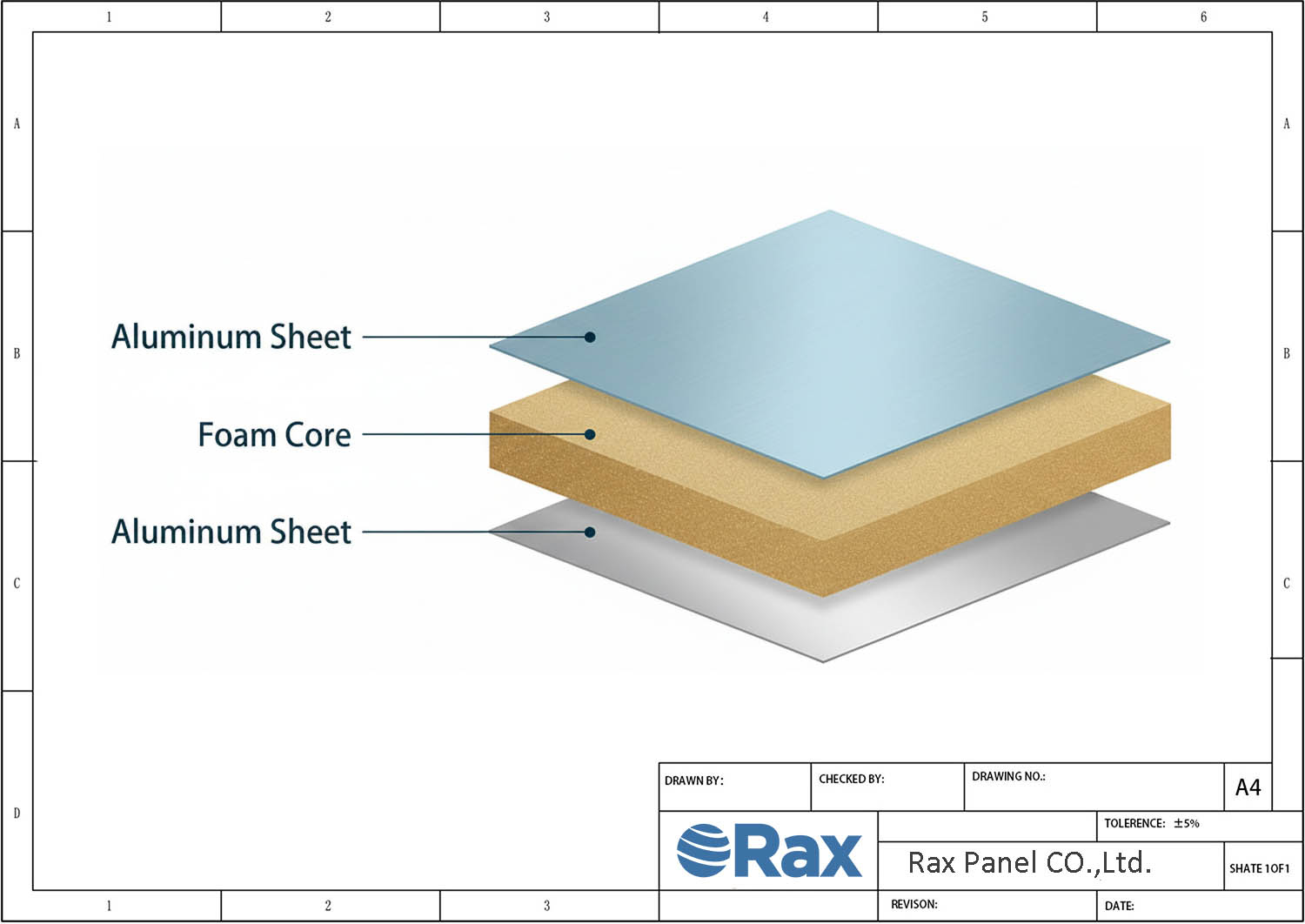
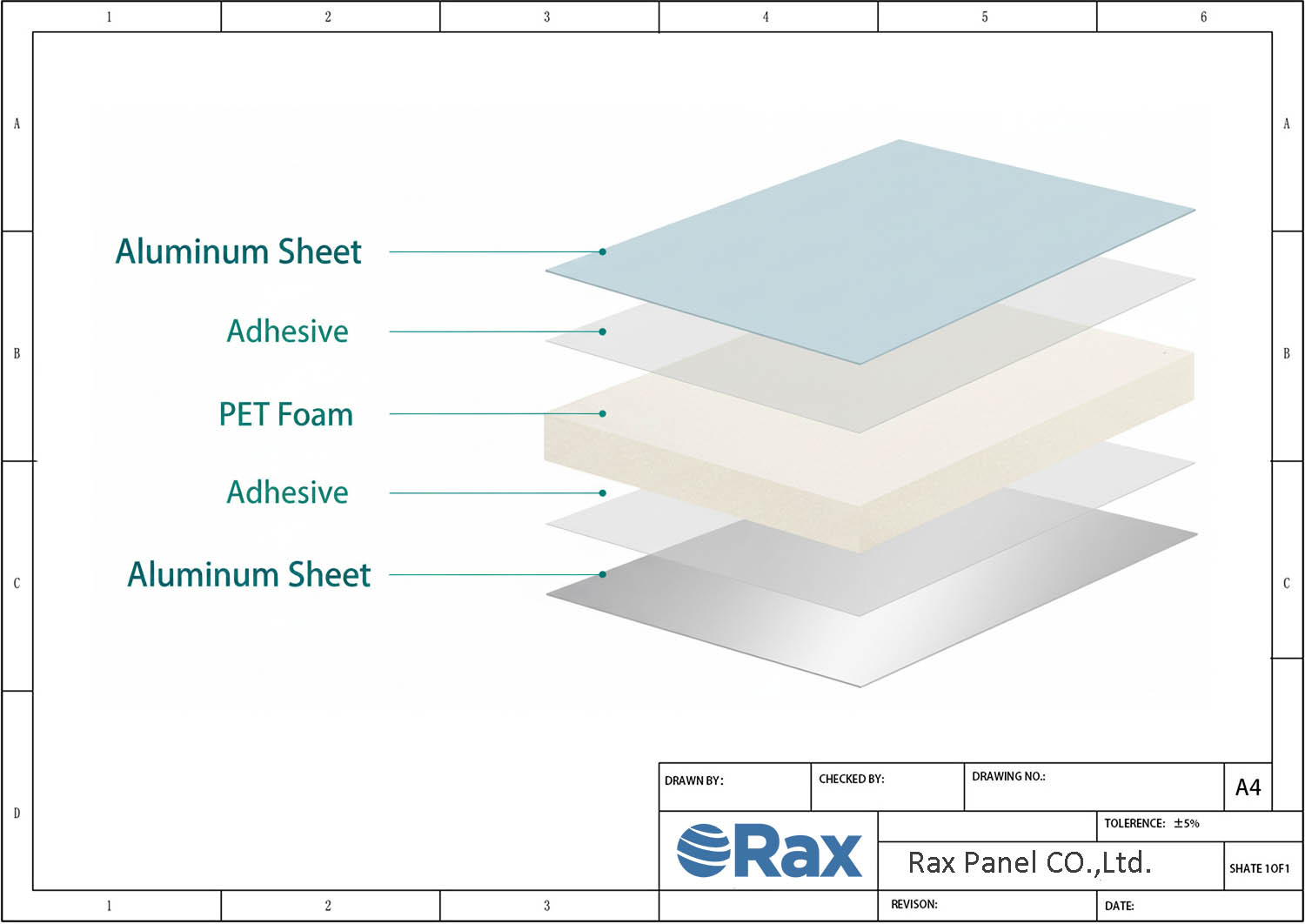
Aluminum sandwich panels are structural insulated composites: 0.4–0.8mm AA3003/AA5005 face sheets bonded to structural cores such as PIR, PU, mineral-filled material, or aluminum honeycomb. They deliver ≤0.022 W/(m·K) thermal conductivity and EN 13501-1 Class A2 fire rating, unlike decorative ACM with polyethylene cores.
What Makes Aluminum Sandwich Panels Structurally Distinct?
Commercial envelopes demand structural load-bearing panels, not flimsy cladding. We bond 0.5mm AA3003-H14 skins to 100mm PIR cores using high-pressure lamination, hitting a flexural strength of ≥18 MPa on our own production line. Standard ACM uses 0.5mm skins over PE cores that buckle under point loads exceeding 1.2 kN/m².
Core Material Determines Fire Safety & Insulation Performance
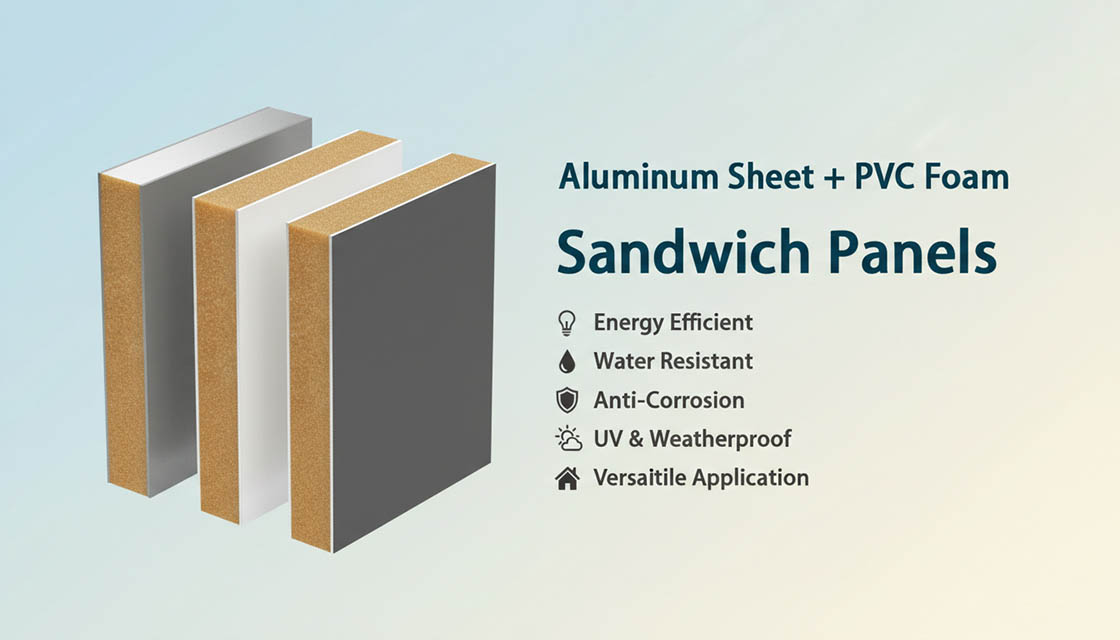
Core selection dictates your lifecycle costs and fire safety compliance. Our PIR-core panels are engineered to reach EN 13501-1 B-s1,d0 with thermal conductivity at ≤0.022 W/(m·K), roughly 15% better than standard PU cores. Cheaper PU cores force you to add bulky fire barriers, while honeycomb cores demand a 2.3x price premium over standard PIR.
- Fire ratings are not the place to guess. We confirm PIR and honeycomb cores against EN 13501-1 and ASTM E84 through third-party lab reports: fire-retardant PIR typically tests to B-s1,d0, and mineral-filled cores reach Class A2. If you insist on PU cores to save upfront budget, you are accepting a lower fire classification for the building.
- Thermal data dictates your energy audit results. Our 100mm PIR cores achieve thermal conductivity of ≤0.022 W/(m·K), easily passing cold-storage codes. If you install the same thickness in PU, you settle for a poorer thermal resistance of 0.026 W/(m·K) and pay higher refrigeration costs.
- Specifying the correct skin alloy prevents structural failures on site. We use AA3003-H14 as our standard, stepping up to AA5005-H14 for marine-grade saltwater environments. Thickness runs 0.4 to 0.8mm, holding EN 485-4 sheet tolerances.
- We hold flatness tolerance to ±1mm across a 2.4m length. That precision prevents ugly facade gaps and stops thermal bridging dead in its tracks. You get seamless joints without fighting the material during installation.
Why Commercial Procurement Teams Specify Aluminum Sandwich Over ACM
Procurement managers for cold rooms avoid standard ACM because its PE core softens near 130°C and cannot deliver the fire performance that high-rise and cold-storage codes demand. Our PIR-core panels are engineered to hit ASHRAE 90.1 insulation targets out of the box. We deliver R 4.5 m²·K/W at 100mm thickness (about R-26 in imperial units) and include full test documentation with every shipment.
ACM mis-specification stalls projects every year: after the Grenfell Tower fire, PE-core ACM was banned on buildings over 18m in the UK and restricted across much of Europe, so inspectors now scrutinize core composition on every submittal. You avoid these disasters by partnering with a factory that runs batch-level fire testing and offers 50m² trial orders.
Why Choose Them for Commercial Buildings?
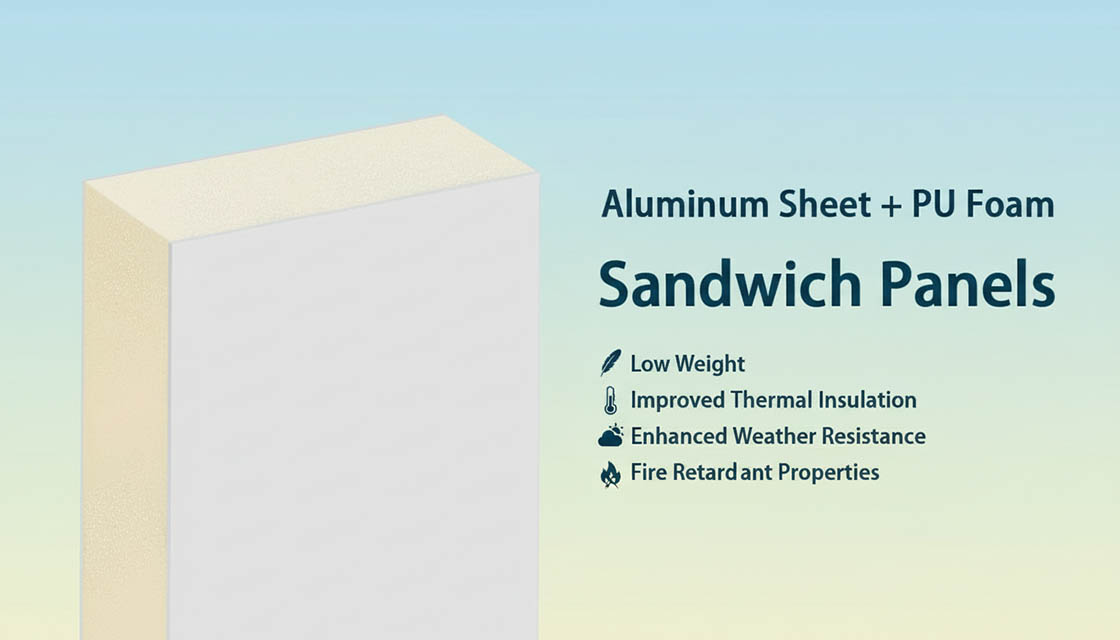
Our PIR-core aluminum sandwich panels cut structural load, slash HVAC costs, and eliminate corrosion risks, engineered for commercial builds where compliance and lifecycle cost matter more than aesthetics.
Reduced dead load on structures
Site engineers frequently ask us how to reduce dead load, because heavy precast concrete ruins tight project schedules. At 8.5 kg/m², our panels cut facade weight to a fraction of precast assemblies, and their rigidity makes crane-free retrofits realistic on constrained sites.
Lower HVAC costs via high R-values
Our PIR core offers thermal conductivity of ≤0.022 W/(m·K), delivering an R-value of roughly 4.5 m²·K/W at 100mm thickness (about R-26 in imperial units). That beats standard PU cores by roughly 15% at equal thickness, verified by third-party ASTM C518 testing. For a 10,000 m² cold room, that difference flows straight into the refrigeration energy budget and supports ASHRAE 90.1 compliance.
Corrosion resistance in harsh environments
Choosing the right panel supplier makes or breaks your warranty risk. Cheap steel or low-grade aluminum blisters in coastal environments. We prevent this by specifying AA3003-H14 or AA5005-H14 skins with a 25–30μm PVDF coating. That specific thickness shrugs off salt spray, industrial SO₂, and daily chemical washdowns. We have shipped these exact specs into coastal and industrial projects across Southeast Asia and North America, backed by more than 15 years of composite panel production for customers in over 50 countries.
Dimensional stability ensuring tight joints and preventing leaks or thermal bridging
We hold a ±1mm flatness tolerance across 2.4m lengths at the factory. That is not just a bragging right. It eliminates on-site shimming and guarantees continuous air barriers at the seams. Thermal bridging kills energy efficiency in rushed commercial builds. When the inspector runs the blower-door test, your tight joints will pass on the first attempt. You avoid expensive rework delays.
Fire Safety & Building Code Compliance
Every aluminum sandwich panel order ships with EN 13501-1 and ASTM E84 test documentation: fire-retardant PIR cores tested to B-s1,d0, mineral-filled cores to Class A2, and ASTM E84 reports showing flame spread ≤25. No extrapolated ratings, no outdated standards.
PIR vs. Mineral-Filled Cores: Verified Ratings, Not Claims
When you compare fire ratings, the paperwork separates truth from marketing. Our standard 100mm PIR-core panels are tested under EN ISO 11925-2 and EN 13823 protocols to EN 13501-1 B-s1,d0. If your build requires true non-combustibility, our mineral-filled cores are the route to Class A2. Never accept a verbal promise. Missing paperwork is exactly how projects fail final inspections.
ASTM E84 & EN 13501-1: What Your Spec Sheet Must Show
Do not tolerate suppliers who cannot produce fire test paperwork before you commit to an order. We provide ASTM E84 reports from accredited third-party labs for U.S. builds, showing flame spread ≤25 and smoke-developed index ≤450 upfront. For EU and UK projects, our EN 13501-1 paperwork explicitly cites EN ISO 11925-2 and EN 13823 test methods rather than printing a vague “meets A2” label. We attach these digital files the moment you confirm the order.
How to Spot Unsubstantiated “Fire-Resistant” Marketing
- No test report number or accredited lab name? Reject the shipment immediately. Real compliance is always traceable to the source.
- A legitimate factory refuses to use vague phrases like “B1 equivalent” without providing the raw EN 13501-1 data. Building authorities flat out reject equivalency claims. If a sales rep suggests bypassing the exact test paperwork, find a new vendor.
- A reliable supplier quotes EN 13501-1, not retired national classifications: the UK removed BS 476 reaction-to-fire references from Approved Document B in March 2025, and DIN 4102 B1/B2 grades have been superseded by EN 13501-1 classes. Demand EN 13501-1 and ASTM E84 metrics instead; those are the current baselines for international commercial building codes.
Thermal Performance & Energy Efficiency
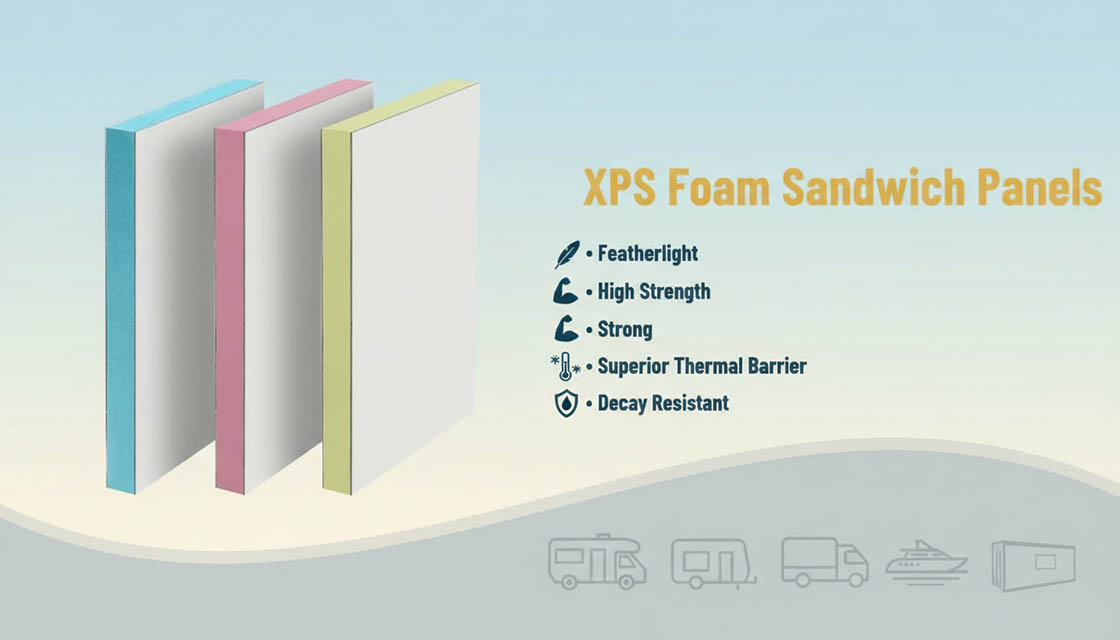
Our PIR-core aluminum sandwich panels achieve ≤0.022 W/(m·K) thermal conductivity and R 4.5 m²·K/W at 100mm thickness (about R-26 imperial), delivering verifiable energy savings for cold rooms and warehouses.
PIR Core Delivers Industry-Leading Thermal Conductivity
For thermal efficiency, rigid polyisocyanurate cores win over standard PU by hitting 0.022 W/(m·K). We test every production batch to ISO 8301 standards and ship the hard data in your compliance dossier. Decorative surface finishes might look pretty, but measurable core performance prevents real-world job failures.
R 4.5 m²·K/W Insulation in a 100mm Panel Thickness
Any experienced panel factory will confirm that 100mm PIR panels with 0.5mm AA3003-H14 aluminum skins deliver R 4.5 m²·K/W (about R-26 imperial). That covers typical cold-storage envelope targets without stacking secondary insulation. You get faster install times, no thermal bridges through the core, and a cleaner run at energy audits.
Long-Term Energy Savings for Industrial Facilities
Job sites in Southeast Asia and the EU keep choosing PIR over standard PU because PIR holds its thermal rating as temperatures fluctuate while cheaper PU ages faster. For lifecycle budgeting, that means predictable operating costs and a simpler path to compliance with energy codes like California’s Title 24.
Installation Precision & Tolerances
We machine every RAX Panel aluminum sandwich panel (0.5mm AA3003 skins, 100mm PIR core) to a flatness tolerance of ±1mm across standard 2.4m lengths, eliminating on-site fitting errors that delay warehouse and cold room builds.
±1mm Tolerance Ensures Seamless On-Site Alignment
Gaping joints compromise thermal performance faster than any other installation defect. We prevent this using CNC cutting to hold a strict ±1mm flatness tolerance on 2.4m lengths, verified per batch to guarantee continuous vapor barriers and airtight envelope performance.
Factory-Cut Openings, Corners & Jointing Accessories
We pre-fabricate exact openings for vents and conduits directly from your shop drawings to eliminate onsite measuring mistakes. We bundle the 0.5mm AA3003 aluminum corner profiles and sequence-code them for the install crew. Taking this preparation off the critical path reduces field trimming and measurably cuts facade cladding labor hours.
Reduced On-Site Errors = On-Time Project Delivery
Exact ±1mm tolerance and factory-cut trimouts slash on-site rework to near zero. That is the difference between hitting your deadline and paying liquidated damages. When comparing suppliers, look at how they handle cold storage walls. Decorative ACM vendors treat tolerances as mere suggestions, and every millimeter of gap becomes a thermal leak you keep paying for in refrigeration.
Logistics & On-Site Delivery
Transit damage and delivery misalignment are top causes of project delays for aluminum sandwich panels, especially on cold room or warehouse builds where flatness tolerance (±1mm) and fire-rated integrity can’t be compromised.
Reinforced Crating & Edge Protection Are Non-Negotiable
We ship 0.5mm AA3003 aluminum skins up to 11.8m in custom steel-reinforced crates because standard wood pallets fail at that length. Panels over 6m flex during transit, causing core micro-cracks and skin delamination. Factories that skip edge protectors to save a few dollars per load routinely hand their buyers thousands of dollars in rejection fees at the third-party facade inspection.
Confirm Inland Freight Is Included: Port Drop-Off Isn’t “Delivery”
FOB port quotes are a trap. If your contract lacks inland freight, you gamble on crane availability and oversize road permits for loads over 3.6m. Whichever panel type you compare, check who actually manages the truck. We mandate GPS-tracked transport with real-time tilt monitors so transit abuse is documented before it becomes your warranty problem.
Avoid Crane Scheduling Conflicts by Specifying Full Turnkey Delivery
Port drop-offs force your team to fight with MEP crews for crane time. Port cities like Rotterdam run congested crane schedules, and a supplier who assumes delivery means dumping pallets at the gate leaves you paying idle crews for days. We embed crane coordination into our logistics for orders over 200m² to guarantee your panels land on the staging pad within a strict 4-hour window.
Conclusion
To pass energy code and fire inspections on the first try, specify PIR-core aluminum panels with 0.5mm AA3003 skins. Our ≤0.022 W/(m·K) conductivity beats standard PU by roughly 15%. Ask vendors pushing cheap polyurethane for their test paperwork up front, because they rarely volunteer it.
Order a 3-meter sample cut to your exact joint tolerance. Run a side-by-side thermal scan against your current panel. Most buyers spot the gap leakage difference in 48 hours.
Frequently Asked Questions
What’s the difference between aluminum composite panels and aluminum sandwich panels?
Aluminum composite panels (ACPs) typically consist of two thin aluminum sheets bonded to a polyethylene or fire-retardant core, while our specialized Aluminum Sandwich Panels feature high-performance cores, such as mineral-filled, fire-rated, or structural foam, that offer superior strength-to-weight ratios, enhanced thermal performance, and greater durability. Unlike standard ACPs, our aluminum sandwich panels are engineered for demanding architectural applications requiring higher load-bearing capacity, fire resistance, and long-term weatherability.
Are aluminum sandwich panels suitable for exterior walls?
Yes, our specialized Aluminum Sandwich Panels are specifically designed for high-performance exterior wall applications. They offer excellent resistance to UV degradation, thermal cycling, moisture, and wind loads, while maintaining dimensional stability and aesthetic integrity over time. Their robust construction meets international building codes for façade systems and is ideal for modern commercial, institutional, and high-rise projects.
How much do 4×8 aluminum wall panels cost?
Pricing for 4×8 ft aluminum sandwich panels varies based on core type, finish, fire rating, and order volume, typically ranging from $80 to $250 per panel. For precise quotes aligned with your project specifications, we recommend contacting our sales team to evaluate options across our product range, including CFRT, GRP/FRP Honeycomb, Foam Core, and specialized Aluminum Sandwich Panels.
Can these panels be used in cold storage facilities?
Yes, several products in our range, including Foam Core Panels and certain Aluminum Sandwich Panels with closed-cell insulation cores, are engineered for cold storage environments. They provide exceptional thermal resistance (low U-values), moisture impermeability, and structural stability at sub-zero temperatures, making them ideal for refrigerated warehouses, food processing plants, and pharmaceutical cold chains.
Do you provide installation support for contractors?
Absolutely. We offer comprehensive installation support for contractors, including detailed technical drawings, on-site training, connection system guidance, and compatibility assessments with substructures. Our engineering team collaborates closely with installers to ensure seamless integration of our CFRT, GRP/FRP Honeycomb, Foam Core, and Aluminum Sandwich Panels into complex façade systems.