PIR Sandwich Panel

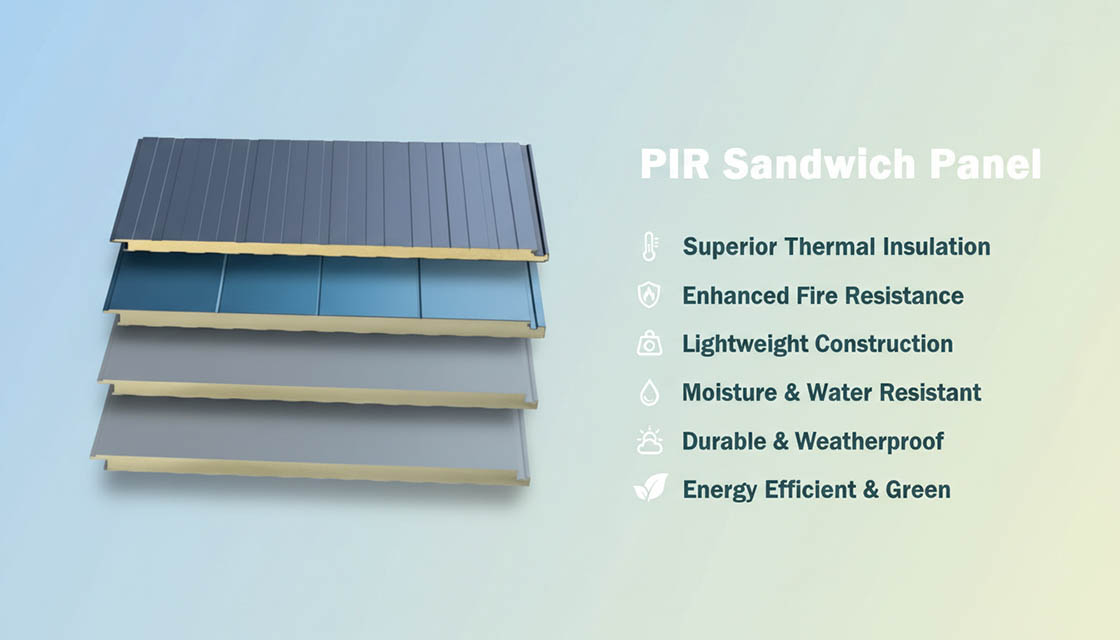
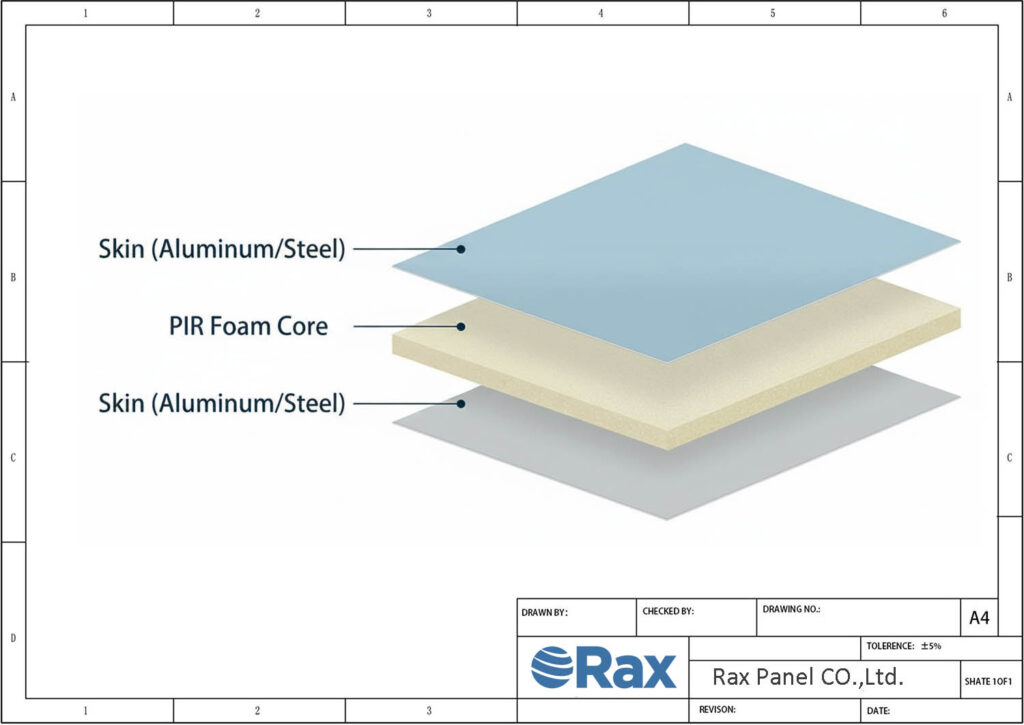
The PIR sandwich panel combines a polyisocyanurate foam core with aluminum face sheets to deliver thermal insulation and structural performance for architectural applications. Standard configurations feature a 15/16-inch Polyisocyanurate (PIR) core achieving 1-inch total thickness, with 0.040-inch aluminum skins and 48-inch widths available alongside custom dimensions.

The closed-cell PIR core provides an R-value of 6 while maintaining lightweight handling characteristics compared to solid metal alternatives. Aluminum skins deliver tensile strength, corrosion resistance, and accept various coatings including Polyvinylidene Fluoride (PVDF) finishes in multiple colors and textures such as wood or stone grains. Toughened epoxy adhesive bonds the layers across wide temperature ranges, ensuring panel integrity.

Primary applications include building facade cladding, curtain wall systems, spandrel panels, opaque glazing, and cold storage environments where thermal performance is critical. The composite structure provides compressive strength through the rigid foam core while aluminum skins contribute dimensional stability and smooth surface finish.

Fabrication utilizes standard wood or aluminum working tools for cutting, routing, and shaping operations. Custom fabrication services accommodate specific shapes, edges, and sizes per project requirements, enabling versatile design integration across diverse construction applications.
Leading Wholesaler of Custom PIR Sandwich Panels

Rax Panel is a professional ACP sandwich panel supplier and manufacturer based in Hebei, China, specializing in custom composite panel solutions including XPS panels and tailored fabrication services. With over 20 years of experience since 2002, we have built a strong reputation for delivering high-performance PIR sandwich panels that offer an exceptional combination of strength, light weight, and superior thermal insulation, with a heat conductivity coefficient within 0.03W/m·k, making them ideal for demanding applications such as:

  • Cold storage
  • Building facades
  • Refrigerated transport

Our in-house R&D and production capabilities allow us to maintain strict quality control and achieve a daily output of 1500+ m², ensuring reliable supply for clients across more than 30 countries. Committed to meeting the specific needs of our customers, we provide customized sizes, finishes, and fabrication options without compromising on durability or performance.

Contact us today to learn how Rax Panel’s PIR sandwich panels can enhance your next project.

Parameter Category Parameter Value
Core Properties Core Material Polyisocyanurate (PIR) Foam
Core Thickness 15/16 inch
Thermal Resistance (R-value) 6
Panel Dimensions Panel Thickness 1 inch
Panel Width 48 inch
Panel Length Customizable
Skin Properties Skin Material Aluminum
Skin Thickness 0.040 inch (per skin)
Coating Type PVDF (PVDF), others available
Color/Finish Options Wide selection of colors, wood grain, stone grain
Performance Thermal Conductivity Low (Closed-cell foam)
Density Lightweight
Fabrication Can be cut, routed, and shaped with standard wood or aluminum tools
Adhesive Toughened Epoxy (Rated -50°F to 250°F)
Applications Primary Uses Building facade cladding, curtain wall systems, spandrel panels, opaque glazing panels, cold storage, infill panels


    Related Products

    PIR Sandwich Panel Selection & Engineering Guide

    Polyisocyanurate (PIR) sandwich panels represent the pinnacle of thermal insulation efficiency and fire-retardant performance for commercial buildings, cold storage logistics, and food processing facilities. Formulated with a high polyisocyanurate ring structure and an extremely low thermal conductivity ($\lambda pprox 0.019$ W/m·K), PIR panels allow architects to specify thinner wall profiles while achieving maximum thermal resistance (R-value) and FM 4880 Class 1 fire compliance.

    💡 Pro Tip: Isocyanate Ring Cross-Linking & Char Ring Formation
    At RaxPanel, our PIR rigid foam core is synthesized under high isocyanate index ratios (>250). When exposed to direct flame, the surface polymerizes into a dense carbonaceous char layer that cuts off internal oxygen supply, preventing flame propagation and maintaining structural wall integrity.

    1. Why Is PIR Preferred Over Standard PUR for High-Performance Envelopes?

    While standard Polyurethane (PUR) offers good thermal insulation, PIR introduces a highly stable ring chemical cross-linking that improves fire endurance to EN 13501-1 Class B-s1, d0 without flaming droplets (d0) and with minimal smoke density (s1).

    2. What Core Density and Thermal Performance Matrix Does PIR Offer?

    The closed-cell structure (>95% closed cell) ensures zero water absorption and long-term U-value stability:

    Performance Parameter RaxPanel Engineering Metric Application Advantage
    Thermal Conductivity (λ) 0.018 W/m·K – 0.022 W/m·K Highest insulation value per mm thickness; reduces energy costs
    Fire Classification EN 13501-1 Class B-s1, d0 / FM 4880 Class 1 Protective carbon char formation; insurance compliant
    Operating Temperature Range -200°C to +120°C Suitable for cryogenic freezers and hot industrial roofs
    Compressive Resistance ≥ 140 kPa to 180 kPa Resists foot traffic and wind suction loads

    3. Which Surface Steel Coatings Resist Industrial Corrosion?

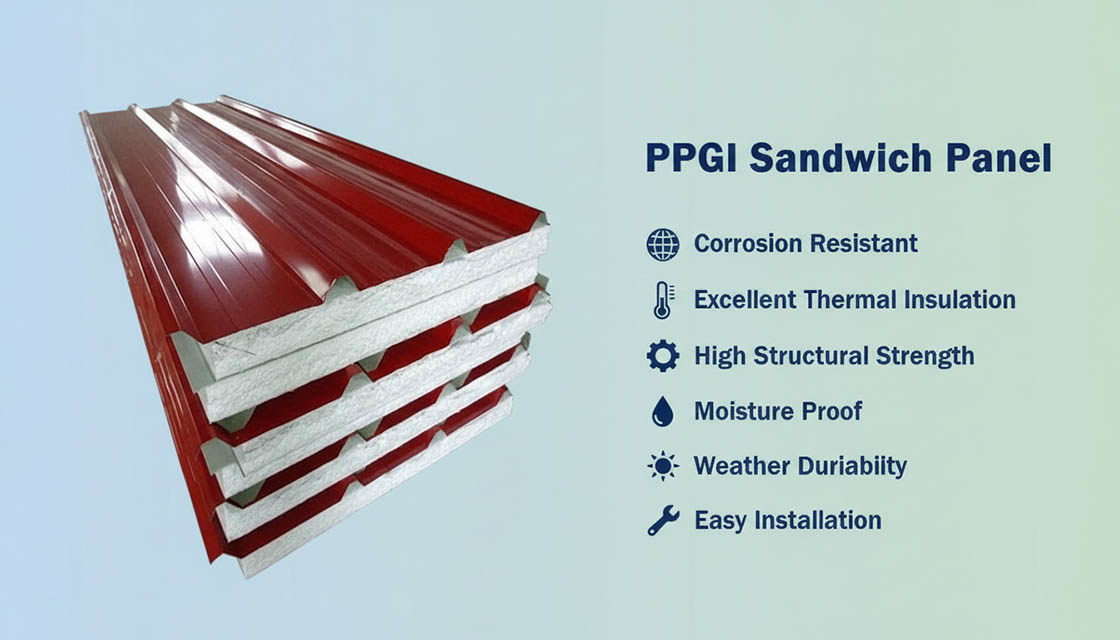
    Options include 0.5mm to 0.7mm pre-painted galvanized steel (PPGI), PVDF coatings for outdoor UV resistance, or HDP (High Durable Polyester) for humid food packaging lines.

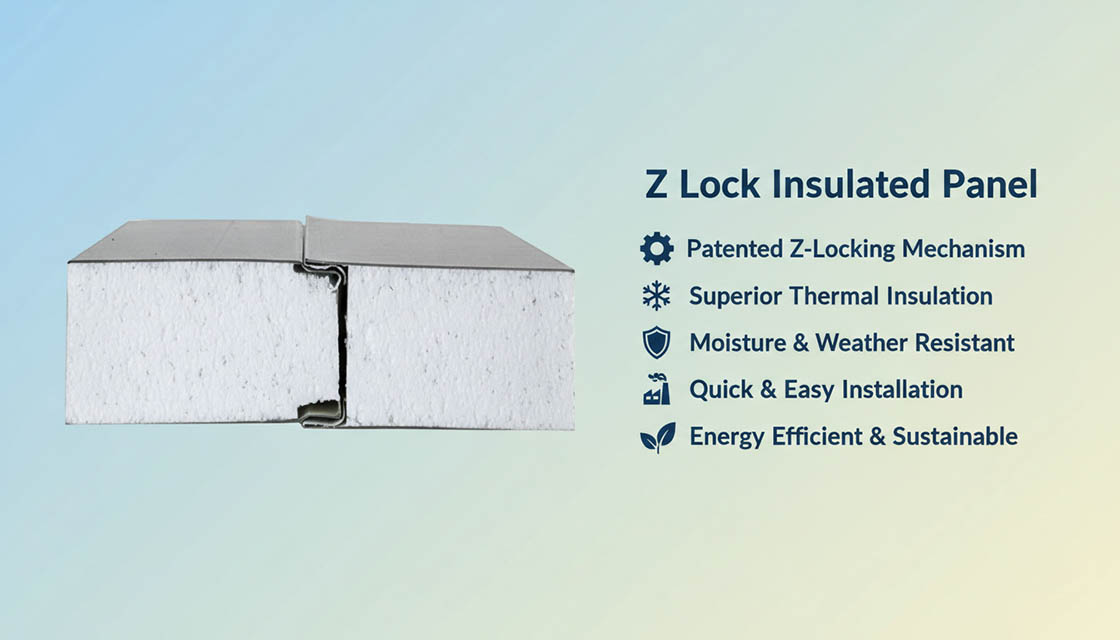
    4. How Does Cam-Lock Interlocking Maintain Cryogenic Seals?

    ❄️ Airtight Joint Sealing Technology:

    • Double Tongue-and-Groove: Precision CNC milled joint profiles with factory-applied non-hardening butyl sealant.
    • Cam-Lock Fasteners: Integrated eccentric hook fasteners pull panels tight during assembly, eliminating cold thermal bridges.

    5. Where Are PIR Sandwich Panels Most Commonly Installed?

    🧊 Cold Storage Logistics & Freezers

    Sub-zero temperature holding rooms (-25°C to -40°C) requiring maximum R-value insulation.

    🏢 Pharmaceutical Cleanrooms & High-End Factories

    Hygienic, washable, FM-approved wall and ceiling enclosures for sensitive manufacturing.

    6. How to Ensure Airtight Sealing and Thermal Bridge Elimination During Erection

    PIR panels are erected using continuous bottom alignment channels with dual elastomeric gasket strips. Internal corners receive continuous aluminum coving profiles to comply with USDA/HACCP hygiene standards.

    Frequently Asked Questions (FAQS)

    1. What is the thermal conductivity (λ value) of RaxPanel PIR sandwich panels?
    RaxPanel PIR rigid foam core achieves a thermal conductivity between 0.018 and 0.022 W/m·K, delivering superior thermal efficiency that allows thinner building wall profiles compared to EPS or Rockwool.
    2. How does PIR differ from standard PUR foam in fire situations?
    PIR incorporates higher isocyanate index ring structures that polymerize into a protective carbon char under flame, achieving EN 13501-1 Class B-s1, d0 fire compliance and preventing flaming drops.
    3. What panel thickness is recommended for a -20°C cold storage room?
    For a -20°C freezer, a 120mm to 150mm PIR sandwich panel is typically specified to achieve optimal U-values (U ≈ 0.15 W/m²K) and minimize refrigeration compressor duty cycles.
    4. Are PIR sandwich panels FM Approved?
    Yes. Formulations meet FM 4880 and FM 4881 Class 1 building envelope fire and wind-load performance standards for commercial industrial structures.
    5. Can PIR sandwich panels absorb moisture over long service life?
    No. Rigid PIR foam has a closed-cell ratio exceeding 95%, making it virtually impervious to moisture ingress, rot, or mold growth even under high humidity.
    6. What surface skin steel thicknesses are available for PIR wall and roof panels?
    Available skin thicknesses range from 0.4mm up to 0.8mm in pre-painted steel (PPGI), Galvalume, or 304 stainless steel for food-grade environments.
    7. How are PIR panels jointed during cold room installation?
    Panels join via precision double tongue-and-groove profiles with internal eccentric cam-lock hooks that lock adjacent panels together to guarantee vapor-tight seals.


    Get A Quick Quotation Today