
At two in the morning the compressor is fine and the door is not. Ice has welded the gasket to the frame, the shift leader is tempted to put a shoulder into it, and the stock behind that door is warming by the minute. Most cold room door problems trace back to a choice made on paper months earlier: which hardware got hung in that opening.
The sliding vs hinged cold room doors question looks like a coin flip until you score the opening itself. We build cold rooms – wall, ceiling and door panels on one line – and the door debate follows the panel schedule everywhere we ship. This page compares the two across the five things that decide it: space, the seal, the calendar of openings, the five-year bill, and what happens when things go wrong. The finish is a scorecard – one door per opening, not one door per building.
The Two Doors Do Different Jobs
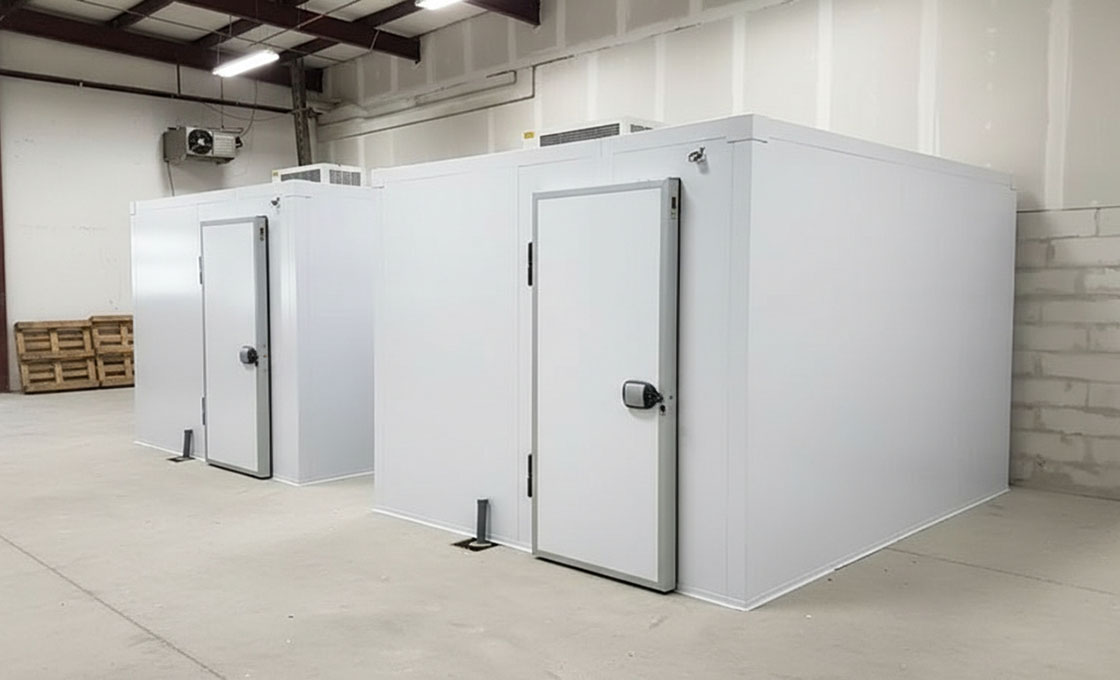
A hinged door swings on hinges like any room door, and the familiar motion is its strength. The leaf presses into gaskets around the whole perimeter as it closes, which is why it seals best. The price is the swing: the opening needs clear floor space in front, roughly a leaf-width deep, and the width of what passes through is bounded by the leaf itself.
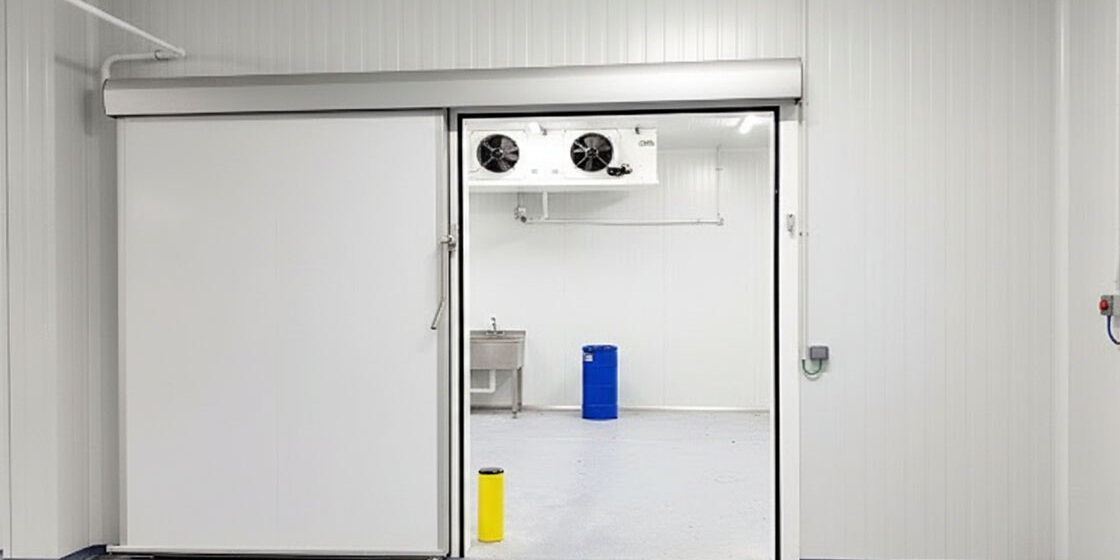
A sliding door hangs from a track and moves sideways along the wall. The leaf can be far wider than any practical swing, and it never sweeps the floor in front of the opening. Pallet traffic walks through without waiting on a return swing. The track and its rollers are moving parts the hinged door does not have, and they want maintenance on a schedule, not on failure.
They are also not the only two options, and pretending otherwise narrows the argument artificially. Strip curtains hang inside an opening as the cheap second layer, and high-speed roll doors serve the heavy-traffic class above both. The sliding vs hinged cold room doors decision covers the classic range in between: manual openings serving people, trolleys and pallets. The two outsiders merely set the boundaries of it.
The Seal: Gaskets, Ice and Heated Frames
Freezers turn door seals into a consumable. Moisture in the air freezes onto the gasket and welds it to the frame. The classic failure reads like a maintenance log: the door needs excessive force to open, and the gasket tears when forced. A torn gasket then leaks air, which builds more ice – so the rule is never force a frozen door; the fix upstream is heat, not muscle. Humidity at the envelope feeds this whole cycle, which is why we treat door care and the cold room humidity plan as one subject.
Below freezing, specification practice adds a heated frame: a perimeter gasket plus a heating cable run through the frame and the threshold, keeping the sealing surface just above freezing. A heated frame should feel warm to the touch – if it does not, the cable has failed and ice is on its way. A wipe of food-safe silicone on the gasket face reduces ice adhesion between defrosts.
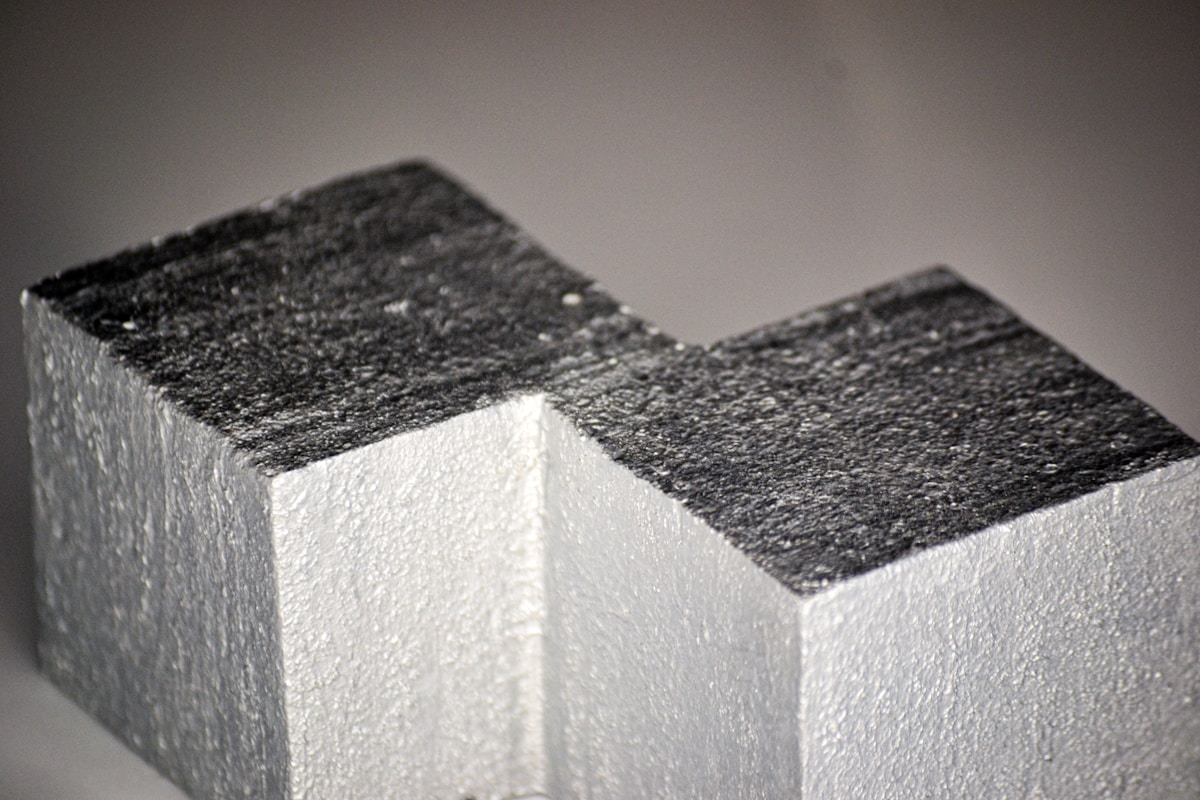
The seal itself is EPDM rubber or silicone, compressed by the leaf, and the leaf carries the insulation. Hinged leaves run from 50 to 180 millimetres depending on temperature class, while sliding leaves commonly sit between 75 and 150 millimetres. Blast freezers take a 120-millimetre leaf with a double gasket and threshold heaters as standard. Assemblies across the category are rated for roughly -45 to +50 degrees Celsius, so the hardware is rarely the limit – the maintenance habits are.
Between the two, the physics favor the hinged door at the seal. A swing closes into compression along the whole perimeter, while a slide seals along its edge as it parks. Both hold temperature in practice. The sliding door pays for its seal with track discipline and a heated frame done right.
Space, Traffic Width and Opening Frequency
Measure the opening, not the doorway. A person or a hand trolley clears a standard personnel opening of 700 by 1800 or 900 by 1800 millimetres, and a hinged door serves that class well. Once the traffic is pallets – or a forklift carrying them – the practical width jumps past what a swing leaf wants to carry. The swing itself also becomes a hazard in a narrow corridor.
Frequency is the other half of the arithmetic. Trade specifications put hinged doors in their comfort zone under about 20 openings an hour, and high-speed doors take over from roughly 50 cycles an hour upward. The manual sliding door owns the ground in between: wide, always openable, and quicker than a swing for repeating pallet traffic.
| Aspekt | Hinged door | Sliding door |
|---|---|---|
| Seal at rest | Full-perimeter compression – the better seal | Edge seal as the leaf parks; heated frame below freezing |
| Clear opening width | Bounded by the leaf; personnel-class widths typical | Wide – pallet and forklift class |
| Floor space in front | One leaf-depth of swing clearance | None beyond the wall line |
| Traffic rate | Under about 20 openings/hour | Frequent pallet cycles; 50+/hour wants high-speed |
| Moving parts | Hinges, latch, gasket | Track, rollers, gasket |
| Freezer duties | Heated frame and gasket care | Heated frame plus track and roller discipline |
Anterooms and curtains change the arithmetic. A strip curtain inside either door cuts the losses of every open second. An air curtain adds more than 50 percent efficiency at busy openings. That is why high-cycle stores pair a sliding or fast door with a curtain instead of upsizing the leaf.
What Each Door Costs Over Five Years
Sticker price flatters the hinged door; the five-year bill is a different document. A hinged door costs less to buy and hangs on hardware anyone can service: hinges, latch, gasket. A sliding door carries more up front in leaf, track and frame, then asks for a maintenance rhythm of track cleaning, roller checks and cold-rated lubricant. Service habits are where the money is: a door checked weekly rarely becomes a door replaced.
Where the door meets the wall, the seal chain continues into the panels. Ordering door and panels from one line, as we do across our Kühlraumpaneel range, keeps the perimeter detail continuous instead of spliced. The spliced detail is where leaks start. The five-year comparison of sliding vs hinged cold room doors is therefore structural: purchase price, energy losses at every opening, service calls, and the cost of impact damage.
Impact is the sleeper line. Forklifts and trolleys find doorways, and a bent leaf or broken handle does not just stop working. A door left ajar wastes energy and grows ice, which becomes the next failure. Sliding leaves present a long flat target along a wall; hinged leaves present their edge. The guard rails and bollards in front of a busy doorway belong in the door budget, whatever hangs in it.
RaxPanel manufactures cold room wall, ceiling, floor and door panels on one line – over 1,700 m2 a day for projects in 30+ countries. Send your opening schedule: widths, cycles per hour, temperature class – an engineer returns the door and panel specification one to one.
Safety and the Freezer Failure Modes
Both doors owe the same safety hardware. An internal safety release on every cold room door is standard specification, so a person can get out even when the outside handle is locked. Visibility panels, door furniture that works with cold-store gloves, and a threshold that does not catch boots – these are baseline, not upgrades.
Sliding doors fail in their track. Misaligned rails, damaged rollers and debris or ice in the mechanism show up as a door that binds or derails. The service answer is cleaning the track and re-lubricating the rollers with cold-resistant product on a schedule – before anyone forces anything.
Hinged doors fail at their fittings – hinges that sag, gaskets that age, latches that no longer pull the leaf home. The compounding habit is the dangerous part: a broken handle leaves the door ajar, the ajar door wastes energy and grows ice, and the ice becomes the next failure. Door checks belong on the weekly walk, with the heated frame at the top of the list.
Score Your Opening: The Door Decision
Five questions score any opening, and the door picks itself. How wide is the traffic – trolley or forklift, and how many cycles an hour? What temperature class does the room hold, and what does the door open into – a corridor, an anteroom, a dock? And who services it – a maintenance team, or a shift leader with a mallet?
| Your opening | The door that fits |
|---|---|
| Personnel and trolley traffic, up to about 20 openings/hour, chiller or freezer | Hinged – add the heated frame below freezing |
| Pallet or forklift width, frequent cycles | Sliding – with the track on the maintenance schedule |
| 50+ cycles/hour in a distribution store | High-speed or sliding, paired with a strip curtain |
| Blast freezer | Hinged, 120 mm double-gasket leaf with threshold heaters |
| Narrow corridor in front of the door | Sliding – the swing clearance does not exist |
Two habits keep the score honest. Cheap hardware fails the score later, because door damage is a budget line, not bad luck. Price the guard protection with the door, and buy the door with its spares in mind. The door is also one line in a build. The full hardware range sits in our cold room door selection guide, and the assembly around it follows our cold room build guide.
Score each opening once and the sliding vs hinged cold room doors argument ends where it should: with the traffic, not the catalogue. The right door is the one your fork drivers stop noticing.
Frequently Asked Questions About Cold Room Doors
Which door is better for a freezer room?
In the sliding vs hinged cold room doors choice, walk-in staff doors suit a hinged leaf with a heated frame and threshold cable. Sliding doors work in freezers with wide pallet traffic, provided the heated frame and track maintenance stay on schedule.
How much clearance does a hinged cold room door need?
Clear the swing: floor space roughly one leaf-width deep in front of the opening. Personnel-class clear openings run 700 x 1800 or 900 x 1800 millimetres.
Why does my cold room door keep freezing shut?
Moisture freezes the gasket to the frame; forcing it tears the gasket and the leak builds more ice. Check the heated frame is warm, the gasket is intact, and use a food-safe silicone wipe on the seal.
Are sliding cold room doors safe?
Yes, when the safety hardware is respected. An internal release on every door lets a person exit even if the outside is locked, and the track stays on a cleaning schedule.
Can I add a strip curtain to my cold room door?
Yes. Curtains are the economical pairing for busy openings, and air curtains add more than 50 percent efficiency at high-cycle doors.