
The rejected leaf lies sawn open on the bench, and the fault sits in plain sight: a void behind the hinge plate where the foam never reached. Skins straight, gasket rebate clean – and three hinge screws biting into nothing. The cold room door core is the part nobody sees after assembly, and this one failed where it counts.
Sandwich panel door fillings are the subject of this page: what goes between the skins of a cold store door, and where the default gets replaced. We inject foam and bond cores on the same line that builds our cold room door panels, so this is bench talk. It ends at a temperature-class table and a five-point receiving check.
What Sits Inside a Sandwich Panel Door
Strip a leaf to its bones and three assemblies remain. Two metal skins take the knocks and hold the screw threads. Between them sits the core, insulation and skeleton in one, and the edge detail cuts the gasket rebate and hinge lands.
- Skins
- Galvanized steel, stainless or aluminium, 0.3-0.8 mm (Topolo).
- Kern
- Rigid PU injected at 45-50 kg/m3, CFC-free (Topolo). The cold room door core is the layer this page argues about.
- Gasket rebate
- Machined through skin and core; the seal is only as solid as the filling behind it.
- Hinge reinforcement
- Steel blocks bedded where the screws land – by design on good leaves.
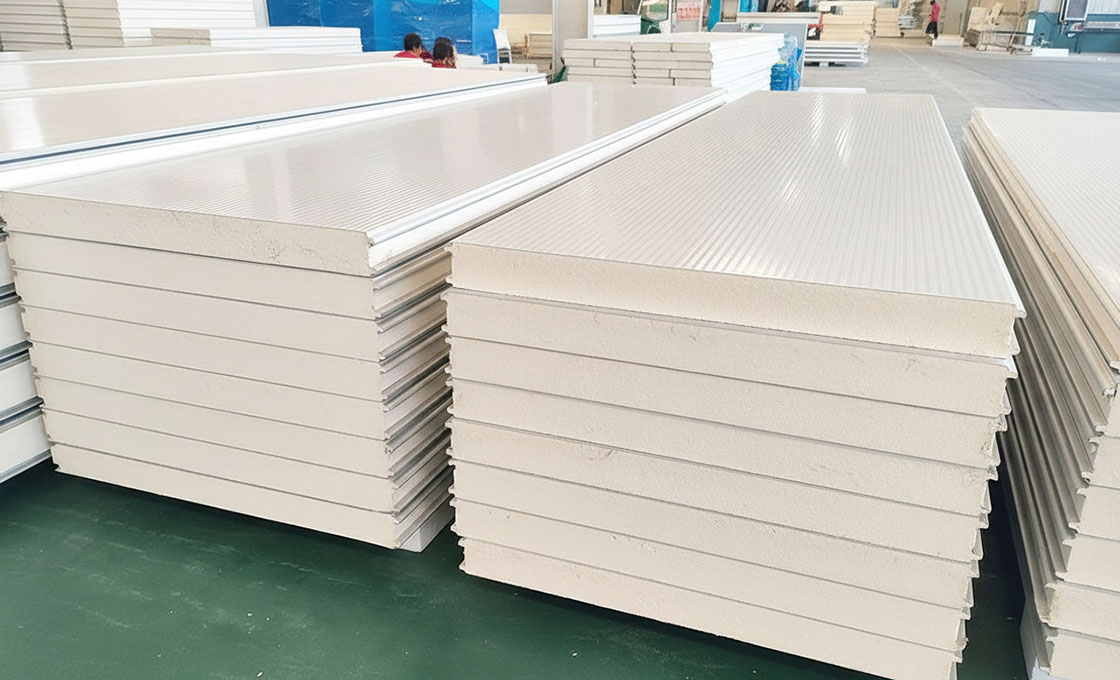
Two build routes put the core in place. Injection foaming fills the cavity under pressure – uniform fill, no cold spots, strong bond to both skins. The bonded-board route is quicker, but every glue line is a place the cross-section can disappoint.
A wall panel never carries a hinge or a machined gasket edge, so wall-core logic does not transfer. Which door type swings or slides is its own decision – our sliding versus hinged comparison owns it. This page stays inside the leaf.
What the Filling Must Do in a Door Leaf
Insulating is the job everyone assigns, and only the first of four. Vendor guidance for cold storage doors lands at R-20 to R-30, with the top of the band for deep cold (Kodiak). A leaf also moves all day, so its sandwich panel door fillings must work as structure, moisture barrier and fire layer at once.
- Insulate: hold the R-value the room paid for – PU foam and XPS lead the vendor shortlist (Kodiak).
- Carry hardware: screws live in the foam; pull-out strength rises with density, so weak cores want blocks behind every fitting (attributed).
- Stay dry: saturated PUR foam loses insulation value permanently, without recovery (Frostbox).
- Hold fire: the core sets the leaf’s fire class – B1-rated PIR and PU grades serve this spec line (Topolo).
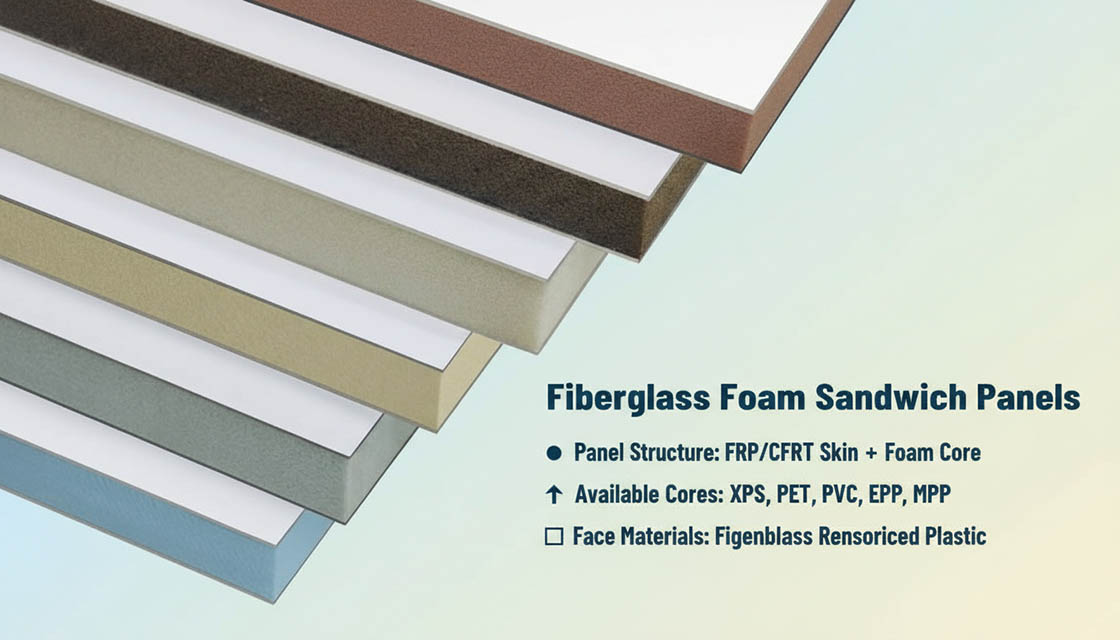
A void behind a hinge plate is invisible at handover and expensive in year two. Screw withdrawal, gasket pressure and impact all load the same door panel core material. Judge a filling on all four jobs, or the leaf fails on the one you skipped.
Polyurethane and PIR: The Default Cold Store Fillings
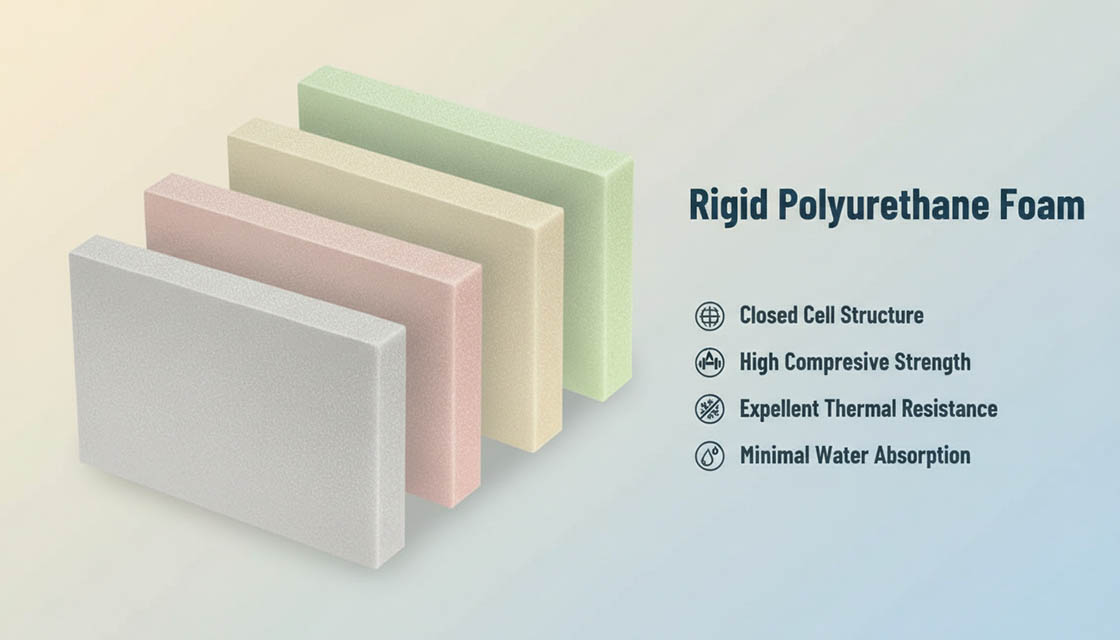
Rigid PU is the default cold store fill: 45-50 kg/m3, CFC-free, injected between the skins (Topolo). PIR is the same family turned up for fire – lambda 0.021-0.023 W/mK, B1 flame rating, 0.9 percent water absorption, stable to -150 degrees C (Topolo). Read the mixed signals simply: PU is the default injected filling, PIR the upgrade when fire paperwork leads.
Both cores come off one plant here. The same line that pours our Kühlraum-Paneele also builds the door leaves, so wall and door cores get decided on one spec sheet. The cold room door core question starts with these two foams.
| Parameter | PU door core | PIR door core |
|---|---|---|
| Dichte | 45-50 kg/m3, CFC-free (Topolo) | 28-50 kg/m3 (Topolo) |
| Lambda | Not on door page | 0.021-0.023 W/mK (Topolo) |
| Brandklassifizierung | Flame-retardant grades available | B1 declared (Topolo) |
| Water absorption | Closed-cell, low | 0.9% (Topolo) |
| Low-temp limit | Rated to about -45 C | Stable to -150 C (Topolo) |
Panel-side guidance points the same way: Wiskind pairs 75 mm of PU with +5 C and 150 mm of PIR with -25 C. The chemistry head-to-head lives in our PU vs PIR comparison. Here the questions are density, weight and what holds a screw.
Rock Wool and XPS: The Special-Purpose Fillings
Rock wool earns its place only in special positions. Non-combustible mineral wool goes into a leaf where the code, not the temperature class, writes the spec; lambda runs about 0.035-0.045 W/mK across the industry range (attributed). The UK’s Genehmigtes Dokument B keeps reaction-to-fire classification as the judging framework. The cost is weight, paid at the hinges in bigger blocks.
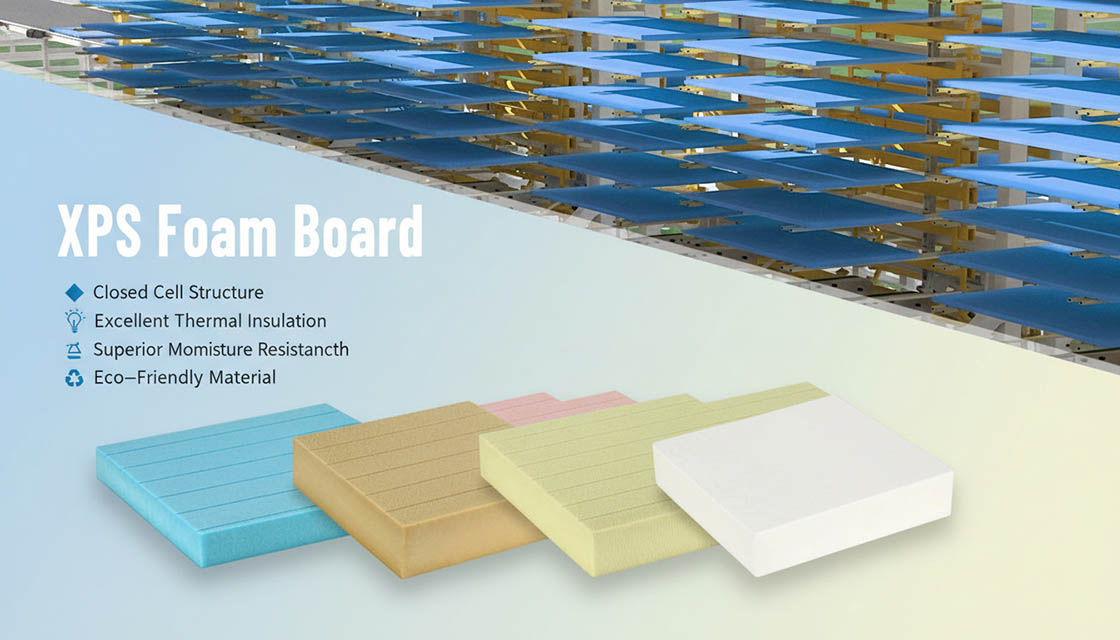
XPS is the second; Kodiak lists it alongside PU as its two recommended cold storage door cores. Closed-cell extruded foam takes on water reluctantly – very low absorption in Huamei’s tables – with 150-500 kPa compressive strength and 28-45 kg/m3 density (attributed). That stubbornness suits washdown rooms and coastal fish plants, where a daily hose-down defeats other cores.
Neither is the default answer to sandwich panel door fillings. Pick rock wool when fire sign-off leads, XPS when water leads, and injected PU or PIR the rest of the time. The door panel core material follows the position, not the catalogue order.
Send the temperature class, the fire rating the opening must meet and its traffic. RaxPanel builds cold room door panels alongside its PUR, PIR and rock wool lines – over 1,700 m2 a day, shipped to 30+ countries. An engineer returns fill, density and thickness one to one.
Matching Fill and Thickness to Temperature Class
Thickness and fill follow the room’s temperature class, not preference. Topolo’s door ladder runs 100, 120, 150 and 200 mm, and Kodiak puts cold storage doors at 4-6 inches of leaf holding R-20 to R-30. Read your row, then argue the last 20 millimetres with your energy bill.
One row needs a second look. Blast doors swung by forklift traffic all shift take the top of the ladder – 150 to 200 mm with high-density PU or PIR inside. Topolo specs low-temperature sliding leaves with 48-50 kg/m3 cores for that duty. The cold room door core density steps up as temperature steps down.
| Temperature class | Filling | Dicke | Note |
|---|---|---|---|
| Chiller, 0 to +8 C | PU | 80-100 mm | Topolo hinged 60/80/100; Wiskind 75 mm PU at +5 C |
| Freezer, -18 to -25 C | PU or PIR | 100-150 mm | Kodiak’s 4-6 inch band; Wiskind 150 mm PIR at -25 C |
| Blast, below -35 C | High-density PU/PIR | 150–200 mm | Topolo low-temp sliders 48-50 kg/m3; deep-freeze tops the ladder |
Match the sandwich panel door fillings to the row and thickness stops being a guess. A pharmacy room replacing sagging leaves at +2 to +8 C reads the chiller row; a blast cell reads the bottom one. Weight, hinge duty and gasket rebate follow from an honest row.
Where Door Fillings Fail and How to Check
Three years on, the same leaf model comes back from a fish plant and gets sawn open for a claim. The core is dark, wet and heavy, and it will not dry – saturated PUR foam loses insulation value permanently, without reversal (Frostbox). Upstream it read like bad luck: a gasket past its 2-5 year life, air leaking, frost climbing, condensation feeding the core. Ice built until it ripped the hinges out of the panels, a failure Air Cooling Tech documents.
Every one of those failures shows in the cross-section first. Run the five-point check below on arrival – before signing, not after the first defrost.
- Ask where the hinge reinforcement blocks sit. Pull-out strength rises with density, so weak cores need blocks behind every fitting (attributed).
- Inspect the gasket rebate edge. Machined through skin and core, it should show solid filling, not a void or glue line.
- Sound the leaf. Rap the skins: hollows behind the hardware zones mark a wrecking void.
- Check diagonals and flatness. A twisted leaf opens its gasket line at one corner; the leak becomes ice, then hinge load.
- Match the fire paperwork to the filling. The certificate must name the actual door panel core material, not a wall-panel grade.
Run the check against the temperature-class table above and the leaf you sign for is the leaf you keep. The whole-door frame sits in our Leitfaden zur Auswahl von Kälteraumtüren. This page has done its job when the filling behind the hardware is no longer a guess.
Frequently Asked Questions About Door Fillings
What is the filling inside a cold room door?
Most sandwich panel door fillings are rigid PU injected at 45-50 kg/m3 between the skins (Topolo); PIR where fire leads, XPS in washdown areas.
Is a door core different from a wall panel core?
Yes. A cold room door core also carries hinge loads, survives a machined gasket rebate and takes impact – density matters more.
Which filling for a blast freezer door?
High-density PU or PIR in a 150-200 mm leaf. Topolo low-temp sliders run 48-50 kg/m3 cores; Wiskind holds -25 C with 150 mm PIR (attributed).
Does a wet door core recover when it dries?
No. Frostbox is explicit: saturated PUR foam loses insulation value permanently. Replace the leaf or cut out and re-fit the wet section.
Why choose rock wool in a door leaf?
Fire sign-off. Non-combustible mineral wool holds a fire-rated position foam cannot, at the cost of a heavier leaf at the hinges.