
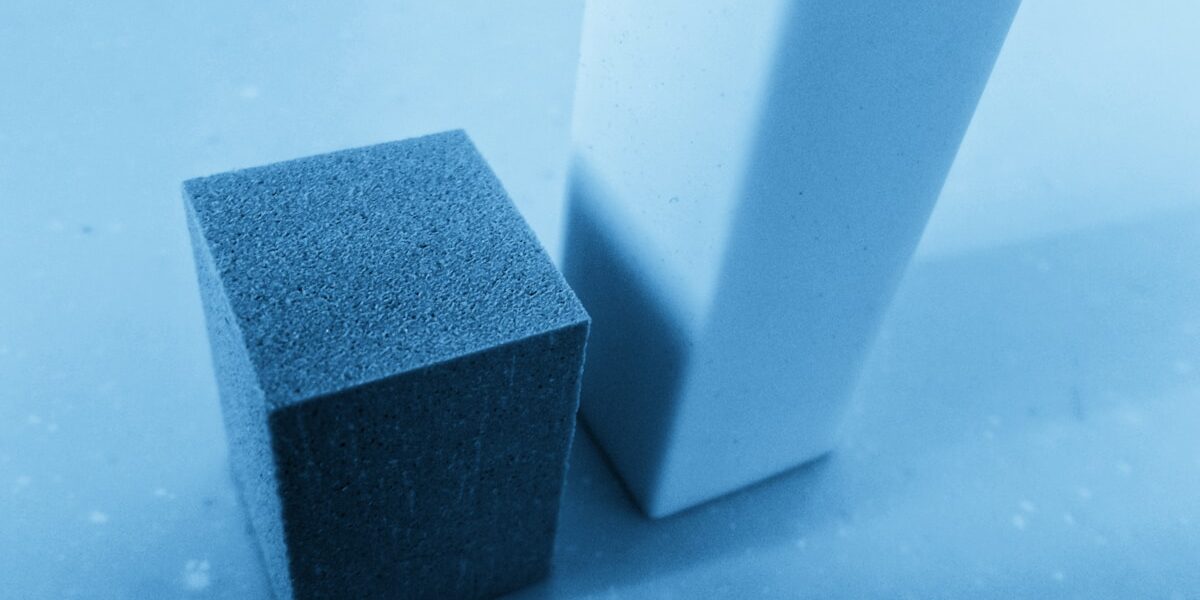
Einkaufsingenieure in der Wohnmobil- und Marinewirtschaft kennen das Gefühl, ein Zielgewicht zu erreichen, nur um zuzusehen, wie der Prototyp einen Feuchtigkeitseinweich-Test nicht besteht. Traditionelle Materialien wie Stahl und Aluminium lösen das Dauerheitsproblem, ruinieren jedoch Ihre Kraftstoffeffizienz , während Sperrholz das Gewicht unten hält, bis es auf den ersten feuchten Kai oder Waschbay trifft. Kernkunststoff zieht in diese Diskussion ein, um diese Lücke zu schließen, ohne Kompromisse bei der strukturellen Integrität.
erzwingen zu müssen. Wir haben beobachtet, dass Aluminiumkörper bei Aufprall irreversibel beulen, während Sperrholz in hochfeuchten Umgebungen innerhalb von Monaten dem Faulen und Schimmel erliegt. Diese Analyse überspringt den generischen Verkaufsquatsch und betrachtet die harten Zahlen, indem sie die Kraftstoffeinsparvorteile durch Leichtbau und den Lebenszykluskostenvergleich mit Stahl und Sperrholz aufschlüsselt.
Sie müssen wissen, ob der Wechsel zu einem Verbundsystem tatsächlich Ihre Gesamtbetriebskosten senkt oder die Ausgaben nur von Materialien auf Werkzeugformen verschiebt. Der folgende Vergleich zeigt genau, wann sich Kernkunststoff für Ihr Volumen lohnt und wie er unter realen Belastungsbedingungen abschneidet.
Warum OEMs Materialien nebeneinander bewerten müssen
OEMs, die eine Gegenüberstellung der Materialien überspringen, zahlen regelmäßig zu viel für versteckte Wartungskosten, verpassen Kraftstoffersparnis-Potenziale und wählen Materialien, die in rauen Umgebungen vorzeitig versagen. Der richtige Vergleich verhindert kostspielige nachgelagerte Konstruktionsänderungen.
Jedes Fahrzeug und jede industrielle Plattform, die ein OEM baut, verursacht Materialkosten, die weit über den Kaufpreis hinausgehen. Stahl, Aluminium und Sperrholz dienen der Branche seit Jahrzehnten, aber ihre Gesamtbetriebskosten erzählen eine andere Geschichte, sobald Wartungszyklen, Nutzlast-Einbußen und vorzeitiger Ersatz berücksichtigt werden. Eine disziplinierte Gegenüberstellung zwingt die echten Kompromisse ans Licht, bevor ein einziges Paneel spezifiziert wird.
Lebenszykluskostenvergleich mit Stahl und Sperrholz
Der Listenpreis von Stahl oder Marine-Sperrholz ist fast immer niedriger als der eines technisch entwickelten Verbundpanels, aber diese Lücke schließt sich schnell, wenn man die Kosten über einen zehnjährigen Betriebszeitraum aufzeichnet. Stahlkonstruktionen erfordern kontinuierlichen Korrosionsschutz — Grundierungen, Decklacke und Nacharbeit, die mit der Flottengröße skalieren. Sperrholz-Karosseriepaneele verursachen einen wiederkehrenden Ersatzzyklus durch Feuchtigkeitseintritt, Delamination und Befestigungsmittelabriss in hochvibrierenden Umgebungen.
Verbund-Sandwich-Konstruktionen beseitigen einen Großteil dieser wiederkehrenden Ausgaben. Ein korrekt spezifiziertes CFRT- oder GRP-Schaumkernpaneel rostet nicht, fault nicht und benötigt keine Neubanichtung über die gesamte Lebensdauer des Fahrzeugs. Die anfängliche Materialprämie wird durch vermiedene Wartungseingriffe, reduzierte Stillstandszeiten und längere Paneel-Ersatzintervalle ausgeglichen. In unserer Arbeit mit Kühlwagenbauern sehen wir regelmäßig Lebenszykluskostenmodelle, bei denen die Verbundoption innerhalb von drei bis vier Jahren die Stahlvariante erreicht und danach Nettoeinsparungen liefert.
- Wartungsrhythmus: Stahl erfordert je nach Klimaexposition alle zwei bis vier Jahre eine Neu-Beschichtung und Korrosionsbehandlung; Verbundwerkstoffe eliminieren diesen Zyklus typischerweise vollständig.
- Ersatzhäufigkeit: Sperrholzpaneele in feuchten oder gefrier-/tau-Wechsel-Umgebungen zeigen innerhalb von fünf bis sieben Jahren Delamination und Befestigungsmittelversagen; Schaumkern- und Waben-Sandwich-Paneele überschreiten regelmäßig zehn Jahre ohne strukturellen Ersatz.
- Stillstandskosten: Jede ungeplante Karosserie-Reparatur entfernt ein Fahrzeug aus der einnahmeproduzierenden Nutzung; weniger Eingriffe verbessern direkt die Flottenauslastungsrate.
- Garantieexposition: OEMs, die Werkstoffe spezifizieren, die zu frühem Abbau neigen, absorbieren höhere Garantieforderungen und Reputationsrisiken über ihre Händlernetzwerke.
Bitten Sie Ihren Lieferanten um ein dokumentiertes Lebenszykluskostenmodell, das Wartungsintervalle, Beschichtungszyklen und die erwartete Lebensdauer der Paneele einschließt — nicht nur ein Quadratmeter-Preisangebot. Das billigste Paneel auf dem Papier kostet auf der Baustelle oft am meisten.
Kraftstoffeinsparvorteile durch Leichtbau
Kraftstoffverbrauch ist eine der größten variablen Betriebskosten für jede Flotte, und die Wahl der Aufbau-Materialien ist ein direkter Hebel. Jedes Kilogramm Totgewicht, das ein LKW oder Wohnmobil mit sich führt, reduziert die Nutzlastkapazität und erhöht den Energiebedarf zum Bewegen des Fahrzeugs. Stahl- und Aluminium-Aufbau-Paneele sind strukturell kompetent, fügen jedoch signifikante Masse hinzu, die anderswo auf der Plattform nicht zurückgewonnen werden kann, ohne Sicherheit oder Ladevolumen zu beeinträchtigen.
Leichtbau-Verbund-Sandwich-Paneele — ob mit PMI-, XPS-, PET- oder PU-Schaumkernen mit CFRT- oder GRP-Oberflächen — liefern vergleichbare oder überlegene Steifigkeit bei einem Bruchteil des Gewichts. Für einen Kühlwagen-Aufbau kann der Unterschied zwischen einer Stahl-Paneel-Konstruktion und einer Schaumkern-Verbund-Konstruktion zu Hunderten von Kilogramm Gewichtsersparnis pro Fahrzeug führen. Über eine Flotte von hunderten Einheiten summiert sich diese Gewichtsdifferenz zu spürbaren Kraftstoffeinsparungen und höherer nutzbarer Nutzlast bei jeder Fahrt.
- Nutzlast-Gewinn: Geringeres Aufbau-Gewicht erhöht direkt die gesetzliche Nutzlastkapazität und ermöglicht mehr einnahmeproduzierende Ladung pro Fahrt ohne Änderung des Fahrgestells oder der Achsenratings.
- Reduktion des Kraftstoffverbrauchs: Gewichtsersparnisse von 200 bis 400 Kilogramm pro LKW-Aufbau können den Kraftstoffverbrauch über jährliche Laufleistungen spürbar reduzieren, insbesondere im Stop-and-Go- oder Stadtzustellverkehr.
- Regulatory alignment: Increasingly stringent emissions standards and total-distance fuel economy targets make every kilogram of avoided mass a compliance asset.
- Range extension: For electric and hybrid commercial platforms, reduced body weight directly extends driving range — a critical differentiator in last-mile and regional distribution applications.
We see this dynamic most clearly in the RV and mobile home segment, where payload limits are tight and interior volume is at a premium. A lighter wall and roof panel system allows designers to allocate weight to amenities — insulation, fixtures, and HVAC — without exceeding GVWR. That flexibility is impossible to achieve with heavy traditional materials without significant structural redesign.
Beständigkeit gegenüber Feuchtigkeit und Chemikalienbelastung
Moisture and chemical exposure are the two most common degradation pathways for vehicle and industrial body materials, and the failure modes are distinctly different across material families. Plywood absorbs water at its edges and faces, leading to swelling, delamination, and eventual structural softening. Steel corrodes at cut edges, fastener holes, and scratch points — especially in environments where de-icing salts or refrigerant brines are present. Aluminum resists corrosion better than steel but suffers from galvanic attack when in direct contact with dissimilar metals in wet conditions.
Engineered composite panels address these failure modes at the material level. GRP and CFRT facings with closed-cell foam cores create a barrier that water and most industrial chemicals cannot penetrate. There are no hygroscopic layers to swell, no ferrous content to oxidize, and no galvanic couples to manage during normal service. This is why composite sandwich panels are the default choice for marine vessel flooring, refrigerated truck bodies, and chemical-handling equipment enclosures — environments where traditional materials degrade on a predictable timeline.
- Water resistance: Closed-cell foam cores (XPS, PET, PU, PVC, PMI) are intrinsically waterproof and do not absorb moisture, eliminating the swelling and delamination pathways that destroy plywood and compromise adhesive bonds in steel assemblies.
- Chemical inertness: CFRT and GRP facings resist exposure to fuels, oils, cleaning agents, and refrigerant fluids that would degrade adhesive bonds or corrode metal substrates over time.
- Impact recovery: Unlike aluminum, which dents and retains deformation, thermoplastic composite facings exhibit elastic recovery characteristics that restore surface integrity after minor impacts.
- UV and thermal stability: Gel-coated GRP and formulated CFRT surfaces maintain structural and aesthetic performance under prolonged UV exposure and thermal cycling without cracking or brittleness.
Not all “waterproof” composites are equal. Panels with open-cell cores or poorly sealed edges can still wick moisture into the core over time. Always verify core type (closed-cell only) and edge-sealing methodology before committing to a specification for high-moisture or submersion-prone applications.
The bottom line for OEMs is straightforward: evaluating materials side by side on lifecycle cost, weight impact, and environmental durability prevents the kind of late-stage surprises that erode margins and damage brand reputation. Steel and plywood have their place, but for applications where weight, moisture resistance, and long-term service life are non-negotiable, composite sandwich panels represent a materially different value proposition — one that rewards careful comparison and penalizes selection based on upfront price alone.
| Kriterien | Traditional Materials | Rax Panel Solutions | Performance Advantage | OEM Impact |
|---|---|---|---|---|
| Gewichts-zu-Stärke-Verhältnis | Heavy materials like steel and aluminum increase transport costs and reduce fuel efficiency. | Lightweight CFRT, PP Honeycomb, and Foam Core panels. | High strength with significantly reduced weight; lighter, thinner, and more resilient. | Improved fuel efficiency and higher payload capacity for vehicles. |
| Environmental Durability | Plywood rots and molds in humidity; aluminum dents irreversibly upon impact. | Waterproof, thermally insulated GRP/FRP and Foam Core panels. | Resistant to rot, corrosion, and impact; maintains structural integrity in wet conditions. | Extended product lifecycle and reduced maintenance costs. |
| Designflexibilität | Rigid standard options with limited customization for specific project needs. | Customized solutions with diverse cores (XPS, PET, PU, PMI) and skins (GRP, CFRT). | Tailored material configurations to meet exact project specifications and demanding conditions. | Cost-effective optimization for specific applications like RVs and truck bodies. |
| Manufacturing Reliability | Quality inconsistency leads to product failures and costly recalls. | 15+ years experience, 1,700+ sqm daily capacity, strict experimental testing. | Consistent high-quality output backed by a professional engineering team. | Reliable supply chain and minimized risk of substandard components. |
| Application Versatility | Limited performance across varied industrial sectors. | Comprehensive range including Sandwich, Honeycomb, and Specialized Panels. | Suitable for RVs, Marine, New Energy, Industrial equipment, and public transit. | Single-source supplier for complex, multi-industry material requirements. |
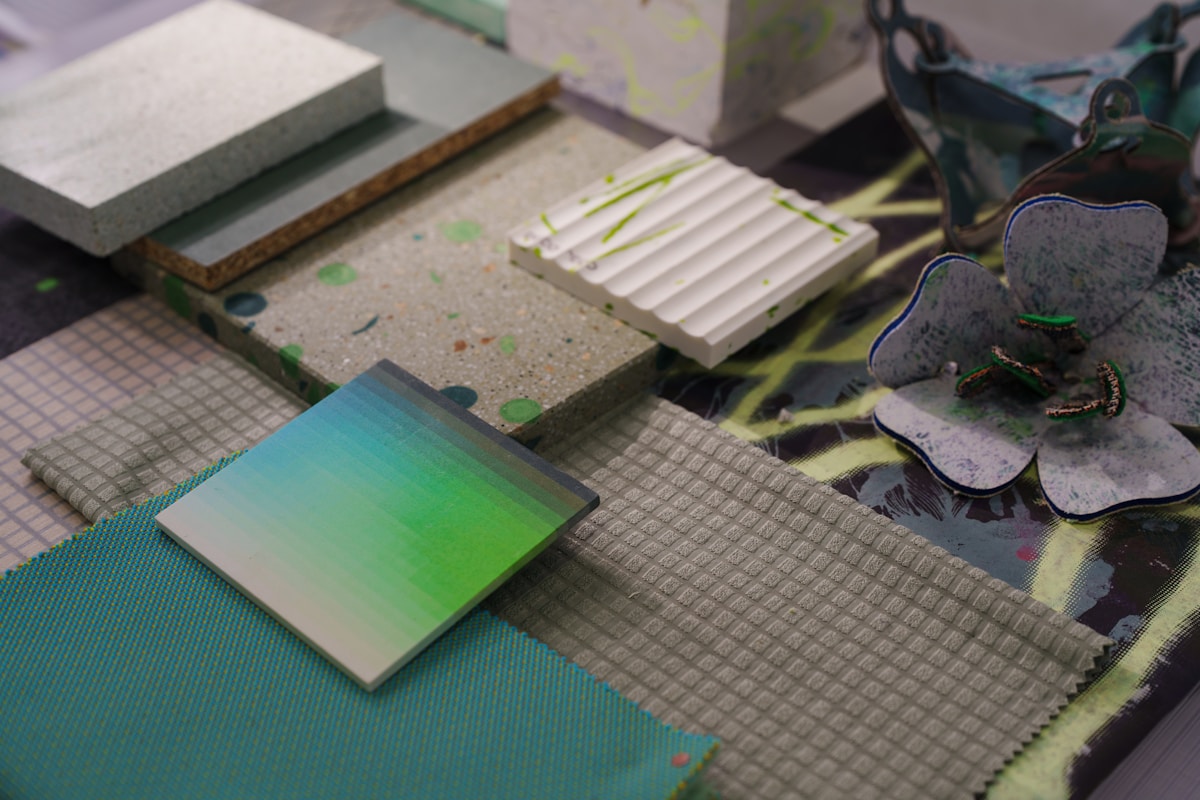
Wie sich Kernkunststoff und herkömmliche Materialien in der Leistung vergleichen
When evaluating performance, core plastic composites decouple structural rigidity from mass, offering up to 60% weight reduction over steel while eliminating corrosion and providing inherent thermal insulation that metals cannot match natively.
For B2B buyers and engineers, the shift from traditional materials like steel, aluminum, and plywood to core plastic composites represents a fundamental change in structural physics. Unlike monolithic metals, core plastic materials—specifically engineered as sandwich panels with CFRT or GRP facings and foam or honeycomb cores—deliver high stiffness-to-weight ratios by separating high-strength faces with a lightweight, stabilizing core. This comparison breaks down the critical performance deltas across four key metrics: mass efficiency, thermal insulation, corrosion resistance, and environmental lifecycle.
Gewicht-zu-Festigkeits-Verhältnis und strukturelle Effizienz
The most immediate performance divergence is the specific gravity difference. Steel, while offering high tensile strength, carries a density of approximately 7.85 g/cm³, which imposes severe penalties on fuel efficiency and payload capacity in transport applications. Aluminum improves on this at roughly 2.7 g/cm³ but often requires increased thickness or complex ribbing to match the rigidity of steel, partially negating its weight advantage.
Core plastic sandwich panels, utilizing cores such as PET, XPS, or PP honeycomb, typically achieve densities between 0.5 and 1.2 g/cm³. In applications like RV walls or truck bodies, this translates to a 40% to 60% reduction in structural mass compared to steel counterparts, without a proportional loss in rigidity. The sandwich structure acts like an I-beam: the high-strength skins (CFRT or Aluminum) resist bending and tensile loads, while the core resists shear and prevents the skins from buckling. This allows OEMs to meet strict weight limits in vehicle manufacturing that are impossible with traditional steel sheeting.
- Steel: High tensile strength (~250-500 MPa mild steel) but extremely heavy (~7.85 g/cm³); poor stiffness-to-weight ratio.
- Aluminium: Moderate strength (~90-600 MPa depending on alloy) with medium weight (~2.7 g/cm³); prone to deformation under point loads.
- Core Plastic Composites (Sandwich): High flexural rigidity dependent on core thickness; superior specific stiffness (stiffness per unit weight) exceeding metals by 3-5x in panel applications.
Wärmeisolation und Temperaturbeständigkeit
Thermal performance is where the material gap widens significantly. Metals are inherently efficient thermal conductors. Aluminum, for instance, has a thermal conductivity of roughly 205 W/m·K, acting as a thermal bridge that rapidly transfers heat from exterior environments to interior spaces. This forces manufacturers to add thick, heavy insulation layers to meet regulatory standards for refrigerated trucks or residential habitats.
Core plastic materials integrate thermal insulation directly into the structural matrix. Cores such as PU (Polyurethane), PET, and XPS (Extruded Polystyrene) possess thermal conductivities ranging from 0.02 to 0.04 W/m·K. This innate insulation capability eliminates the need for separate cladding and significantly improves the R-value (thermal resistance) of walls and flooring. However, OEMs must consider the heat resistance temperature limits. While metals withstand extreme heat, plastic cores generally have upper service limits (e.g., PET foam typically handling up to 120°C-150°C) which must be accounted for in high-heat environments like engine bays or industrial ovens.
Korrosionsbeständigkeit und Haltbarkeit
In harsh environments—marine applications, chemical processing plants, or regions utilizing road salt—traditional metals suffer from degradation. Steel requires galvanization or painting, yet remains susceptible to rust if the coating is compromised. Aluminum offers better resistance but is vulnerable to galvanic corrosion when in contact with dissimilar metals and can pit from chloride exposure.
Core plastic panels constructed with GRP (Glass Reinforced Plastic) or CFRT facings and foam cores are chemically inert. They do not rust, rot, or corrode. Marine-grade PVC and PET cores are impervious to water absorption, preventing the swelling or delamination that plagues plywood in wet conditions. This chemical stability drastically reduces long-term maintenance costs and extends the service life of assets exposed to moisture or aggressive chemicals.
Recyclierbarkeit und Nachhaltigkeitsauswirkungen
Sustainability mandates are forcing a re-evaluation of material lifecycles. Steel and aluminum are highly recyclable, but the processes are energy-intensive, particularly for aluminum. Plywood, often treated with formaldehyde-based resins, frequently ends up in landfills at end-of-life, releasing volatile organic compounds (VOCs).
The environmental performance of core plastic depends heavily on the polymer type. Thermoset composites (traditional polyester/fiberglass) are difficult to recycle. However, the industry is shifting toward thermoplastic solutions. CFRT (Continuous Fiber Reinforced Thermoplastic) and cores made from recycled PET offer a circular path; these materials can be reheated and remolded, reducing industrial waste. For OEMs targeting carbon neutrality, specifying core plastic panels with recycled PET content or thermoplastic matrices provides a quantifiable reduction in embodied carbon compared to virgin metal extraction and processing.
Die wahren Kosten von Kernkunststoff über die Lebensdauer eines Produkts
OEMs evaluating core plastic must look beyond unit price. The real cost equation spans raw material yield, tooling amortization, freight weight savings, and lifetime maintenance avoidance — factors that often flip the initial price advantage in favor of traditional materials.
Rohstoffkostenstruktur und Ausbeuteeffizienz
Core plastic panels enter the procurement conversation with a lower per-square-meter price than steel or aluminum sheet, but the unit price tells only part of the story. Engineered polymer panels deliver higher effective coverage per raw unit because they combine structural facing and core in a single manufactured component. This integration eliminates the secondary operations that traditional material buyers absorb separately — bonding, riveting, sealing, and surface treatment.
The yield advantage becomes more pronounced at scale. Steel and aluminum require individual cutting, forming, and fastening steps before a panel reaches the vehicle or structure. Each operation adds labor cost, scrap generation, and quality inspection time. Core plastic panels arrive as ready-to-install assemblies, reducing the number of touch points in the production flow and compressing the bill of materials into fewer line items.
Color consistency and surface finish represent another hidden cost category. Traditional metal panels often require painting or powder coating to achieve target aesthetics and corrosion protection. Core plastic panels can be manufactured with integrated gelcoat or surface finishes that match exact Pantone specifications, eliminating a finishing stage and reducing waste from paint overspray and rework.
Werkzeuginvestitionen und Amortisationsdynamik
One of the most significant lifecycle cost differentiators between core plastic and traditional materials lies in tooling. Steel stamping and aluminum forming require heavy, expensive dies that can run into six or seven figures for high-volume applications. These tooling costs are amortized over the production run, meaning low-to-mid volume manufacturers bear a disproportionate per-unit tooling charge.
Core plastic manufacturing typically relies on continuous or semi-continuous production lines rather than individual part dies. This approach shifts the cost structure from high fixed tooling investment toward variable production costs, which scales more linearly with volume. For OEMs producing custom panel sizes or limited-run vehicle configurations, this reduces the financial barrier to entry and allows design iteration without retooling penalties.
The tooling advantage also extends to secondary modifications. When an OEM adjusts panel dimensions or adds mounting features, traditional metal fabrication requires new stamps, weld fixtures, or drilling jigs. Core plastic panels can be cut, routed, or machined with standard workshop tools, enabling design changes without the lead time and capital expense of new tooling.
Frachtgewichtseinsparungen und Logistikökonomie
Transportation cost represents a substantial but often underestimated component of total material lifecycle cost. Steel panels and aluminum extrusions carry significant structural dead weight that compounds across every shipment from mill to fab shop to final assembly. This weight burden translates directly into higher freight charges, reduced payload capacity per truck, and increased fuel consumption during inbound logistics.
Core plastic panels, particularly those utilizing foam core or honeycomb construction, deliver the same or superior structural performance at a fraction of the weight. The weight reduction compounds across the supply chain — fewer trucks required for raw material delivery, lower fuel costs at the manufacturing facility, and reduced structural mass in the final product. For vehicle manufacturers, this translates into higher payload capacity or extended range for electric platforms.
The logistics savings extend to international procurement as well. Core plastic panels ship efficiently from manufacturing centers in China to global OEM locations without the weight penalties associated with metal. This enables competitive pricing even when accounting for ocean freight, customs duties, and inland distribution — factors that erode the apparent cost advantage of locally sourced steel or aluminum.
Wegfall der Wartung und Haltbarkeit über die Lebensdauer
Traditional materials carry maintenance costs that are frequently omitted from initial procurement comparisons. Steel panels require anti-corrosion treatment, periodic repainting, and replacement of fasteners compromised by rust. Aluminum panels dent and deform under impact, requiring panel replacement or cosmetic repair. Plywood cores absorb moisture, leading to rot, mold, and structural degradation in humid environments.
Core plastic panels are engineered to eliminate these maintenance cycles. The materials are inherently waterproof, resistant to chemical exposure, and dimensionally stable across temperature fluctuations. This means fleet operators and vehicle manufacturers avoid the recurring costs of paint touch-ups, corrosion treatment, panel replacement, and interior mold remediation. Over a ten-year service life, these avoided maintenance expenses can significantly exceed the initial material cost differential.
Quality assurance costs also shift between material systems. Traditional materials require incoming inspection for thickness consistency, surface defects, and material certification. Core plastic panels from established manufacturers come with documented mechanical properties and batch testing records, reducing the inspection burden and providing traceability that simplifies compliance documentation for OEMs.
Versteckte Kosten: Qualitätskontrolle und Lieferkettenrisiken
Operational disruptions caused by material variability extend beyond simple inspection protocols. When material properties fall outside specification, operators must frequently perform tooling recalibrations and complex production line adjustments to accommodate the variance. These downstream interventions create unplanned downtime and increase labor overhead, significantly driving up the operational expenses associated with traditional materials.
Core plastic panels manufactured through controlled continuous processes deliver consistent mechanical properties across production runs. This consistency reduces quality inspection requirements, minimizes production line stoppages for material rejection, and provides predictable performance that simplifies engineering validation. For OEMs operating lean production environments, this reliability translates directly into throughput gains and reduced scrap rates.
Supply chain risk also factors into lifecycle cost analysis. Steel and aluminum prices fluctuate with commodity markets, geopolitical trade policies, and energy costs. Core plastic resin and foam prices follow different market dynamics, often providing more stable procurement cost forecasting. Manufacturers with diverse supplier bases and long-term supply agreements can further insulate themselves from market volatility.
| Lifecycle Phase | Traditional Material Challenge | Rax Core Plastic Solution | Cost Impact Analysis | Ingenieurtechnischer Vorteil |
|---|---|---|---|---|
| Production & Logistics | Heavy materials (Steel/Aluminum/Plywood) increase freight costs and complicate handling. | Lightweight CFRT and Honeycomb panels significantly reduce structural dead weight. | Immediate savings on transportation and reduced installation labor costs. | Optimized strength-to-weight ratio facilitating easier assembly and logistics. |
| Operational Efficiency | Excess weight in truck bodies and RVs lowers fuel efficiency and payload capacity. | High-strength GRP/FRP and foam core materials maintain integrity without added mass. | Long-term reduction in fuel consumption and increased revenue via higher payload limits. | Customized composite solutions designed for rigorous transport applications. |
| Maintenance & Durability | Susceptible to corrosion (Steel), denting (Aluminum), and rot/mold (Plywood) in humidity. | Waterproof, thermally insulated panels with excellent impact recovery properties. | Elimination of frequent repair cycles, replacement parts, and operational downtime. | Superior durability in harsh environments including marine and high-humidity zones. |
| Quality Assurance | Inconsistent quality benchmarks lead to premature failure and unpredictable performance. | Strict experimental testing ensures all composite panels meet precise data standards. | Lower total cost of ownership through predictable asset lifespan and reliability. | Consistent output backed by 15+ years of specialized manufacturing heritage. |
| Nachhaltigkeit | Environmentally taxing disposal and limited recyclability of conventional cores. | Eco-friendly products utilizing recycled PET foam and sustainable composites. | Alignment with green regulations and enhanced corporate brand value. | Environmentally friendly materials optimized for specific industrial requirements. |
Ist Kernkunststoff für Ihren Fertigungsprozess geeignet?
Integrating core plastic requires shifting from subtractive manufacturing to design consolidation. While tooling costs are lower than metal stamping, success depends on negotiating flexible MOQs for specialized cores like PET or PMI foam.
Abwägung zwischen MOQ-Beschränkungen und Prototyping-Anforderungen
For OEMs, the shift to core plastic composites presents a dual-edged sword regarding supply chain economics. Unlike metal stamping, where upfront tooling costs force high volume runs to amortize investment, the tooling for processing composite panels—such as molds for thermoforming CFRT sheets or cutting jigs for honeycomb panels—is significantly cheaper. However, manufacturers often face strict Minimum Order Quantities (MOQs) from raw material suppliers for specialized cores like PMI, PET, or PP honeycomb. High MOQs can bottleneck prototyping phases, forcing engineers to over-order inventory or delay validation until volume targets are met. To maintain cash flow agility, procurement teams must identify suppliers offering “kitting” services or stock standard panel sizes (e.g., 1220x2440mm) that can be cut to size without triggering custom production MOQs.
Reduzierung der Teileanzahl und Designkonsolidierung
The most significant manufacturing fit for core plastic lies in its ability to consolidate complex assemblies into single, molded parts. Traditional manufacturing often requires welding separate metal ribs, brackets, and stiffeners to achieve structural rigidity. In contrast, sandwich panels—such as GRP/FRP foam core panels or aluminum honeycomb panels—integrate the skin and core into a unified structural element during the initial production phase. This consolidation drastically reduces the part count, which directly streamlines the assembly line.
- Elimination of Secondary Operations: By using continuous fiber reinforced thermoplastic (CFRT) sheets, manufacturers can produce complex geometries in a single thermoforming step, removing the need for subsequent painting, rust-proofing, or welding.
- Integrated Fastening: Core plastics allow for the insertion of embedded inserts or blocks during the curing process, reducing the labor required for manual fastening during final assembly.
Unterschiede bei Werkzeugen und Verarbeitung
Processing core plastic requires a departure from the heavy-machinery mindset of metal fabrication. While metal relies on high-torque machining and heat-intensive welding, core plastic processing is characterized by high-speed cutting and cold-forming or low-heat molding. CNC routing and waterjet cutting are the standard methods for fabricating panels, offering faster cycle times without the thermal distortion risks associated with metal.
However, manufacturers must respect the specific processing limitations of the core material. For instance, while CFRT and thermoplastic honeycombs offer excellent moldability, they require precise temperature control during forming to avoid delamination. Furthermore, joining core plastic panels relies heavily on structural adhesives rather than mechanical fasteners. This necessitates a controlled environment for bonding (temperature and humidity control) and introduces “cure time” into the production schedule, which must be accounted for in line balancing. It is critical to note that while adhesives provide excellent load distribution, core polymers generally have lower localized bearing strength than metals; therefore, high-stress connection points often require additional reinforcement, such as aluminum or steel inserts, to prevent failure under load.
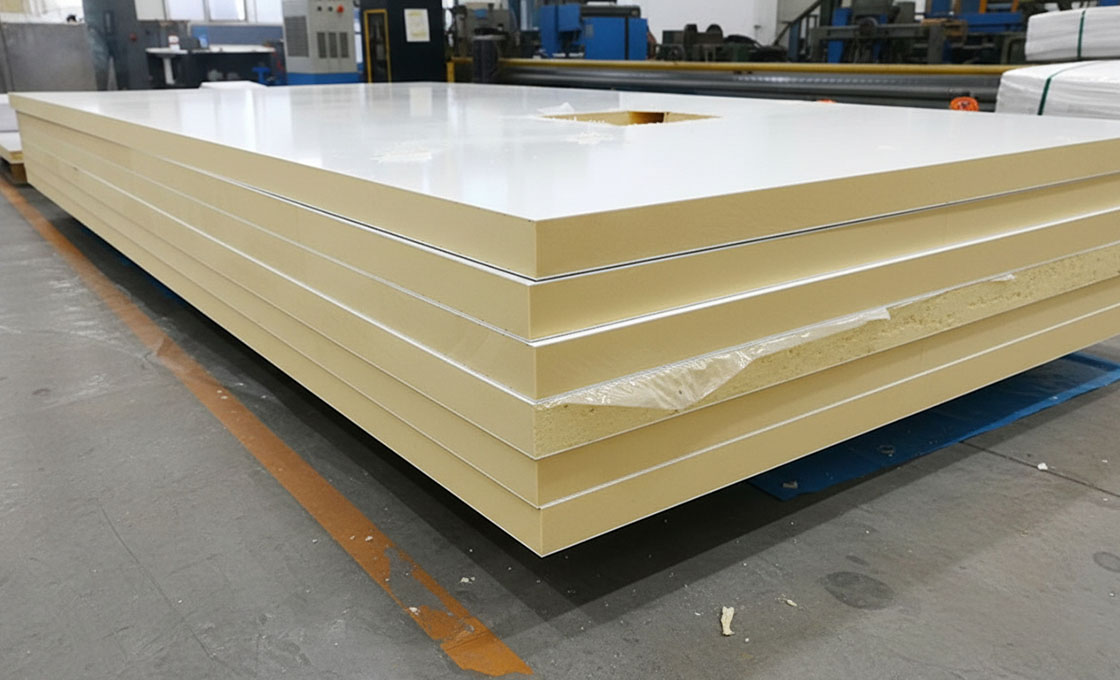
Wie sich Kernkunststoff unter realen Belastungen bewährt
Core plastic composites outperform traditional materials by combining high impact energy absorption with inherent corrosion resistance, eliminating the denting of aluminum and the rotting of plywood without relying on protective coatings.
Schlagzähigkeit und strukturelle Integrität
One of the primary failure points for aluminum in transport applications is irreversible denting upon impact. While aluminum offers high strength-to-weight ratios, it deforms plastically under stress, requiring costly panel replacements. In contrast, advanced core plastic solutions, specifically CFRT (Continuous Fiber Reinforced Thermoplastic) sandwich panels and foam core structures, demonstrate superior resilience. When utilizing cores like XPS, PET, or PU foam combined with GRP or CFRT facings, these composites exhibit excellent energy absorption. The sandwich structure distributes impact forces across a wider area, allowing the material to withstand significant blows without permanent deformation or structural compromise.
Furthermore, quality inconsistencies found in low-grade plastic components—often resulting in flimsy parts that fail under load—are mitigated in high-specification sandwich panels through controlled manufacturing processes. The integration of PP honeycomb cores with fiberglass sheet facings, for instance, creates a rigid structure that resists puncture and maintains shape under heavy dynamic loads, making it ideal for vehicle flooring and walls where point loads are frequent.
Wasserdichtheit und Dimensionsstabilität
Traditional plywood suffers from a critical vulnerability in humid or marine environments: it is hydrophilic. When exposed to moisture, plywood absorbs water, leading to swelling, mold growth, and a catastrophic loss of structural strength. Core plastic materials address this by utilizing closed-cell foam cores such as PET, PVC, and PU. These materials are inherently waterproof and non-hydrophilic, meaning they do not absorb moisture regardless of immersion duration or humidity levels.
- Zero Water Absorption: Closed-cell foam structures actively repel moisture ingress at the molecular level. XPS (extruded polystyrene) and PET (polyethylene terephthalate) foams consist of discrete, sealed gas-filled cells that are completely isolated from one another, creating a continuous barrier that prevents liquid water and vapor from penetrating the core. In hydrostatic or submerged conditions, this architecture ensures that the foam cannot become saturated, as there are no interconnected pathways for water to wick through. The result is a core material that maintains its mechanical properties, thermal performance, and dimensional integrity indefinitely, even under prolonged exposure to standing water or high-humidity environments.
- Fungal Resistance: The synthetic nature of plastics and resins eliminates the food source for mold and fungi, a common issue with organic materials in damp climates.
- GRP/FRP-Decklagen: When paired with glass fiber reinforced polymer (GRP) facings, often finished with a gel coat, the surface provides an impermeable barrier that further shields the core from environmental exposure.
Korrosionsbeständigkeit in rauen Umgebungen
In saltwater environments or areas with industrial chemical exposure, metal components are prone to rust and electrochemical corrosion. This necessitates regular maintenance, repainting, or the use of expensive sacrificial anodes. Core plastic composites are chemically inert. Materials like fiberglass, carbon fiber, and thermoplastic cores do not rust or corrode when exposed to salt spray, acids, or alkalis found in industrial settings.
This corrosion resistance is particularly critical for refrigerated truck bodies and marine vessel components. While a steel frame might degrade over time, a GRP sandwich panel structure retains its mechanical properties without the need for additional protective treatments. This longevity significantly reduces the total cost of ownership by eliminating maintenance cycles associated with oxidation.
While the core materials are impervious to water and corrosion, the facings can be susceptible to UV degradation if left untreated. Extended exposure to intense UV light can break down the resin matrix in FRP sheets, leading to chalking or surface fiber bloom.
Leistung unter thermischer Belastung und UV-Einstrahlung
Thermal stability is a decisive factor for exterior applications. Different core materials have varying thermal limits. For instance, standard PVC foam offers good insulation but may have lower heat resistance compared to PET or PMI foams. In high-temperature environments, such as the under-hood areas of trucks or roofs in hot climates, selecting the correct core is vital to prevent softening or delamination.
To mitigate UV risks, high-performance applications typically utilize FRP sheets with a specialized gel coat finish. This outer layer acts as a UV shield, protecting the structural fibers and resin matrix from degradation. Without this gel coat layer, the mechanical strength of exposed composite panels can diminish over time, whereas gel-coated panels maintain their aesthetic and structural integrity for years, even under direct sunlight.
Wann Sie Kernkunststoff statt herkömmlicher Materialien wählen sollten
Core plastic is the right call when your application demands permanent water resistance, strict weight budgets in vehicle manufacturing, or flexible production runs that traditional materials simply cannot support economically.
Anwendungen mit hohen Ansprüchen an Wasserbeständigkeit
When your product will sit in or near water for extended periods, traditional materials like plywood and mild steel become liability risks. Plywood delaminates. Steel corrodes. Both require continuous maintenance, sealant reapplication, and eventual replacement — costs that compound over a product’s lifecycle.
Core plastic sandwich panels with PVC foam, PET foam, or XPS cores are inherently waterproof. Unlike wood-based alternatives, they do not absorb moisture, swell, or support mold growth. When paired with a gelcoat finish on CFRT or GRP facings, these panels create a sealed, non-porous surface that resists saltwater exposure, UV degradation, and chemical cleaning agents.
- Marine vessel flooring and decks: PVC foam core panels with GRP facings are a standard in commercial and recreational boatbuilding because they maintain structural integrity in wet environments where plywood would fail within months.
- Refrigerated truck bodies: These units operate in high-humidity, condensation-heavy conditions. Core plastic panels with PU or PET foam cores provide both waterproofing and thermal insulation in a single layer — something steel panels cannot achieve without additional lining.
- Exterior cladding in coastal construction: Salt-laden air accelerates corrosion on metal facades and rot on timber. Foam core sandwich panels with aluminum or GRP skins eliminate both failure modes.
Our engineering team runs accelerated aging tests on every core-skin combination we offer. We found that PET foam core panels maintained zero water absorption after 2,000 hours of salt-spray exposure, while comparable plywood-based panels showed visible delamination at the 500-hour mark. If your application involves persistent moisture, core plastic is not just an upgrade — it is a necessity.
Erfüllung strenger Gewichtsgrenzen in der Fahrzeugherstellung
In vehicle manufacturing — particularly RVs, trucks, and mobile homes — every kilogram matters. Regulatory weight limits, payload capacity, and fuel economy targets create hard constraints that traditional materials struggle to meet. Aluminum is lighter than steel but still carries a density of approximately 2.7 g/cm³. Core plastic sandwich panels, depending on core selection and face material, can achieve effective densities as low as 0.3 to 0.8 g/cm³ while delivering comparable or superior stiffness.
The weight advantage becomes most critical in three vehicle scenarios:
- RV wall and roof panels: An all-aluminum RV wall assembly can weigh 30 to 50% more than a CFRT or GRP foam-core equivalent of the same span and load rating. Over a full vehicle build, that difference translates to hundreds of kilograms — directly affecting payload allowance and fuel consumption.
- Refrigerated and dry freight truck bodies: Lighter body panels mean more payload capacity within the same gross vehicle weight limit. For fleet operators, a 200-kilogram weight reduction across the body can mean an additional 200 kilograms of sellable cargo per trip.
- Mobile home and modular construction: These structures are transported on flatbed trailers with strict road weight restrictions. Switching from plywood-steel combinations to foam-core composite panels reduces transport weight and allows more units per convoy.
We work with several RV manufacturers who specify our CFRT sandwich panels for interior and exterior wall applications. Their design engineers initially questioned whether the panels could match the impact resistance of aluminum skin. After structural testing, the CFRT panels exceeded their required load ratings while weighing less than half as much. The key is selecting the right core density and face thickness for your specific span and load requirements — not simply choosing the lightest option available.
Hochvolumige Fertigung und Anpassungsbedarf
Traditional materials like steel and aluminum are available from broad commodity supply chains, but they offer limited customization. If you need a specific density, a non-standard thickness, or a unique face-skin combination, you are typically locked into what the mill or distributor offers. Core plastic sandwich panels, by contrast, are built to specification — and this flexibility becomes a decisive advantage at scale.
The production model for composite panels allows manufacturers to adjust core material, face material, thickness, and panel dimensions without retooling entire production lines. This is particularly valuable for OEMs who run multiple product variants or who need to iterate designs quickly based on field feedback.
- Variable thickness requirements: A single panel line can produce 10mm, 15mm, 20mm, and 25mm variants without stopping production. With traditional materials, each thickness typically requires a separate order from a different supplier or a different mill run.
- Mixed face-skin configurations: You can specify GRP faces on one side and aluminum on the other, or combine CFRT with plywood for cost optimization in non-critical areas. This level of customization is not feasible with rolled steel or extruded aluminum.
- Lower effective MOQs: Because composite panels are manufactured to order rather than stocked as commodity inventory, many manufacturers — including our facility, which produces over 1,700 square meters daily — can accommodate smaller production runs without the prohibitive setup costs associated with metal fabrication.
Our engineering team conducts experimental testing on custom panel configurations before they go to production. This means you are not guessing whether a non-standard specification will work — your panel is validated against your actual performance requirements before it leaves the factory. For OEMs who have been burned by quality inconsistency in plastic components, this testing step is what separates a reliable supply chain from a risky one.
If your production volume is high enough to justify custom tooling or if your design requires a combination of properties that no single traditional material can deliver, core plastic sandwich panels are the more efficient choice. The question is not whether they can meet your specs — it is whether your current material selection is leaving performance and cost on the table.
Fazit
Core plastic isn’t a universal replacement for steel or aluminum — it’s a targeted solution for projects where moisture resistance, weight savings, and design flexibility outweigh raw structural strength. If you’re building RV walls, truck bodies, or marine flooring, the math shifts fast. Traditional materials win on pure load-bearing specs and upfront cost. Core plastic wins on lifecycle cost when you factor in fuel savings, zero rot, and lower replacement frequency. Our engineering team has spent years running side-by-side comparisons on CFRT sandwich panels and PET foam core systems, and the pattern is clear: for vehicle and marine OEMs chasing weight targets and corrosion resistance, core plastic delivers measurable gains over a product’s full lifecycle.
- Match core plastic to applications requiring high water resistance and strict weight limits, not as a blanket swap for all traditional materials.
- Request engineering consultation for early-stage design questions — our team can help you validate whether core plastic fits your specific manufacturing process before you commit to tooling.
- Compare lifecycle costs, not just unit prices, when evaluating core plastic against steel, aluminum, or plywood for long-term durability.
Häufig gestellte Fragen
Ist der Kunststofkern recycelbar und nachhaltig?
Viele Kernkunststoffe, einschließlich PET-Schaum und PP-Waben, sind recycelbar und unterstützen Nachhaltigkeitsziele. Im Gegensatz zu Sperrholz erfordern sie keine Abholzung, und im Gegensatz zu Metallen benötigen sie bei der Produktion weniger Energie. OEMs, die unter Druck stehen, umweltfreundliche Materialien einzusetzen, können aus einer Reihe recycelbarer Kernoptionen wählen, die die Leistung beibehalten, ohne Umweltziele zu gefährden.
Bietet Kernkunststoff Wärmeisolierung?
Ja. Schaumkernmaterialien wie XPS, PET, PU und PVC bieten inhärente wärmedämmende Eigenschaften, die Metalle und Sperrholz nicht bieten können. Dies macht Kernkunststoffpaneele ideal für gekühlte Transporter, Wohnmobiltüren und energieeffiziente Gebäudeanwendungen, bei denen die Temperaturregelung die Betriebskosten senkt.
Wie schneidet Kernkunststoff bei Stoßbelastung im Vergleich zu Aluminium ab?
Kernkunststoffpaneele widerstehen dem Dellen und bleibenden Verformungen deutlich besser als Aluminiumbleche unter Stoßeinwirkung. Während Aluminiumkörper auch bei kleineren Kollisionen irreversible Schäden zeigen, absorbieren und verteilen Verbundpaneele mit Schaum- oder Wabenkern die Stoßenergie und erhalten die strukturelle Integrität in Fahrzeug- und Marineumgebungen.
Welche Gestaltungsfreiheit bieten Kernkunststoffpaneele an OEMs?
Kernkunststoffpaneele können mit einer breiten Palette an Kernmaterialien, Belagsoptionen und Stärken konstruiert werden, um spezifische Projektanforderungen zu erfüllen. OEMs können Dichte, Festigkeit, Wärmeeigenschaften und Oberflächengüte anpassen, wodurch maßgeschneiderte Lösungen ermöglicht werden, die herkömmliche Materialien ohne zusätzliche Bearbeitung nicht ohne Weiteres replizieren können.
Welchen Prüfnormen unterliegen Kernkunststoffpaneele?
Kernkunststoffpaneele werden experimentell getestet, um präzise Datenstandards für Festigkeit, Wärmeleitwiderstand, Wasseraufnahme und Haltbarkeit zu erfüllen. Engineering-Teams validieren jede Materialkonfiguration gegenüber Branchenstandards, um eine konsistente Leistung unter anspruchsvollen Realbedingungen sicherzustellen, bevor die Produkte die OEMs erreichen.