
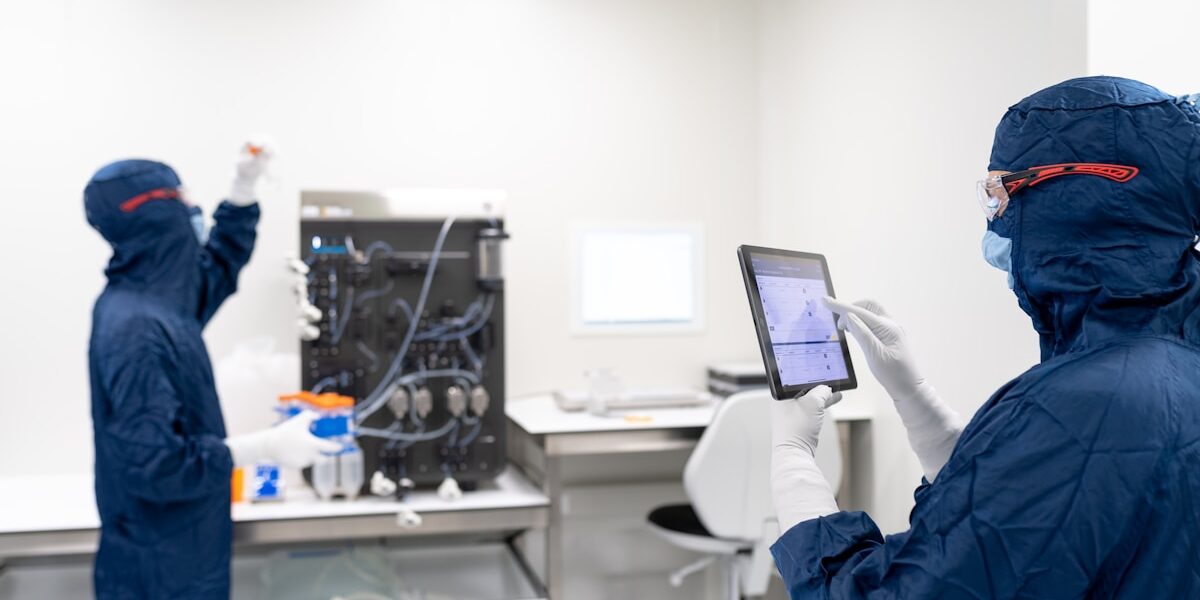
An audit failed last quarter because the wall panels on order never matched the written classification for the filling suite. The builder assumed ISO 8, the quality team wrote ISO 7, and the panel order said nothing at all. That gap between specification and order is where cleanroom cosmetic industry projects lose the most money, and it is almost always a panel problem before it is a process problem.
Beauty manufacturing sits between food and pharma: water-rich products, aggressive cleaning regimes, and regulators tightening the rules every year. The panels covering walls, ceilings, partitions and doors decide how a room cleans, how particles behave, and whether a certificate holds. This guide sets out what this industry demands from panels, how ISO and GMP frameworks apply, and what belongs on the order checklist.

Why Cosmetics Need Controlled Environments
Most beauty formulations are water-based, and water is the growth medium for bacteria and mold. Every airborne particle that settles on an open batch, a filling nozzle or a jar rim carries that risk one step closer to the product. A contaminated batch cannot be filtered, reworked or argued away; it is scrapped, and the batch record explains the loss to the auditor.
Standard ambient air in a typical urban environment contains approximately 35,000,000 particles per cubic metre at 0.5 micron size. Left uncontrolled, that load settles across every exposed surface during a shift. Filtration removes particles from the air, but the surfaces the air touches must not add particles back, and that is precisely the job of the cleanroom envelope.
Regulatory pressure is the second driver. GMP requirements in personal care are tightening globally, with regulatory bodies increasingly aligning with pharmaceutical-grade facility standards. GMP (Good Manufacturing Practice) is enforced by bodies including the FDA, EMA and WHO, and it covers facility design, personnel hygiene, equipment calibration and process documentation. A facility envelope that sheds, cracks or holds moisture quietly undermines every one of those documented controls.
The contamination route is short and well documented. Airborne particles settle, an operator touches a surface, a cap or a dropper picks the residue up, and the batch carries it to a customer. Regulators responded by extending GMP thinking from pharma into personal care, and inspectors now ask how the facility itself controls particulate load. A wall that sheds or a ceiling joint that harbors residue is a finding waiting to be written.
- Cleanroom
- A room where airborne particulate concentration is controlled to a defined class, with filtration, airflow and surfaces engineered so the room does not add contamination.
- Controlled environment
- A broader term covering any space where temperature, humidity, cleanliness or pressure are managed to protect a product or process, including filling and packaging zones.
- Clean room panel
- A factory-made sandwich or solid-core panel forming walls, ceilings, partitions or doors, with a smooth non-porous face, sealed joints and documented material properties.
Panel Requirements for Cosmetic Cleanrooms
The first requirement is a smooth non-porous surface, because a smooth non-porous surface prevents microbial growth where cleaning cannot reach. Porous plaster or painted blockwork absorbs moisture and harbors colonies inside the wall; a panel face does neither. Joints matter as much as faces, so sealed joints are what separate a compliant installation from a decorative one.
The second requirement is chemical resistance. Beauty facilities sanitize with alcohol solutions, quaternary ammonium compounds and peroxide-based agents, sometimes several times per shift. A face that dulls, stains or micro-cracks under those agents will shed particles within a year, so chemical resistance belongs in the panel datasheet, not in a sales conversation. For background on how panels are built and compared, see what a cleanroom is and why its envelope matters.

The third requirement is fire performance. Alcohol-based products, ethanol stocks and flammable fragrances raise the fire load of a production area, and panel cores differ sharply in how they respond. Core, face skin and joint detail should match the fire grade the local code assigns to the production area. The certificate for that grade should travel with the panels. Steel-faced panels over mineral wool or rated honeycomb cores are the usual candidates here.
Material choice also drives long-term cost. Pre-coated steel, stainless and aluminum-faced panels each behave differently under impact, moisture and repeated washdowns. For a worked comparison of skins, cores and edge details, the panel materials guide covers types, features and specifications in depth. It explains how GB/T 17748 classifies aluminum composite panels. It also shows how ASTM D1781 tests peel adhesion between face and core.
Consejo: Ask for three documents with every panel quotation. Request the surface finish datasheet with chemical resistance notes, the fire test certificate for the exact core and thickness quoted, and the joint sealing detail. If a supplier cannot produce all three, the price comparison is not worth finishing.
ISO or GMP: Which Framework for Cosmetic Cleanrooms
ISO 14644-1 classifies cleanrooms by airborne particulate concentration, with classes ranging from ISO 1 (strictest) to ISO 9. It is an engineering language. It tells the facility team what particle count the air must hold, and it tells the panel supplier what surface performance the envelope must sustain to keep that count stable. Compliance is demonstrated with a laser particle counter measuring airborne particulate concentration in the 0.5 micron range across ISO Classes 1-9. Panels contribute by staying non-shedding and easy to seal.

GMP works differently. Where ISO sets a number, GMP sets a duty of care: documented facility design, validated cleaning, trained personnel and traceable records. GMP guidelines for personal care vary by region. The practical outcome is that one filling room may need an ISO classification for its engineering file and a GMP description for its regulatory file. These are not competing frameworks; they describe the same room from two directions.
Panels serve both frameworks at once. Sealed joints, smooth non-shedding surfaces and compatibility with HEPA-filtered air circulation patterns support the ISO classification, while cleanable faces and documented materials support the GMP file and its cleaning validation. A panel chosen for one framework usually satisfies the other, provided the specification was written with both in mind from the start.
The ordering stage is where the two frameworks meet in practice. Write the ISO class into the technical annex, write the cleaning agents and fire grade into the material annex, and make both annexes part of the purchase order. Suppliers can then test to the agreed data standard before production, and the handover file opens with documents instead of apologies.
Common Applications in Cosmetic Manufacturing Facilities
Filling and packaging lines take the strictest treatment. Cosmetic cleanrooms typically operate at ISO 7-8, with filling zones at the stricter end, because the product is open and exposed exactly there. Walls beside filling machines take splash, wipe-down and impact from trolleys, so the panel face and corner protection need to survive the shift, not just the handover photo. Doors between zones carry pressure differentials and traffic at the same time, which is why door panels belong in the same specification as the walls.
Laboratory QC areas are the second common application. Microbiology and analytical labs inside a beauty plant run at controlled conditions to keep test results defensible, and their surfaces must tolerate reagents along with disinfectants. Partition panels let the lab sit adjacent to production without sharing airflow or wall cavities, which auditors frequently check.
Raw material storage is the application most often underestimated. Water-based raw materials, ethanol and active powders all need clean, temperature-stable surroundings with surfaces that do not add particulate to drums, totes and liners. For a deeper comparison of how classification grades map to zones like these, the ISO 14644 and GMP comparison sets the two frameworks side by side.
Across all three applications, one pattern repeats. The envelope is the interface between people, product and air, and every cleaning shift, pressure differential and audit trail runs across that interface. Panel specification drawn once for the whole envelope, from filling room to store, costs little extra at design stage and prevents the mismatched surfaces that fail inspections later.
Clean Room Panels That Meet Your Grade
Panel surface finish also affects cleaning frequency: a smoother surface means fewer particles stick and faster wipe-downs between production runs, which directly reduces downtime in cosmetic filling and packaging areas.
Panel surface finish also affects cleaning frequency: a smoother surface means fewer particles stick and faster wipe-downs between production runs, which directly reduces downtime in cosmetic filling and packaging areas.
RaxPanel manufactures clean room wall panels, ceiling panels, partition panels and door panels on its own line. Engineers test to the data standard each project agrees on. Replies within 24 hours, one to one.
The Panel Checklist for Cosmetic Manufacturing
A checklist turns the requirements above into order-line items. Before signing, put each point in writing and match it to a document, not a verbal assurance. The items below are the ones that decide whether the cleanroom envelope passes its first audit.

- Surface smoothness: non-porous, non-shedding face with a stated finish class, no exposed pores or texture that traps residue.
- Resistencia química: written resistance to the exact disinfectants and detergents listed in the site cleaning SOP, at the stated concentration.
- Fire rating: a test certificate for the quoted core and thickness, matched to the fire classification of the production area.
- Sealed joints: a joint detail drawing showing how panels, corners, ceilings and penetrations stay sealed and cleanable.
- Certificates: material datasheets, fire test reports and any agreed test data delivered with the shipment, referenced in the order.
- Complete envelope: wall panels, ceiling panels, partition panels and door panels specified as one system, not sourced piecemeal from separate suppliers.
When the checklist is agreed, the clean room panel product page is the place to compare panel families against those lines. Engineers there test to the data standard each project agrees on, which keeps the quotation and the handover documents on the same sheet.
Cleanroom Panels in One Sentence
Standards describe the room, but panels are the contact surface between the product and the environment, so the standard is only as good as the surface that carries it. A classification written in a quality manual becomes real at the joint detail, the face finish and the fire certificate attached to the order. Get those documents right at ordering, and the audit finds a room that matches its file. That is why cleanroom panels matter in this industry: they are where the framework either holds or fails.
- Beauty products are water-based, so particle control and cleanable surfaces are production inputs, not finishing touches.
- ISO 7-8 covers most beauty cleanrooms, and GMP files run alongside the classification rather than instead of it.
- Demand datasheets, fire certificates and sealed joint details at ordering stage, while changes cost nothing.
- Specify walls, ceilings, partitions and doors as one envelope so the system performs as tested.
Frequently Asked Questions About Beauty Cleanrooms
¿Qué clase ISO debe usar una sala limpia de cuidado personal?
Las salas limpias cosméticas suelen operar en el rango ISO 7-8, con las zonas de llenado en el extremo más estricto. Las áreas de envasado y almacenamiento suelen funcionar en la clase superior, y la clasificación escrita debe corresponder al riesgo de exposición de cada zona.
¿Tienen los paneles de sala limpia clasificación de resistencia al fuego?
Pueden serlo, dependiendo del núcleo y del sistema de cara especificado. Solicite el certificado de ensayo contra el fuego para el núcleo y el espesor indicados exactamente y verifíquelo con la clasificación frente al fuego que su código local asigna a la zona de producción.
¿Cómo se limpian los paneles de pared de sala blanca?
Limpie la cara no porosa con el desinfectante aprobado por el sitio y siga el detalle de sellado de junta para que ninguna costura retenga residuos. Los paneles de sala limpia contribuyen mediante juntas selladas, superficies lisas que no desprenden partículas y compatibilidad con los protocolos de limpieza.
¿Los paneles de sala limpia cuestan más que las paredes pintadas?
Upfront, yes, painted blockwork is cheaper on day one. Panels offset that through faster cleaning, fewer repaint cycles and documentation that survives audits, which is where painted surfaces usually fail in beauty plants.
Panel systems or painted walls: which suits a beauty plant?
Painted walls are porous, crack at corners and shed into the room as they age, so they struggle against ISO classification and cleaning validation. Panel systems provide smooth non-porous faces, sealed joints and certificates that support both frameworks.