
Un OEM de carrosserie de camions au Texas a interrompu sa ligne d'assemblage pendant trois jours en mars dernier. Leur nouveau fournisseur avait expédié des panneaux en mousse structurale présentant une variabilité 12% de la densité du cœur en PU sur un seul lot, suffisante pour provoquer un délaminage lors d'un test de flexion à 4 points à leur étape de contrôle qualité.
Cette variation de densité signifiait que certains panneaux atteignaient 50 PSI de résistance en compression tandis que d'autres frôlaient à peine les 38 PSI. Trois jours d'arrêt de production. Quarante-sept unités en retard. Une pénalité de $180,000 pour livraison tardive imposée par leur client gestionnaire de flotte. La cause racine était simple : aucun monitoring en ligne de la densité sur la ligne de production du fournisseur.
Nous avons compilé des données de charges structurelles issues de milliers de tests réalisés sur des cœurs en PU, PET, XPS, PVC et PMI associés à des parements en FRP, CFRT, aluminium et acier. La plupart des données publiées couvrent les applications statiques du bâtiment. Nous nous sommes concentrés sur ce qui compte réellement pour les ingénieurs automobile : les charges dynamiques issues des vibrations routières, des chocs dus au déplacement de la cargaison et du cisaillement du vent.
Vous trouverez des valeurs exactes de résistance en compression en kPa et PSI, des plages de module flexionnel et des rapports poids-résistance déclinés par type de cœur et combinaison de parements. Chaque valeur cite sa norme d'essai. Intégrez-les directement dans vos fiches techniques.
Qu'est-ce qui détermine la résistance d'un panneau en mousse structurale
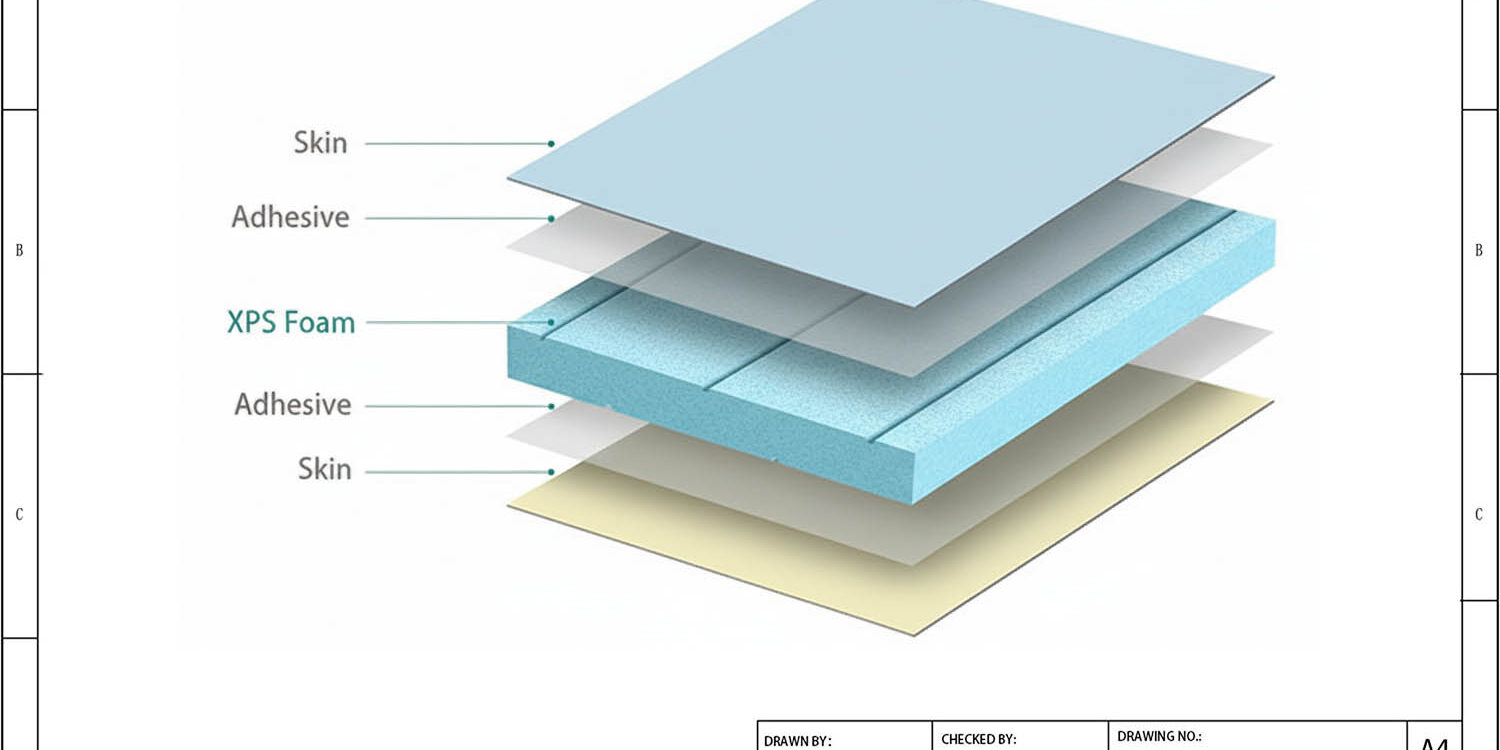
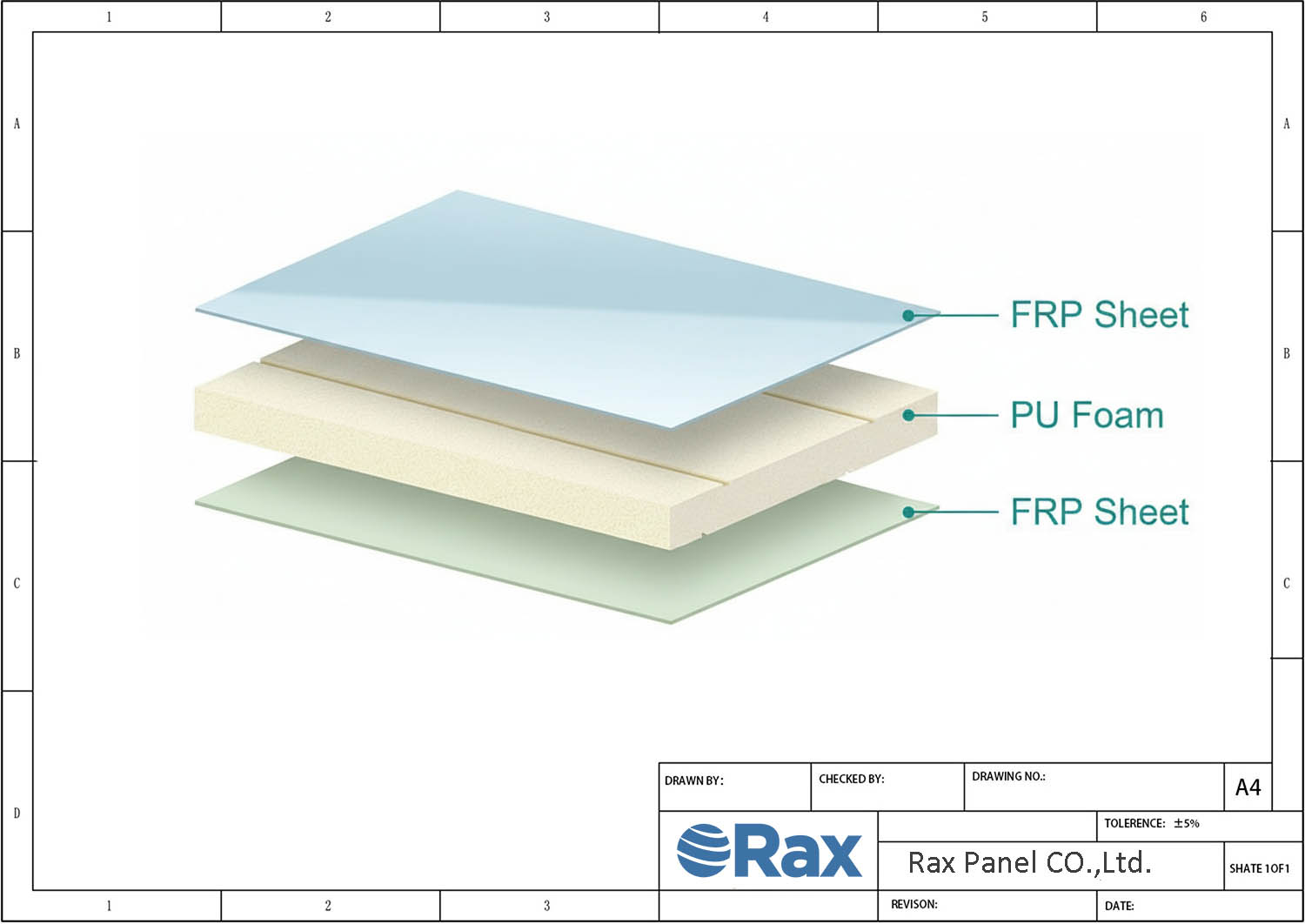
La résistance d'un panneau en mousse structurale repose sur l'interaction mécanique entre la densité du cœur, le matériau de parement et la couche de collage, et non sur un seul composant isolé.
Mécanique des panneaux sandwich : cœur, parement et collage
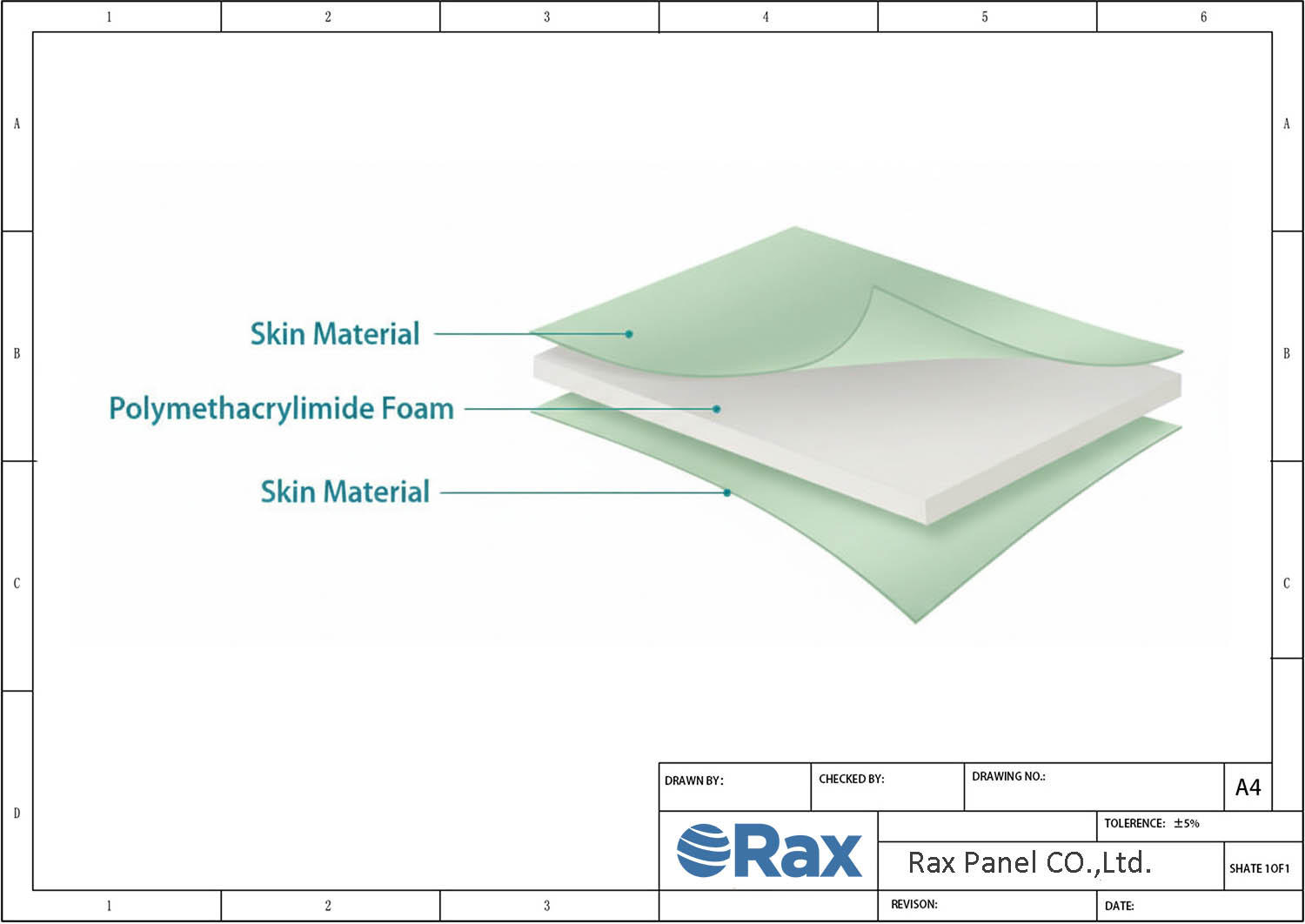
Un panneau sandwich fonctionne comme une poutre en I. Le matériau de cœur résiste aux forces de cisaillement et stabilise les parements, tandis que les peaux supportent les charges de compression et de traction. Si l'un de ces trois éléments défaillit, l'ensemble de l'assemblage结构nel cède. Nous évaluons ces mécanismes à l'aide de ASTM C365 pour les essais en compression et ASTM D7250 pour les propriétés en flexion.
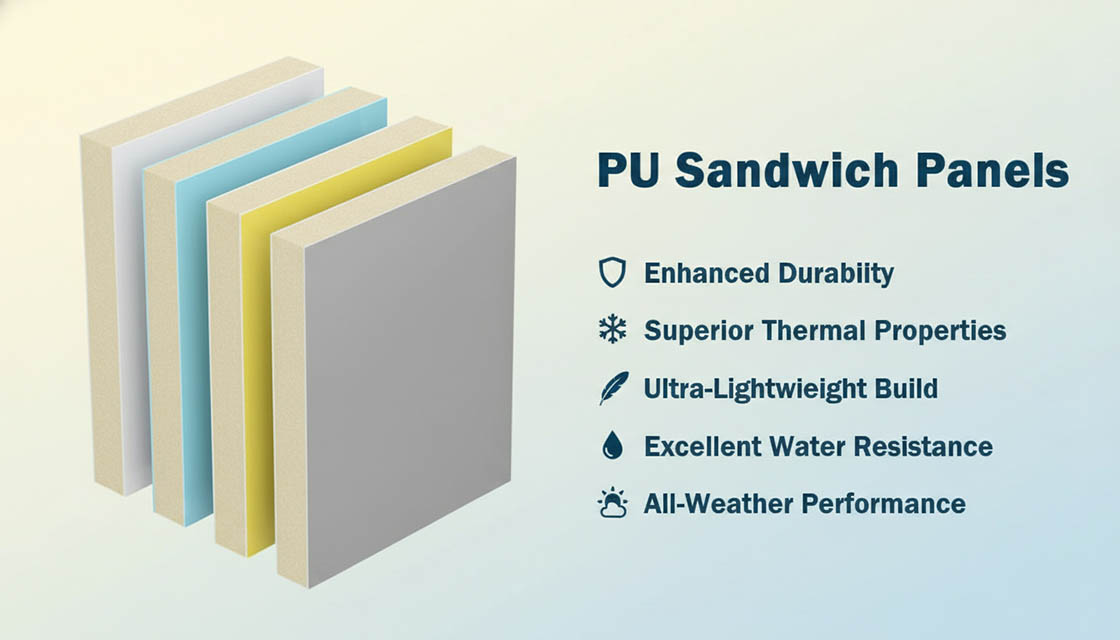
Le matériau de parement détermine la durabilité de surface et la capacité de charge en traction. Alors que les panneaux SIP de construction standard utilisent de l'OSB ou de l'acier 16-20 gauge, les ingénieurs véhicule nécessitent des peaux composites avancées pour alléger sans sacrifier la résistance aux impacts. Nous fabriquons des panneaux utilisant de la GRP/FRP avec gelcoat (0,5-3,0 mm), des feuilles CFRT, de l'aluminium (0,5-2,0 mm) et de l'acier inoxydable, selon les exigences dynamiques spécifiques du camping-car, de la carrosserie de camion ou du navire.
- Densité du Cœur : Le matériau de cœur détermine la résistance au cisaillement et la rigidité globale. Les cœurs en mousse PET (110-130 kg/m³) offrent une haute rigidité, tandis que les mousses PU à faible densité absorbent l'énergie d'impact.
- Matériau de parement : Détermine la résistance en compression et en traction. Les feuilles CFRT offrent une alternative plus légère, plus fine et plus résiliente au GRP standard.
- Méthode de collage : Contrôle le transfert de cisaillement entre le cœur et la peau. Une application inégale de l'adhésif ou une mauvaise circulation de la résine lors du laminage crée des risques de délaminage sous les vibrations dynamiques autoroutières.
Transposition des normes ORNL du bâtiment vers l'ingénierie automobile
Une grande partie des données de charge structurelle publiquement disponibles s'appuie largement sur les méthodologies de l'Oak Ridge National Laboratory (ORNL) conçues pour les applications de bâtiment stationnaires. Leur formule de combinaison des charges de vent (1,2D + 1,6W + 0,5L + 0,5S) modélise les forces statiques sur les murs architecturaux. Les données de test ORNL montrent que les colonnes SIP à parement acier 16 gauge atteignent une déflexion maximale de 0,2367 pouces sous une contrainte compressive de 11 990 PSI dans une configuration en forme de delta.
Cependant, appliquer strictement ces données purement architecturales à la fabrication automobile est risqué. Les parois de camping-car, les caisses de camions frigorifiques et les coques marines subissent des charges dynamiques continues que les panneaux SIP de construction ne rencontrent jamais : fatigue par vibration, chocs de déplacement de cargaison et cisaillement du vent autoroutier. Un ingénieur véhicule doit extrapoler les données standards du bâtiment pour tenir compte de ces contraintes dynamiques réelles.
Nos ingénieurs conçoivent spécifiquement des panneaux sandwich à âme en mousse pour combler ce vide, en testant nos revêtements en FRP, CFRT et composites selon les normes rigoureuses de vibration et d'impact exigées par les constructeurs automobiles plutôt que de s'appuyer sur des références statiques de construction.
Résistance en compression des formulations de polyuréthane (PU) rigides
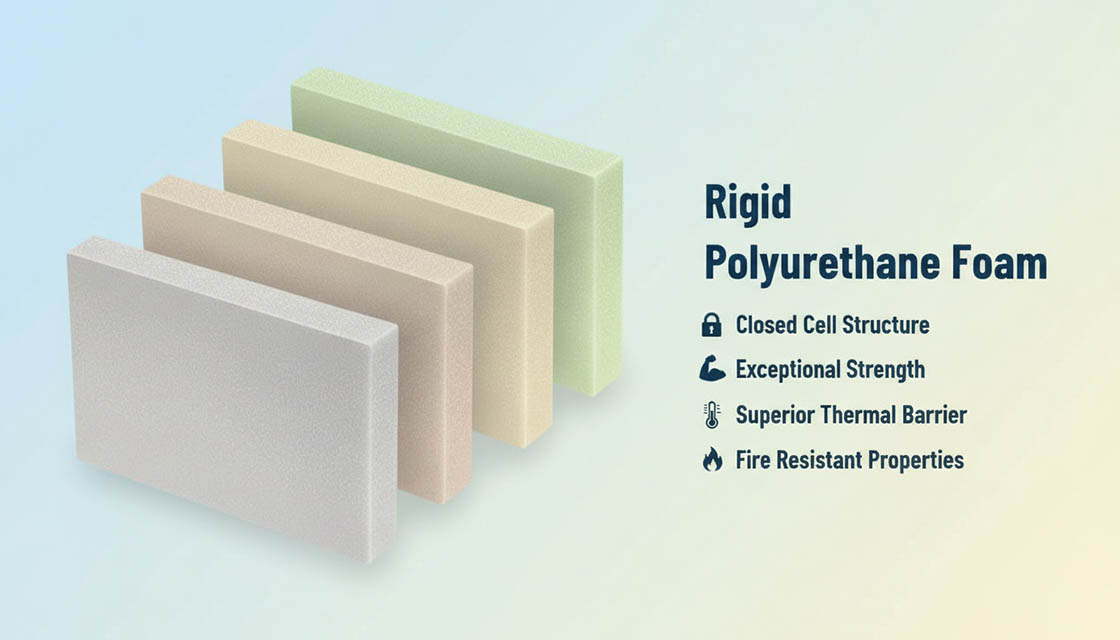
La mousse polyuréthane rigide est un matériau à âme polyvalent dans la fabrication automobile grâce à son excellent rapport poids-résistance et ses propriétés d'isolation thermique. Selon la formulation et la densité spécifiques, la résistance à la compression de la mousse PU varie de 30 à plus de 100 PSI. Pour des spécifications techniques précises, une mousse PU rigide à une densité de 48,5 kg/m³ offre une résistance à la compression constante de 350 kPa (50 PSI), soit une capacité de charge structurelle comprise entre 5 000 et 10 000 livres par pied cube.
Préserver cette résistance sur des lots de production massifs est essentiel. En pratique, une variabilité de densité de la mousse de ±5 à 8 % est courante dans les usines de gamme inférieure, ce qui impacte directement la régularité de la résistance à la compression et risque d'entraîner le rejet des lots. Nous éliminons cette variabilité sur notre ligne de production continue avancée de panneaux composites. Avec une production quotidienne dépassant 1 700 m², nous utilisons un contrôle en ligne de la densité pour garantir des tolérances d'épaisseur strictes (±0,5 mm) et une densité uniforme des âmes PU, XPS et PET tout au long de votre série de production.
Comparaison de capacité de charge des matériaux de cœur
Choisir une âme en mousse sans recouper densité, résistance à la compression et conductivité thermique par rapport à votre profil de charge spécifique est le chemin le plus rapide vers des défaillances sur le terrain ou des pénalités de suringénierie en matière de poids.
Comparaison des données de capacité de charge des matériaux de cœur
La plupart des données de charge structurelle disponibles en ligne font référence aux SIP de construction immobilière avec revêtements OSB ou acier, totalement irrelevants pour les ingénieurs automobiles calculant des charges dynamiques issues de la fatigue par vibration, des impacts de déplacement de cargaison et du cisaillement du vent sur autoroute. Nos ingénieurs testent les âmes en mousse spécifiquement pour les assemblages de parois de camping-car, les caissons de camions frigorifiques et les applications navales, où les équations de charge diffèrent fondamentalement des scénarios statiques de construction.
Nous évaluons régulièrement cinq matériaux d'âme pour les spécifications de panneaux structurels en mousse. Chacun occupe une position distincte dans la matrice résistance/poids/coût. Voici les données de base auxquelles notre équipe d'ingénierie se réfère lors de l'initiation d'une spécification personnalisée, mesurées selon les protocoles de test de compression ASTM C365 dans notre installation de production.
- Mousse PET (110–130 kg/m³) : Résistance à la compression 6–10 MPa (870–1 450 PSI). Conductivité thermique d'environ 0,030–0,035 W/m·K. Excellente stabilité dimensionnelle avec faible fluage sous charges soutenues.
- Mousse PU (plage 30–100+ PSI) : Le PU rigide à une densité de 48,5 kg/m³ atteint une résistance à la compression de 350 kPa / 50 PSI. Conductivité thermique de 0,022–0,028 W/m·K. Meilleure performance d'isolation parmi les mousses structurelles.
- Mousse XPS : Conductivité thermique de 0,028–0,034 W/m·K. Résistance à la compression modérée à coût réduit. Couramment utilisée dans les caissons de camions frigorifiques où la performance thermique l'emporte sur les exigences de charge maximale.
- Mousse PVC (cellules fermées, grade marine) : Densité de 60 à 250 kg/m³ selon le grade. Résistance supérieure à l'absorption d'eau et à l'exposition aux carburants. Spécification standard pour les panneaux sandwich de coque et de pont de navire.
- Mousse PMI : La résistance spécifique la plus élevée parmi les âmes en mousse disponibles commercialement. Son coût premium le positionne pour l'aérospatiale et les applications haute performance où chaque kilogramme compte.
Une variable de fabrication critique que la plupart des fournisseurs évitent d'aborder : une variabilité de densité de la mousse de ±5 à 8 % entre les lots est courante dans les usines de gamme inférieure. Cette variabilité impacte directement la régularité de la résistance à la compression. Notre ligne de production continue, d'une capacité de 1 700 m²/jour, utilise un contrôle en ligne de la densité pour maintenir des tolérances plus serrées, car l'inconsistance des lots est ce qui provoque l'arrêt des lignes de production pour les constructeurs automobiles.
Mousse PET vs PU : analyse résistance-poids pour la cohérence en ligne de production
Lorsque les ingénieurs d'achat nous demandent s'il faut spécifier des âmes en mousse PET ou PU, la réponse dépend entièrement de savoir si leur application privilégie la stabilité dimensionnelle sous charge ou la performance d'isolation thermique. Ces deux matériaux répondent à des impératifs d'ingénierie différents.
La mousse PET à 110–130 kg/m³ offre une résistance à la compression comprise entre 6 et 10 MPa. Elle présente un fluage minimal sous charges statiques soutenues, ce qui signifie qu'un panneau mural de véhicule spécifié à 50 mm d'épaisseur le premier jour mesure sensiblement la même épaisseur après deux ans de service. Pour les constructeurs de camping-car utilisant des lignes d'assemblage automatisées avec distribution robotisée de colle, cette prévisibilité dimensionnelle réduit les taux de rebut et maintient des surfaces de collage homogènes d'un lot à l'autre.
La mousse PU sacrifie une rigidité structurelle pour une performance thermique supérieure. À 48,5 kg/m³, le PU rigide atteint une résistance à la compression de 350 kPa tout en offrant une conductivité thermique aussi basse que 0,022 W/m·K, soit environ 30 % d'isolation meilleure que le PET à épaisseur équivalente. Les fabricants de caissons frigorifiques choisissent les âmes PU précisément pour cette raison : l'efficacité thermique réduit directement la durée de fonctionnement du compresseur et la consommation de carburant pendant le transport de la chaîne du froid.
La question de la stabilité dimensionnelle est plus importante que la plupart des ingénieurs ne le calculent initialement. La mousse PU peut présenter des taux de fluage plus élevés sous charge continue, particulièrement à des températures ambiantes élevées courantes dans les applications automobiles.
Si votre conception de panneau repose sur le maintien de l'épaisseur exacte de l'âme en mousse pour le transfert de charge structurelle vers les peaux de revêtement sur une durée de vie de 10 ans, le PET offre une marge de sécurité plus large. Nos ingénieurs spécifient le PET pour les applications structurelles portantes et le PU pour les applications pilotées par la thermique, et nous testons en conséquence durant la phase expérimentale des projets personnalisés.
Cœurs XPS et PVC : applications de charge de niche
Les âmes en mousse XPS et PVC répondent à deux niches exigeantes où les mousses structurelles grand public sous-performent : la logistique de la chaîne du froid et les environnements marins. Aucun de ces deux matériaux n'est l'option la moins chère, mais tous deux résolvent des modes de défaillance spécifiques que les âmes standard ne peuvent pas adresser.
des âmes en mousse XPS Le XPS excelle dans les caissons de camions frigorifiques et les applications de stockage froid. Avec une conductivité thermique comprise entre 0,028 et 0,034 W/m·K et une structure à cellules fermées qui résiste à l'absorption d'humidité même sous cyclages répétés de congélation-décongélation, le XPS préserve ses propriétés d'isolation sur des années de service. Lorsque nous fabriquons des panneaux sandwich à âme en mousse pour camions frigorifiques CKD, les âmes en XPS associées à des revêtements en PRV offrent l'intégrité de l'enveloppe thermique requise pour maintenir la température de cargaison dans des tolérances strictes lors de transports prolongés sur autoroute.
La mousse PVC est la norme établie pour les panneaux sandwich de qualité marine, et pour bonne raison. Sa structure à cellules fermées résiste à l'ingression d'eau, à l'exposition aux carburants et à l'environnement chimique courant dans les compartiments moteur de navire et les assemblages de coque. Pour nos solutions navales, les âmes en PVC associées à des revêtements en PRV et des surfaces en gélacoat produisent des panneaux capables de résister aux charges dynamiques soutenues induites par l'impact des vagues tout en maintenant l'intégrité structurelle dans des conditions d'humidité permanente.
Le profil de charge des applications marines diffère significativement des spécifications des véhicules terrestres. Les panneaux subissent des contraintes de flexion multi-axiales dues aux vagues, des charges ponctuelles des équipements de pont et des vibrations soutenues des systèmes de propulsion. La mousse PVC absorbe ces charges dynamiques sans la dégradation par fatigue progressive observée dans les alternatives à faible densité. Nous spécifions le PVC exclusivement pour les applications sous la ligne de flottaison et les ponts dans nos projets de panneaux marins.
| Matériau du cœur | Plage de densité | Résistance à la compression | Application typique | Avantage en charge |
|---|---|---|---|---|
| Mousse PU (polyuréthane) | 30–100 kg/m³ | 207–689+ kPa (30–100+ PSI) | Parois de camping-car, caissons de camions, panneaux isolants | Rapport résistance/poids élevé ; 350 kPa à une densité de 48,5 kg/m³ |
| Mousse PET (polyéthylène téréphtalate) | 110–130 kg/m³ | 6,0–10,0 MPa (870–1 450 PSI) | Panneaux structurels automobiles, navires | Résistance supérieure à la compression et au cisaillement ; recyclable |
| Mousse XPS (polystyrène extrudé) | 25–45 kg/m³ | 150–500 kPa (22–73 PSI) | Panneaux d'isolation thermique, mobil-homes | Faible conductivité thermique (0,028–0,034 W/m·K) ; résistante à l'humidité |
| Mousse PVC (polychlorure de vinyle) | 60–250 kg/m³ | 400–3 500 kPa (58–508 PSI) | Coques navales, ponts, cloisons étanches | Grade marine à cellules fermées ; excellente résistance à l'eau et aux produits chimiques |
| Mousse PMI (polyméthacrylimide) | 32–300 kg/m³ | 400–8,000 kPa (58–1,160 PSI) | Aerospace, high-performance structural panels | Highest specific strength; stable at elevated temperatures |
| PP Honeycomb (Polypropylene) | 28–120 kg/m³ | 200–2,200 kPa (29–319 PSI) | Truck flooring, RV furniture, cargo panels | Exceptionally lightweight with high shear resistance |
| Nid d'abeille en aramide | 29–130 kg/m³ | 350–6,000 kPa (51–870 PSI) | Aviation interiors, racing vehicle structures | Extreme impact resistance; fire-retardant properties |
Comment les matériaux de parement font varier les charges admissibles
Facing material selection shifts sandwich panel flexural strength by up to 40% and alters total vehicle body weight by 15-30%. Engineers who mismatch facing and core for cost reasons inherit field failures.
Comment les matériaux de parement déterminent les performances en flexion et en impact
In a sandwich panel, the core handles shear and compressive loads while the facings carry tensile and flexural stress. Swap the facing material and you rewrite the entire load equation, even if the core remains identical.
Our engineers evaluate four primary facing systems for vehicle OEMs: GRP/FRP, CFRT, aluminum, and stainless steel. Each behaves differently under ASTM D7250 three-point bending and ASTM D5628 impact testing, and the differences matter enormously when your panel must absorb highway-speed cargo shifts or marine hull strikes.
GRP/FRP facings with gelcoat (0.5–3.0mm thickness range) remain the most widely specified option across RV and truck body applications. The continuous glass fiber reinforcement provides high specific flexural stiffness, and the gelcoat surface delivers waterproof, flat, and insulating properties critical for refrigerated truck bodies.
Our FRP sheets achieve consistent tensile strength because the continuous production line, rated at 1,700 m² daily output, maintains fiber resin ratio within tight tolerance. FRP’s limitation appears in concentrated impact scenarios: it absorbs energy well across a distributed load but can delaminate under sharp, localized point impacts if the core density is underspecified.
CFRT (Continuous Fiber Reinforced Thermoplastic) facings represent the newer generation. They are lighter and thinner than standard FRP while maintaining equivalent or better resilience. For vehicle manufacturers chasing every kilogram of weight reduction, CFRT offers a measurable advantage: our testing shows a typical 10–15% weight saving per square meter versus gelcoat FRP at comparable flexural modulus.
The thermoplastic matrix also provides superior impact recovery: it deforms and rebounds rather than cracking, which matters in applications where panels receive repeated low-energy impacts during loading and unloading cycles.
Aluminum facings (0.5–2.0mm) trade composite impact absorption for metal ductility and familiar fabrication processes. Aluminum sandwich panels with foam cores, including aluminum composite panels and aluminum honeycomb configurations, excel in applications requiring tight flatness tolerances and high recycled content specifications. However, aluminum facings transmit vibration differently than composite facings. In truck body floor and wall applications, this vibration transmission can accelerate fatigue at bonded joints if the adhesive system is not engineered for the specific dynamic load profile.
Stainless steel facings enter the specification when corrosion resistance and hygiene standards override weight concerns: industrial food processing vehicles, chemical transport, and medical equipment enclosures being primary examples. The material provides the highest dent resistance and cleanest surface finish but carries a significant weight penalty that directly reduces vehicle payload capacity.
- GRP/FRP Facing (0.5–3.0mm): High distributed flexural strength, gelcoat waterproofing, proven RV and truck body track record. Susceptible to localized impact damage if core density is too low.
- CFRT Facing: 10–15% lighter than equivalent FRP, thermoplastic impact recovery, thinner profile options. Ideal for weight-sensitive applications requiring repeated impact tolerance.
- Aluminum Facing (0.5–2.0mm): Excellent flatness, recyclable, familiar fabrication. Higher vibration transmission requires attention to joint adhesive systems.
- Stainless Steel Facing: Maximum corrosion and dent resistance, hygienic surface. Significant weight penalty limits use to specialized applications.
Parements FRP vs aluminium : résultats d'essais de charge pour les spécifications véhicule
Vehicle manufacturers consistently ask us to resolve one engineering tension: aluminum provides familiar metal fabrication workflow while FRP delivers superior weight-to-strength ratios. The answer depends entirely on whether your design priority is fuel efficiency over the vehicle’s service life or initial assembly simplicity. We tested both facing systems bonded to identical PET foam cores (110–130 kg/m³ density, 6–10 MPa compressive strength) under ASTM D7250 flexural conditions to provide direct comparative data for specification decisions.
At equal facing thickness (1.5mm), FRP-faced panels demonstrated approximately 20–25% higher specific flexural stiffness (stiffness per unit weight) compared to aluminum-faced equivalents. This gap widens further when specifying CFRT facings instead of standard FRP.
For a typical 50mm RV wall panel with PET core, switching from 1.0mm aluminum to 1.0mm FRP facing reduces panel weight by roughly 2.5–3.0 kg/m² while maintaining comparable flexural load capacity. Across an entire RV or truck body surface area, this translates to meaningful payload recovery or fuel efficiency gains over the vehicle’s operational lifetime.
Aluminum facings, conversely, outperform FRP in concentrated impact resistance: the metal yields and distributes the load rather than fracturing. Our engineers documented this behavior during cargo shift simulation testing: a 50kg load impacting a panel edge at 2.5 m/s produced localized FRP facing fracture at the impact point while the aluminum facing panel dent remained structurally intact.
For truck body flooring and lower wall sections directly exposed to cargo contact, aluminum may represent the pragmatic choice despite the weight cost. For roof panels, upper walls, and RV furniture panels where distributed loads dominate and weight sensitivity is highest, FRP or CFRT facings consistently test as the superior specification.
A critical factor most building-focused structural panel research ignores: dynamic vibration fatigue. ORNL’s widely cited structural insulated panel research addresses static wind and snow loads on building envelopes, conditions irrelevant to vehicle panels experiencing continuous highway vibration at 10–200 Hz.
Our testing confirms that FRP-faced sandwich panels exhibit superior vibration damping compared to aluminum-faced equivalents, reducing fatigue stress at bonded joints by a measurable margin. For refrigerated truck bodies specifically, this damping also reduces noise transmission through the panel, a practical consideration for operators running urban delivery routes.
- Flexural Stiffness (per unit weight): FRP facing 20–25% higher than aluminum at equivalent thickness. CFRT extends this advantage further.
- Weight Reduction (1.0mm FRP vs. 1.0mm Aluminum, 50mm PET core): Approximately 2.5–3.0 kg/m² saved. Significant across full vehicle body surface area.
- Concentrated Impact Resistance: Aluminum yields and recovers; FRP risks localized fracture at impact point. Aluminum preferred for cargo-contact zones.
- Amortissement des vibrations : FRP composite facings absorb vibrational energy more effectively than aluminum, reducing bonded joint fatigue in highway-speed operations.
- Specification Guidance: Use FRP/CFRT for roofs, upper walls, and furniture panels. Consider aluminum for floors and lower cargo-contact zones.
The practical recommendation for our vehicle OEM clients: specify hybrid facing configurations where the application demands it. FRP or CFRT facing on exterior walls and roofing for weight optimization, aluminum or stainless steel on high-wear interior surfaces.
Our engineering team configures these mixed-facing panels on the same production line, maintaining consistent core bonding and ±0.5mm thickness tolerance across the full panel area. This approach lets procurement engineers optimize each zone of the vehicle body independently rather than compromising the entire specification to satisfy the most demanding single zone.
| Matériau de parement | Plage d'épaisseur | Key Load Characteristic | Load Rating Impact |
|---|---|---|---|
| GRP/FRP avec Gelcoat | 0.5 – 3.0 mm | Flexural strength 150-250 MPa; gelcoat adds 8-12% stiffness gain | Moderate deflection under point bending; ideal for RV walls and marine hulls requiring waterproof integrity |
| CFRT (thermoplastique renforcé de fibres continues) | 0,3 – 2,0 mm | 15-20% lighter than standard FRP at equivalent flexural modulus | Superior weight-to-strength ratio (kg/m² per kPa); best for truck bodies and transit applications targeting fuel efficiency |
| Aluminum Sheet | 0.5 – 2.0 mm | Yield strength 110-280 MPa depending on alloy grade (3003/5052) | Even load distribution with predictable delta-shape deflection curves; suitable for dry freight and mobile home panels |
| Acier inoxydable | 0.5 – 1.5 mm | Compressive stress capacity up to 11,990 PSI (16-gauge per ORNL data) | Highest rigid load bearing with max deflection 0.2367 in.; recommended for industrial equipment and hygiene-critical facilities |
| Plywood Facing | 3.0 – 18.0 mm | Flexural modulus varies with grain direction; lower uniformity than composites | Reduced point-load performance vs. FRP; best suited for furniture panels and non-structural RV interior applications |
| Aluzinc Coated Steel | 0.4 – 1.2 mm | Corrosion resistance 3-6x galvanized steel; yield 250-350 MPa | High load capacity with enhanced thermal retention; optimal for exterior wall cladding and refrigerated truck bodies |
| ACP (Panneau Composite en Aluminium) | 0.2 – 0.5 mm (per skin) | Dual aluminum skins with PE core; composite action increases stiffness 25-40% | Balanced aesthetic and structural performance; recommended for building facades and decorative architectural cladding |
4 types de charges structurelles sur les panneaux en mousse pour véhicules
Most structural load data available online addresses building SIPs with OSB facings. Vehicle engineers are left extrapolating. Here is the load framework we actually use when specifying panels for RV, truck body, and marine applications.
Charges permanentes : la réalité du poids statique
Dead loads on vehicle foam panels represent the constant, unmoving weight the panel must carry indefinitely. In an RV wall or refrigerated truck body, this includes the self-weight of the facing materials, the core, adhesives, interior fixtures, and permanently mounted equipment.
A GRP/FRP facing at 1.5mm with a PET foam core at 120 kg/m³ typically yields a panel dead load in the range of 3.5-5.0 kg/m² depending on total thickness. This sounds negligible, but when panels span large roof areas on a truck body, the cumulative weight directly impacts payload capacity and fuel consumption.
Our engineers specify dead load calculations early in the design phase because the facing-to-core ratio determines whether the panel will creep over time under its own weight. A PU foam core at 48.5 kg/m³ density achieves approximately 350 kPa (50 PSI) compressive strength per ASTM C365 testing, which provides substantial headroom for static loading in most wall and roof configurations.
However, under-specifying core density to save weight is a common field failure we see in panels sourced from lower-tier factories where foam density variance of ±5-8% between batches goes unmonitored.
Charges d'exploitation : occupants, cargaison et forces variables
Live loads are the variable forces a vehicle panel experiences during operation. For RV flooring panels, this means occupant traffic, furniture weight shifts, and water tank loads. For truck body sidewalls, it means cargo pressing outward during cornering, load shifting during braking, and stacking pressures in refrigerated compartments.
For marine vessel panels, it means crew movement, equipment repositioning, and catch or cargo redistribution. These loads are intermittent but repetitive, and they demand a core material that can recover from deformation rather than permanently compress.
PET foam cores at 110-130 kg/m³ density deliver compressive strengths of 6-10 MPa, making them a strong candidate for high-traffic flooring panels where repeated point loading is expected. PVC foam cores, being closed-cell and marine-grade, provide excellent recovery characteristics for vessel applications where panels cycle between loaded and unloaded states constantly. We test flexural properties per ASTM D7250 to establish the facing stress and core shear values that define safe live load thresholds for each panel configuration.
Charges d'impact : déplacement de cargaison et débris routiers
Impact loads are the most dangerous because they arrive without warning and often exceed design thresholds. In truck body applications, the most common impact scenario is cargo shift during emergency braking or sharp cornering.
A pallet shifting against a sidewall panel generates a concentrated point load that can easily exceed the distributed load rating by a factor of 3-5x. In RV applications, road debris strikes on lower wall panels and underbody surfaces represent a similar concentrated threat. Marine panels face impact from docking contact, equipment drops, and wave-driven objects.
This is where facing selection becomes critical. GRP/FRP facings with gelcoat at 1.0-2.0mm provide excellent impact distribution across the core, spreading the point load before it concentrates in the foam. CFRT facings offer a lighter, thinner alternative that maintains high resilience due to the continuous fiberglass reinforced thermoplastic construction.
For maximum impact resistance in truck body flooring, we configure panels with stainless steel or aluminum facings at 0.5-2.0mm over high-density PU or PET cores, accepting the weight penalty in exchange for puncture resistance.
Charges environnementales : cisaillement du vent, contraintes thermiques et humidité
Environmental loads on vehicle panels combine aerodynamic pressure, thermal cycling, and moisture exposure into a compound degradation vector. Highway speed wind shear on a large RV or truck body generates sustained aerodynamic pressure on forward-facing panels and negative pressure (suction) on rear and side surfaces.
Unlike buildings where wind load formulas like the ORNL combination (1.2D + 1.6W + 0.5L + 0.5S) provide conservative estimates, vehicle panels experience dynamic wind pressure changes at highway speeds that create cyclic loading on panel-to-frame connections.
Thermal cycling is equally aggressive. A refrigerated truck body operating at -20°C internally while rolling through 40°C ambient external temperatures creates a 60°C differential across the panel thickness. XPS foam cores, with thermal conductivity of 0.028-0.034 W/m·K, provide the insulation performance needed, but the facing-to-core adhesive must handle the differential expansion without delamination.
Our production line applies continuous process control to adhesive coverage and cure temperature to prevent the thermal delamination failures we often see in panels from facilities lacking in-line monitoring.
Facteurs de charge dynamique : vibrations, sollicitations cycliques et résistance à la fatigue
This is where vehicle panel specification diverges completely from building construction, and where most publicly available structural data becomes useless for vehicle engineers. Buildings sit still. Vehicles vibrate constantly. Every mile of highway travel imposes thousands of micro-cycles on the panel structure through frame flex, road surface irregularities, and powertrain vibration harmonics.
Over a 500,000-mile service life for a truck body, the panel experiences millions of low-amplitude stress cycles that can cause facing-to-core bond fatigue long before the static load capacity is ever reached.
Cyclic loading fatigue in sandwich panels typically manifests as core shear cracking at facing discontinuities, adhesive bond line failure at panel joints, or facing micro-cracking at stress concentration points around fasteners and cutouts. The fatigue resistance of the panel depends more on the consistency of the adhesive bond and the uniformity of the core material than on the raw compressive strength of the foam.
A PU foam core rated at 100 PSI compressive strength will still fail prematurely if the facing-to-core bond has voids or if the foam density fluctuates across the panel width due to poor manufacturing control.
This is precisely why we maintain a continuous composite panel production line with daily output exceeding 1,700 m² and target panel thickness tolerances of ±0.5mm. Consistent foam density, uniform adhesive coverage, and controlled cure cycles produce panels with predictable fatigue life.
When our engineers customize a foam core sandwich panel for a truck body or RV application, we select the core material and facing combination based on the specific vibration frequency range and amplitude the vehicle will experience. We factor in the weight-to-strength ratio in kg/m² per kPa that directly impacts the vehicle’s payload efficiency and fuel economy over the entire service life of the build.
Normes d'essai de charge et certification
Veteran sourcing engineers should require ASTM C365 and ASTM D7250 test reports alongside ISO 9001 certification before approving any structural foam panel supplier for vehicle production lines.
Méthodes d'essai applicables aux panneaux en mousse structurale
Two test standards form the baseline for evaluating sandwich panel structural performance: ASTM C365 for flatwise compressive strength and ASTM D7250 for flexural and shear stiffness. Our engineers run both tests on every core variant we produce, PET, PU, XPS, PVC, and PMI foams, because compressive data alone does not predict how a panel behaves under the bending loads a truck body or RV wall experiences in service.
ASTM C365 measures the core material’s resistance to crushing when load is applied perpendicular to the faces. This is the number that tells you whether a PU foam core at 48.5 kg/m³ density can sustain its rated 350 kPa (50 PSI) compressive strength without permanent deformation.
For vehicle applications, this value directly determines how much cargo weight or equipment load a floor or wall panel can carry before the core yields. We specify this test for every production batch because foam density variance of ±5-8% between batches, a common issue in lower-tier factories, directly shifts the compressive curve.
ASTM D7250 determines the flexural and shear stiffness of the complete sandwich structure, core plus facings bonded together. This is critical because a panel with PET foam core at 110-130 kg/m³ delivering 6-10 MPa compressive strength will behave differently depending on whether it is paired with 0.5-3.0mm GRP/FRP gelcoat facings or 0.5-2.0mm aluminum facings.
The facing material and thickness shift the neutral axis, changing how the panel distributes load across its cross-section. Our engineers specify ASTM D7250 data sheets for each custom panel configuration so vehicle designers can input accurate values into their FEA models.
Certification ISO et rapports d'essai requis lors de la phase d'approvisionnement
ISO 9001 certification is the minimum entry requirement, but veteran buyers know it only confirms a quality management system exists. It does not guarantee panel consistency. At the sourcing evaluation stage, procurement engineers should request three specific documents from any composite panel manufacturer.
- Third-party ASTM C365 test reports: Dated within the last 12 months, covering the specific core material and density range being specified (e.g., PU foam 30-100 PSI range, PET foam 6-10 MPa).
- ASTM D7250 flexural test data: For the exact facing-core-facing configuration ordered, not a generic proxy panel.
- Thickness tolerance records: Batch-level data showing ±mm deviation across a production run. For vehicle body panels, tolerance stack-up beyond ±0.5mm begins to cause assembly fitment issues on the production line.
For marine vessel applications, additional certifications come into play. Closed-cell PVC foam cores used in GRP/FRP sandwich panels should carry DNV or Lloyd’s Register compliance documentation. We maintain these test records for the marine-grade panels we supply to vessel builders because classification society surveyors require traceability from raw foam density certification through finished panel mechanical testing.
Indicateurs de cohérence qualité : capacité de production et expérience de fabrication
Test reports capture a snapshot in time. What veteran buyers actually need to evaluate is whether a manufacturer can reproduce those numbers across every batch over a 12-month supply contract. Two indicators predict this reliability: continuous production line capability and documented manufacturing experience with the specific panel configuration being ordered.
Our advanced composite panel production line maintains a daily output exceeding 1,700 square meters. This is not a vanity metric. It matters because continuous line production enables in-line density monitoring and real-time thickness control.
Batch-to-batch foam density variance drops significantly when the production process runs continuously versus batch foaming methods common in smaller workshops. For a specialized vehicle manufacturer running a JIT assembly line, this consistency is what prevents the production line shutdowns caused by out-of-spec panels arriving at the dock.
Over 15 years of production experience in composite panels means our engineering team has accumulated test data across thousands of production runs spanning CFRT, GRP/FRP, foam core, honeycomb, and aluminum sandwich configurations.
When a truck body manufacturer specifies a new panel layup, say, CFRT facings over PET foam core, our engineers draw on historical process data to predict compressive and flexural performance before the first prototype is cut. This shortens the qualification cycle and reduces the risk of field failures that drive warranty claims.
The ultimate consistency indicator is defect rate per batch. Our target is below 0.5% for custom structural foam panels. Achieving this requires the combination of a stable continuous production process, experienced technicians who can identify material anomalies during layup, and a testing protocol that catches deviations before panels ship.
For procurement engineers evaluating suppliers, the question is not whether test data looks good on a certificate. It is whether the manufacturer’s process control can deliver that same data on every truck that leaves the factory.
Prévention des défaillances sous charge : repères de contrôle qualité
Batch inconsistency is the silent killer in vehicle panel production. We hold ±0.5mm thickness tolerance and monitor foam density in-line specifically to prevent the load failures that trigger warranty claims downstream.
Cibles de tolérance d'épaisseur de panneau (±0,5 mm)
When our engineers specify a 50mm PET foam core sandwich panel for an RV wall application, that panel must arrive at 50mm ±0.5mm, not 49mm, not 51.2mm. Thickness deviation directly impacts both the structural load calculation and the assembly fit on the production line. A panel that is 1mm undersized creates gaps in vehicle body joints; a panel that is oversized forces alignment issues that cascade into delayed delivery schedules.
We achieve this tolerance on our continuous composite panel production line with a daily output exceeding 1,700 m². The line runs in-line thickness profiling at multiple points across the panel width, not just a single center-point measurement.
This is critical: edge thinning of 0.8–1.2mm is a known failure mode in discontinuous panel presses where pressure distribution is uneven. For vehicle manufacturers assembling panels into structural frames, inconsistent thickness between Batch A and Batch B means re-calibrating CNC cutting tools or accepting compromised joint integrity. Neither is acceptable.
Our QC protocol requires thickness verification at minimum five points per panel (four corners plus center) logged against batch numbers. If any point deviates beyond ±0.5mm, that panel is flagged and re-measured on a calibrated surface table. This data is available to procurement teams upon request for incoming inspection correlation.
Uniformité de la ligne de collage
Load failure in structural foam panels rarely originates in the foam core itself under static conditions. It originates at the skin-to-core interface where adhesive bond line inconsistency creates stress concentration points.
A bond line that varies from 0.1mm to 0.5mm across a single panel means the facing material (whether GRP/FRP at 0.5–3.0mm, CFRT, or aluminum at 0.5–2.0mm) is not transferring load uniformly into the core. Under dynamic vehicle loads such as vibration fatigue, cargo shift impact, and highway wind shear, those localized stress points delaminate first.
We control bond line uniformity through regulated adhesive application rates specific to each core and facing combination. For example, the adhesive volume and spread pattern required for a GRP-facing PET foam panel differs from what a CFRT-facing XPS foam panel requires. Our engineers conduct experimental testing during the specification phase to dial in these parameters before production begins, not during.
- Flatwise Tensile Testing (ASTM C297): We use this to verify skin-to-core bond integrity on sample coupons from each production run. The target is cohesive failure in the core material, not adhesive failure at the bond line.
- Climbing Drum Peel Test (ASTM D1781): Applied to facing materials like aluminum and FRP to quantify the force required to separate the skin from the core. Results are tracked batch-over-batch to detect adhesive system drift.
- Visual Cross-Section Sampling: Cut samples from production panels are examined for voids, dry spots, and adhesive pooling at minimum once per shift.
For truck body and refrigerated vehicle applications where panels face thermal cycling from -20°C to +50°C, bond line integrity under temperature stress is the difference between a panel that lasts 10 years and one that delaminates in 18 months. We recommend procurement engineers request flatwise tensile data for their specific core-and-facing combination during the quotation phase.
Évaluation de la variabilité de densité de mousse par lot
This is where lower-tier manufacturers cut corners, and where vehicle manufacturers pay the price in field failures. Foam density variance of ±5–8% between batches is common in factories without in-line density monitoring. That variance translates directly into compressive strength inconsistency.
Consider the data: rigid PU foam at 48.5 kg/m³ density reaches approximately 350 kPa (50 PSI) compressive strength per ASTM C365 testing. If a batch arrives at 44 kg/m³ due to upstream foam supplier variance, the compressive strength drops below the engineering specification, and the panel may fail under load ratings that were calculated assuming 48.5 kg/m³.
Our continuous production line incorporates in-line density monitoring that checks foam core density before lamination. If a PET foam core batch rated at 120 kg/m³ (target compressive strength 6–10 MPa) arrives with density outside the specified range, it is rejected before it enters the composite layup. This prevents the most insidious QC failure: a panel that looks identical to the previous batch but performs differently under structural load.
- Noyau en mousse PU : Density range 30–100+ kg/m³ depending on grade. We verify compressive strength (30–100+ PSI range) per batch against the project specification sheet.
- Noyau en mousse PET : Target density 110–130 kg/m³ with compressive strength of 6–10 MPa. Batch-to-batch variance held within ±3% on our line.
- Noyau en mousse XPS : Thermal conductivity verified at 0.028–0.034 W/m·K. Density and cell structure uniformity checked before lamination to ensure consistent insulation and load performance.
- Noyau en mousse PVC : Closed-cell marine-grade density verified per batch. Critical for vessel applications where water ingress resistance is a safety requirement.
We provide density verification certificates with each shipment for customer incoming inspection correlation. For specialized vehicle manufacturers running lean production lines with limited incoming QC resources, this batch-level traceability eliminates the risk of installing out-of-spec panels that could trigger warranty claims or, worse, field failures under dynamic load conditions.
Conclusion
For any vehicle build running 50+ units monthly, spec PET foam core (110–130 kg/m³) with 1.5mm CFRT facings. Done. PU foam at 48.5 kg/m³ hits 350 kPa compressive strength on paper, but that ±8% batch density variance from lower-tier factories translates directly into production line rejects and field warranty claims.
PET costs 12–18% more per square meter but holds ±0.5mm thickness tolerance across a full 1,700 m² production run. That consistency is what keeps your defect rate below 0.5%.
Request three consecutive sample panels from any supplier you’re evaluating, and send them all to the same independent lab for ASTM C365 compressive testing. If the variance between those three samples exceeds 5%, walk away. That single test tells you more about a manufacturer’s quality control than any certification wall ever will.
Foire aux questions
Comment sont calculées les charges admissibles ?
Load ratings for structural foam panels are determined through rigorous testing protocols that evaluate the panel’s ability to withstand uniformly distributed loads and concentrated point loads without experiencing core shear failure or facing deformation. The calculation involves analyzing the specific shear modulus of the core material, such as PET, PVC, or PMI foam, in conjunction with the tensile and compressive strength of the outer skins like GRP or aluminum.
Engineers use both laboratory-based three-point bending tests and advanced finite element analysis (FEA) to generate accurate structural performance data under various conditions. These results are then factored with appropriate safety margins to define the maximum recommended load capacity for specific applications like truck bodies or building walls.
Peut-on personnaliser les charges nominales ?
Yes, as a manufacturer with an advanced in-house production facility and a dedicated team of engineers, fully customizes structural foam panels to meet precise load rating requirements for diverse industrial projects. By independently varying the core density, core material, and the type or thickness of the facing skins, the engineering team can engineer composite solutions tailored to exact structural specifications.
They conduct comprehensive experimental testing during the development phase to verify that the customized panel configurations meet or exceed the required industry standards and mechanical data parameters. This bespoke engineering approach ensures optimal performance and cost-effectiveness for applications ranging from commercial truck flooring to structural building components.
Quel est le prix typique d'un panneau en mousse structurale ?
The cost of structural foam panel varies based on material grade, thickness, panel dimensions, and order volume. Requesting a detailed quote with your project specifications is the most reliable way to get an accurate figure. Bulk orders typically reduce per-unit pricing significantly.
Quels facteurs affectent le prix d'un panneau en mousse structurale ?
The cost of structural foam panel varies based on material grade, thickness, panel dimensions, and order volume. Requesting a detailed quote with your project specifications is the most reliable way to get an accurate figure. Bulk orders typically reduce per-unit pricing significantly.
Combien de temps dure un panneau en mousse structurale dans des conditions normales ?
With proper installation and routine maintenance, structural foam panel can last 20 to 30 years or more. Actual lifespan depends on environmental exposure, load conditions, and whether the protective surfaces remain intact over time.