
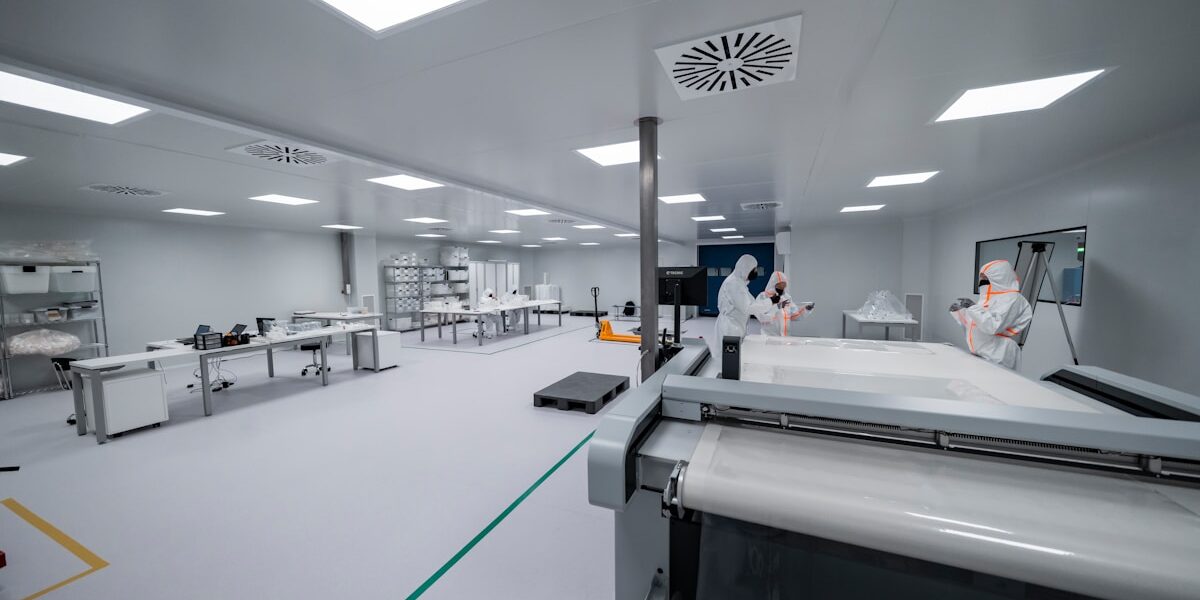
Panel catalogues read like a materials list: aluminum honeycomb, anodized aluminum, painted steel, perforated, rockwool-cored. A project never arrives that way. It arrives as a process sheet – the chemistry the product touches, the washdown regime, the class the validation protocol demands, and the budget left after the equipment is quoted. Choosing cleanroom panels is the work of translating that sheet into a face, a core and a set of joints.
RaxPanel laminates cleanroom wall, ceiling, partition and door panels on its own line, so we sit on the translating side of that table every week. The same wall format can serve a sterile filling suite and a food washdown zone; what changes is the face, the core and the joint detail. Work through the four inputs first, take the mapping table with you, then read the four industry cards against your own process sheet.
Match the Panel to the Process First
Four inputs decide the specification, and they arrive in a fixed order on every project we quote. First, process chemistry: disinfectants, solvents or cleaning foams attack a face long before anything mechanical does. Second, the moisture and washdown regime, which decides whether joints stay rigid or must shed water. Third, the class target, because airflow and filtration punish whatever the cleanroom wall panels shed. Fourth, budget and schedule, which set how much engineering the panel program can carry.
Sequence matters more than the list itself. A face that passes every particle test still fails if the Friday disinfectant fogs it; a core that insulates beautifully still fails if the washdown finds its edges. Fix the process facts in writing before samples are requested, because every quotation inherits whatever the sheet says. The room-level decisions – format, workflow, supplier shortlist – sit in our guide to how to choose a cleanroom; this section stops where the panel question starts.
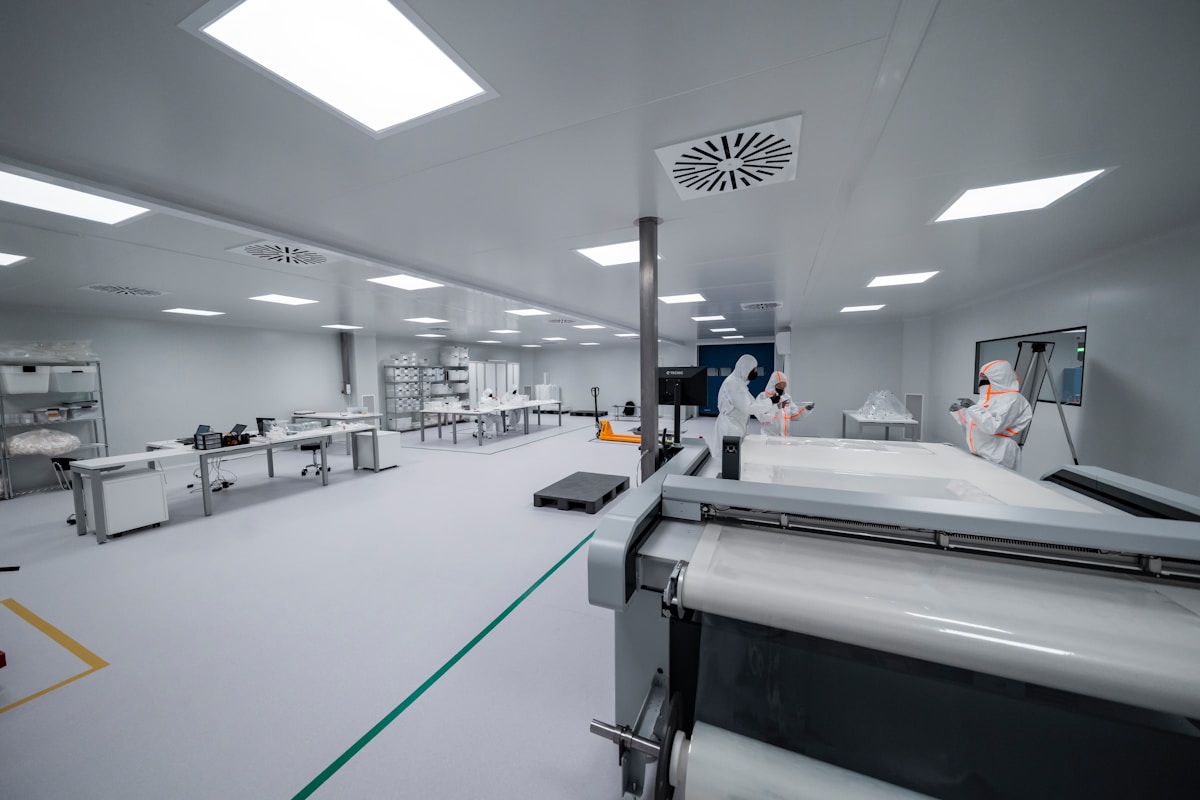
One more habit from the quoting desk: write down what the panels must survive, not how they should look. Tender pages full of finish swatches and empty of chemistry force suppliers to guess, and guesses get priced as risk. A single line about disinfectants or washdown frequency removes more cost from a quotation than any negotiation that follows it.
A Mapping Table: Application to Panel Spec
The market already splits its panels into families – manufacturer type pages are essentially lists of them – so the missing layer is not more material names. It is the mapping that turns a list of cleanroom panels into a specification. The table below reads the way a process sheet does: what the room makes, where its class sits, and which face, core and joints survive that combination.
| Aplicación | Class band | Face | Núcleo | Joints and details |
|---|---|---|---|---|
| Pharma sterile filling and prep | GMP Grade A = ISO 5 (standard-defined); backgrounds ISO 7-8 (trade-typical) | Chemical-tolerant painted or coated steel | Rockwool or aluminum honeycomb | Coved, sealed, disinfectant-tolerant |
| Electronics and semiconductors | ISO 3-5 at critical steps (trade-typical) | Anti-static coated steel or anodized aluminum | Paper or aluminum honeycomb | Tight, low-shedding, tool-friendly |
| Food and beverage | ISO 7-8 (trade-typical) | Washdown-rated steel or FRP | Moisture-tolerant foam or honeycomb | Coved, drainable, alkali-tolerant |
| Hospitals and labs | ISO 7-8; device packaging ISO 8 (trade-typical) | Impact-tolerant steel | Rockwool or honeycomb | Reinforced corners, sealed frames |
Special-purpose families slot in around the four rows. Perforated faces serve return-air plenums where airflow matters more than wipe-down, and treadplate guards the corners that carts actually hit. If a quotation needs one of these, the row it attaches to still decides the core and the joints.
Two reading rules keep the table honest. The class ladder it references is ISO 14644-1, which runs from ISO 1 to ISO 9. It caps the particles a cubic metre of air may carry; the ISO 14644 standard defines those counts. And the bands marked trade-typical are starting points, not laws – a written process requirement can move them, which is exactly why the process sheet outranks the catalogue. Where fire rating leads the requirement list, the rockwool rows carry it; core choice is a fire decision before it is a thermal one.
Pharma and Biotech: Chemical Resistance and Sealed Joints
The defining constraint in pharma is not a number but a clock. Sterile filling runs at EU GMP Grade A, equivalent to ISO 5, and the grade applies at rest and in operation. The room must hold its class while staff and machines work, not only after they leave. Cleanroom panels for pharmaceutical cleanrooms are therefore specified against movement, monitoring and the pressure cascade that guards the Grade A zone, long before anyone discusses finishes.
Acceptance is where the panel choice gets tested. Validation protocols challenge the envelope with aggressive disinfectant rotas, so faces must tolerate repeated chemical exposure without chalking or dulling. Joints are coved and sealed because the cascade must survive doors swinging all shift. Every penetration – ports, ducts, pass-throughs – has to seal and stay testable, because the audit trail reaches the walls themselves. A joint that passes at handover but opens under a year of wiping is the failure this industry actually fears.
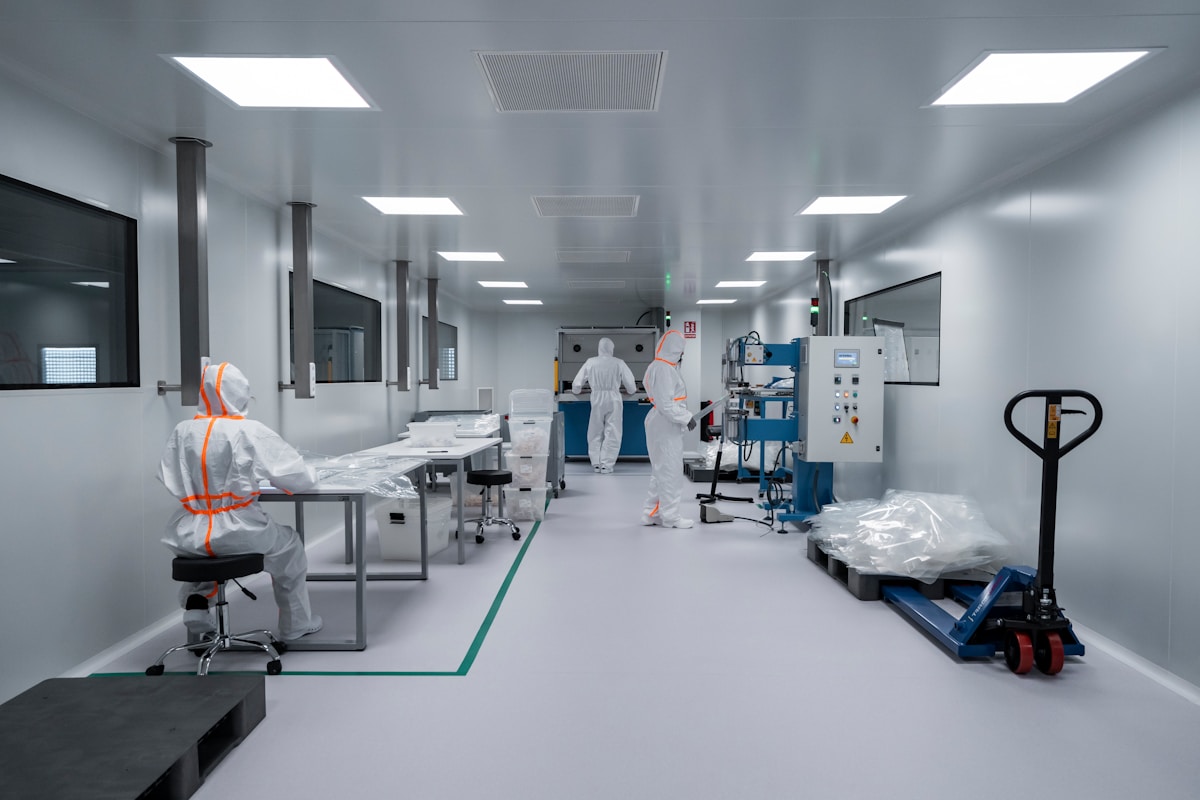
At quotation stage the test is simple to state and hard to fake: ask how the joint system is sealed, which chemicals the face tolerates, and how penetrations are documented. Suppliers who build for pharma answer with details; suppliers who do not answer with brochures.
Electronics: Anti-Static Faces and Low-Particle Cores
Electronics inverts the pharma problem. Nothing biological is at stake; the adversary is geometry. A fab’s critical steps run trade-typically at ISO 3-5, where a single sub-micron particle can kill a die worth more than the panel that let it past. The band explains the specification sheet: faces that shed nothing, cores that do not host particles, and surfaces that resist static charge. A charged surface pulls dust out of the air and onto a wafer.
That last item deserves its own line. For electronics buyers, anti-static cleanroom panels are not an optional extra – static control is part of the contamination strategy, because a charged panel works as a particle collector. Our guide to anti-static and chemical-resistant cleanroom wall panels walks the coating chemistry and surface-resistance trade in depth.

Construction discipline completes the specification. Fab tenants treat installation as part of contamination control: shipping protection, on-site cutting methods and cleaning before handover are written into the contract. A shortcut that leaves debris inside the room’s skin costs more to remove than it saved, which is why electronics quotations read like method statements.
Food Processing: Washdown Duty and Hygienic Joints
Food zones trade-typically sit at ISO 7-8, but the class number is the least of what the envelope must survive. The daily enemy is water: hot, pressurized, often alkaline, aimed at every joint twice a shift. Washdown cleanroom panels for food processing are therefore chosen on face toughness and edge sealing first, with particle ratings as a tiebreaker rather than a decider. Pathogens and shelf-life set the stakes here, not sub-micron geometry.
Hygienic design is the acceptance test. Inspectors look for coved joints that leave no soil trap, faces that shrug off foam cleaner, and details that drain and dry instead of pooling. A panel system that cannot be hosed – or that swells at its cut edges – fails this industry whatever its paperwork says. Our sanitation guide to food-grade clean room panels walks the washdown specifics zone by zone.
Have a process sheet and no panel map? RaxPanel makes cleanroom wall, ceiling, partition and door panels on its own line – pharma, electronics, food and hospital programs included. Send your application and class target; an engineer returns the matched panel specification within 24 hours, one to one.
Hospitals and Labs: Impact, Humidity and Doors
Hospital and laboratory corridors judge a wall differently. The traffic is carts, beds and equipment trolleys, so corners and lower panels take impact all day, and faces are chosen for dent tolerance and repairability. Humidity swings between sterilization, laundry air and night setbacks, which makes core stability and vapor-tight joints part of the base specification rather than an upgrade.
Device packaging and lab work typically sit at ISO 8, so the class pressure is moderate – the durability pressure is not. Doors are the other half of the conversation. Openings take the worst of the traffic, and door panels, frames and interlocks have to seal as well as the walls they interrupt. Supplying wall, ceiling, partition and door panels as one system keeps those responsibilities in a single quotation instead of three.

Acceptance here is practical: push a loaded cart into a corner, scrub a joint with hospital-grade disinfectant, then look at the seam. Panels that survive both keep their rating for years; panels that only look good on a brochure page come back at the first renovation cycle.
Budget, Thickness and Lead Time Trade-offs
Three trade-offs close most panel decisions. Thickness first: it follows span and traffic, not vanity. A long ceiling run or a wall that takes cart impact earns its millimetres, while a partition between two moderate rooms may not. Over-specifying thickness to feel safe is the same error as over-classifying a room out of habit, and both are paid for on every square metre.
Class is a bigger budget lever than any panel brand: the class target drives filtration, airflow and monitoring, and the envelope is specified to serve it. Buyers who find mid-project that the plan is out of budget usually cut the wrong line. The durable fix is deciding the class deliberately and letting the panel specification follow it. The money mathematics of that sequence deserve their own walkthrough, and our cost guide by ISO class owns the numbers, so this section stops at the logic.
Lead time is negotiated, not assumed. Ask what is standard, what is custom, and when a written schedule replaces the verbal one. A supplier who will not put dates in writing has already answered.
Frequently Asked Questions About Choosing Cleanroom Panels
¿Qué paneles de sala limpia son adecuados para aplicaciones farmacéuticas?
Chemical-tolerant steel faces, coved and sealed joints, and cores that hold fire and pressure-cascade ratings. Sterile filling sits at GMP Grade A, equivalent to ISO 5, so every panel detail must survive validation, not just installation.
What panels work in food-grade washdown rooms?
Washdown-rated steel or FRP faces over moisture-tolerant cores, with coved joints that drain and dry. The class band is typically ISO 7-8; the deciding tests are alkali cleaner tolerance and edge sealing.
Do electronics cleanrooms need anti-static panels?
Yes – a charged panel collects airborne particles and deposits them on wafers. Anti-static faces belong in the base specification for fab areas, alongside low-shedding honeycomb cores and disciplined installation methods.
How does budget change the panel specification?
Class drives cost harder than panel brand. Fix the class deliberately, spend on the joints and faces the process actually attacks, and avoid thickness the span and traffic never asked for.
What should you ask a cleanroom panel supplier?
Ask how the cleanroom panels are jointed and sealed, which disinfectants the face tolerates, how penetrations are documented, and when a written schedule replaces the verbal one. Detail beats brochure.