
Wenn ein Beschaffungstechniker das Datenblatt eines Lieferanten für Kälte lagers-Dachpaneele öffnet und keine R-Wert-Daten findet, wissen Sie, dass der Lieferant bei der Dokumentation geschludert hat. Genau dieser Fehler kostet einen meiner Kontakte letztes Jahr sechs Wochen bei einem Tiefkühl-Lagerbau in Doha.
Die Paneele kamen mit Konformitätszertifikaten, die ausschließlich die Dicke aufführten. Keine Brandschutznachweise, keine Wärmeleitfähigkeitskoeffizienten, keine Durchbiegungsgrenzwerte unter Schneelast. Der Händler ging mit $120,000 an Verzögerungsstrafen in die Gefahr, während er auf die vom Hersteller gelieferten tatsächlichen Laborberichte wartete.
Der folgende Vergleich behandelt PU- und PIR-Schaumkernpaneele mit GRP- bzw. Aluminiumdeckschichten sowie Standard- versus maßgeschneiderte Verbindungsprofile und setzt die vor Ort gemessene Wärmespeicherung gegen die Angaben in den meisten Technischen Datenblättern ab.
Die nachfolgenden Empfehlungen sind nicht theoretisch. Sie finden die exakten Spezifikationen, die darüber entscheiden, ob ein Kälte lagersdach nach drei Jahren thermischer Zyklisierung die Temperatur hält: Kerndichteschwellen, verifizierte Lambda-Werte, Brandschutzklassen und Daten zur Dichtheit der Fugendichtung. Das sind die Werte, mit denen Sie argumentieren.
Optionen für isolierte Kernmaterialien
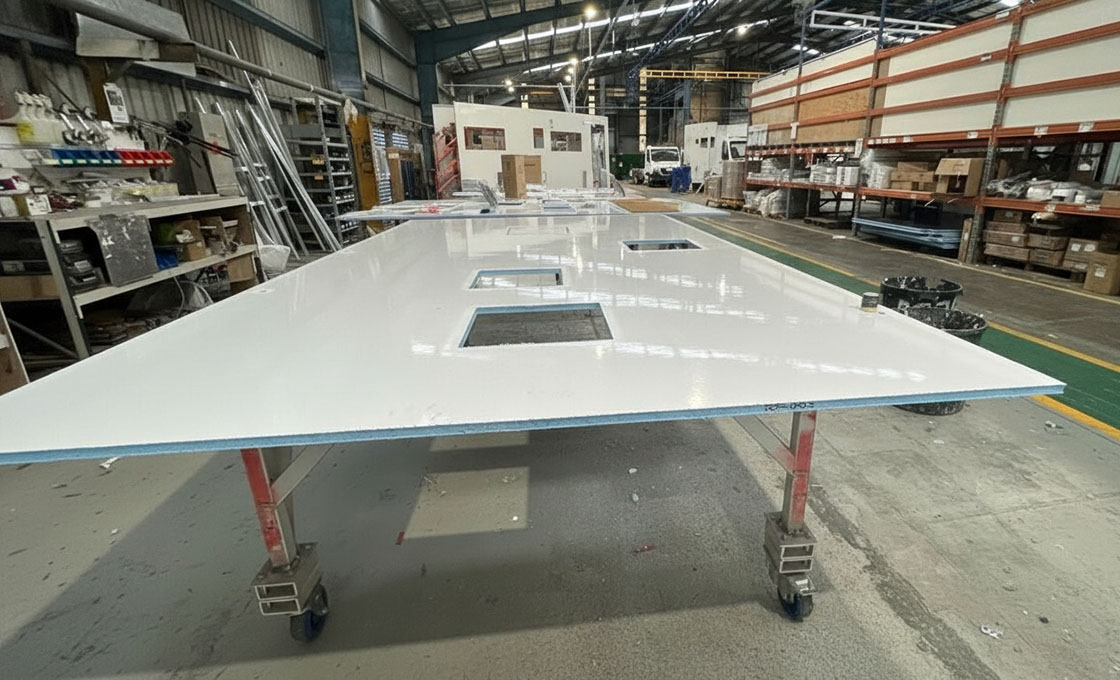
Das Sortiment isolierter Kerne von Rax Panel umfasst acht verschiedene Schaum- und Wabenmaterialien, die jeweils für eine spezifische thermische, strukturelle oder Gewichtseinschränkung in gewerblichen und industriellen Anwendungen entwickelt wurden.
Warum die Kernauswahl den Projekterfolg bestimmt
Der häufigste Fehler bei der Beschaffung, den wir bei Käufern beobachten, besteht darin, das Kernmaterial als nachrangig zu behandeln. Bei einem Sandwichpaneel bestimmt der Kern etwa 80% der thermischen Leistung und einen erheblichen Anteil der Biegesteifigkeit, obwohl er oft weniger als 40% der gesamten Materialkosten ausmacht.
Die Wahl des falschen isolierten Kerns schadet nicht nur der Leistung; er verstärkt sich zusätzlich nachgelagert durch schwerere Baugruppen, gescheiterte Konformitätsprüfungen und verschwendete Margen bei überschüssig spezifizierten Materialien. Mit über 15 Jahren Produktionserfahrung und einer täglichen Ausgabe von mehr als 1.700 Quadratmetern hat unser Engineering-Team den Prozess der Kernauswahl zu einer datenbasierten Entscheidung verfeinert – kein Ratespiel.
Schaumkern-Optionen: Dichte an die Anforderung anpassen
Schaumkerne sind die Arbeitspferde unter den isolierten Paneelen, sind aber keineswegs austauschbar. Rax Panel produziert Paneele mit XPS-, PET-, PU-, PVC-, PMI-, EPP- und MPP-Schäumen. Jedes Material bietet ein eigenes mechanisches und thermisches Profil. Der wichtigste Unterscheidungsparameter ist normalerweise das Verhältnis zwischen Druckfestigkeit, der Wärmeleitfähigkeit (k-Wert) und dem Betriebstemperaturbereich.
- XPS (extrudierter Polystyrol): Hohe Feuchtigkeitsbeständigkeit, kostengünstig. Wird häufig für Gebäude-Fassadenverkleidungen und gekühlte Lkw-Aufbauten spezifiziert, wo eine thermische Isolierung ausreichend ist.
- PET-Schaum: Recycelbarer Thermoplast-Kern mit gleichmäßiger Zellstruktur. Wird häufig in RV-Wandpaneelen und maritimen Anwendungen eingesetzt, wo Gewichtsersparnis und Umweltvorschriften Kaufprioritäten darstellen.
- PU (Polyurethan)-Schaum: Hervorragende k-Werte für thermische Isolierung. Die Standardwahl für Kühlketten-Logistik und Kühltransport-Panele.
- PVC-Schaum: Geschlossenzellige Struktur mit hohem Festigkeits-Gewichts-Verhältnis. Weit verbreitet im Marine- und Schiffbau aufgrund seiner Resistenz gegenüber Wasseraufnahme und chemischem Abbau.
- PMI-Schaum: Hochleistungspolymethacrylimid-Kern mit außergewöhnlicher Wärmebeständigkeit und Scherfestigkeit. Vorbehalten für Luft- und Raumfahrt sowie hochwertige Industrie-Anwendungen, bei denen Toleranzen nicht verhandelbar sind.
- EPP- und MPP-Schäume: Varianten aus expandiertem und geformtem Polypropylen mit hoher Energieaufnahme. Wird in spezialisierten Anwendungen eingesetzt, die Stoßfestigkeit und wiederholbare Crashleistung erfordern.
Für Distributoren mit breiten Beständen ist der pragmatische Ansatz, sich auf zwei oder drei Kerntypen zu standardisieren, die das breiteste Anwendungsspektrum abdecken. PET- und PU-Kerne kombiniert mit GRP/FRP- oder Aluminium-Belegschichten decken typischerweise 70-80% der Auftragseingänge für Fahrzeugherstellung und gewerbliche Bauprojekte ab.
Wabenkern-Optionen bei struktureller Priorität
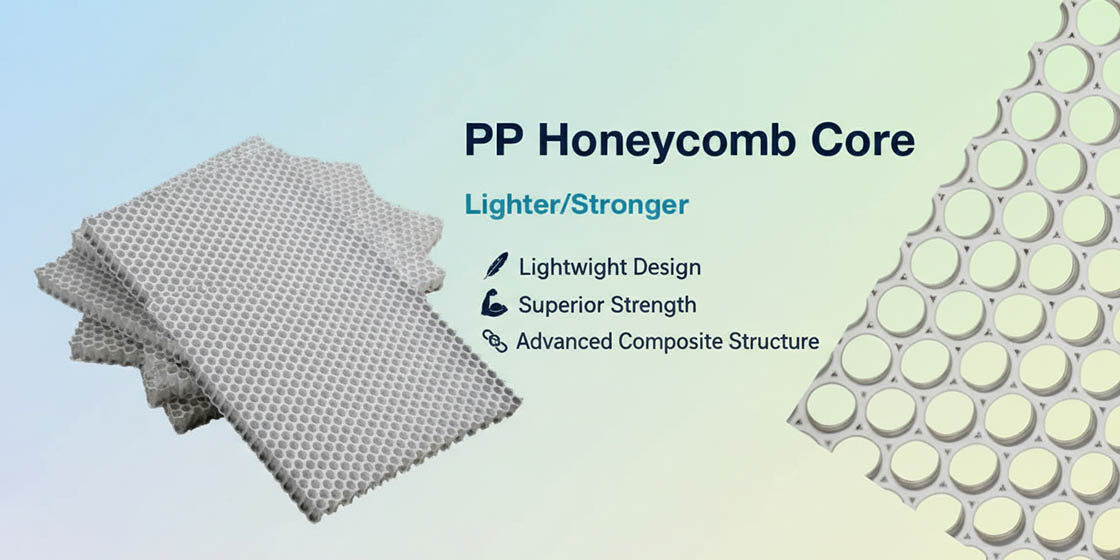
Wenn ein Projekt maximale Steifigkeit bei minimalem Gewicht erfordert, übertreffen Wabenkerne den Schaum. Rax Panel fertigt PP-Wabenkerne, Fiberglas-Wabenkerne, Aramid-Wabenkerne und PC-Wabenkerne. Der PP-Wabenkern, liefert in Kombination mit Fiberglas-Belegschichten ein bemerkenswert hohes Festigkeits-Gewichts-Verhältnis, geeignet für Lkw-Bodendielen, Wohnmobildielen und tragbare Schutzpaneele. Aramid-Waben werden für Verteidigungs-, Luft- und Raumfahrt sowie hochbeanspruchte Industrieausrüstungen vorbehalten, wo Feuerfestigkeit und strukturelle Integrität unter extremer Belastung zwingend erforderlich sind.
Kombinationen aus Decke und Kern
Der Isolierkern ist nur die eine Hälfte der Gleichung. Rax Panel Schaumkern-Sandwichpaneele sind kompatibel mit einer Reihe von Belegschichtmaterialien, darunter GRP/FRP, CFRT, Aluminium, Stahl, ACP, PVC, Sperrholz, Edelstahl und Aluzink. Die Kombination zählt. Ein PU-Schaumkern kombiniert mit GRP-Blechen mit Gelcoat ergibt ein wasserdichtes, glattes und thermisch isolierendes Paneel, ideal für Kühl-Lkw-Aufbauten.
Derselbe PU-Kern kombiniert mit Edelstahlabdeckungen verschiebt die Anwendung hin zu hygienempfindlichen Industrieanlagen, die sowohl Temperaturrückhaltung als auch Korrosionsbeständigkeit erfordern. Unsere Ingenieure führen experimentelle Tests an diesen Kombinationen durch, um sicherzustellen, dass sie projektspezifische Datenstandards erfüllen, bevor die Massenproduktion beginnt.
Lösung spezifischer Käufer-Einschränkungen
Für spezialisierte Fahrzeughersteller hat das Festigkeits-Gewichts-Verhältnis Priorität. CFRT-Sandwichpaneele mit PET- oder PVC-Kernen bieten die leichtesten Anordnungen ohne Kompromisse bei der Strukturintegrität für Wände, Dächer und Fußböden. Beschaffungsteams im gewerblichen Bau benötigen typischerweise dokumentierte Konformität bei Brandbewertungen und Wärmedämmwerten (R-Werte). Für diese Käufer bieten PIR-, PUR- und Steinwoll-Sandwichpaneele die zertifizierte thermische und brandtechnische Performance, die für Außenwandverkleidungen und Gebäudehüllenprojekte erforderlich ist.
Internationale Distributoren profitieren von unserem breiten Katalog: Wir fertigen CFRT-, GRP/FRP-, Aluminium-, Waben- und Spezialpaneele wie HDPE und Hohlkunststoff-Schalung unter einem Dach, was konsolidierte Versandsendungen ermöglicht, die die Marge schützen. Planer von Industrieanlagen, die auf Hygiene und Temperaturrückhaltung fokussiert sind, greifen zu Edelstahl- oder GRP-verkleideten Paneelen mit PU- oder PVC-Schaumkernen, da diese Kombinationen waschbare Oberflächen, thermische Stabilität und Beständigkeit gegen chemische Reinigungsmittel liefern.
| Kernmaterial | Kategorie | Schlüsseleigenschaften | Kompatible Belegschichten |
|---|---|---|---|
| XPS-Schaum | Schaumkern | Wasserdicht, thermisch isoliert, leicht | GRP/FRP, CFRT, Aluminium, Stahl, ACP, Sperrholz |
| PET-Schaum | Schaumkern | Umweltfreundlich, thermisch isoliert, hohes Festigkeits-Gewichts-Verhältnis | GRP/FRP, CFRT, Aluminium, Stahl, ACP, Sperrholz |
| PU-Schaum | Schaumkern | Wasserdicht, thermisch isoliert, leicht | GRP/FRP, CFRT, Aluminium, Stahl, ACP, Sperrholz |
| PVC-Schaum | Schaumkern | Wasserdicht, thermisch isoliert, leicht | GRP/FRP, CFRT, Aluminium, Stahl, ACP, Sperrholz |
| PMI-Schaum | Hochleistungs-Schaum | Außergewöhnliche Wärmedämmung, zuverlässige Leistung unter anspruchsvollen Bedingungen | GRP/FRP, CFRT, Kohlefaser, Aluminium |
| EPP / MPP-Schaum | Polypropylen-Schaum | Wasserdicht, thermisch isoliert, leicht | GRP/FRP, CFRT, Aluminium, Stahl, PVC |
| PIR / PUR-Schaum | Hartschaum | Hohe Wärmerückhaltung, feuerhemmend (PIR) | Stahl, Aluminium, GRP/FRP, Sperrholz |
| Steinwolle | Mineralwolle-Kern | Überlegene Brandbewertung, akustische und thermische Isolierung | Stahl, Aluminium, ACP, Edelstahl |
Paneldicke und Abmessungen
Die Paneldicke bestimmt direkt die strukturelle Tragfähigkeit und den Wärmewiderstand. Bei Rax Panel entwickeln wir maßgeschneiderte Dimensionen nach Ihren genauen Spezifikationen und stellen sicher, dass kein Material verschwendet wird.
Warum Dicke-Toleranzen Ihr Projekt machen oder brechen
Für spezialisierte Fahrzeughersteller und Beschaffungsmanager im gewerblichen Bau ist die Paneldicke niemals nur eine Zahl; sie bestimmt Festigkeits-Gewichts-Verhältnisse, Dämmwerte (R-Wert) und letztlich Ihre Frachtkosten. Ein Paneel, das selbst 2mm zu dick bestellt wird, kann die Gewinnmargen durch erhöhtes Materialgewicht und Versandvolumen drastisch reduzieren. Umgekehrt beeinträchtigt eine zu geringe Dicke die Strukturintegrität unter Belastung.
Standardabmessungen stimmen selten perfekt mit OEM-Anforderungen überein. Daher führt unser Ingenieurteam rigorose experimentelle Tests an jeder Sonderdimension durch. Wir verifizieren, dass die exakte Dicke Ihre strengen Belastungs- und Umweltspezifikationen erfüllt, bevor die Massenproduktion beginnt, und eliminieren kostspielige Vor-Ort-Modifikationen.
Kern- und Deck-Konfigurationen, die die Abmessungen definieren
Die Gesamtpaneeldicke ist eine präzise Berechnung des Kernmaterials kombiniert mit den gewählten Belegschichtlagen. Wir passen diese Schichten basierend auf Ihrer spezifischen Anwendung an, egal ob Sie leichte PP-Waben für Trockenfracht-Lkw-Aufbauten oder hochisolierende PET-Schäume für Kühlanhänger benötigen.
- Verfügbare Kernmaterialien: XPS-Schaum, PET-Schaum, PU-Schaum, PVC-Schaum, PMI-Schaum, EPP, MPP, PP-Waben, Aramid-Waben und PC-Waben.
- Verfügbare Belegschichten: GRP/FRP, CFRT, Aluminium, Stahl, ACP, PVC, Sperrholz, Edelstahl und Aluzink.
Durch die Entwicklung spezifischer Kombinationen, wie z.B. CFRT-Belegschicht mit XPS-Kern oder FRP-Blech mit PP-Wabenkern, stellen wir sicher, dass Sie die exakten erforderlichen Dimensionen erreichen, ohne für unnötiges Material zu bezahlen.
Produktionskapazität für präzise Sonderanfertigungen
Die Einhaltung strikter Dickentoleranzen bei einer umfangreichen B2B-Bestellung erfordert fortschrittliche Produktionsfähigkeiten. Mit über 15 Jahren Fertigungserfahrung nutzt unsere Anlage eine hochentwickelte Verbundpaneel-Produktionslinie, die täglich über 1.700 Quadratmeter ausgeben kann. Diese Kapazität gewährleistet Maßhaltigkeit über Ihre gesamte Charge hinweg, egal ob Sie Paneele für Wohnmobilaußenwände, Schiffe oder Wohnmobildächer beziehen.
Internationale Distributoren und Planer von Industrieanlagen können sich Dimensionsabweichungen während der Installation nicht leisten. Unser Ingenieurteam überwacht den Produktionsfortschritt engmaschig und stellt sicher, dass Ihre Sonder-Dickenspezifikationen nahtlos von der Rohmaterialauswahl bis zur endgültigen Abfertigung umgesetzt werden.
| Produktserie | Kernmaterial | Abmessungen & Dickenbereich | Belegschicht / Außenhaut | Zielanwendung |
|---|---|---|---|---|
| CFRT-Sandwichpaneele | XPS-, PET-, PU-, PVC-Schäume | Völlig maßgeschneiderte Dicke; präziser Projektschnitt | CFRT-, GRP/FRP-Bleche | Wohnmobillösungen, Schiffsinnenräume |
| GFK/FRP-Sandwichpaneele | XPS, PET, PU, PVC, Sperrholz, Balsaholz | Entwickelt nach spezifischen Strukturdatenstandards | Fiberglas (Gelcoat / Nicht-Gelcoat) | Kühl-Lkw, Schiffe |
| Schaumstoffkern-Sandwichplatten | XPS, PET, PU, PVC, PMI, EPP, MPP | Hohe Produktionskapazität (über 1.700 m²/Tag) | Aluminium, Stahl, ACP, Sperrholz, Aluzink | Industrieequipment, öffentlicher Nahverkehr |
| Wabenplatten | PP, Fiberglass, Thermoplastic, Carbon Fiber | Optimized ultra-lightweight dimensional profiles | Fiberglass sheets, Anti-skid surfaces | Sports Goods, Aviation, New Energy |
| Aluminium-Sandwichpaneele | Aluminum Honeycomb, Various Foams | Guaranteed aesthetic flatness; custom architectural cuts | Aluminum, ACP, Aluzinc | Exterior Wall Cladding, General Building |
| Specialized Building Panels | Rockwool, PIR, PUR, Hollow Plastic | Compliance-driven thermal and fire-rated dimensions | Stainless Steel, HDPE, Compact Laminate HPL | Mobile Homes, Medical Facilities |
| Glasfaserverstärkte Platten | Solid Sheet / LWRT / UD Tapes | Thinner, lighter, and highly resilient continuous profiles | Smooth Gelcoat (Flat, Waterproof, Insulating) | Dry Freight Trucks, Furniture Panels |
Standards für thermische Isolierleistung
Thermal insulation in composite panels is dictated entirely by core density and joint integrity. Specifying exact thermal conductivity values prevents energy loss in demanding applications like refrigerated truck bodies and mobile homes.
Das Schmerzpunkt des Käufers: Präzision bei der Wärmeisolierung
Procurement teams often struggle with generic thermal ratings that fail under continuous operational stress. In specialized vehicle manufacturing and commercial construction, even minor thermal bridging drastically increases HVAC loads and operational costs. Relying on standard R-values without verifying the core material’s specific thermal conductivity (Lambda value) leads to compliance failures and energy penalties. We solve this by engineering panels with exact core formulations tailored to your operational environment.
Kernmaterial-Spezifikationen und Wärmeleitfähigkeit
Rax Panel engineers select and composite specific core materials based on strict thermal benchmarks. By matching the precise foam or honeycomb to the project’s environmental demands, we eliminate the guesswork from your supply chain. Our manufacturing capabilities allow us to pair these cores with GRP/FRP, Aluminum, or Steel facings to maximize thermal efficiency.
- Polyurethane (PU) Foam: Delivers superior thermal insulation with lambda values typically between 0.022 and 0.028 W/(m·K), making it the definitive choice for refrigerated truck bodies and cold chain logistics.
- Extruded Polystyrene (XPS) Foam: Offers excellent moisture resistance and steady thermal performance around 0.030 W/(m·K), heavily utilized in mobile home flooring and wall panels.
- Polyethylene Terephthalate (PET) Foam: Provides stable thermal insulation alongside high fire resistance, preferred in industrial facilities and commercial building applications requiring strict compliance.
- Polyvinyl Chloride (PVC) and PMI Foam: Delivers an exceptional strength-to-weight ratio combined with low thermal conductivity, critical for advanced vessel solutions and aviation interiors.
Ingenieurtechnische und Validierungs-Standards
Meeting international thermal standards requires rigorous validation, not just theoretical data sheets. Our engineering team conducts direct experimental testing to ensure every custom composite panel meets the required data standards before leaving our facility. We validate thermal transmission properties under stringent conditions to guarantee performance for your specific project, whether it involves CKD refrigerated trucks or exterior wall cladding.
By operating our own advanced composite panel production line with a daily output exceeding 1,700 square meters, we maintain strict control over the cell structure of the foam cores. This consistency is what guarantees the R-value remains stable over the lifespan of the building or vehicle, protecting your margin against costly warranty claims and retrofitting expenses.
Brandschutznachweise
Fire compliance makes or breaks commercial builds and specialized vehicle certifications. We engineer composite solutions using PIR and Rockwool cores to strictly meet global fire safety standards without sacrificing structural integrity.
Die wahren Kosten fehlender Brandschutznachweise
Procurement teams and vehicle manufacturers come to us with one persistent headache: they need lightweight composite panels, but their projects demand certified fire resistance. The stakes are absolute. A refrigerated truck body operating in the EU must meet ECE R118 standards. A commercial cladding project in the Middle East faces stringent local civil defense codes. If the panel fails the burn test, the entire shipment gets rejected, and the distributor eats the loss.
Generic “fire-resistant” labels on spec sheets are not enough. You need documented, test-backed ratings tied to specific core and facing combinations. This is exactly where our engineering team intervenes. We do not guess. We prototype your exact panel configuration and run the necessary experimental testing to ensure it meets the required data standards before mass production begins on our 1,700-square-meter daily capacity line.
Kernmaterialien bestimmen das Brandverhalten
The core is the deciding factor in how a sandwich panel reacts to flame. We offer a deliberately broad range of core options specifically so you can dial in the exact fire rating your project requires, without overpaying for performance you do not need.
- Steinwolle: The undisputed choice for maximum fire protection. A stone wool core delivers A1 or A2 fire classifications, making it the go-to for exterior wall cladding panels and industrial facilities where firewalls are mandatory.
- PIR (Polyisocyanurate): The standard for refrigerated truck bodies and cold chain logistics. PIR offers an optimal balance of thermal insulation and inherent fire resistance, charring rather than melting when exposed to flame.
- PUR (Polyurethane): Suitable for applications where moderate fire performance is acceptable, but superior structural rigidity and insulation are prioritized.
- PET-Schaum: A thermoplastic option that is easier to process and recycle, often paired with Aluminum or Stainless Steel facings for building sandwich panels requiring balanced performance.
- PVC and PMI Foams: High-end cores used in aviation, vessel, and sports applications where strict weight limits coincide with demanding fire safety standards.
Deckmaterialien und Systemleistung
A fire-rated core alone does not guarantee a fire-rated panel. The facing material acts as the first line of defense. Our GRP sheets with gelcoat provide a naturally insulating, non-conductive surface that will not propagate flame spread. For buyers supplying the construction sector, our Aluminum Composite Panels and Stainless Steel Sandwich Panels paired with Rockwool create a complete firewall system. We strongly advise distributors to specify the full panel makeup (core, facing, and adhesive) when requesting fire compliance documentation from our team.
Anpassung von Brandschutzklassen an Ihren Zielfmarkt
Fire standards are not universal. A panel that passes North American ASTM E84 requirements may fail European EN 13501-01 criteria. With over 15 years of production experience and active supply chains in over 50 countries, we have seen these compliance gaps firsthand.
Our engineers work directly with your team to identify the exact standard your market demands, whether it is a mobile home build in Southeast Asia, a dry freight truck in Central Asia, or a medical facility in Europe, and adjusts the composite layup to guarantee a pass on test day.
Do not leave certification to chance. Leverage our factory’s in-house testing capabilities and our multilingual support team to get the documentation right the first time. This is how you protect your margins and your reputation as a distributor.
Tragfähigkeit bei strukturellen Lasten
Specifiers constantly battle the trade-off between reducing vehicle tare weight and maintaining structural load limits. We engineer composite sandwich panels to hit your exact structural thresholds without adding unnecessary dead weight.
Das Kompromissverhältnis zwischen Gewicht und Festigkeit in gewerblichen Anwendungen
Specialized vehicle manufacturers and industrial facility planners face a strict mandate: lower the weight of the structure to increase payload capacity or improve energy efficiency, but maintain the structural load bearing capacity required for heavy operational loads. Traditional solid materials like plywood or heavy gauge steel require excessive thickness to achieve necessary rigidity, which directly hurts your bottom line through higher freight costs and reduced cargo capacity. Sandwich panel architecture effectively eliminates this outdated compromise.
Spezifische Tragkapazitäten bemessen
Achieving a precise load bearing capacity is not guesswork; it requires strict calibration of the core-to-facing ratio. Our engineering team reviews your project requirements and selects the exact combination of skins and cores to meet stringent data standards. We rely on rigorous experimental testing to validate shear strength, flexural modulus, and point-load resistance before mass production begins.
- High-Shear Cores: PP honeycomb and fiberglass honeycomb cores provide exceptional compressive strength for RV flooring and truck body platforms.
- Rigid Facings: We utilize GRP/FRP, CFRT, and Aluminum sheets to handle high tensile and compressive loads.
- Custom Calibrations: We adjust foam densities (PET, PVC, PMI) and facing thicknesses to match localized load requirements, preventing material over-engineering.
Fabrik-Konsistenz über Großbestellungen hinweg
A validated structural specification is useless if the factory cannot replicate it consistently across a 10,000-square-meter order. Variations in resin distribution or core bonding during manufacturing can create sudden weak points that fail under dynamic road loads.
With over 15 years of production experience, our facility uses an advanced composite panel production line to eliminate these variances. Operating at a daily output exceeding 1,700 square meters, we ensure that every panel shipped to your facility matches the exact structural data established during the prototyping phase.
Oberflächen-Beschichtungstypen aus Metall
Metal surface coatings on composite panels dictate corrosion resistance, UV stability, and project lifespan. Selecting the wrong coating spec is the fastest way to lose margin on warranty claims.
Warum die Wahl der Oberflächenbeschichtung Ihr Projekt machen oder brechen kann
The metal facing on a sandwich panel is only as good as its surface treatment. We see international distributors and specialized vehicle manufacturers consistently struggle with one issue: specifying a coating that balances initial procurement cost against long-term field performance. A refrigerated truck body operating in coastal climates faces completely different corrosive stresses than an interior wall panel in a climate-controlled facility. Matching the coating to the actual operating environment is non-negotiable.
At Rax Panel, our engineers evaluate coating specifications alongside core material selection during the customization phase. With over 15 years of production experience and a daily production capacity exceeding 1,700 square meters, we have accumulated direct field feedback from over 50 countries. That data informs exactly which coating systems perform in which conditions.
Verfügbare Optionen für metallische Kern-Oberflächenbeschichtungen
We apply several distinct surface treatments to our metal-faced composite panels. Each serves a specific performance requirement. Below are the primary coating and surface categories we configure for B2B buyers:
- PVDF (Polyvinylidene Fluoride) Coating: The standard for exterior architectural and vehicle applications requiring high UV resistance and color retention. Typically specified for aluminum sandwich panels and ACP foam core panels used in exterior wall cladding. PVDF maintains structural aesthetics for 15-20 years in harsh sun exposure.
- PE (Polyester) Coating: A cost-effective solution for interior applications or controlled environments. Common on aluminum composite panels destined for indoor partitions, RV furniture panels, and mobile home interior walls. Lower cost, but not recommended for prolonged outdoor UV exposure.
- SMP (Silicone Modified Polyester): A mid-tier option offering better heat resistance than standard PE. Often selected for building sandwich panels in industrial facilities where temperature retention and moderate weather resistance are required.
- Aluzinc Coating (Galvalume): A metallic coating combining aluminum and zinc applied to steel facings. Provides sacrificial corrosion protection. We recommend Aluzinc-facing foam core panels for agricultural buildings and industrial equipment housings where cost must stay low but rust prevention is critical.
- Stainless Steel Finish (304 Grade): Used in hygiene-critical environments. Our stainless steel sandwich panels are specified in food processing, medical facilities, and vessel interiors where chemical cleaning agents would degrade coated surfaces.
- Gelcoat on FRP/GRP Sheets: While technically a resin-based surface rather than a metal coating, gelcoat is applied to our fiberglass reinforced sheets to provide a waterproof, flat, and smooth finish. This is the preferred surface solution for marine vessel applications and refrigerated truck bodies requiring a seamless, easy-to-clean exterior.
Beschichtungen auf die Anwendung abstimmen: Praxisübersicht
Procurement teams often over-specify coatings, paying for PVDF on panels that will never see direct sunlight. Conversely, under-specifying on exterior vessel panels leads to rapid degradation. Here is how we guide specification based on our production data and global project history:
- Kühl-Lkw-Aufbauten: Gelcoat-finished GRP sheets over XPS or PU foam cores. The gelcoat provides necessary waterproofing and chemical resistance from road salts, while keeping the facing weight low.
- Außenwandverkleidung: PVDF-coated aluminum facings over PET or rockwool cores. Fire rating compliance and UV stability are the driving factors.
- Schifffahrt: Gelcoat FRP or stainless steel facings paired with PVC or PET foam cores. Salt spray resistance is the absolute priority.
- Industrial Facilities: Aluzinc-coated steel or SMP-coated steel over rockwool or PIR cores. Focus goes to temperature retention, fire compliance, and corrosion resistance from industrial fumes.
Kosten vs. Leistung: Wo Händler tatsächlich Margen erwirtschaften
For international building materials distributors managing a broad catalog, the key to profitability is avoiding unnecessary coating upgrades. PE-coated aluminum composite panels perform perfectly well for interior mobile home partitions. Specifying PVDF there wastes margin. Our engineering team conducts experimental testing to validate the minimum effective coating specification for each project’s actual environmental load, rather than defaulting to the most expensive option.
We customize cost-effective composite materials by combining the right surface treatment with the right core. A PP honeycomb core with a fiberglass sheet facing and gelcoat finish delivers exceptional strength-to-weight for dry freight truck bodies without the premium cost of aluminum honeycomb with PVDF. That configuration difference can shift your landed cost per square meter significantly while still meeting all structural requirements.
Our professional international sales service team provides 24-hour one-to-one consultation precisely for these specification decisions. With multilingual support in English, French, Russian, Japanese, and Korean, we ensure that coating specifications are communicated without ambiguity across our supply chain partnerships in over 50 countries. Miscommunication on coating specs is one of the most expensive errors in composite panel procurement. We engineer that risk out of the process from the initial design phase.
| Surface Metal Type | Compatible Core Materials | Performance Traits | Target Buyer Persona |
|---|---|---|---|
| Aluminium | XPS, PET, PU, PVC Foams, Honeycomb | Lightweight, high strength-to-weight ratio, waterproof | Specialized Vehicle Manufacturer |
| Edelstahl | XPS, PET, PU, PVC Foams | Hygiene, temperature retention, corrosion resistance | Industrial Facility Planner |
| Aluzink | XPS, PET, PU, PVC Foams | Weather resistance, thermal insulation, durability | Commercial Construction Procurement |
| ACP (Aluminum Composite Panel) | Honeycomb, Foam Core | Flat/smooth surface, aesthetic finish, eco-friendly | International Building Materials Distributor |
| Steel | XPS, PET, PU, PVC Foams | Heavy-duty durability, high impact resistance | Industrial Facility Planner |
Verbindungssysteme für Kälte räume
Cold storage fails at the seams, not the core. Engineering a reliable cold room joint system requires eliminating thermal bridges and preventing vapor drive through precise composite panel profiling.
Die Schwachstelle der Kälteraum-Verbindung
When industrial facility planners and procurement teams audit cold room failures, the culprit is almost always the joint system. Standard mechanical fasteners or poorly sealed overlaps create localized thermal bridges. In a -20°C industrial freezer or a refrigerated truck body, these microscopic gaps invite condensation, ice buildup, and eventual structural rot. The compressor works overtime to compensate for the thermal leak, driving up operational costs and compromising the internal temperature threshold required for compliance.
We approach this pain point by controlling the entire manufacturing process. Because we operate our own advanced composite panel production lines with a daily output exceeding 1,700 square meters, we do not rely on generic, off-the-shelf joint profiles. Our engineers custom-engineer the panel edges to match the specific core and facing materials, ensuring a tight, interlocking fit that minimizes the need for excessive aftermarket sealants.
Luftdichte Nähte mit GRP- und Schaumkernen konstruieren
The choice of skin and core material directly dictates the integrity of the joint. For high-performance cold storage, we use GRP/FRP (Fiberglass Reinforced Plastic) sandwich panels paired with PU (Polyurethane) or PIR cores. Unlike standard metals that conduct heat and sweat at the seams, GRP is a natural thermal break.
We apply a continuous gel coat to our FRP sheets during production. This yields a completely flat, smooth surface that ensures a flawless mating surface at the joint, preventing the microscopic air pockets that plague lower-grade panels.
For specialized vehicle manufacturers, weight-to-strength ratio is just as critical as thermal retention. In these scenarios, our team utilizes experimental testing to match the exact foam core density, whether PET, PU, or PVC, to the required structural load. We then mill precise tongue-and-groove or cam-lock profiles directly into the composite structure. This ensures that when the panels connect, the foam core compresses uniformly, creating an airtight seal without sacrificing the structural shear strength of the wall.
Kritische Spezifikationen für Kälteraum-Montagen
To guarantee performance across global supply chains, we adhere to strict material standards for our cold room and refrigerated truck solutions:
- Core Densities: PU and PIR foams strictly controlled to prevent gas escape and thermal conductivity loss over a 15-year lifespan.
- Vapor Barrier Facings: Gel-coated GRP/FRP sheets providing zero water absorption and an inherently non-conductive joint interface.
- Joint Profiles: Custom-milled tongue-and-groove and integrated cam-locks designed to prevent shifting during thermal expansion cycles.
Fazit
For cold storage roofing, spec PIR-core panels with GRP facings at minimum 150mm thickness. Closed-cell PIR holds its R-value longer than PU. PU panels lose thermal efficiency over years in constant deep-freeze service as the blowing agent diffuses out, and that energy bleed eats your margin.
Order two physical samples before committing volume: one PIR-GRP, one Rockwool-steel. Freeze both to -30°C for 48 hours, then thermal-scan the joint seams as they thaw. That single test reveals more about real-world performance than any certification document.
Häufig gestellte Fragen
Welche Verkleidungsmaterialien werden verwendet?
Die gängigsten Oberflächen für Dachpaneele von Kältespeichern sind vorbelackter galvanisierter Stahl, Edelstahl oder Aluminium, typischerweise mit einer Dicke von 0,5 mm bis 0,8 mm. Diese robusten Außenhüllen bieten einen entscheidenden Schutz vor rauem Wetter, schweren Lasten und täglichem Betriebsverschleiß und wirken gleichzeitig als wichtige Dampfbremse gegen Feuchtigkeitseindringung. Sie nutzt fortschrittliche, kontinuierliche Produktionslinien für zusammengesetzte Paneele, um diese Metalloberflächen mit Hochleistungs-Schaumkernen zu verbinden, wodurch eine außergewöhnlich ebene, stabile und luftdichte Gebäudehülle entsteht.
Versenden Sie Kühlpaneele weltweit?
ist ein weltweit tätiger Anbieter fortschrittlicher Verbundwerkstoffe und unterhält langfristige Lieferkettenpartnerschaften mit über 50 Ländern und Regionen in Europa, Nordamerika, Asien und dem Nahen Osten. Das Unternehmen verfügt über ein eigenes internationales Verkaufsserviceteam, das fließend Englisch, Französisch, Russisch, Japanisch und Koreanisch spricht, um eine reibungslose Kommunikation während des gesamten Bestellprozesses zu gewährleisten. Von ihrer hochmodernen Produktionsstätte in China aus bietet sie einen 24-Stunden-One-to-One-Service zur Betreuung von Produktion, Kostensenkung und Risiken im internationalen Transport.
Wie viel kostet ein Kältespeicherdach in der Regel?
The cost of cold storage roof varies based on material grade, thickness, panel dimensions, and order volume. Requesting a detailed quote with your project specifications is the most reliable way to get an accurate figure. Bulk orders typically reduce per-unit pricing significantly.
Welche Faktoren beeinflussen den Preis eines Kältespeicherdaches?
The cost of cold storage roof varies based on material grade, thickness, panel dimensions, and order volume. Requesting a detailed quote with your project specifications is the most reliable way to get an accurate figure. Bulk orders typically reduce per-unit pricing significantly.
Wie lange hält ein Kältespeicherdach unter normalen Bedingungen?
With proper installation and routine maintenance, cold storage roof can last 20 to 30 years or more. Actual lifespan depends on environmental exposure, load conditions, and whether the protective surfaces remain intact over time.