
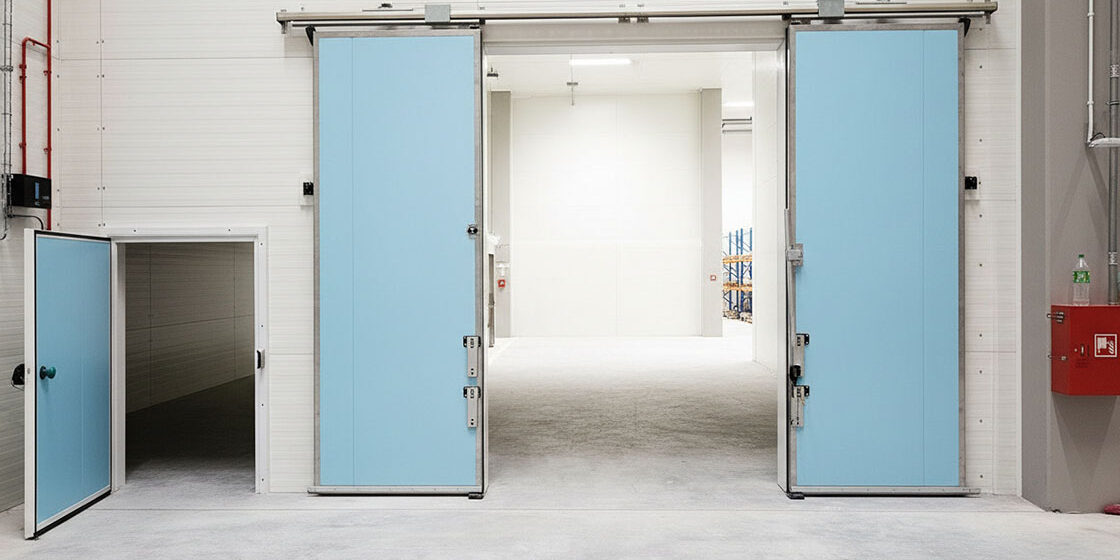
A commercial walk-in is not just a larger refrigerator; it is a structural system where the insulation dictates the energy efficiency as much as the compressor. Insulated panels built with materials like polyurethane foam (PUF) or polyisocyanurate (PIR) are critical to minimizing thermal exchange. At Rax Panel, we see too many projects where facility planners overspend on mechanical cooling while ignoring the wall panels that actually hold the cold.
This guide dissects the anatomy of a cold room and maps out the refrigeration cycle from a practical engineering perspective. You will learn how to calculate whole-wall R-values and spot thermal bridging failures before they compromise your product integrity.
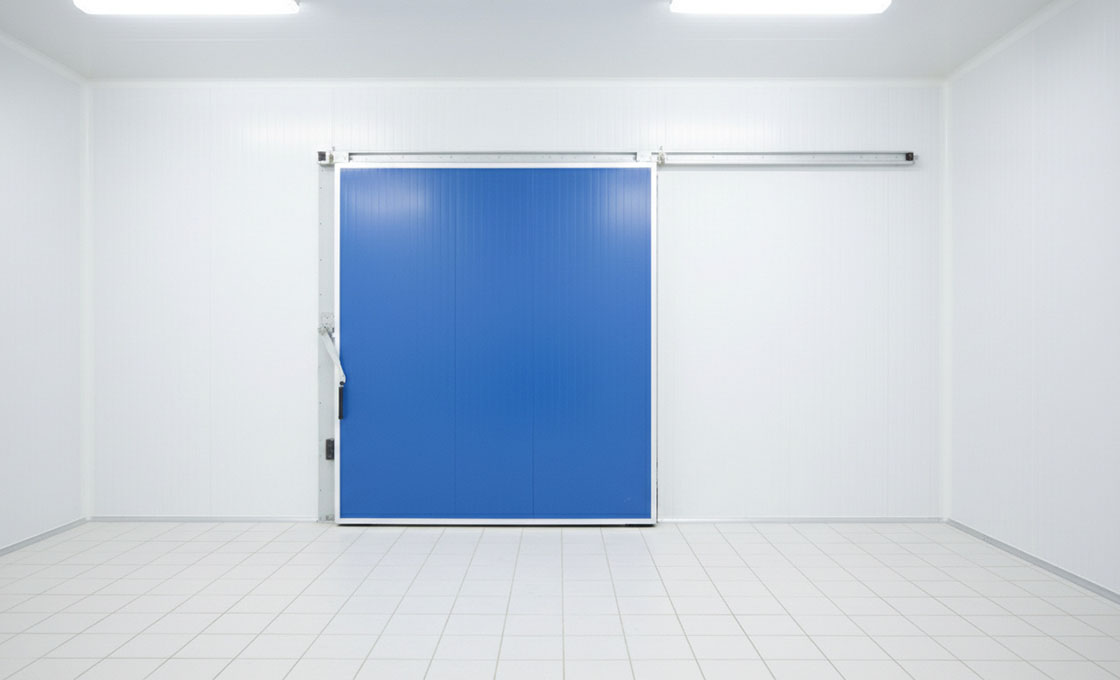
What Makes a Cold Room?
This factor has a direct bearing on project performance and long-term cost. Addressing it with specific data rather than general assumptions leads to better outcomes.
Key Components of Cold Room Construction
Designing a cold room is an exercise in balancing the building envelope’s integrity with mechanical load calculations. The construction relies on four primary systems working in tandem: the insulated panel envelope, the active refrigeration unit, the floor foundation, and the structural access points. For industrial facility planners, the critical error in this system is not a lack of cooling power, but rather the failure to mathematically align the mechanical equipment with the specific thermal properties of the walls.
Most procurement projects falter by treating these components as isolated purchases. A standard practice for high-efficiency facilities involves calculating the “whole wall R-value“—a metric that accounts for the entire assembly, including the fasteners, gaskets, and joints—rather than just the insulation core itself. Our engineering team has found that relying solely on component-level thermal ratings often leads to underestimating the actual heat gain, resulting in HVAC oversizing and significant operational cost leakage over the facility’s lifespan.
Role of Insulation in Temperature Control
The insulation core is the first line of defense against thermal bridging—the phenomenon where heat bypasses the insulating material through structural gaps or fasteners. Different temperatures require distinct core materials to maintain optimal thermal conductivity (k-value) and prevent energy waste. For instance, while expanded polystyrene (EPS) is cost-effective for mild environments (-5°C to +10°C), its higher thermal conductivity makes it unsuitable for ultra-low temperature applications.
When evaluating the best insulation core for a -20°C cold room, closed-cell polyurethane (PU) or polyisocyanurate (PIR) are the industry standards due to their superior k-values and moisture resistance. However, newer materials like Graphite Polystyrene (GPS) and PET foam are gaining traction.
GPS offers higher density and better thermal performance than traditional EPS, while PET foam provides an eco-friendly alternative with exceptional compressive strength and low moisture absorption. Our analysis of recent project failures shows that ignoring these material-specific nuances often leads to rapid performance drift, where the initial thermal efficiency degrades by up to 20% within five years due to gas diffusion or moisture ingress.
To mitigate this, we prioritize panels that have undergone rigorous experimental testing to ensure they meet stringent data standards for thermal retention. By customizing the core-to-skin ratio, we can engineer panels that not only resist heat transfer but also maintain structural rigidity under heavy loads, which is particularly critical for mobile refrigeration units and multi-story cold storage facilities.
Essential Refrigeration Equipment Requirements
Once the envelope is sealed, the mechanical system must be calibrated to the specific load, not just the desired set-point. A common pitfall is selecting a compressor based solely on nominal capacity without accounting for the “start-up shock” from door openings or ambient temperature spikes. The refrigeration unit must be sized to handle the calculated heat influx, which is directly influenced by the airtightness of the panels and the precision of the joint seals.
We emphasize that for applications, the control and monitoring systems are non-negotiable. Digital thermostats with humidity sensors and data loggers provide the traceability required for regulatory compliance and help identify subtle fluctuations that indicate early equipment failure. Additionally, redundancy is key; in high-temperature zones like blast freezers, having a backup unit or a cascading system ensures business continuity even during maintenance windows.
The collaboration between the envelope and the machinery defines the total landed cost. A highly efficient panel system allows for downsizing the refrigeration unit, reducing both capital expenditure and ongoing energy consumption. Therefore, procurement decisions should evaluate the cold room as an integrated thermal ecosystem, ensuring that every component—from the panel core to the evaporator fan—is optimized for the specific temperature zone and operational profile of the facility.
| System Component | Core Function | Technical Criticality | Industry Standard Materials | Operational Impact |
|---|---|---|---|---|
| Insulated Panel Envelope | Thermal Barrier & Structural Integrity | R-value, Airtightness, Thermal Bridging Prevention | Composite Sandwich Panels (PU, PIR, XPS, PET Cores) | Primary determinant of energy efficiency & temperature stability |
| Refrigeration Unit | Active Heat Extraction & Circulation | Load Calculation, Redundancy, Capacity Matching | Compressor, Condenser, Evaporator, Expansion Valve | Directly influences cooling speed, reliability & maintenance costs |
| Flooring & Foundation | Structural Support & Ground Insulation | Crush Resistance, Thermal Break, Moisture Control | Reinforced Concrete + Insulation Layer (XPS/PU) | Prevents ground heat ingress and structural frost heave |
| Doors & Access Points | Controlled Entry & Air Sealing | Seal Integrity, Air Infiltration Control, Speed | Insulated Sliding/Hinged Doors, Heated Gaskets | Minimizes thermal shock and energy loss during operation |
| Control & Monitoring | Regulation & Data Logging | Precision, Alarm Compliance, Traceability | Digital Thermostats, Humidity Sensors, Data Recorders | Ensures regulatory compliance and prevents product spoilage |
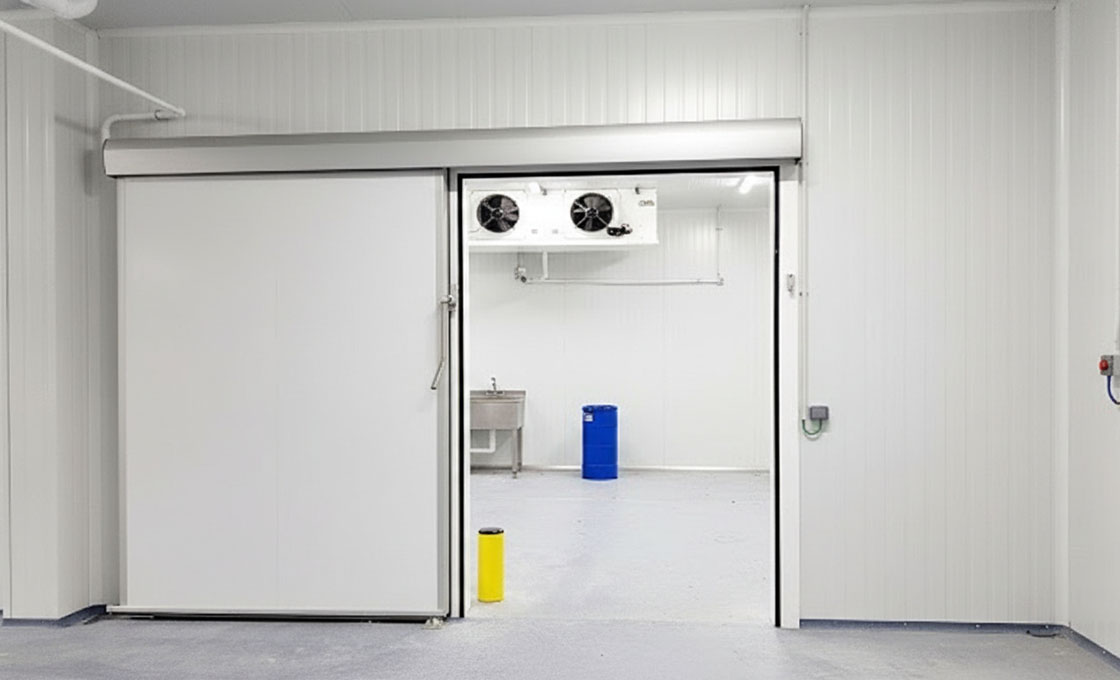
Anatomy of a Cold Room
The structural integrity and thermal efficiency of a cold room are dictated by the precise assembly of its insulated panels, structural framework, and specialized doors. Buyers frequently overlook that a failure in these physical components—such as unmitigated thermal bridging at joints or neglected floor insulation—can increase operational energy costs by up to 40%, regardless of the quality of the refrigeration machinery installed.
Key Takeaway: The cold room envelope is not just a wall; it is a continuous thermal barrier. Weak points at joints, floors, and doorways are the primary drivers of condensation, ice buildup, and excessive energy consumption.
Panel Construction and Thermal Bridging
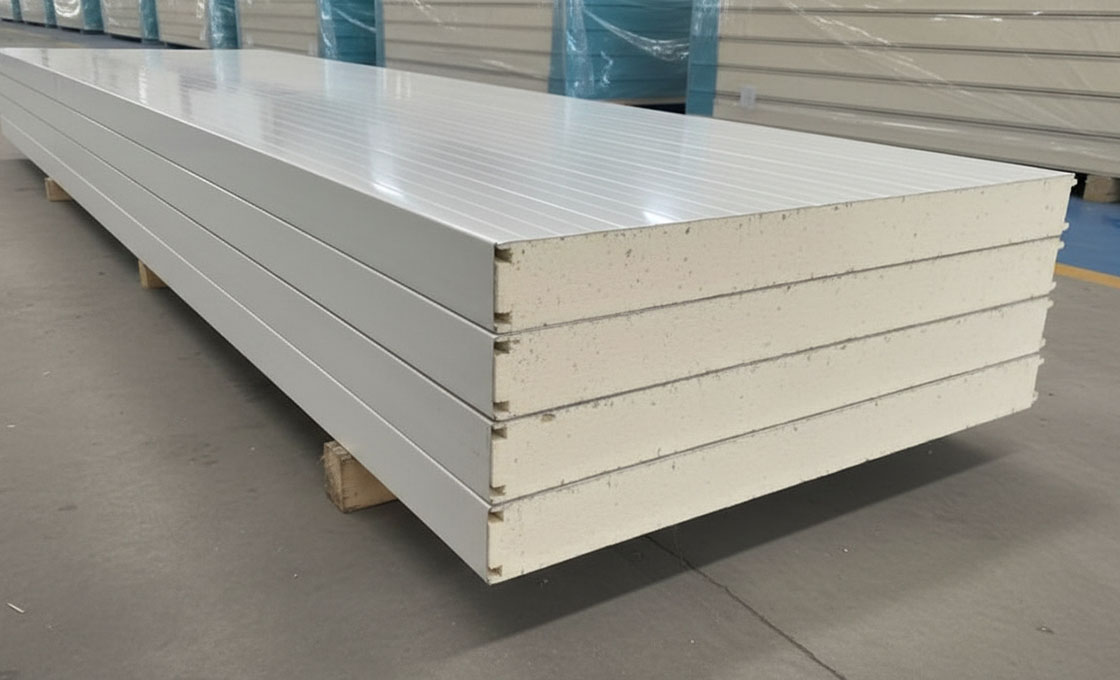
At the core of any cold room construction are structural insulated panels (SIPs). These panels consist of an outer structural skin, such as fiberglass-reinforced plastic (FRP), galvanized steel, aluminum, or stainless steel, bonded to a highly insulating foam core. Common core materials include polyurethane (PU), polyisocyanurate (PIR), expanded polystyrene (EPS), extruded polystyrene (XPS), or polymethacrylimide (PMI) foam.
The primary engineering challenge in panel construction is eliminating “thermal bridges.” A thermal bridge occurs when a conductive material—like exposed metal framing or unsealed fasteners—pierces the insulation layer, allowing heat to bypass the thermal envelope rapidly. In a refrigerated environment, this heat influx leads to severe localized condensation and frost formation on the interior surfaces, which can compromise hygiene and product safety.
- Cold Room Wall Panels: Designed for vertical installation, standard cold room panels typically range from 4 inches (100mm) for chill rooms to 6 inches (150mm) or more for freezer applications. They utilize concealed clip systems or tongue-and-groove joints to ensure the structural frame does not breach the insulation layer.
- Fiberglass Reinforced Panels (GRP/FRP): Panels using fiberglass skins with PU, XPS, or PET foam cores offer exceptional moisture resistance and structural rigidity without adding excessive weight, making them a preferred choice for humid cold storage environments.
- Honeycomb Core Panels: For ultra-high strength-to-weight requirements, thermoplastic (PP) or aramid honeycomb cores are used. While offering outstanding mechanical stability, the honeycomb structure requires careful sealing to prevent air migration through the cells, which would drastically reduce its thermal performance.
Cheap cold room panels often use exposed exterior screws or metal clips to hold panels together. Over time, these metal paths transfer outside heat directly into the cold room, creating localized frost buildup and increasing your electricity bill by 15-25%. Always specify fully insulated, concealed-joint panel systems.
Managing Moisture Infiltration at Seams
The seams between individual cold room panels represent the most vulnerable areas for moisture infiltration. As the internal temperature fluctuates or when warm ambient air encounters the cold room exterior, water vapor seeks to penetrate the enclosure. If the panel seams are not perfectly sealed, this humid air infiltrates the insulation core, permanently destroying its thermal properties and promoting mold growth behind the inner liner.
To combat this, industry best practices dictate the use of high-quality, continuous sealants specifically designed for low-temperature environments. Silicone or polyurethane sealants must be applied along all panel joints, corners, and perimeter interfaces to create a continuous airtight and watervapor-tight barrier.
the selection of the facing material plays a crucial role in long-term seam integrity. Gel-coated FRP skins provide a completely non-porous, smooth surface that prevents moisture from adhering to the walls, whereas standard painted metals can eventually rust at the cut edges of panels, leading to seam degradation. For highly corrosive environments, such as seafood processing, specifying 304 or 316-grade stainless steel panels prevents rust-related seam failures entirely.
The Structural Framework and Floor Insulation
Beyond protecting the exterior seams from moisture, the internal structural framework must be designed to maximize thermal efficiency. This is particularly critical for the flooring, which requires specialized materials to withstand extreme sub-zero environments.
While seam integrity protects the building envelope from moisture, the structural foundation must independently resist thermal transfer. This dual approach ensures that both the vertical walls and the horizontal floor maintain their respective performance standards under extreme cold.
- Freezer Floor Insulation: For environments operating below -20°C, the floor requires a minimum of R-28 insulation value. This is achieved using thick layers of high-compression-strength XPS or PMI foam boards installed beneath the concrete slab, equipped with built-in heating cables to prevent the soil underneath from freezing.
- Chill Room Flooring: For temperatures between 2°C and 8°C (standard fresh produce or pharmaceutical storage), a 2-inch to 3-inch layer of insulating foam is generally sufficient. PIR foam is frequently selected here due to its excellent fire rating and high thermal resistance per inch of thickness.
Specialized Doors and Thermal Breaks
The cold room door is the single largest source of thermal inefficiency in the entire structure. Every time a door is opened, massive amounts of warm, humid air rush in, forcing the refrigeration system to work overtime to restore the set temperature.
To mitigate this, doors must be heavily insulated, typically matching the thickness of the surrounding walls (e.g., 4 to 6 inches of core foam). However, the critical design element often omitted to save costs is the “thermal break” in the door jamb (frame).
In freezer rooms, standard metal door frames conduct external heat directly to the interior, causing dangerous ice accumulation on the door tracks and seals. This ice build-up prevents the door from closing tightly, leading to further air leaks and eventual seal failure. High-performance cold room installations mandate electrically heated door jambs. These heaters keep the frame above freezing, preventing ice formation and ensuring the magnetic or rubber door gaskets maintain an airtight seal at all times.
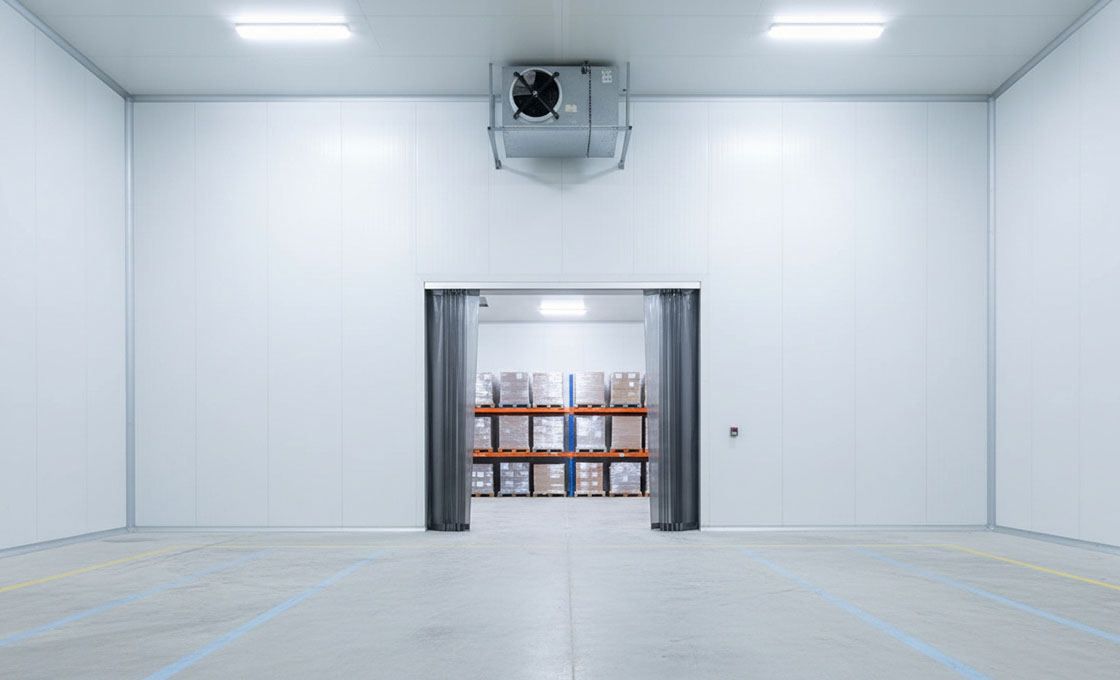
How the Refrigeration Cycle Works
A cold room is not a freezer; it is an insulated barrier that traps low temperatures generated by a mechanical refrigeration cycle. Understanding this cycle is critical for calculating heat loads and preventing thermal bridging.
At its core, a cold room relies on the vapor-compression refrigeration cycle to continuously pump heat out of the interior space and reject it to the outside environment. This process does not “create” cold; instead, it removes thermal energy from the stored products and the surrounding air.
For a commercial facility, understanding the physics of this cycle is essential because the efficiency of the entire system depends entirely on how effectively your insulated panels can resist the heat trying to flow back inside.
The Four Stages of Heat Extraction
cold; instead, it simply moves thermal energy from one location to another using a specialized fluid known as refrigerant. This transfer is accomplished by cycling the fluid through four distinct mechanical stages.
- Compression (Energy Input): The cycle begins at the compressor, often called the “engine” of the refrigeration unit. Here, low-pressure, low-temperature gaseous refrigerant is mechanically compressed into a high-pressure, high-temperature superheated gas. Think of this as squeezing a sponge; the energy put into compressing the gas drastically raises its temperature.
- Condensation (Heat Rejection): This hot gas flows into the condenser coils, usually located outside the cold room. As ambient air or water passes over these coils, the refrigerant releases its stored heat and condenses into a high-pressure liquid. At this stage, the refrigerant has shed the bulk of the thermal energy it absorbed from inside the room.
- Expansion (Pressure Drop): The high-pressure liquid refrigerant travels through an expansion valve. This valve acts as a strict bottleneck, suddenly dropping the pressure. As the pressure plummets, a portion of the liquid instantly boils off, absorbing massive amounts of latent heat from the remaining liquid. This causes the temperature of the refrigerant to drop significantly below the internal temperature of the cold room.
- Evaporation (Heat Absorption): The final stage of the refrigeration cycle relies on precise phase change dynamics within the evaporator. The ultra-cold, low-pressure liquid enters the evaporator coils mounted on the interior walls or ceiling. Because the refrigerant is now much colder than the air inside the room, heat naturally flows from the warm air into the cold pipes. The refrigerant absorbs this heat and boils back into a low-pressure gas, completing the loop.
Why Insulation Dictates Cycle Efficiency
While the mechanical components generate the cold, the composite sandwich panels dictate the system’s workload. Heat transfer follows the laws of thermodynamics: heat always moves from a warmer area to a cooler one. If your cold room maintains an internal temperature of -20°C while the external ambient temperature is 35°C, there is a constant 55-degree temperature differential pushing thermal energy through the walls, floor, and ceiling.
This is where the choice of insulation core becomes the most critical technical decision in the project. If you use standard Expanded Polystyrene (EPS) foam, its higher thermal conductivity allows significant heat penetration. To counteract this heat gain, the refrigeration compressor must run longer and harder, leading to massive energy spikes and accelerated mechanical wear.
Conversely, high-performance closed-cell foams like Polyurethane (PU) or Polyisocyanurate (PIR) offer superior thermal resistance. By using these advanced materials, you lower the overall U-value (thermal transmittance) of the enclosure. This means the refrigeration cycle only has to work to remove actual product heat and minor air infiltration, rather than fighting a constant battle against heat leaking through poor insulation.
Thermal Bridging Breaks the Cycle: Even with premium insulation cores, structural metal brackets or poorly sealed joints can create “thermal bridges.” These are weak points where heat bypasses the insulation entirely. In extreme cold rooms (-30°C or lower), thermal bridging leads to localized icing on the interior panels, which destroys structural integrity and forces the refrigeration system to cycle inefficiently to defrost the area.
Matching the Cycle to Your Required Temperature
To prevent these thermal bridges from undermining the system’s efficiency, it is essential to select insulation materials that align with your specific operational temperature range.
- Chiller Applications (0°C to +5°C): The compressor operates under moderate conditions. Standard PU foam panels between 50mm and 80mm thick are typically sufficient to maintain stability without overworking the system.
- Deep Freeze Applications (-25°C and below): The heat load differential is immense. Compressors must operate at much lower suction pressures, requiring larger motors and thicker condensers. To support this heavy mechanical load, the insulated panels must be significantly thicker (often 100mm to 200mm) and utilize rigid PIR or phenolic foam cores to prevent wall sweating and structural collapse from ice buildup.
This strong engineering ensures reliable performance even in the most demanding industrial environments. Explore our specialized deep freeze solutions below.
Industries That Use Cold Rooms
Suitability depends on environmental exposure, hygiene requirements, and structural loading. Matching the panel specification to these three factors prevents premature degradation in service.
Food Processing and Manufacturing
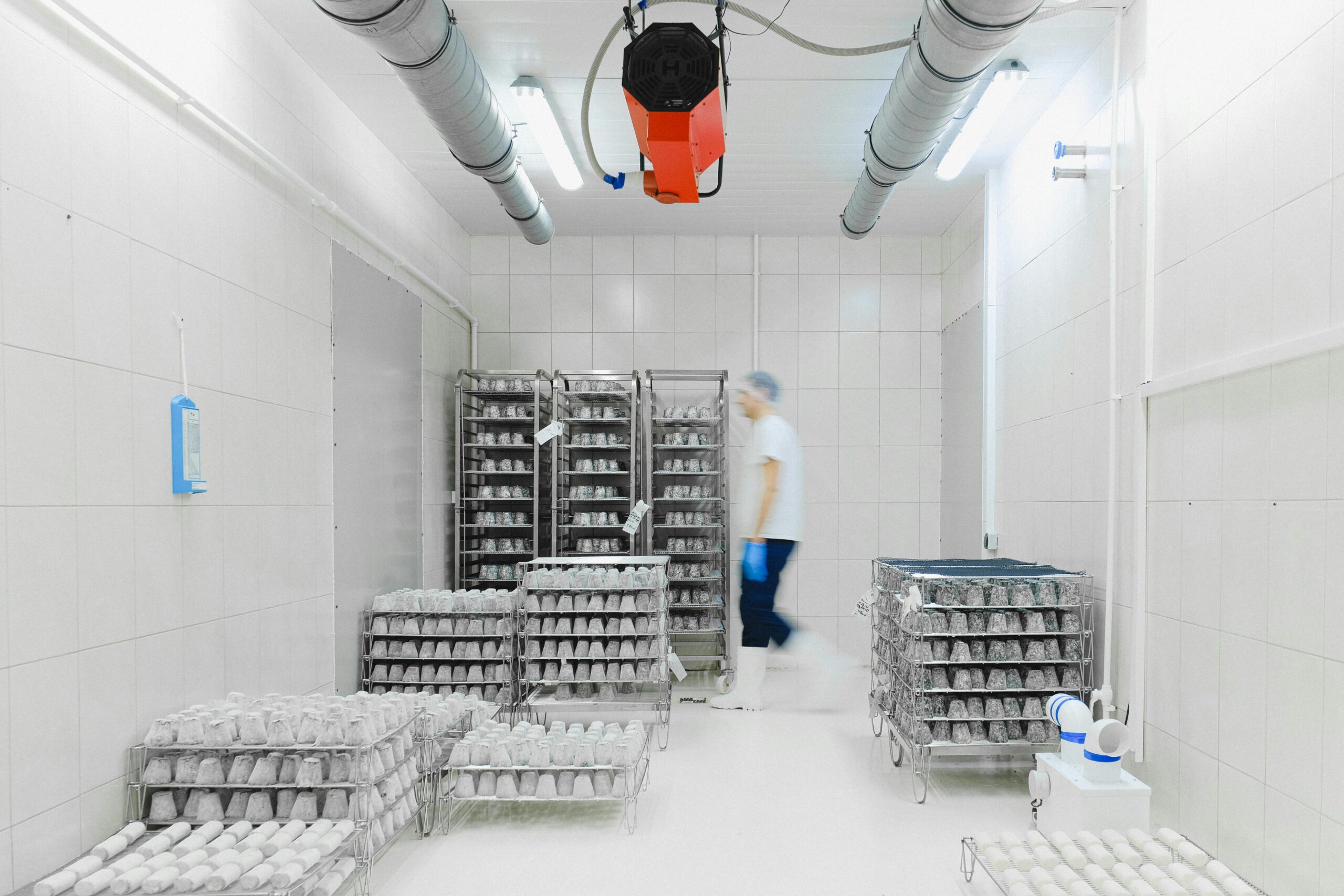
In the food processing sector, the cold room is not merely a storage space but a critical control point for safety and shelf life. The primary engineering challenge here is not just maintaining low temperatures, but surviving rigorous hygiene protocols. Facilities undergo daily washdowns with aggressive caustic chemicals to eliminate pathogens like Listeria and Salmonella.
Consequently, the panel facing must offer exceptional corrosion resistance and non-porous surfaces to prevent bacterial harborage. While many legacy facilities still use materials that degrade under these conditions, modern specifications favor high-grade stainless steel or specialized composite facings that withstand chlorine-based sanitizers without oxidizing.
Thermal stability is equally vital. Meat and poultry processing often requires a sharp temperature gradient, typically moving from +4°C in processing zones to -18°C in blast freezers. To prevent thermal bridging—which causes condensation and mold growth at the joints—the insulation core must maintain consistent density. Expanded Polystyrene (EPS) or rigid Polyurethane (PU) foams are frequently utilized here for their closed-cell structure, which stops moisture ingress and maintains the R-value even in high-humidity environments typical of slaughterhouses.
Pharmaceuticals and Biotechnology
For the pharmaceutical industry, the cold room functions as a vital piece of quality assurance infrastructure. The tolerance for temperature fluctuation is razor-thin; vaccines and biological reagents often require a strict storage window of 2°C to 8°C. Any deviation, even for a few minutes, can render valuable stock unusable.
Therefore, the design priority here is airtightness and thermal inertia. The insulation material must possess low thermal conductivity to ensure the refrigeration system cycles less frequently, maintaining a stable environment that protects the chemical integrity of the drugs.
Panel selection in this sector is heavily influenced by compliance with Good Distribution Practice (GDP). The internal surfaces must be smooth, non-shedding, and easy to decontaminate.
Fiberglass Reinforced Polymer (FRP) or composite sheet facings are often selected over traditional metal finishes because they do not sweat or condense moisture as easily, reducing the risk of water contamination in sterile environments. The goal is an engineered “box within a box” where the wall panels contribute to a hermetic seal, minimizing the load on the HVAC systems.
Cold Chain Logistics and Distribution
Logistics centers and refrigerated transport hubs represent the high-impact, high-throughput end of the spectrum. Unlike a static storage warehouse, these facilities face constant physical abuse from forklifts, pallet jacks, and shifting cargo. The buyer pain point here is twofold: minimizing structural damage and maximizing payload efficiency. Lightweight paneling is a crucial ROI driver; reducing the dead load of the truck body or warehouse structure allows for higher cargo capacity and lower fuel consumption.
To address this, advanced composites such as Polypropylene (PP) honeycomb cores are increasingly specified. These materials offer a superior strength-to-weight ratio compared to traditional solid foams. A PP honeycomb structure acts like a microscopic I-beam, providing high flexural rigidity and impact resistance without the mass of heavier cores.
When combined with durable Aluminum or Glass Reinforced Plastic (GRP) skins, these panels absorb the kinetic energy of collisions, preventing dent penetration that would compromise the insulation barrier. For fleet operators, this translates directly into reduced downtime for repairs and lower lifetime maintenance costs.
Agriculture and Horticulture
| Industry | Key Requirement | Recommended Panel Core | Benefit for Procurement |
|---|---|---|---|
| Food Processing & Meat/Poultry | Hygiene, Corrosion Resistance, -18°C to +4°C Stability | PU or XPS Foam with Stainless Steel/CFRT Facing | Prevents microbial growth and cross-contamination while resisting aggressive cleaning chemicals. |
| Pharmaceuticals & Biotech | Precise Temp Control (2-8°C), Airtightness, Compliance | PIR or High-Density PU Foam with GRP/Aluminum Facing | Ensures vaccine/drug integrity with superior thermal stability and minimal HVAC load. |
| Floral & Horticulture | Humidity Control, Extended Shelf Life, Ventilation | XPS or PET Foam with Smooth GRP Facing | Maintains optimal humidity to prevent wilting and extends vase life of perishable blooms. |
| Cold Chain Logistics & Trucking | Lightweight Strength, Rapid Assembly, Impact Resistance | PP Honeycomb or EPS Foam with Aluminum/Steel Facing | Maximizes payload capacity and reduces fuel consumption through lightweight composite construction. |
| Agricultural Storage (Fruit/Veg) | Long-term Storage, Ethylene Management, Temperature Zones | PU or PIR Foam with Anti-Fog GRP/ACP Facing | Supports controlled atmosphere storage to preserve texture, flavor, and nutritional value. |
Why Use a Cold Room?
The practical payoff shows up in operating costs over time. Lower energy consumption, minimal maintenance, and a service life measured in decades typically recover the initial investment within a few years.
Extending Shelf Life for Perishable Goods
- Microbial Inhibition: Cold temperatures (typically between -25°C and +5°C) dramatically reduce the growth rate of bacteria and fungi. For highly sensitive items like fresh produce or vaccines, this stabilization is non-negotiable for preventing irreversible loss.
- Moisture Retention: Properly designed insulated panels prevent the rapid moisture loss (dehydration) that occurs in open-air environments. This maintains the structural integrity, weight, and visual appeal of the stored products, directly reducing shrinkage waste.
- Chemical Stability: Many chemicals and pharmaceutical compounds begin to break down rapidly at standard temperatures. A controlled cold environment ensures the potency and safety of these materials are maintained throughout their entire storage lifecycle.
Meeting Food Safety and Hygiene Standards
This preservation of integrity extends beyond chemical compounds to biological safety, where maintaining strict hygiene is equally critical. To ensure that perishable goods remain safe for consumption, cold storage facilities must also adhere to rigorous sanitation protocols.
- Surface Sanitization: The internal surfaces of modern cold rooms utilize sandwich panels made from hygienic materials, such as gel-coated fiberglass (GRP) or treated aluminum. These smooth, non-porous finishes resist the buildup of grime and are easily cleaned with industrial disinfectants, preventing cross-contamination.
- Temperature Logging Compliance: Maintaining a consistent internal environment is essential for meeting audit requirements. Fluctuating temperatures due to poor insulation can lead to failed inspections. High-performance thermal barriers ensure the cold room stays within the narrow tolerances required by health authorities.
- Pest and Contaminant Barrier: Unlike stick-framed walls, modular panel systems create an airtight seal. This eliminates gaps where pests could enter and prevents external contaminants from degrading the internal sterile environment.
Optimizing Storage Density and Efficiency
Beyond securing the interior against contamination, these advanced systems also maximize usable space through superior material efficiency. By achieving necessary thermal resistance in a thinner profile, composite panels minimize the structural footprint required for the walls.
- Minimal Footprint Loss: Traditional brick or concrete walls require significant thickness to achieve adequate thermal resistance (R-value). Advanced composite sandwich panels provide superior insulation with much thinner profiles. This means more of the building’s interior volume is available for shelving, palletizing, and inventory rather than being lost to thick structural walls.
- Modular Scalability: Panel-based structures allow for easy reconfiguration and expansion. As business needs fluctuate, additional storage blocks can be added smoothly. This modularity prevents the inefficiencies associated with rigid, permanent masonry structures that cannot adapt to changing storage demands.
- Rapid Thermal Recovery: Efficient storage isn’t just about how many boxes you fit, but how quickly the system bounces back. When doors are opened during high-traffic picking operations, a well-insulated structure recovers its target temperature faster. This minimizes energy spikes and ensures the storage environment remains stable even under intense operational activity.
Key Takeaways
Building a cold room isn’t just about bolting a compressor to a box. It relies entirely on your insulated panels stopping heat transfer. Cheap insulation cores create thermal bridging. When that happens, your refrigeration unit works overtime and destroys your profit margins through wasted electricity. You need high-performance composite panels to maintain -20C stability without massive energy spikes. This is where you save money long-term.
We manufacture these composite panels to handle specific thermal loads. Don’t guess on your R-value calculations. Send us your floor plans so we can verify the wall assembly integrity before installation. Our engineering team is ready to review your blueprints. We can help you select the right core thickness to ensure your system holds up for years.
Frequently Asked Questions
This factor has a direct bearing on project performance and long-term cost. Addressing it with specific data rather than general assumptions leads to better outcomes.
What materials are cold room panels made of?
Modern cold room panels typically consist of a structural core sandwiched between two metal or composite facings. Common cores include polyurethane (PU), polyisocyanurate (PIR), extruded polystyrene (XPS), and expanded polystyrene (EPS). Facings often utilize galvanized steel, stainless steel, or aluminum to provide durability and hygiene compliance.
Best insulation core for -20C cold room
For temperatures at -20°C, PIR or high-density PU foams are generally preferred due to their low thermal conductivity and fire resistance. These materials minimize heat transfer effectively while maintaining structural integrity under extreme cold. XPS is also a viable option if moisture resistance is a primary concern, though it may require thicker profiles to match the R-value of PIR.
Preventing thermal bridging in cold room construction
Thermal bridging occurs when conductive materials bypass insulation, leading to significant energy loss and condensation risks. To prevent this, engineers use thermally broken panel joints, specialized gaskets, and continuous insulation layers without metallic penetrations. Structural connections should be designed to isolate the interior envelope from the exterior structure, ensuring a smooth thermal barrier.
Whole wall R-value calculation for cold storage
Calculating whole-wall R-value requires accounting for the insulation core, facings, and any structural thermal bridges, not just the material itself. Unlike component ratings, this complete metric reflects actual performance under load. Engineers must subtract the impact of fasteners and joints to determine the effective thermal resistance that dictates HVAC sizing and operational costs.
Can cold rooms be customized or expanded?
Yes, modern cold room systems are highly modular and can be customized to fit specific spatial constraints and temperature requirements. Panels can be easily added or removed to expand capacity, allowing for scalable infrastructure growth. Customization also extends to interior finishes, door placements, and integration with existing building management systems for optimized operational control.