
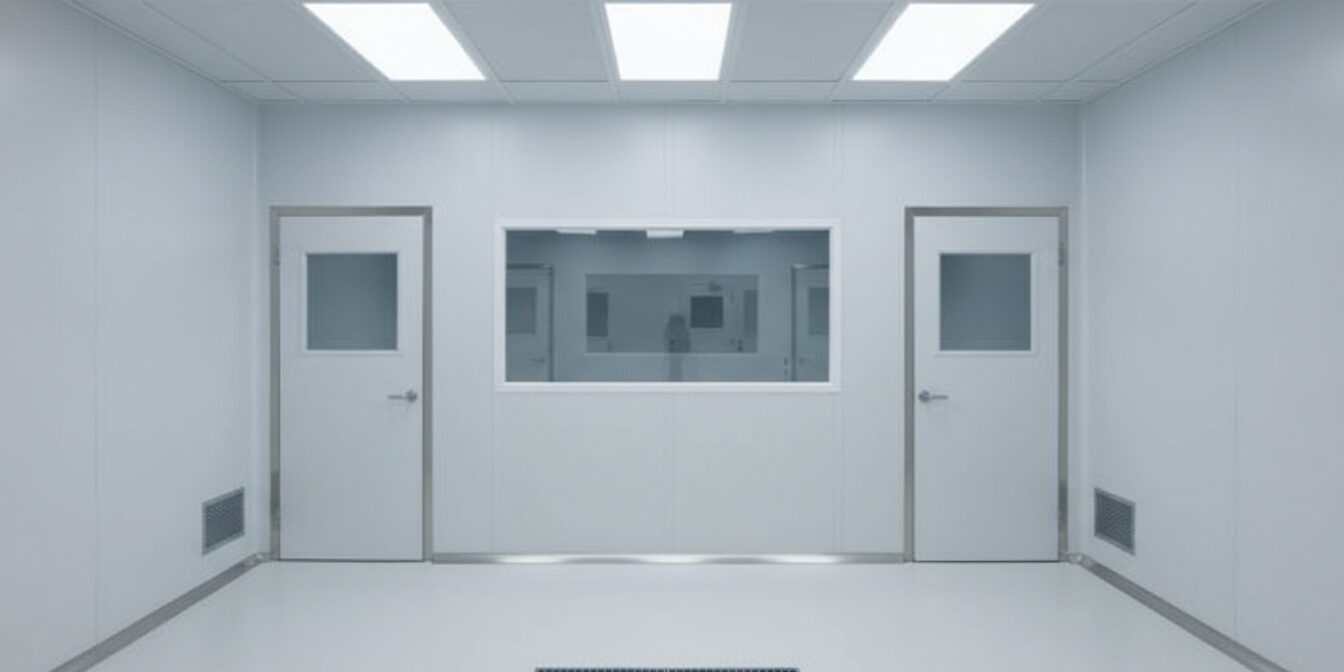
PPGI-faced clean room panels still get specified into GMP buffer zones because they are cheap and look fine on paper. Then the first humidity spike arrives: the zinc coating corrodes under condensation, the skin blisters at the seams, and the delamination surfaces right around room qualification, when rework is measured in six figures and lost launch time rather than panel price. That is a specification failure, not a materials failure, and it is entirely preventable at the selection stage.
This guide cuts through the confusion around surface finishes and joint types using published GMP guidance and standard fire and corrosion test methods. You’ll see exactly why stainless steel needs post-cut passivation, why GRP’s gel-coat thickness matters more than you think, and which joint design keeps surfaces flush and crevice-free without relying on field-applied sealant. No theory: just what passes (or fails) during actual GMP audits.
GMP Panel Surface Requirements
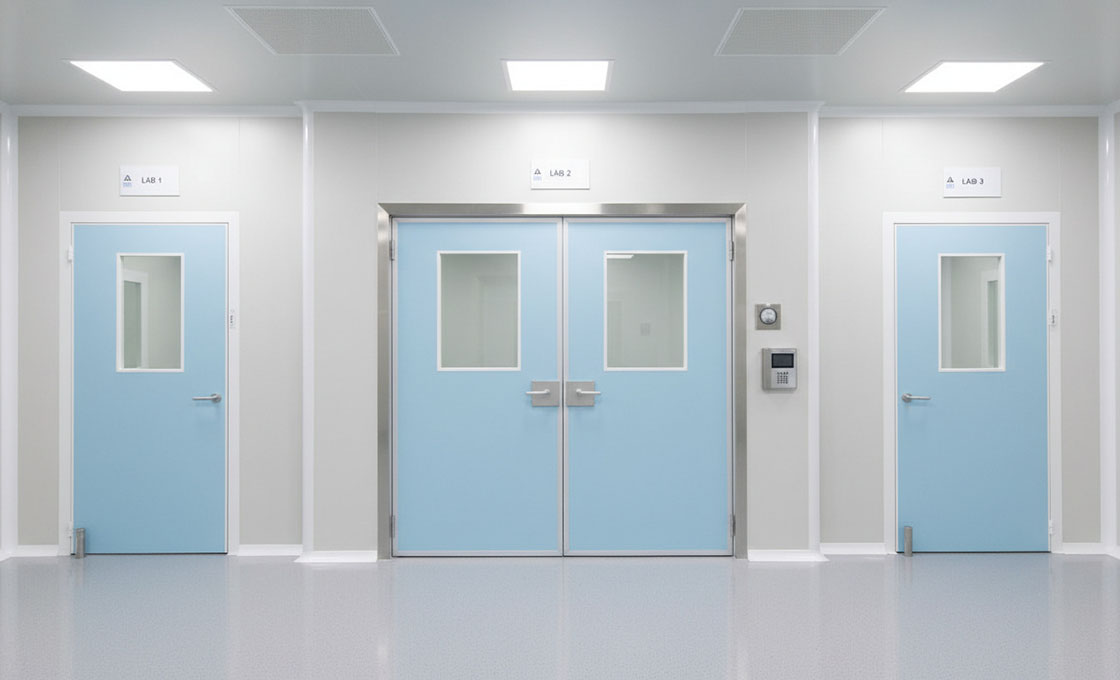
GMP demands non-porous, seamless surfaces that won’t shed particles or harbor microbes: matte-finish SS 304 and factory-gel-coated GRP meet this; powder-coated GI fails if the coating is breached.
Smooth, Non-Shedding, Easy-to-Clean Surfaces Are Non-Negotiable
GMP clean rooms (especially ISO Class C/D for pharma) require wall panels with continuous, non-shedding surfaces that withstand daily high-pressure cleaning and chemical decontamination. Any micro-crack, exposed edge, or porous substrate becomes a contamination risk. GMP auditors expect wall and ceiling surfaces to be smooth, flush and crevice-free, with joint recesses under 0.5mm; that is achievable only with precision-engineered flush joints and factory-finished edges. Field-cut panels almost always violate this threshold, triggering inspection failures.
Matte Finish Prevents Glare Without Sacrificing Cleanability
Mirror-polished stainless steel may look premium, but it creates hazardous glare under intense clean room lighting, impairing visual inspections and operator safety. A consistent matte finish (Ra ≤ 0.8 µm) eliminates reflections while maintaining the same cleanability. RaxPanel’s SS 304 panels are supplied with this GMP-appropriate finish standard, with no post-installation polishing needed.
SS 304 Resists Aggressive Fumigation Chemicals
Formaldehyde vapor and hydrogen peroxide (H₂O₂) fogging are common in pharma decontamination cycles. SS 304 withstands repeated exposure without degradation, unlike aluminum or coated steel. Critical note: cut edges must be passivated post-installation to restore the chromium oxide layer; skipping this step invites pitting corrosion. We supply pre-passivated panels with sealed edges to eliminate this contractor oversight.
GRP Delivers Built-In Color and Hygienic Performance
Our GRP/FRP Honeycomb Panels use an isophthalic polyester gel coat (0.3–0.5mm thick) with a smooth, non-porous hygienic finish. This layer is molded during production rather than painted on, so color and hygiene performance are integral, not superficial. But field repairs or on-site cutting compromise the gel coat’s continuity, voiding GMP compliance. That’s why we ship panels fully fabricated to your dimensions, with all edges factory-sealed.
Powder-Coated GI Requires Perfect Coating Integrity
PPGI (pre-painted galvanized iron) panels are cost-effective but high-risk in humid GMP zones. ASTM B117 salt-spray testing confirms that even minor coating damage, such as scratches, cut edges, or fastener penetrations, exposes zinc to condensation, causing white rust and core delamination within months. For food or pharma applications above 60% RH, we recommend against PPGI entirely. If used, joints must be fully sealed with food-grade silicone and never exposed to direct washdown.
Flush vs. Tongue-and-Groove Joints
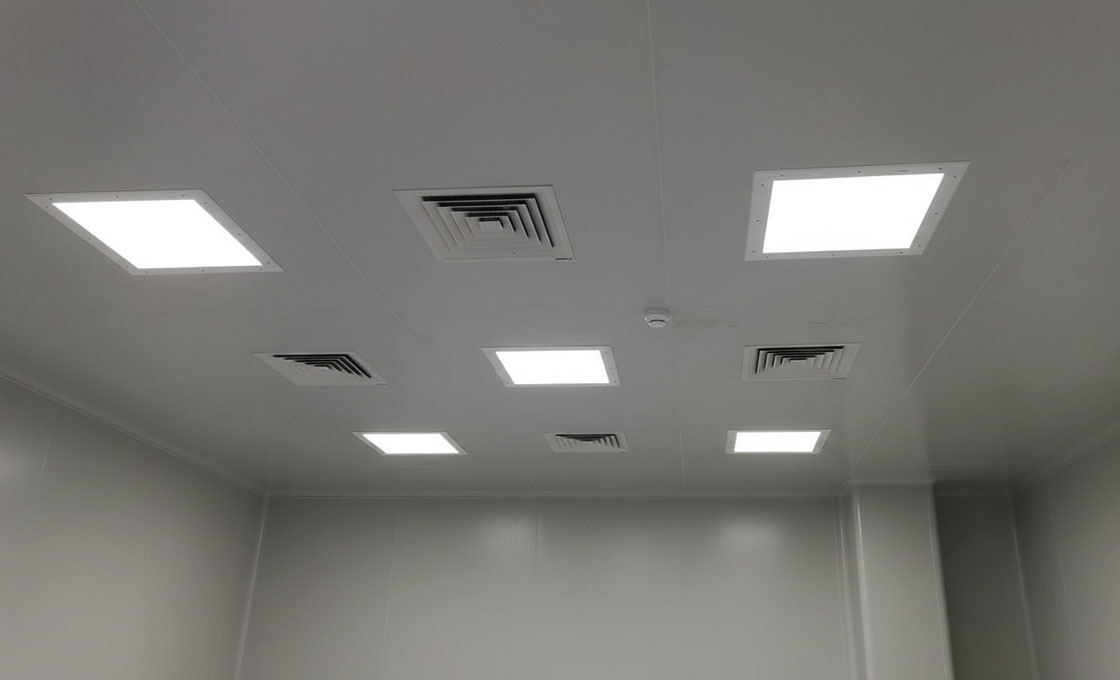
For GMP clean rooms, flush joints are non-negotiable: tongue-and-groove only passes inspection if factory-sealed and never field-cut.
Why Flush Joints Are Mandatory in GMP Environments
GMP (Good Manufacturing Practice) clean rooms demand surfaces that prevent microbial harborage and particle accumulation. Any recess deeper than 0.5mm gives contaminants a place to accumulate and is treated as a defect in GMP audits. Flush joints, achieved through precision aluminum splines or chemical welding, eliminate crevices where contaminants can hide. This isn’t aesthetic preference; it’s a regulatory baseline for pharma, food, and medical device facilities.
The Hidden Risk of Tongue-and-Groove Joints
Tongue-and-groove joints create micro-gaps by design. Even a hairline opening invites moisture ingress, biofilm formation, and particulate trapping, especially under thermal cycling or humidity swings. If you must use this joint type (e.g., legacy specs), it’s only acceptable when fully sealed with food-grade silicone at the factory. Field-applied sealant fails under inspection: inconsistent bead width, poor adhesion, and curing flaws are common rework triggers.
Factory-Notched Panels Prevent Costly Failures
On-site cutting destroys joint integrity. A handheld saw introduces ±2mm variance, enough to breach the 0.5mm ISO tolerance. RaxPanel supplies GRP Honeycomb and Stainless Steel panels with factory-notched edges, ensuring ±0.2mm thickness consistency and pre-sealed flush joints. This eliminates contractor guesswork, accelerates installation, and guarantees compliance documentation is audit-ready from day one.
Skin Material Comparison
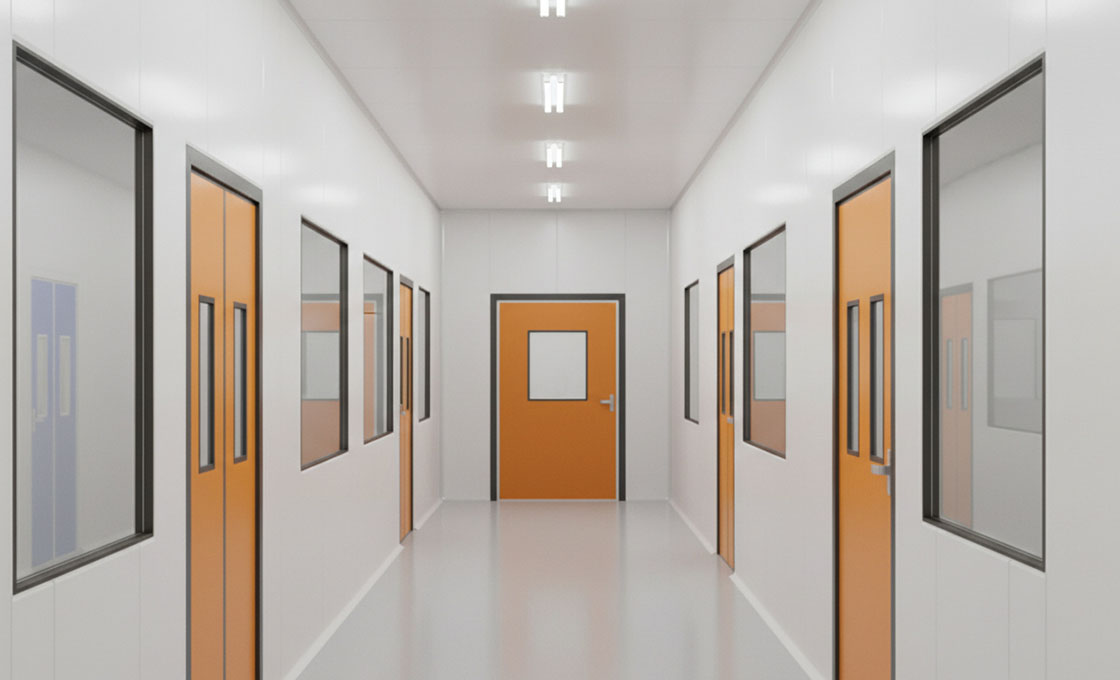
For GMP clean rooms, skin material dictates compliance risk, not just aesthetics. SS 304 and GRP meet pharma hygiene demands; PPGI fails under condensation.
Stainless Steel 304 (SS 304)
SS 304 is the gold standard for high-hygiene zones in pharmaceutical and medical device facilities. It’s non-combustible, withstands repeated chemical sanitization (including hydrogen peroxide vapor), and retains oxidation resistance in intermittent service up to 870°C and continuous service up to 925°C (avoid sustained exposure between 425°C and 860°C, where sensitization occurs). Its matte finish supports GMP cleanability expectations when paired with factory-sealed flush joints. Critical note: cut edges must be passivated post-installation to restore corrosion resistance. This step is often skipped by contractors, leading to rust staining during validation inspections.
GRP (Glass-Reinforced Plastic)
Our GRP panels use isophthalic polyester resin with glass mat reinforcement and a factory-applied gel-coat layer (0.3–0.5mm thick). This delivers Class A fire rating per ASTM E84 and exceptional resistance to acids, alkalis, and moisture, ideal for washdown environments. The seamless gel-coat finish prevents microbial harborage, but field repairs or on-site cutting compromise the barrier. For Class C/D GMP rooms, only factory-finished edges ensure compliance; never accept panels requiring site trimming.
PPGI (Pre-Painted Galvanized Iron)
PPGI panels historically carried a Class O rating under BS 476 Part 6 & 7 and offer a smooth coated surface at lower cost, but they’re unsuitable for high-humidity GMP zones. Under condensation cycles, the 80–120gsm zinc coating corrodes (per ASTM B117 salt spray testing), causing delamination and panel swelling. Multiple pharma projects have failed inspection due to hidden PPGI degradation behind wall cladding. Avoid this material where temperature fluctuations or steam cleaning occur.
| Skin Material | Surface Finish & Compliance | Joint & Installation | Core Compatibility | GMP Suitability |
|---|---|---|---|---|
| Stainless Steel (SS 304) | Matte, non-porous; flush joints under 0.5mm recess; requires post-cut passivation | Factory-sealed flush joints with aluminum spline; sealed with food-grade silicone | PIR (about R-6.5/inch) or mineral wool (A1, R-4/inch) | Ideal for high-humidity, Class A/B zones; corrosion-resistant when properly maintained |
| GRP/FRP (Isophthalic Polyester + Glass Mat) | Gel-coat finish (0.3–0.5mm); non-porous; factory-finished edges mandatory for Class C/D | Friction interlock or chemical weld; no on-site cutting to preserve integrity | Honeycomb (structural, near-zero R) or PIR (about R-6.5/inch) | Cost-effective for dry environments; avoid high-condensation areas |
| PPGI (80–120gsm Zinc-Coated Steel) | Painted coil finish; fails ASTM B117 in humid GMP zones due to zinc corrosion | Standard interlocks; prone to delamination at seams under condensation | PUF (about R-5/inch) or PIR (about R-6.5/inch) | Not recommended for pharmaceutical cleanrooms due to high rework risk during inspections |
| Aluminum (Specialized Alloy) | Anodized or powder-coated; smooth, non-porous surface; flush-joint system | Precision flush joints with spline; compatible with food-grade silicone sealing | PIR (about R-6.5/inch) or mineral wool (A1, R-4/inch) | Lightweight alternative for transportable or modular cleanrooms; good corrosion resistance |
Core Insulation Options
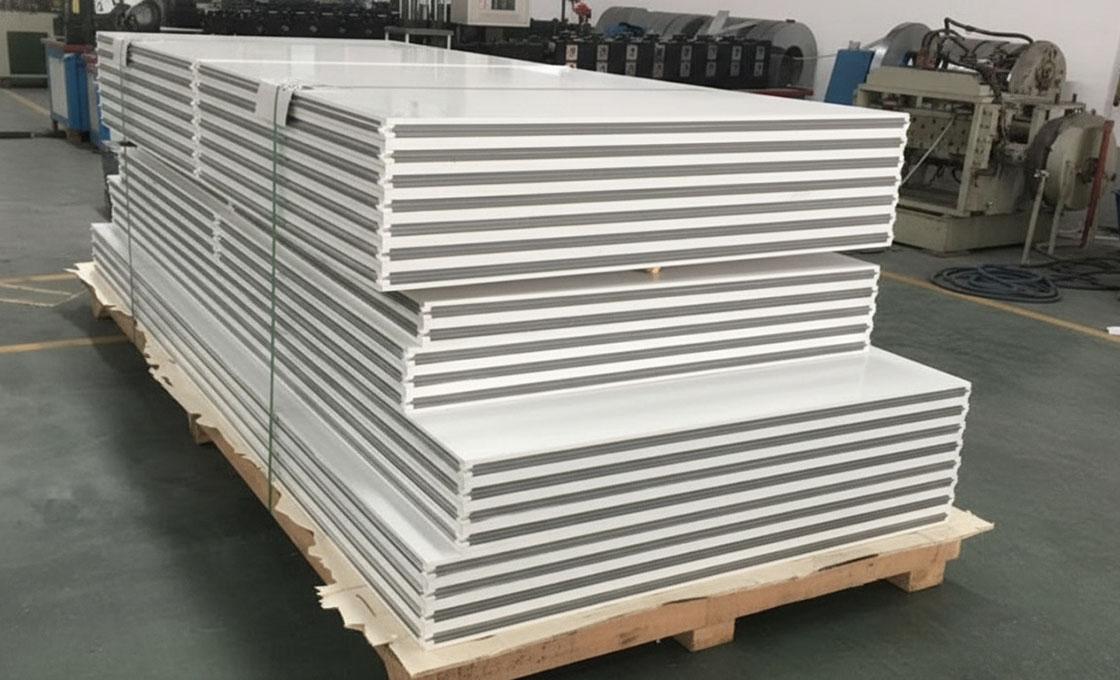
GMP clean rooms require insulation that balances thermal performance, fire safety, and regulatory compliance: PIR cores deliver about R-6.5 per inch, mineral wool offers A1 non-combustibility at R-4 per inch, and honeycomb cores provide negligible insulation and are only acceptable in non-climate-critical partitions.
PUF/PIR Cores: High R-Value for Temperature Stability
PIR foam cores deliver about R-6.5 per inch of thermal resistance (R 4.5 m²·K/W at 100mm) and PUF cores roughly R-5 per inch, making them the default choice for GMP zones requiring strict temperature control: pharmaceutical production suites, cold storage, and medical device assembly areas. This performance ensures minimal energy loss and stable internal conditions during HVAC cycling. All RaxPanel PIR-core panels are engineered to achieve EN 13501-1 B-s1,d0, the European classification that has replaced the legacy BS 476 Class “O”, with fire test documentation supplied for building inspections.
Mineral Wool: Non-Combustible Safety Where Fire Risk Dominates
Mineral wool cores carry an A1 non-combustible classification under EN 13501-1, eliminating flame spread risk entirely. They’re specified in high-occupancy or egress-sensitive zones where fire codes override thermal efficiency. Their R-value averages R-4 per inch, sufficient for buffer areas but inadequate for primary process rooms needing tight thermal envelopes. We integrate mineral wool only in GRP or stainless steel panel systems with factory-sealed flush joints to maintain ISO 14644-5 surface continuity.
Honeycomb Cores: Structural Lightness, Not Insulation
Paper or aramid honeycomb cores reduce panel weight by up to 40% versus foam alternatives, useful in mobile clean rooms or ceiling applications where load matters more than climate control. But their effective R-value is near zero. They conduct heat almost like solid metal. Never specify honeycomb cores in any GMP area requiring temperature stability; inspectors will flag them during commissioning. At RaxPanel, we restrict honeycomb use to non-climate partitions and always pair them with GRP skins featuring intact gel-coat edges to preserve hygiene integrity.
Installation Best Practices
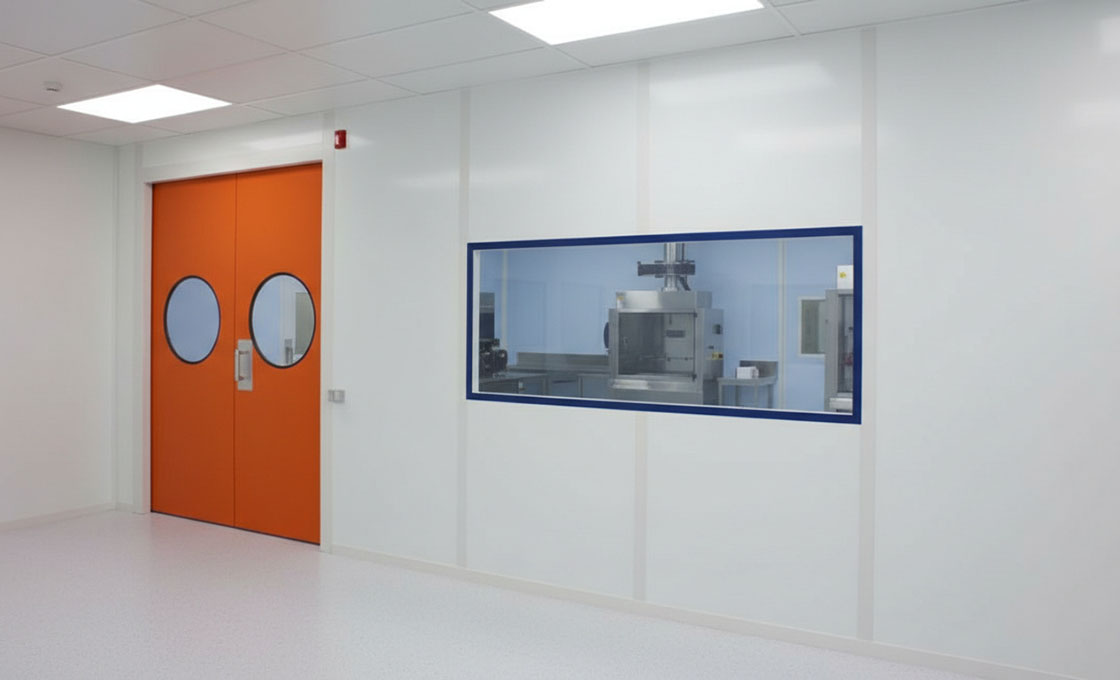
GMP clean room panels fail inspections not from poor materials, but from avoidable installation errors. Follow these four non-negotiable practices to pass first-time.
Use factory-made cutouts for utilities: never drill on-site
On-site drilling breaches the panel’s integrity, creating micro-gaps that trap contaminants and break the flush, crevice-free surface GMP audits expect. RaxPanel pre-cuts all utility openings at ±0.2mm tolerance in controlled conditions, ensuring flush, non-porous transitions. Field modifications void compliance documentation: inspectors check for tool marks.
Install radius coving (minimum 50mm) at wall-floor-ceiling transitions
Sharp corners collect particulates and impede cleaning validation. EU GMP Annex 1 requires cleanroom surfaces to be smooth, impervious and unbroken; in practice, inspectors look for continuous coved junctions of at least 50mm radius. We supply matching GRP or stainless steel coving kits pre-fitted to panel thickness (44–160mm), eliminating ad-hoc silicone fills that crack under thermal cycling.
Seal all perimeter joints with food-grade silicone
Standard construction sealants outgas VOCs and degrade under sanitization chemicals, compromising air classification. Only NSF/ANSI 51-certified food-grade silicone maintains elasticity and non-toxicity after repeated exposure to hydrogen peroxide or quaternary ammonium cleaners. Apply a continuous bead with no gaps, even behind trim. Inspectors swab joint lines during audits.
Avoid corrugated panels, which trap contaminants
Corrugated profiles create shadow zones where microbes colonize, violating “non-porous clean room panels for pharmaceutical use” requirements. Smooth, flat surfaces (like our GRP Honeycomb or Stainless Steel panels with matte gel-coat or passivated finish) enable full wipe-down validation. Note: PPGI panels may appear smooth but corrode under condensation (per ASTM B117), causing delamination. Exclude them from high-humidity GMP zones.
Conclusion
Go with factory-finished GRP honeycomb panels if your build includes Class C/D rooms: they meet ISO 14644-5’s <0.5mm joint recess rule out of the box, and field repairs on gel-coat surfaces void compliance. Stainless steel looks premium but demands post-cut passivation most contractors skip, risking corrosion in humid zones.
Ask your supplier for the ASTM E84 fire test report and a sample panel with its actual joint assembly, then run your fingernail across the seam. If you feel a ridge or gap, walk away. Compliance isn’t theoretical; it’s tactile.
Frequently Asked Questions
Do GMP clean room panels need specific fire ratings?
Yes, GMP clean room panels must meet stringent fire safety standards such as ASTM E84 Class A or EN 13501-1 Class B-s1,d0 to ensure compliance in regulated environments. Our clean room panel systems use fire-retardant cores designed to meet these targets, and fire test documentation ships with your order. GRP/FRP Honeycomb and Foam Core Panels can also be customized with fire-inhibiting additives to meet project-specific regulatory requirements.
Can powder-coated GI panels pass GMP audits?
Powder-coated galvanized iron (GI) panels generally do not meet GMP audit requirements due to potential surface porosity, susceptibility to corrosion, and difficulty in achieving seamless, cleanable finishes. In contrast, our GRP/FRP Honeycomb Panels and specialized Aluminum Sandwich Panels offer non-porous, smooth surfaces that comply with GMP cleanliness and hygiene standards. For validated cleanroom environments, we recommend our documented clean room panel systems designed specifically for pharmaceutical and biotech applications.
Are GRP panels more expensive than stainless steel?
GRP (Glass Reinforced Plastic) panels typically have a lower initial material cost compared to stainless steel while offering superior corrosion resistance and easier maintenance. Our GRP/FRP Honeycomb Panels provide a cost-effective alternative without compromising on GMP compliance, especially in high-humidity or chemical-exposure environments where stainless steel may require additional passivation or protective treatments. Over the lifecycle, GRP often delivers better total cost of ownership due to reduced cleaning and replacement needs.
What joint type prevents microbial growth?
Factory-sealed flush joints are the most effective at preventing microbial ingress in GMP clean rooms, because they leave no crevice for biofilm to colonize. Our clean room panel systems use precision aluminum splines and factory-applied seals to deliver flush, cleanable transitions. When combined with hygienic gel-coat or stainless finishes, these joints significantly reduce contamination risks in critical environments.
Where can I find GMP clean room panel suppliers?
Reputable GMP clean room panel suppliers can be found through industry certifications such as ISO 14644 compliance, FDA registration, or membership in organizations like ISPE. We supply clean room panel systems, including GRP/FRP Honeycomb, Foam Core, and Stainless Steel Sandwich Panels, with the qualification and test documentation pharmaceutical, biotech, and medical device projects require. Contact us directly for validated documentation, technical specifications, and project-specific validation support.