
The same aluminum composite panel that earns top marks as a showroom sign can fail a facade inspection six floors up. Core chemistry draws that line: standard PE-core sheets are capped near ten metres, while fire-rated and A2 cores climb higher. Buyers who treat ACP as one product keep discovering this after the quote is signed.
Six job families consume most of the world’s ACP output: facades, signage, interiors, vehicle bodies, industrial enclosures and temporary builds. Each family pulls a different core, coating and thickness off the same shelf. RaxPanel laminates aluminum composite panels and their honeycomb-core and foam-core variants on one production line, so the trade-offs below are set at the press, not quoted from a brochure.
One Material, Six Different Jobs
More than 200 companies produce aluminum composite panels worldwide, and nearly all of them sell into the same six places. That breadth is easy to misread. Volume says commodity; behavior says otherwise, because a sheet engineered for a forecourt totem fails a curtain-wall spec, and a facade grade is expensive overkill bolted to a kiosk. The six families below cover where the material actually lives and what each one punishes.
- Facades and external cladding – the volume leader, where fire rating decides everything.
- Signage and corporate identity – flatness is the product.
- Interior walls, ceilings and column covers – finish quality over raw strength.
- Truck, trailer and RV bodies – weight converts directly into payload.
- Industrial enclosures – a flat, light substitute for painted sheet metal.
- Exhibition stands and temporary builds – speed of assembly decides.
Two companion reads cover adjacent ground: the case for the material’s benefits sits in one guide, and the ACP-versus-ACM terminology question is settled in another. What follows here is the application map itself.
One habit makes the map useful before the first quotation arrives. Write down which property your project cannot compromise – fire class, flatness, mass or speed – and let that single answer eliminate two of the six families on sight. A buyer who needs payload has already left the facade aisle. A buyer who needs a finish rated for decades has already left the exhibition aisle. The cards below then become confirmation rather than exploration.
Building Facades and External Cladding
Facades are the least forgiving buyer on this list. A rainscreen panel must hold flat across a storey, survive thermal cycling and satisfy the fire code that governs the building’s height. Get the grade wrong here and nothing else on the spec sheet matters.

Height decides the core. Industry guidance published after the Grenfell inquiry caps standard PE-core cladding near ten metres. Fire-retardant cores, limited to 30% polyethylene content, extend the range to roughly thirty metres. A2 mineral cores take everything taller.
The stakes are not historical trivia: PE-cored cladding was implicated in the 2017 Grenfell Tower fire, which killed 72 people. Hospitals, schools and housing estates all sit inside this family, each adding coating and warranty expectations of its own. The architectural applications of metal composite panels deserve their own deep dive, and a separate guide covers them.
Warning: treat the height band as a purchase gate, not a preference. Ask which standard the certificate names and which storey the panel is rated for. A PE-core sheet invoiced as generic ACP is the classic route to a failed handover.
Geometry is the second facade decision after fire class. Rainscreen cassettes route and fold from flat sheets, so the panel must bend without whitening at the fold line and stay flat after bending. That is a fabrication question as much as a product one, which is why facade suppliers are asked for folded-corner samples, not just flat coupons. Contractors who skip that sample meet the surprise on the scaffold instead.
Signage, Corporate ID and Wayfinding
A sign face lives or dies by flatness, and an aluminum composite panel substrate delivers it at a fraction of solid plate’s weight. Printers and vinyl crews need a surface that stays put through temperature swings. The PE-core sheet that fails a facade spec is often the correct choice here.
The category is institutional, not just retail. Petroleum brands run national forecourt programs on composite totems, and highway authorities specify the same sheets for wayfinding boards built for long outdoor service. Corporate identity walls on headquarters live in the same family.
Coating is the real decision. Polyester paint handles indoor and short-cycle work at friendly cost, while PVDF fluoropolymer coatings hold color through years of ultraviolet exposure. Match the coating to the service life you are selling, not to the sample swatch.
Fabrication volume is the quiet reason sign shops stay loyal. Sheets route on a CNC table without chipping, fold into tray faces for depth, and accept painted, brushed or mirrored finishes from the same base panel. One substrate serves the menu board, the monument sign and the tenant panel above the door. Fewer materials on the rack means fewer chances to quote the wrong sheet for the job.
Interior Walls, Ceilings and Column Covers
Indoors, the priorities invert. Partitions, false ceilings and column covers reward finish quality, formability and light weight, while structural muscle comes from the subframe instead. Wall panels arrive flat, route cleanly and accept every decorative coating in the catalog.
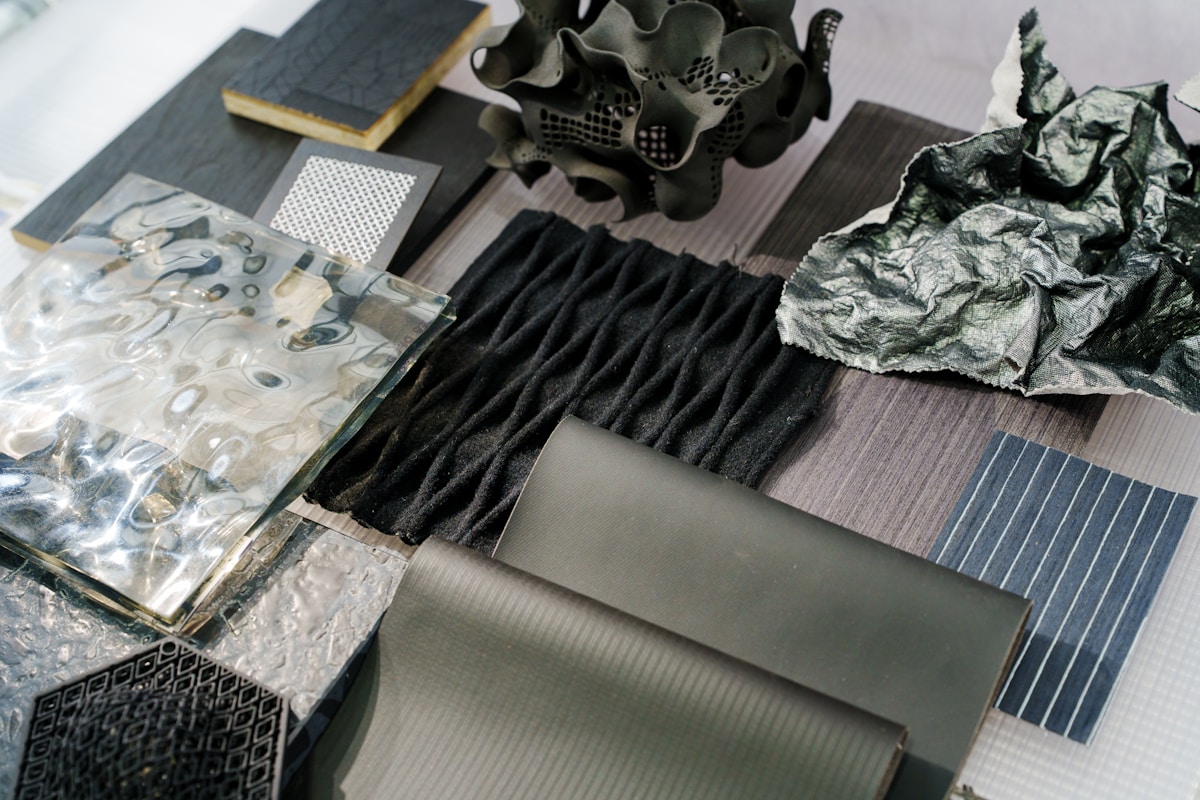
Two interior specifics earn their keep. Column covers wrap structure and services with a clean radius that drywall cannot hold, and perforated ACP ceilings tune acoustics in lobbies and transit halls. Both lean on the same property: a light sheet that stays flat.
Fire discipline does not stop at the entrance. Public interiors specify FR cores wherever the code calls for them, and honest suppliers say so up front. The grade logic from facades carries inside, just with lower stakes.
Serviceability is the third interior advantage nobody advertises. A damaged lobby panel unbonds, unscrews or unclips and swaps in minutes, because the sheet is light enough for one technician to handle. Compare that with re-skimming and repainting a plaster wall during business hours. Facilities managers notice the difference by the second service call.
Truck, Trailer and RV Bodies
On a truck or trailer, every kilogram of body is a kilogram of cargo you cannot invoice. That arithmetic made composite panels standard equipment on refrigerated and dry-freight bodies. ACP-based builds add a stiffness trick: bond the aluminum skins to a honeycomb or foam core and the panel resists flex far beyond its weight class.
RaxPanel builds in this exact territory. The catalog pairs ACP skins with honeycomb or foam cores for body programs, adds complete refrigerated and dry-freight packages, CKD kits and RV wall, roof and floor panels. Specify by payload and span, not by sheet weight alone; a body panel that oil-cans at highway speed was priced by the kilogram instead of by the span.
Body programs also live or die on batch consistency. A fleet of two hundred boxes needs identical flatness, bonding and edge detail from the first panel to the last, because a body shop cannot re-work a stiffness number. Ask body-builders what they audit and they point at the same three records: peel tests per batch, skin gauge per coil and core density per lot. Suppliers who cannot produce those three sheets per shipment are selling hope with a logo.
RaxPanel laminates aluminum composite panels and their honeycomb-core and foam-core variants on one line serving facade and vehicle-body programs across 30+ countries. Send the application, span and payload, and an engineer replies with core, coating and thickness within 24 hours.
Industrial Enclosures and Machine Coverings
Factory floors specify ACP for the same reason sign shops do: it stays flat and weighs little. Machine coverings, control-cabinet doors and guards replace painted sheet metal with a panel that will not oil-can or rust through. Container construction borrows the same trick at larger scale.
The substitution is economic as much as technical. A composite skin replaces thicker plate at a fraction of the weight, so enclosures lift and swap without cranes. Maintenance windows shrink with the mass.
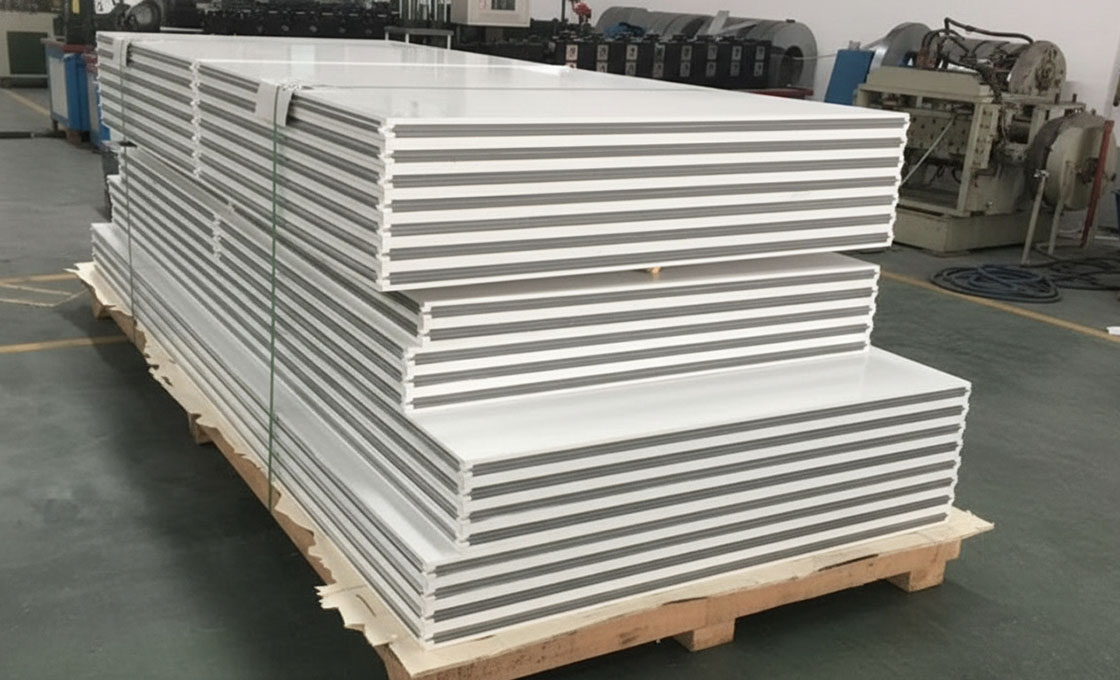
Capacity makes the industrial case practical. RaxPanel’s own line exceeds 1,700 square metres of daily output, which keeps enclosure programs supplied at production rates in custom widths and colors. Industrial buyers order by the tolerance sheet, and volume at that level is what makes tolerance contracts enforceable.
Exhibition Stands and Temporary Structures
Exhibition work treats ACP as a consumable, and the material suits that life. Booth builders rout, fold and print the sheets into walls, counters and graphics carriers, then break them down when the show ends. The panel’s job here is speed: light sheets mean smaller crews and shorter builds.
Repeated assembly punishes soft edges, so specify edge sealing or return folds for stands that travel a circuit. Graphics carriers also need a surface that survives re-printing between shows, which points back to coating choice rather than core choice. A booth panel is a consumable with a spec sheet, not a liability.
Matching the Spec to the Application
Six applications, four spec levers. The table below compresses the choices each buyer family actually makes, and it is the closest thing this material has to a crosswalk.
| Application | Core family | Coating | Typical sheet | Deciding check |
|---|---|---|---|---|
| Facade cladding | PE / FR / A2 by height | PVDF | 4-6 mm | Height band vs local code |
| Signage | PE standard | PE or PVDF | 3-4 mm | Flatness over service life |
| Interiors | PE or FR by code | PE / decorative | 3-4 mm | Finish plus code |
| Vehicle bodies | Honeycomb or foam core | PVDF | 6-10 mm | Payload vs span |
| Industrial enclosures | PE or honeycomb | PE | 4 mm | Tolerance and corrosion |
| Exhibition builds | PE | PE / printed | 3 mm | Assembly speed |
Thickness entries are trade-typical ranges rather than promises; the height bands above are the sourced numbers. Use the aluminum composite panel range page to see how these levers turn into orderable formats. The panel inspection guide then shows how to verify grades before they ship.
Read the table as a sequence of eliminations rather than a menu. The deciding check kills candidates faster than the spec columns do: a ten-storey facade never reaches the coating row, and a payload contract never reaches the signage row. Buyers who run the right-hand column first spend one meeting on selection. Buyers who start on the left spend three.
Choosing the Right Panel for the Job
The pattern behind all six cards fits in one sentence: the application picks the grade, not the brochure. A property that flatters one card can sink another, which is why the same sheet reads as overkill in one aisle and underspec in the next. Specification discipline, not brand loyalty, holds the purchase together.
- Start from the application’s punishing question – fire, flatness, payload or speed – and let it pick the core.
- Treat height bands as purchase gates: PE near ten metres, FR near thirty, A2 above, local code overriding.
- Verify every grade against a named standard before the quote becomes an order.
If a project sits between two cards, send the drawings to RaxPanel’s engineers. A short review usually settles core, coating and thickness in one pass.
Related reading: why stone facades need aluminum honeycomb panel backing.
Frequently Asked Questions About ACP Applications
What are the main applications of aluminum composite panels?
Facades and cladding, signage, interior walls and ceilings, truck and RV bodies, industrial enclosures, and exhibition builds. Each application pulls a different core, coating and thickness from the same product family.
Which ACP core is allowed on tall building facades?
Industry guidance caps PE-core panels near ten metres, FR cores near thirty metres, and reserves A2 mineral cores for taller buildings. Local code overrides guidance wherever it is stricter.
Is ACP a good signage material?
Yes. It stays flat at low weight, prints and accepts vinyl cleanly, and costs far less than solid plate. Choose PVDF coating for permanent outdoor signs.
Can aluminum composite panels be used on truck bodies?
Yes, in honeycomb-core and foam-core variants that bond ACP skins to a structural core. The stiffness-to-weight gain converts directly into payload on refrigerated and dry-freight bodies.
What sheet thickness does signage work need?
Trade-typical signage sheets run 3-4 mm, where flatness matters more than depth. Structural fascia or vehicle skins move to thicker, core-stiffened builds.