
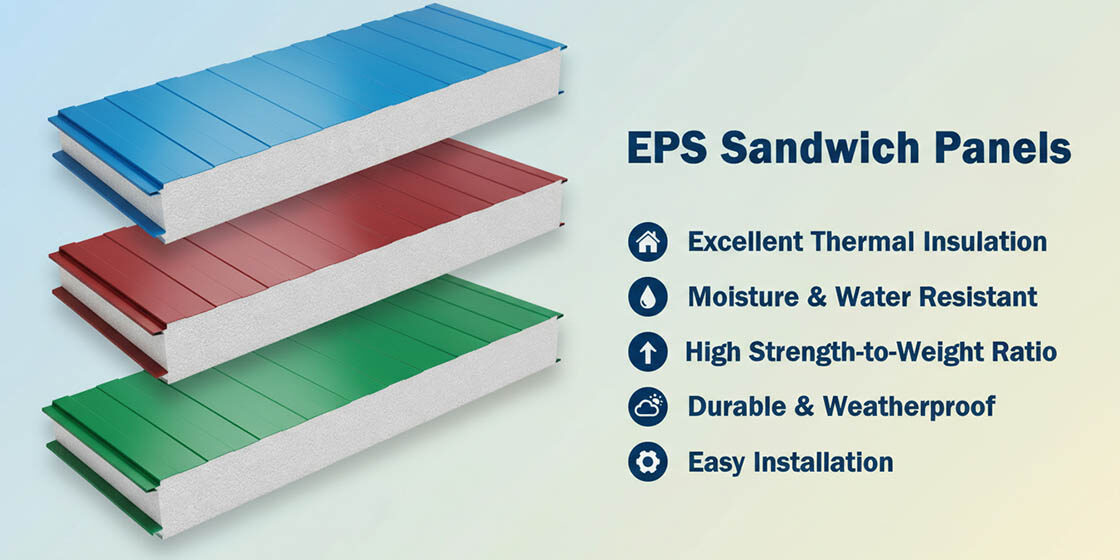
When you’re specifying an EPS sandwich panel for a cold storage warehouse or clean room, fire resistance, moisture protection, and long-term durability aren’t nice-to-have features — they’re the difference between passing inspection and tearing out walls two years early. Too many procurement officers learn this the hard way after a panel fails a fire test or shows hidden moisture damage behind seemingly sound cladding. At RaxPanel, we’ve reviewed test reports from dozens of projects across Europe and the Middle East, and the gap between what suppliers claim and what independent labs verify is wider than most buyers expect.
A typical EPS core sits at 8kg/m³ density, but that single number tells you nothing about whether the fire retardant additives are properly distributed or whether the panel will hold its Euroclass B s1 d0 rating under real fire conditions. We break down exactly how fire resistance ratings differ from reaction-to-fire classifications, what documentation you need to request before signing a purchase order, and how moisture migrates through EPS bead structures in cold storage environments where condensation shifts the dew point inside the panel cavity.
By the end, you’ll know which test certificates to demand, how to verify density and facing thickness against what’s actually delivered, and when an EPS core makes sense versus when PU, PIR, or rock wool is the safer call for your project’s fire code and lifecycle cost targets.
Fire Ratings vs. Reaction Classes: What’s the Difference?
Fire resistance tells you how long a panel survives a fire. Reaction class tells you how much the panel feeds the fire. They measure completely different things, and confusing them is the #1 specification error in EPS panel procurement.
Fire Resistance Ratings vs. Reaction-to-Fire Classifications
These two concepts live in different corners of fire safety engineering, yet they get used interchangeably in supplier conversations — and that creates real risk. Fire resistance (the “R” rating) is a performance duration metric. It answers: how many minutes can this assembly maintain structural integrity and compartmentation when exposed to a standard fire curve? Reaction to fire is a classification of the material’s inherent behavior. It answers: when this panel ignites, how aggressively does it contribute flame spread, heat release, and smoke production?
The confusion matters because building codes reference both systems differently depending on jurisdiction. A specifier in the EU will see Euroclass labels on product data sheets. A specifier in North America may encounter ASTM E84 surface burning characteristics or UL classifications. Meanwhile, the same EPS panel might carry a 60-minute fire resistance rating from one lab and an EN 13501-1 Euroclass B-s1-d0 from another. Both are valid. Neither describes the same property.
Fire resistance is assembly-dependent. It changes with facing material, panel thickness, and mounting configuration. A 100mm EPS panel with steel facings behaves differently in a fire than a 100mm EPS panel with aluminum facings, even though the core material is identical. Reaction class is more intrinsic to the core formulation, but still influenced by facing materials and any flame retardant additives in the EPS bead.
Understanding Euroclass and ASTM Fire Test Standards for EPS
The Euroclass system under EN 13501-1 dominates European and many international specifications. It classifies materials from A1 (non-combustible) through F (no performance rated). EPS with appropriate flame retardants typically achieves B or C class, with s1/d0 modifiers indicating smoke production and flaming droplet behavior. The s1 designation means low smoke development. The d0 means no flaming droplets or particles during testing. These modifiers matter as much as the base class when evaluating panel performance in occupied spaces.
The Single Burning Item (SBI) test under EN 13823 is the primary reaction-to-fire method for wall and ceiling products in the Euroclass system. It uses a controlled flame exposure on a full-scale panel assembly mounted in a corner configuration. The test measures heat release, smoke production, and flame spread over a defined duration. Results feed directly into the Euroclass assignment. However, repeatability challenges exist at intermediate scales, which is why full-scale validation remains critical for specification certainty.
ASTM standards take a different path. ASTM E84 (Steiner Tunnel Test) measures surface burning characteristics and produces a Flame Spread Index and Smoke Developed Index rather than a class label. These numerical outputs get mapped to classifications by model codes, but the testing geometry and exposure differ significantly from SBI. A panel that performs well under ASTM E84 does not automatically translate to an equivalent Euroclass without cross-referencing test data from the appropriate standard.
Fire resistance testing follows EN 13501-2 or EN 13381 series methods. These use time-temperature curves that simulate developing compartment fires. The panel assembly is exposed to elevated temperatures while structural performance, integrity, and insulation criteria are monitored. The duration the panel satisfies all three criteria becomes its fire resistance rating. This is why facing material and panel thickness determine the rating more than core composition alone.
How Fire Retardant Additives Influence EPS Panel Classification
Virgin EPS is inherently combustible. Without treatment, it would struggle to meet even the lowest Euroclass thresholds. Flame retardant additives — typically brominated or phosphorus-based compounds integrated during bead production — shift the combustion behavior sufficiently to achieve B or C class ratings. The additive concentration and dispersion quality directly affect both reaction class and long-term stability under thermal cycling.
The mechanism works through radical interception in the gas phase. When EPS begins to pyrolyze under heat, flame retardants release species that interrupt the chain reactions sustaining combustion. This delays ignition, reduces flame spread rate, and lowers peak heat release. The effect is most visible in SBI testing where the corner flame exposure simulates realistic fire growth conditions.
However, flame retardant performance is not static. Thermal aging, UV exposure during storage, and repeated temperature cycling can degrade additive efficacy over time. Panels installed in applications with significant thermal fluctuation — cold storage facilities, industrial buildings with heating cycles — should be evaluated for long-term retention of fire performance characteristics. Manufacturer documentation should include aging study data, not just initial test results.
The facing material also interacts with flame retardant performance. Metal facings provide physical barrier protection that complements the core’s chemical treatment. Intumescent coatings on facings can further enhance fire resistance ratings by expanding under heat to insulate the core. When evaluating classification claims, verify that the tested assembly matches the supplied configuration — core formulation and facing type must both align with the reported ratings.
Interpreting Fire Test Reports for Regulatory Approval
A fire test report is not a simple pass-or-fail document. It contains configuration details, testing conditions, and performance thresholds that determine whether the results apply to your specific installation. The first thing to verify is that the tested panel matches your specification: core density, facing material and gauge, panel thickness, and joint configuration. Deviations from the tested assembly may require additional validation or reduce the assigned rating.
Check the testing laboratory accreditation. Reports from ISO 17025 accredited laboratories carry more weight with building control authorities. The standard reference should be clearly stated — EN 13501-1 for Euroclass, EN 13501-2 for fire resistance, ASTM E84 for surface burning characteristics. If the report references multiple standards, confirm which classification applies to your jurisdiction’s requirements.
Fire resistance ratings include an assembly designation. A 60-minute rating for a specific panel with particular fastener spacing and joint treatment does not automatically apply to the same panel installed differently. The test report should specify mounting conditions, support arrangements, and any joint sealing methods used during testing. Installation practices that deviate from these conditions may compromise the achieved rating.
Reaction class assignments include modifiers that carry equal weight to the base class. Euroclass B-s1-d0 is not equivalent to Euroclass B without the smoke and droplet designators. The s1 classification indicates limited smoke production, critical for occupied buildings where visibility during evacuation matters. The d0 classification means no flaming droplets, reducing fire spread risk to areas below the installed panel. Both modifiers should appear in your specification requirements.
Table data unavailable.
Regulatory compliance is the primary mechanism for liability transfer in construction. Failure to validate specific regional codes and active test certifications exposes the entire supply chain to severe legal and financial risks.
Key International Standards Governing EPS Sandwich Panel Safety
For B2B buyers, understanding the hierarchy of standards is essential to ensure product suitability. The safety envelope of EPS sandwich panels is defined by structural integrity, thermal performance, and fire behavior standards. The most critical standard governing self-supporting double-skin metal faced sandwich panels is EN 14509. This European standard has been widely adopted globally outside of North America and specifies requirements for both the factory production control (FPC) and the physical properties of the panels, including tensile strength and shear modulus.
Regarding the core material, specifications such as EN 1602 (for density) and EN 13163 (for thermal insulation products made of expanded polystyrene) establish the baseline quality of the EPS foam itself. These standards dictate the acceptable deviation in dimensions and thermal conductivity. Additionally, fire safety is frequently governed by the classification system in EN 13501-1, which determines the reaction-to-fire performance. In North America, projects often reference ASTM C578 for EPS material specifications and multiple ASTM E84 or UL standards for surface burning characteristics.
Regional Compliance Requirements for Building and Transport Applications
Compliance is rarely a global constant; it is hyper-localized to the jurisdiction of installation. In the European Union, the Construction Products Regulation (CPR) mandates that panels carry a CE mark, accompanied by a Declaration of Performance (DoP). This legal document confirms that the product meets the Essential Requirements for mechanical resistance and stability, safety in case of fire, and energy economy. Non-compliance with CPR is a strict liability offense that can halt customs clearance immediately.
In North America, compliance is driven by model building codes such as the International Building Code (IBC) and the International Fire Code (IFC). These codes dictate the allowable height and area of buildings based on the panel’s fire rating. additionally, for industrial and commercial projects, approval from FM Global or UL is often required by insurance underwriters, focusing heavily on fire propagation and collapse risk.
For transport applications—specifically cold chain logistics and modular containers—compliance shifts toward CSC (Convention for Safe Containers) standards and ATA (Admission Temporaire) regulations for Carnets. Transport applications demand higher shear strength and impact resistance standards compared to static cladding, often requiring testing specific to dynamic loads and vibration fatigue.
Documentation Required to Demonstrate EPS Panel Regulatory Conformity
Verbal assurances of compliance hold no weight in disputes. Buyers must demand a specific documentation package that traces the product from raw material to final installation. This package forms the basis of technical due diligence.
- Declaration of Performance (DoP): A mandatory document under EU CPR (or equivalent in other regions) legally binding the manufacturer to the stated performance values (thermal conductivity, fire class, load bearing capacity).
- Test Reports from Accredited Labs: Reports must be issued by a third-party laboratory (e.g., ISO 17025 accredited). Ensure the reports list the exact thickness, density, and facing configuration being purchased, not just a generic “family” of products.
- Factory Production Control (FPC) Certificate: Evidence that the manufacturer undergoes regular audits to ensure consistent production quality. Without a valid FPC, individual test certificates lose their validity over time.
- Fire Classification Certificates: Specific documents detailing the Euroclass (e.g., B-s1,d0) or ASTM/UL rating. These must be current, as fire retardant formulations can change, and standards are updated periodically.
Common Compliance Pitfalls in EPS Panel Procurement
The most frequent failure point in B2B procurement is the “certificate mismatch.” Suppliers often provide a test certificate for a panel with a thicker core or higher density than the one actually shipped. Since thermal and fire performance degrade with lower density and thickness, relying on a certificate for a superior specification is a critical compliance failure. Buyers must cross-reference the density value on the physical packaging label against the density value in the submitted test report.
Assuming that “Fire Retardant” (FR) grade EPS automatically meets all building codes. Many regions now restrict or ban Flame Retardant additives containing HBCD (Hexabromocyclododecane). If the EPS core utilizes legacy additives, it may be non-compliant with environmental regulations like REACH in Europe, rendering the panels illegal to import or install regardless of their fire test results.
Another common oversight is ignoring the distinction between “reaction to fire” and “fire resistance.” A panel might achieve a Euroclass B rating (reaction to fire) but provide zero minutes of fire resistance (integrity and insulation). For compartmentalization and structural walls, fire resistance (EI ratings) is often the code requirement, and buying a panel based solely on a good reaction-to-fire rating can result in a failed building inspection.
How Much Moisture Can EPS Absorb — and How to Stop It
While EPS is hydrophobic at the cellular level, the bead structure creates capillary pathways. In high-humidity cold storage, absorption can reach 4-8% by volume, reducing R-value by 0.5% per 1% moisture content.
The Mechanism of Moisture Infiltration in EPS Cores
A common misconception in the industry is that Expanded Polystyrene (EPS) is waterproof due to its closed-cell nature. While the individual polymer beads are hydrophobic, the macroscopic structure of molded EPS contains microscopic interstitial voids between the fused beads. In high-humidity environments—specifically cold storage warehouses where temperature differentials drive vapor pressure—these voids act as capillary tubes, allowing moisture migration via diffusion and air leakage.
Field data indicates that without perfect vapor barriers, EPS sandwich panels in aggressive environments can exhibit water absorption rates of 4–8% by volume within 3 to 5 years of service. This saturation does not usually occur evenly; it often concentrates at panel joints, edges, and areas where the facing has been compromised, leading to localized “wet spots” that are difficult to detect without thermal imaging.
Thermal Performance Degradation: The R-Value Cost
The primary economic penalty of moisture ingress is the rapid degradation of thermal resistance. Water has a thermal conductivity roughly 25 times higher than air (0.6 W/m·K vs. 0.024 W/m·K). As air pockets within the EPS bead structure are displaced by water, the insulation value collapses.
Industry studies and field tests correlate a linear regression in performance loss: approximately a 0.5% reduction in R-value for every 1% increase in moisture content by volume. Therefore, a panel saturated at 6% moisture by volume has lost nearly 3% of its insulating capability. For cold storage facilities operating on thin margins, this translates directly into higher compressor run-times and increased energy expenditure that can negate the initial material savings of choosing EPS over more moisture-resistant cores.
Relying solely on the EPS core density for water resistance is insufficient. A high-density EPS core slows absorption but does not eliminate the capillary action between beads.
Prevention Strategies: Facings and Seals
Stopping moisture ingress requires a systemic approach focusing on the “envelope” rather than just the core material. The facings (skins) and the joining systems are the primary defense against vapor drive.
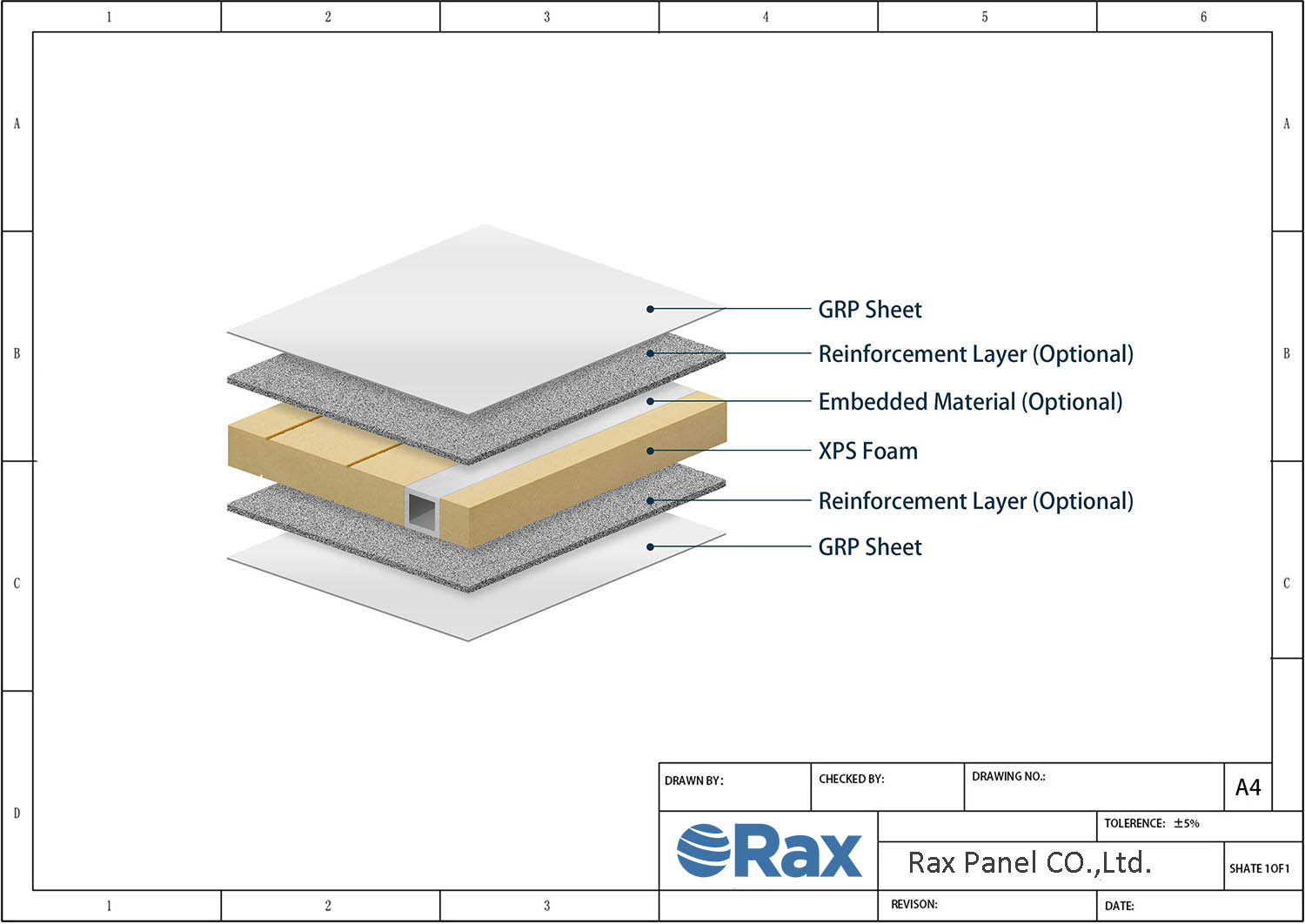
- Continuous Facings: The integrity of the outer skin—whether Steel, Aluminum, or GRP (Glass Reinforced Plastic)—is paramount. GRP facings, often used in corrosive environments, must be manufactured with consistent resin thickness to prevent micro-cracking that admits vapor.
- Edge Sealing: The cut edges of panels are the most vulnerable point. During installation, applying a high-quality, compatible sealant to the tongue-and-groove joints or cam-lock mechanisms is critical to block the direct pathway humidity uses to enter the core.
- Vapor Barriers: In high-humidity cold storage, a dedicated vapor barrier membrane on the warm side of the assembly is often mandated by building codes to protect the EPS core from the continuous vapor pressure differential.
When specifying panels for refrigerated truck bodies or cold storage, verify the lamination process. Continuous lamination lines (common in advanced manufacturing) typically provide superior facing adhesion compared to discontinuous processes, significantly reducing the risk of delamination and subsequent water wicking between the skin and the foam.
How EPS Holds Up Against Aging and Harsh Conditions
EPS sandwich panels, when properly specified with UV-protective facings and adequate density, maintain structural integrity and thermal performance for 15–30 years depending on environmental exposure.
Thermal Cycling and Long-Term Structural Stability
One of the most overlooked stressors on sandwich panels is repeated thermal cycling — the expansion and contraction that occurs as ambient temperatures swing between day and night, or across seasons. EPS foam is inherently stable under these conditions because its closed-cell structure does not absorb moisture, meaning there is minimal risk of freeze-thaw damage within the core itself.
The real concern lies in the bond between the EPS core and the outer facings. Over decades of thermal cycling, differential expansion rates between the metal facing and the foam core can induce subtle stress at the interface. High-quality panels from established manufacturers use adhesives and manufacturing processes engineered to minimize delamination risk, but buyers should verify that the panel supplier has documented long-term bond integrity testing rather than relying solely on initial shear strength values.
In industrial buildings with relatively stable environmental conditions and proper maintenance, well-manufactured EPS sandwich panels can last up to 30 years. On the other hand, in harsh coastal environments or areas with extreme weather conditions, the service life may be closer to 15 years or even less if the panels are not properly maintained.
UV Exposure and Surface Degradation
EPS foam itself is vulnerable to ultraviolet radiation — prolonged direct exposure will cause the foam to break down, become brittle, and lose structural integrity. This is why EPS sandwich panels are never left exposed; the metal or composite facing acts as the primary UV barrier.
However, UV degradation of the facing material is a separate and equally important consideration. Exposed to direct sunlight in desert climates, some facing materials degrade over time — fading, chalking, or losing mechanical strength. With proper UV-protective coatings and high-quality painted or coated metal facings, EPS sandwich panels retain their structural integrity and appearance despite prolonged sun exposure. Buyers in high-UV regions should specify facings with proven UV resistance, such as pre-painted galvanized steel with a PVDF or polyester coating system rated for the local solar intensity.
- Standard painted steel facings: Adequate for temperate climates with moderate UV exposure
- PVDF-coated facings: Recommended for high-UV environments such as desert or tropical regions, offering significantly better color retention and surface integrity over 20+ years
- Uncoated or damaged facings: Any breach in the facing that exposes EPS to direct sunlight creates a degradation pathway that accelerates panel failure
Lifespan Degradation Curves by Environment
Understanding how EPS panels age requires looking at degradation curves rather than a single lifespan number. The rate at which a panel deteriorates depends heavily on three environmental variables: UV intensity, temperature extremes, and atmospheric corrosivity (salt spray in coastal zones, industrial pollutants, etc.).
In controlled indoor or temperate outdoor environments, the degradation curve is relatively flat — performance remains stable for decades with minimal change in thermal resistance or compressive strength. In harsher conditions, the curve steepens, particularly in the first 5–10 years, as UV and thermal stress begin to affect the facing materials. The EPS core itself remains largely unaffected as long as it stays sealed and dry.
The 15–30 year lifespan range commonly cited in the industry reflects this environmental dependency. A panel installed in a mild climate with a high-quality UV-resistant facing can reasonably be expected to reach the upper end of that range. The same panel installed in a corrosive coastal environment with standard facings may see meaningful performance decline well before the 15-year mark.
Chemical and Atmospheric Resistance
EPS is chemically inert to most common atmospheric contaminants, including mild acids, alkalis, and salts. This makes it inherently resistant to the kind of chemical degradation that affects some other insulation materials. However, the metal facings — particularly steel — are susceptible to corrosion in aggressive atmospheres.
In industrial settings with chemical exposure or near-coastal installations with salt spray, the corrosion rate of steel facings becomes the primary durability concern. Aluminum facings offer naturally superior corrosion resistance and are a preferred choice in these environments, though at a higher material cost. Buyers should match the facing material and coating system to the specific atmospheric challenges of the project location.
Practical Longevity Indicators for Buyers
When evaluating EPS sandwich panels for long-term durability, the following indicators provide a more reliable assessment than manufacturer marketing claims alone:
- Core density specification: Higher density EPS (typically 18–22 kg/m³ for sandwich panels) provides better compressive strength retention over time compared to lower-density variants
- Facing coating system: Verify the type and thickness of the protective coating — PVDF coatings outperform standard polyester in UV and chemical resistance
- Bond integrity testing: Request documentation of long-term bond shear strength testing, not just initial values
- Environmental rating: Reputable suppliers will rate panels for specific environmental classes (e.g., C2, C3, C4 per ISO 12944 for corrosion protection)
- Installed project references: Ask for references from projects installed in environments similar to your own, particularly those exceeding 10 years of service
Cold Storage Risks: Condensation, Mold, and Fire Safety
Cold storage facilities face three interrelated risks: condensation shifting the dew point into panel cavities, mold proliferation in trapped moisture, and fire performance at sub-zero temperatures. Proper panel selection and installation details determine whether these risks remain theoretical or become operational failures.
Condensation and the Dew Point Problem
Condensation inside insulated panel systems occurs when warm, moisture-laden air contacts a surface below the dew point temperature. In cold storage environments, this risk is amplified because the temperature gradient across the panel is extreme—interior surfaces may sit at -25°C while exterior ambient conditions reach 35°C with high humidity. If the dew point migrates into the core or between the facing and core layers, liquid water forms where it cannot evaporate.
EPS sandwich panels mitigate this risk through their closed-cell structure. Expanded polystyrene cores with densities between 18–22 kg/m³ exhibit water absorption rates below 1.0% by volume, significantly limiting moisture ingress through the insulation itself. However, the facing material and joint design matter equally. Pre-painted galvanized steel facings with intact coating systems prevent vapor transmission at the panel surface, while improper joint sealing creates pathways for humid air to reach cold surfaces.
The critical failure mode is not the panel core absorbing water but condensation forming at the interface between layers due to thermal bridging or inadequate vapor barriers. Panels rated for cold storage must maintain their thermal performance across the operating temperature range of -30°C to +10°C without structural degradation or delamination.
Mold Prevention in Insulated Panel Systems
Mold requires three conditions to proliferate: moisture, organic food sources, and suitable temperatures between 5°C and 35°C. EPS foam itself is inorganic and does not support mold growth as a food source. However, when condensation persists on or within panel cavities, dust, spores, and organic debris from the construction environment accumulate on damp surfaces, creating conditions favorable to mold colonization.
In cold storage applications, the risk is highest during temperature transitions—such as defrost cycles or door openings—when surface temperatures temporarily rise above the dew point and then drop again, cycling moisture conditions. Panels installed without adequate ventilation gaps behind the facing or with compromised seals allow humid air to become trapped, creating micro-environments where mold can establish regardless of core material properties.
- Panel thickness selection: Thicker EPS panels (100mm to 200mm) reduce the likelihood of the dew point falling within the core, keeping condensation surfaces on the exterior side where ventilation can manage moisture.
- Joint sealing integrity: Tongue-and-groove or shiplap joints with compressible gaskets prevent humid air infiltration at panel connections, which are the most common failure points for moisture entrapment.
- Maintaining an unbroken vapor barrier on the warm-in-winter side of the assembly is critical to preventing interstitial condensation in cold storage environments. Vapor barrier continuity: To meet this requirement specified in cold storage construction standards, tongue-and-groove or shiplap joints with compressible gaskets must be effectively sealed. Since these panel connections are the most common failure points for moisture entrapment, proper sealing is essential to prevent humid air infiltration and maintain the integrity of the vapor barrier.
Specifying standard architectural EPS panels for cold storage without verifying low-temperature performance ratings is a common procurement error. Panels not rated for sub-zero operation may experience reduced thermal resistance and increased moisture permeability over time, accelerating condensation risk.
Fire Safety in Cold Storage Environments
Fire safety in cold storage presents unique challenges because the insulation core must maintain flame resistance while operating in conditions where condensation and temperature fluctuations are constant. EPS panels for cold storage applications are manufactured with fire-retardant additives that achieve Euroclass B-s1-d0 or equivalent ASTM classifications, limiting flame spread and reducing heat release rates compared to non-treated variants.
The fire performance of EPS sandwich panels depends on multiple factors beyond core treatment. Panel thickness influences burn-through time—100mm EPS panels demonstrate longer structural integrity under fire exposure than 50mm variants. The steel facing thickness and coating quality also affect how quickly flames penetrate to the core. Pre-painted galvanized steel facings provide a physical barrier that delays core exposure, while inadequate facing gauge allows rapid thermal transfer to the insulation.
Cold storage facilities often house refrigeration machinery, electrical systems, and high-value inventory, making fire classification a regulatory and insurance requirement. Building codes in most jurisdictions mandate specific fire ratings for cold storage construction, and panels must be tested as complete assemblies—not just core material—to demonstrate compliance. Test reports from accredited laboratories covering full panel construction, including joints and fixings, are the standard evidence for regulatory approval.
- Fire-retardant EPS core: Brominated or phosphorus-based flame retardants reduce flammability and self-extinguish when ignition sources are removed, a requirement for cold storage panel certification.
- Assembly-level testing: Fire ratings apply to the complete panel system including facings, core, and joint details. Standalone core test results do not satisfy building code requirements for installed assemblies.
- Low-temperature fire performance: Fire retardant effectiveness must be validated at operating temperatures. Some additives lose efficacy below -20°C, making temperature-specific testing essential for deep-freeze applications.
Panel Specifications for Cold Storage Applications
EPS sandwich panels designed for cold storage typically range from 50mm to 200mm in thickness, with thermal conductivity values between 0.033 and 0.038 W/(m·K) depending on core density. The facing system commonly uses 0.4mm to 0.75mm pre-painted galvanized steel on both sides, providing structural rigidity and moisture resistance. Panel widths are standardized at 1,000mm or 1,200mm to optimize coverage while maintaining handling feasibility on construction sites.
For refrigerated transport applications, lighter panel configurations with aluminum or thinner steel facings reduce vehicle payload while maintaining thermal performance. The same condensation and fire safety principles apply, but weight constraints drive different facing and core density selections compared to permanent cold storage buildings.
When evaluating cold storage panels, request test certificates that specify performance at the intended operating temperature range. A panel rated for ambient conditions may not perform identically at -25°C, particularly regarding fire retardant effectiveness and facing material brittleness.
EPS vs. Other Insulation Cores: A Side-by-Side Look
Selecting the correct core requires balancing fire safety against cost and insulation thickness. EPS remains the most cost-effective solution for general warehousing, while PIR and Rock Wool are strictly necessary for high-fire-risk zones or ultra-low temperature environments.
Fire Performance Comparison Across Foam Core Materials
When evaluating fire safety, the chemical composition of the core dictates the reaction to flame. Expanded Polystyrene (EPS) is a thermoplastic, meaning it will soften and melt when exposed to high heat, potentially contributing to fuel load if not treated with effective flame retardants. In contrast, Polyisocyanurate (PIR) and Polyurethane (PU) are thermosets; they tend to char rather than melt, forming a carbonaceous layer that can slow down fire spread. Rock Wool, being inorganic, is non-combustible and offers the highest level of protection but at a significant weight and cost penalty.
The industry standard for reaction-to-fire varies significantly by material class. While Rock Wool naturally achieves Euroclass A1, foam cores require chemical modification to reach acceptable ratings. At Rax Panel, we engineer our EPS cores with specific fire-retardant additives to meet rigorous Euroclass B-s1-d0 / C-s2-d0 standards. This ensures that even in budget-sensitive projects, the EPS panels do not contribute significantly to flame propagation and produce very limited smoke, addressing a critical safety concern for wholesalers supplying to commercial building codes.
Moisture Resistance and Water Absorption Rates by Core Type
Moisture ingress is the silent killer of thermal efficiency in sandwich panels. The structure of EPS consists of fused closed-cell beads, but the gaps between these beads can potentially allow moisture to migrate if the facings are compromised. PU and PIR cores boast a fully continuous closed-cell structure, which theoretically offers superior resistance to water vapor penetration. XPS (Extruded Polystyrene) also offers a tight cell structure but can be prone to long-term moisture retention if exposed to standing water.
However, the manufacturing process determines the real-world performance. We maintain strict quality controls to ensure our EPS panels achieve moisture absorption rates of ≤2%. This low absorption threshold is critical for cold storage logistics and warehouse applications where high humidity is constant. While PIR may have a marginal advantage in continuous water exposure, our EPS formulation provides sufficient resistance to prevent the sagging and rotting often seen in lower-grade foam boards, ensuring the panel retains its structural dimensions over decades of use.
Thermal Insulation Efficiency: EPS Versus Alternative Foam Cores
Insulation efficiency is dictated by the material’s thermal conductivity, often determining the required panel thickness for a specific R-value. PIR and PU cores generally lead the market in insulation efficiency, allowing for thinner wall sections while maintaining high thermal resistance. This makes them ideal for refrigerated transport and freezers where maximizing internal volume is paramount. XPS follows closely, offering better insulation per inch than standard EPS but typically at a higher material cost.
EPS requires a greater thickness to match the thermal resistance of PIR, yet it remains the dominant choice for general warehousing and dry freight for economic reasons. The “cost-per-R-value” of EPS is often unbeatable. In our R&D facility, we optimize the density and bead fusion of our EPS cores to stabilize its thermal profile. While it may not match the extreme low-temperature retention of PIR, it provides consistent, reliable performance for standard climate-controlled environments without the premium price tag associated with high-performance polyurethanes.
Structural Integrity and Long-Term Durability by Core Material
Durability goes beyond just insulation; it involves the core’s ability to withstand compressive loads and dimensional stability over time. EPS exhibits excellent dimensional stability and does not suffer from the “creep” or shrinkage issues that can occasionally plague PU foams over very long periods, especially in varying temperature cycles. Rock Wool offers high compressive strength but is brittle and can settle if vibrated, making it less ideal for transport applications like truck bodies.
For long-term building envelopes, the rigidity of EPS is a significant asset. We design our EPS sandwich panels with a service lifespan targeting 40-60 years. The consistency of the EPS foam core ensures that the bond with the metal or GRP facings remains secure, preventing delamination—a common failure point in composite panels. By strictly adhering to premium raw material standards, our panels resist the brittleness found in lower-density alternatives, providing a robust solution for industrial equipment and structural wall claddings that must endure mechanical stress.
| Core | Thermal Conductivity | Fire Rating | Moisture Absorption | Best For |
|---|---|---|---|---|
| EPS | 0.033–0.038 W/(m·K) | Euroclass B-s1-d0 / C-s2-d0 (up to 120 min) | ≤2% | Budget projects, general warehouses, cold storage, container houses |
| PU | 0.022–0.026 W/(m·K) | Euroclass B/C | Low | Space-limited builds, freezers, temperature stability |
| PIR | 0.021–0.024 W/(m·K) | Euroclass B-s1-d0 | Low | Strict fire regulations, high-performance insulation |
| Rock Wool | 0.035–0.040 W/(m·K) | Euroclass A1 (non-combustible) | Moderate | Fire-critical applications, acoustic insulation |
| XPS | 0.030–0.035 W/(m·K) | Euroclass B/C | Low | Specialized insulation, ground floors, roofs |

What Buyers Need to Verify Before Purchasing EPS Panels
Essential Test Certificates and Documentation to Request
Before releasing any funds, demand documentation that proves the panel system was tested as a complete assembly, not just as individual raw materials. A common error in procurement is accepting generic “raw material” safety data sheets (SDS) instead of specific “system” performance certificates. You must verify that the specific grade of EPS foam and the specific facing material (e.g., GRP, Steel, Aluminum) were tested together in a laboratory setting.
- Declaration of Performance (DoP) and Reaction to Fire Classification Report: The Declaration of Performance (DoP) is a mandatory document for any construction product placed on the EEA market under the Construction Products Regulation (CPR). It confirms the product meets declared performance levels. Additionally, ensure the Reaction to Fire Classification Report follows EN 13501-1 (Europe) or ASTM E84 (USA). The report must list the exact thickness and density of the panel tested.
- Reaction to Fire Classification Report: Ensure this follows EN 13501-1 (Europe) or ASTM E84 (USA). The report must list the exact thickness and density of the panel tested.
- Thermal Conductivity Certification: Request lab data verifying the Lambda (λ) value. We provide third-party verification for our panels, ensuring the thermal conductivity remains stable at 0.033–0.038 W/(m·K).
- Core Material Origin & Certificates: Verify the EPS bead source. High-quality panels use beads with consistent expansion rates.
Never rely solely on a manufacturer’s “self-declaration” of fire safety. Independent, third-party lab reports are the only acceptable currency for high-stakes B2B procurement.
Verifying EPS Density, Facing Thickness, and Core Specifications
The physical robustness of an EPS sandwich panel relies heavily on the density of the core and the gauge of the facings. Low-density EPS may offer a cheaper upfront price, but it sacrifices compressive strength and thermal stability over time. When reviewing specs, do not accept vague ranges like “Standard Density.” Demand the specific number in kg/m³.
- EPS Core Density: EPS core density is a non-negotiable specification that directly governs compressive strength and long-term load-bearing performance. Construction-grade EPS core density should be 18–22 kg/m³, where lower density reduces structural load without sacrificing R-value. For cold storage or industrial flooring, density typically needs to be higher to resist loads. Verify the nominal density and confirm that the EPS bead source provides consistent expansion rates, as this affects density uniformity throughout the panel. Check if the supplier guarantees density consistency throughout the panel, not just at the surface.
- Facing Thickness Tolerance: Request the millimeter tolerance for the metal or GRP skins. A deviation of even 0.05mm can impact the panel’s screw-holding capacity and wind load resistance.
- Moisture Absorption Data: Ask for specific water absorption test results (e.g., by volume). High absorption leads to rot and thermal loss. Our manufacturing protocols enforce a moisture absorption rate of ≤2% to ensure long-term durability.
- Adhesion Strength: Request the peel strength test results (e.g., N/mm). This measures the bond between the foam and the facing; poor adhesion causes delamination during transport or thermal cycling.
Validating Fire Rating Claims Through Independent Laboratory Reports
Fire safety is the most critical technical gatekeeper in procurement. Suppliers often conflate “fire resistance” (how long a wall stands up) with “reaction to fire” (how the material contributes to flame spread). You must validate claims specifically against the Euroclass system (Class B to Class F). Watch out for suppliers claiming “Class B” based on additives that degrade over time; the fire retardancy must be inherent and tested.
- Check for Euroclass B-s1-d0 or C-s2-d0: These indicate limited combustibility, low smoke production, and no flaming droplets. We maintain strict compliance with B-s1-d0 / C-s2-d0 ratings, a standard that many low-cost competitors fail to meet consistently.
- Verify the “Integrity” and “Insulation” Duration: For applications like firewalls, request the EI rating (e.g., EI 60, EI 120). Our panels can achieve up to 120 minutes of fire resistance, but this performance depends entirely on the specific facing configuration used.
- Laboratory Accreditation: Any test report lacking ISO/IEC 17025 accreditation from an independent laboratory carries no weight in regulatory audits or compliance reviews. Reports from internal or non-accredited labs carry no weight in regulatory audits. Verify the “Integrity” and “Insulation” Duration: For applications like firewalls, request the EI rating (e.g., EI 60, EI 120). Our panels can achieve up to 120 minutes of fire resistance, but this performance depends entirely on the specific facing configuration used.
Assessing Manufacturer Quality Control and Production Consistency
A certificate is only as good as the batch consistency behind it. In B2B manufacturing, volume production often leads to “batch drift” where quality varies between the first shift on Monday and the last shift on Friday. You need to probe the supplier’s ability to maintain ISO 9001 standards in reality, not just on paper.
- Production Line Automation: Ask if the foaming and lamination process is continuous and automated or manual. Automated lines (like our facility exceeding 1,700 square meters daily capacity) ensure uniform density and adhesive spread.
- In-House Lab Testing: Does the manufacturer test every batch? Our team conducts experimental testing on every production run to verify core integrity before panels leave the factory floor.
- Raw Material Traceability: Request evidence of traceability. Can they identify which resin batch was used in a specific panel shipment six months later?
- Service & Response Speed: Quality control extends to post-sales support. A manufacturer that offers 24-hour one-to-one service is typically better equipped to handle immediate quality inquiries than a distant trading company.
Conclusion
You now know the hard truth about EPS sandwich panels: fire performance and moisture resistance aren’t vague marketing claims — they’re measurable, verifiable, and absolutely critical to your project’s longevity. Euroclass B s1 d0 isn’t a suggestion. It’s a requirement in most cold storage and commercial builds, and every panel you specify should carry independent lab reports to prove it. We’ve spent over a decade engineering EPS sandwich panels, and our technical team regularly helps buyers validate fire ratings, review moisture absorption data, and confirm compliance before orders ship.
- Request full Euroclass fire test reports from accredited laboratories before committing to a supplier.
- Verify water absorption rates are under 1.0% by volume for cold storage applications.
- Ask our engineering team any early-stage design or specification questions — no purchase required.
Frequently Asked Questions
Can hot work be done on-site?
Working with open flames or sparks near exposed EPS core is strictly prohibited due to flammability risks. All hot works must be completed before panel installation or performed with strict spark containment and fire watch protocols. Manufacturers often recommend mechanical cutting tools to ensure safety on-site.
How do I repair damaged panels?
Minor cuts to the facing material should be sealed immediately with compatible waterproof tape or sealant to prevent moisture ingress. For significant damage that exposes the core, replacing the entire panel is the only way to restore structural and fire integrity. Always consult the manufacturer’s technical guide for approved repair methods specific to your panel system.
Are EPS panels environmentally friendly?
While EPS is a petroleum-based plastic, it is fully recyclable and can be reprocessed into new insulation products or plastic lumber. Its outstanding thermal insulation significantly reduces operational energy consumption and carbon emissions over the building’s lifespan. Leading manufacturers like Rax Panel are increasingly incorporating sustainable practices to minimize the environmental footprint of production.
Are EPS panels suitable for pools?
Yes, when equipped with appropriate facings like Glass Fiber Reinforced Plastic (GRP), EPS panels resist high humidity and chlorine corrosion effectively. The closed-cell structure prevents water absorption that would otherwise lead to swelling or mold growth in pool enclosures. These panels provide a durable, thermally efficient solution for maintaining comfortable temperatures in high-humidity recreational facilities.
Do fasteners compromise thermal efficiency?
Yes, metal fasteners can create thermal bridges that bypass insulation, slightly reducing the overall thermal efficiency of the system. To minimize this loss, use thermally broken fasteners or ensure the fastener density aligns with engineering calculations. Proper detailing around penetrations is essential to maintain the panel’s intended R-value and prevent condensation.
Is long-term thermal performance stable?
Unlike gas-filled foams that experience thermal drift as blowing gases escape, EPS is filled with air and maintains stable thermal conductivity over its lifetime. This means its R-value remains consistent for decades without degradation, provided the panel stays dry. This stability makes EPS a reliable choice for projects requiring guaranteed long-term energy efficiency.