
Choosing an insulation core based solely on the purchase order price is a mistake that haunts project managers for years. At RaxPanel, we see procurement teams frequently assume expanded polystyrene and a polyurethane panel are functionally interchangeable, but the divergence in fire performance and thermal stability makes them entirely different assets for a commercial facility.
While polystyrene relies on trapped air within its bead structure, a polyurethane panel utilizes a closed-cell foam with a density of approximately 40 kg/m³ to achieve superior thermal resistance. We examine the cost-per-unit-performance data to expose why “upfront savings” often result in operational losses, and we compare fire safety specifications to ensure your project passes code inspections. Understanding these technical distinctions protects your long-term investment and ensures the facility performs as specified.
Why Your Material Choice Matters
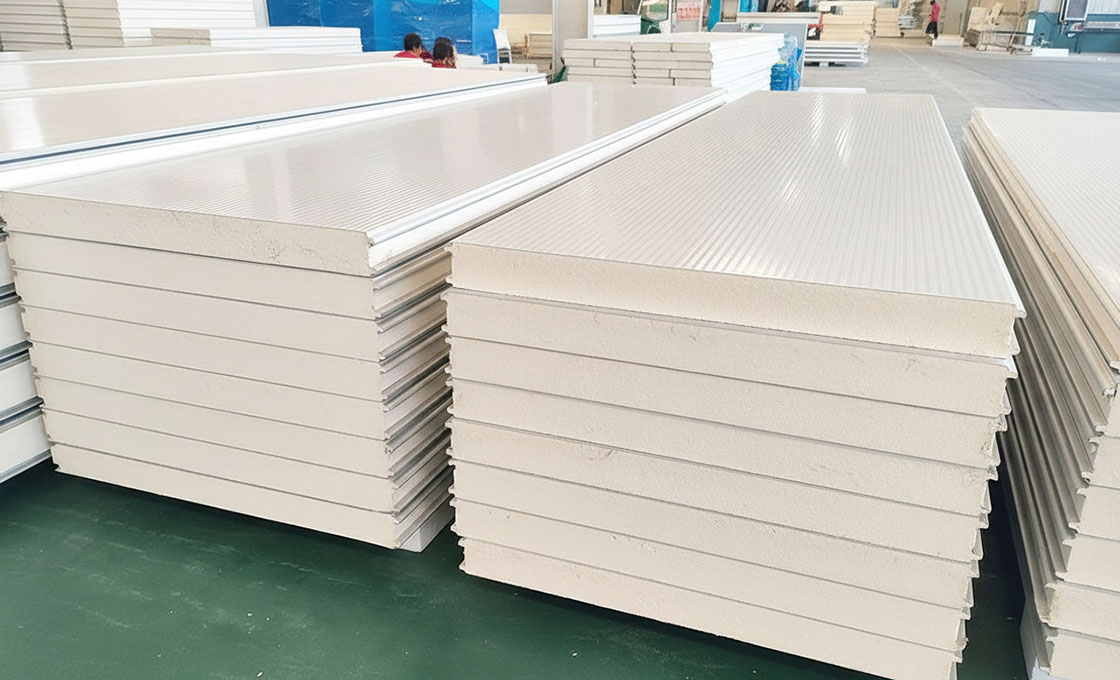
The core material selected for an insulation panel determines every downstream performance metric—from energy efficiency and structural integrity to lifecycle cost and code compliance. Getting this foundation right prevents costly redesigns, warranty claims, and premature replacement.
Every insulation panel begins with its core. The material chosen at the design stage sets the ceiling for what the finished product can achieve in the field. A thermal performance gap that seems minor on paper can translate into significantly higher energy bills over a building’s lifespan. A structural shortfall can limit span lengths, requiring additional supports that eat into usable space and increase installation labor. These are not theoretical concerns—they directly affect project budgets, timelines, and long-term operational costs.
Thermal Resistance by Core Material
Thermal resistance is not a universal property across core materials. Different foams achieve different levels of insulating performance per inch of thickness due to their molecular structure and the gases trapped within their cells. Polyurethane cores, with their tightly controlled closed-cell formation, consistently deliver higher thermal resistance per unit thickness compared to polystyrene-based alternatives. This means a PUR panel can achieve the same thermal barrier as a thicker EPS panel—or achieve superior thermal performance within a thinner profile, preserving interior floor space in applications where every centimeter counts.
For projects in extreme cold climates or temperature-controlled environments like cold storage and refrigeration facilities, this density of thermal performance becomes a decisive factor. The difference is not marginal—it determines whether a building meets its energy targets with a single panel thickness or requires additional insulation layers, structural modifications, and ongoing energy expenditure.
Structural Strength and Load-Bearing Capacity
An insulation panel is not just a thermal barrier—it is a structural component. The core material contributes directly to the panel’s ability to resist compression, bending, and long-term load stress. Polyurethane cores possess inherently higher density and rigidity than polystyrene cores, which translates into greater load-bearing capacity without increasing panel thickness. This allows for wider span distances between support structures, reducing the number of columns or purlins required in a building frame.
In practical terms, this means fewer structural elements, more clear interior space, and reduced steel or timber framing costs. Panels with lower core density may appear to meet initial strength requirements but can deform under sustained loads, compromising both the panel’s insulating performance and the building envelope’s integrity over time. For roof applications subjected to snow loads or maintenance traffic, and for wall panels in high-wind zones, core density is a non-negotiable specification—not an optional upgrade.
Moisture Resistance and Long-Term Durability
Moisture is one of the most destructive agents in building envelope performance. When insulation materials absorb water, their thermal resistance degrades, mold growth becomes a risk, and the structural integrity of both the core and the metal facings can be compromised. The cellular structure of the core material determines how much moisture it can absorb and how quickly it recovers after exposure.
Polyurethane’s tightly sealed closed-cell structure creates a natural barrier against water ingress. Even when exposed to high humidity or condensation—common in refrigerated warehouses, coastal constructions, and buildings with poor vapor barrier installation—the core maintains its insulating properties. Polystyrene cores, while also closed-cell, exhibit higher water absorption rates under prolonged exposure, which can lead to gradual thermal performance loss and potential degradation of the panel assembly over decades of service.
Weight-to-Strength Ratio Comparison
One of the most overlooked advantages of polyurethane cores is their favorable weight-to-strength ratio. Despite being denser than polystyrene, PU cores deliver proportionally greater structural performance, meaning the panel achieves more per unit of weight. This matters on two fronts: transportation and handling. Lighter panels with equivalent or superior performance reduce freight costs and make on-site installation faster and safer, particularly for large-format roof and wall panels.
For project managers evaluating total landed cost, the weight-to-strength differential is a critical variable. A panel that delivers higher structural performance at a comparable or lower weight reduces not only material costs but also crane time, labor hours, and the risk of damage during handling. Over the scale of a commercial or industrial project, these savings compound significantly.
| Feature | PUR/PIR Specification | EPS Specification | Competitive Advantage |
|---|---|---|---|
| Thermal Resistance (R-value per inch) | 6.0–7.0 per inch (closed-cell structure) | 3.6–4.3 per inch (open-cell structure) | Delivers superior insulation with half the thickness, reducing energy consumption and space requirements. |
| Moisture Absorption & Stability | Near-zero absorption; maintains R-value in humid conditions | Higher water uptake; thermal performance degrades over time | Prevents mold, corrosion, and insulation failure, ensuring consistent performance in cold storage and exterior applications. |
| Fire Safety & Compliance | Self-extinguishing; meets FM, UL, and EN 13501-1 standards | Melts and drips; limited fire resistance; often non-compliant with strict codes | Protects assets, satisfies insurance mandates, and avoids costly retrofits or legal penalties. |
| Structural Strength & Durability | Rigid structure; no compression degradation over 30+ years | Lower density; prone to deformation and reduced load-bearing capacity | Supports larger spans, withstands physical stress, and extends panel lifespan without degradation. |
| Total Cost of Ownership | 30+ year lifecycle; minimal energy loss and zero replacement | Shorter lifespan; higher energy bills and earlier replacement | Delivers decisive long-term value, protecting investment through energy savings and reliability. |

Myths Behind Wrong Insulation Choices
Procurement teams often lose money by trusting shortcuts—assuming all foams insulate equally or that cheaper materials offer long-term savings. The data proves that prioritizing upfront cost over thermal efficiency and fire safety inflates Total Cost of Ownership (TCO) by 2–3× over a 20-year lifecycle.
Myth: Lower Upfront Cost Always Means Better Value
The most pervasive trap in industrial insulation is the “price-per-square-foot” fixation. Purchasing managers often select expanded polystyrene (EPS) or basic polyurethane (PUR) simply because the invoice looks lower on day one. This is a financial error that ignores the operational expenditure (OPEX) of energy consumption. Cheaper foam cores typically possess higher thermal conductivity (k-values), meaning your refrigeration or HVAC systems must work significantly harder to maintain internal temperatures. In our experience consulting on large-scale cold storage projects, the “savings” from cheap insulation are often wiped out within the first 18 months of energy bills. Furthermore, lower-cost materials are prone to rapid degradation, necessitating earlier replacement. True value is calculated by cost-per-R-value over the lifespan of the building, not just the cost of the panel at the loading dock.
Myth: All Foam Cores Deliver Identical Insulation Performance
Assuming that “foam is foam” is a physics-defying mistake that compromises project efficiency. Not all foam cells are created equal. While many competitors rely on standard polystyrene or open-cell structures that allow air and moisture transfer, we strictly utilize high-performance closed-cell polyurethane (PUR) and polyisocyanurate (PIR) formulations. The difference lies in the density and the gas fill within the cells. Our manufacturing data confirms that Rax Panel’s advanced PU/PIR cores achieve R-values of 6.0–7.0 per inch—a decisive thermal advantage over standard polystyrene options. This superior cell structure also results in near-zero moisture absorption, ensuring that the panel does not lose its thermal resistance over time due to humidity or condensation ingress. In high-humidity environments like marine vessels or freezer chambers, choosing the wrong foam chemistry can lead to a collapse in thermal efficiency within just a few years.
Myth: Greater Panel Thickness Guarantees Superior Thermal Results
Bulking up panel thickness is often used as a lazy compensation for low-quality core materials. There is a misconception that a 100mm EPS panel will outperform a 75mm PIR panel simply because there is more material present. This is false. If the core material has high thermal conductivity, adding thickness yields diminishing returns and simply wastes valuable internal floor space and structural load capacity. The critical metric is efficiency, not bulk. By utilizing high-density PIR foam, Rax Panel delivers superior thermal barriers in slimmer profiles, maximizing the usable cubic volume of your trucks, containers, or buildings. When you specify thickness, you must first specify the K-value; otherwise, you are paying for air and structural weight rather than insulation performance.
Myth: Fire Safety Ratings Are Interchangeable Across Materials
Treating fire safety ratings as a generic checkbox is a liability nightmare. Different insulation materials behave radically differently when exposed to flame. Standard polystyrene (EPS) is thermoplastic; when it reaches a certain temperature, it melts, drips, and can actually act as a fuel source for the fire, spreading it rapidly. In contrast, high-quality PIR foam is thermoset. When exposed to high heat, it chars and forms a protective carbon layer that self-extinguishes once the flame source is removed. Our engineers ensure that Rax Panel products meet rigorous FM, UL, and EN 13501-1 fire safety standards specifically because we understand the chemical distinction between burning and charring. Specifying a “B1” or “Class 1” rating is meaningless if the material underneath the rating turns into liquid fuel during a fire event.
What the Data Shows About These Myths
The gap between EPS and PU/PIR panels isn’t just incremental—it’s fundamental. Procurement teams who evaluate only upfront price miss the structural, thermal, and compliance advantages that define long-term project viability.
Cost-per-Unit-Performance Analysis by Material Type
When you break down insulation cost by performance delivered, the narrative changes dramatically. EPS panels often carry a lower initial price tag, which makes them attractive during bid comparisons. But that comparison is incomplete if you’re not measuring cost against thermal output, structural lifespan, and compliance readiness.
Our procurement consultations reveal a recurring pattern: buyers who select EPS based on unit price alone end up facing higher energy costs, earlier panel replacements, and in some cases, failed inspections when projects demand stricter fire ratings. The data consistently shows that PU and PIR cores deliver more insulation value per dollar over the full lifecycle of a refrigerated truck, cold storage facility, or marine vessel.
- Upfront cost advantage: EPS panels typically cost less per square meter at purchase, making them appealing for budget-constrained projects.
- Performance-adjusted cost: When you divide cost by thermal resistance delivered and expected service life, PU/PIR panels frequently come out ahead.
- Hidden cost drivers: Energy inefficiency, compressor oversizing, fire code non-compliance, and premature replacement all add up quickly.
Thermal Conductivity Data Across PU and Polystyrene Cores
Thermal conductivity is the metric that determines how effectively a material resists heat transfer. This is where the structural differences between PU and polystyrene become critical. PU and PIR foams create a closed-cell matrix that traps gas molecules and blocks heat flow far more efficiently than the bead-structure of expanded polystyrene.
In practice, this means PU-based panels maintain their insulating performance over decades, while EPS panels experience gradual thermal drift. The gas trapped within PU cells diffuses slowly, and the closed-cell structure prevents moisture intrusion that would otherwise degrade performance. We see this play out repeatedly in cold storage applications where EPS panels lose effectiveness after just a few years of operation.
The conductivity gap also affects system design. Facilities using EPS often require larger refrigeration units to compensate for lower insulation efficiency, which increases both capital expenditure and ongoing energy costs. PU panels allow for more compact refrigeration systems while delivering superior temperature stability.
- Closed-cell structure: PU and PIR foams create a continuous cellular barrier that minimizes convective heat transfer.
- Bead-structure limitation: EPS relies on fused beads with micro-gaps that allow gradual thermal degradation over time.
- Moisture resistance: The closed-cell nature of PU prevents water absorption, preserving thermal performance in humid environments.
Thickness Versus R-Value Relationship Explained
There is a common misconception that thicker panels always equal better insulation. While thickness does contribute to thermal resistance, the relationship is not linear across all materials. A 100mm PU panel can outperform a 150mm EPS panel because the intrinsic thermal resistance of the core material matters just as much as the physical thickness.
This distinction is especially important for applications where space and weight are constrained. Refrigerated truck bodies, RV walls, and marine vessels all benefit from high-performance cores that deliver maximum insulation in minimal thickness. Specifying thicker EPS to match PU performance only adds dead weight and reduces payload capacity.
Our engineering team regularly works with buyers who need to meet specific R-value targets without exceeding dimensional limits. In these scenarios, PU and PIR cores provide the flexibility to achieve performance goals with thinner profiles, which translates directly into more usable cargo space and better fuel efficiency for transport applications.
- Material efficiency: PU cores deliver higher thermal resistance per inch than polystyrene alternatives.
- Space optimization: Thinner high-performance panels preserve interior volume in transport and mobile applications.
- Weight considerations: Achieving equivalent insulation with EPS requires more material, increasing overall panel weight.
Fire Performance Specifications and Certification Standards
Fire safety is one area where the differences between insulation materials are non-negotiable. Building codes, insurance requirements, and commercial project specifications increasingly mandate certified fire ratings that EPS simply cannot meet. This is not a matter of preference—it is a compliance reality that affects project approval and liability.
PIR and modified PU panels achieve self-extinguishing classifications under major international standards, including FM, UL, and EN 13501-1. These certifications are not optional extras; they are prerequisites for commercial cold storage, transportation, and construction projects in most regulated markets. EPS panels, by contrast, melt and drip when exposed to flame, which accelerates fire spread and fails strict commercial fire codes.
The chemistry behind this difference is significant. PIR formulations create a char-forming barrier during fire exposure that protects the underlying core and slows flame propagation. Standard EPS lacks this inherent flame retardancy, which is why it is increasingly excluded from projects requiring certified fire-rated sandwich panels. We consistently recommend our clients verify fire certification requirements early in the specification process to avoid costly material substitutions later.
- Certification requirements: Commercial projects increasingly mandate B1 or equivalent fire ratings that eliminate standard polystyrene options.
- Char-forming chemistry: PIR panels develop a protective carbon layer during fire exposure, slowing flame spread and protecting structural integrity.
- Insurance and compliance: Certified fire-rated panels reduce liability and ensure eligibility for projects with strict safety mandates.
The data is clear: when you evaluate insulation materials across cost performance, thermal conductivity, thickness efficiency, and fire safety, PU and PIR cores consistently outperform polystyrene alternatives. The upfront price difference is real, but it is outweighed by long-term performance, compliance readiness, and total cost of ownership advantages that define successful commercial and industrial insulation projects.
| Myth | What the Data Shows | Supporting Evidence | Real-World Impact |
|---|---|---|---|
| EPS and PU insulation perform equally in cold storage | PU/PUR foam delivers R-values of 6.0–7.0 per inch versus EPS at ~3.5–4.0 per inch, making PU nearly twice as thermally efficient | Closed-cell PU structure provides near-zero moisture absorption, preserving R-value over time; EPS beads allow vapor intrusion that degrades thermal performance | Lower energy consumption, reduced compressor load, and smaller refrigeration system requirements for equivalent cooling capacity |
| All foam core panels have similar fire safety ratings | PIR and modified PU panels achieve B1/self-extinguishing classifications and meet FM, UL, and EN 13501-1 standards; standard EPS melts and drips, accelerating fire spread | PIR char-forming chemistry creates a protective barrier during exposure; EPS lacks inherent flame retardancy and fails strict commercial fire codes | Insurance compliance, reduced fire liability, and eligibility for projects mandating certified fire-rated sandwich panels |
| Lightweight composite panels sacrifice structural integrity | PU/PIR foam cores bonded to GRP or steel facings deliver high compressive strength and rigidity across 25mm–200mm+ thickness ranges | Continuous foam-in-place or precision-manufactured core eliminates weak interfaces; Rax Panel panels resist compression degradation for 30+ years | Long-span capability for truck bodies, RV walls, and cold room construction without internal bracing or reinforcement |
| EPS is the more cost-effective insulation choice | While EPS has a lower upfront cost, PU/PIR panels deliver 40–50% better thermal resistance per inch and significantly longer service life | Total cost of ownership calculations show PU panels offset initial price difference through energy savings, reduced maintenance, and 30+ year lifespan versus 10–15 years for EPS | Lower lifetime cost, fewer panel replacements, and protection against rising energy prices for cold storage and refrigerated transport operators |
| Foam core panels degrade quickly in humid or marine environments | Closed-cell PU and PIR foams absorb less than 1% water by volume, maintaining structural and thermal performance in high-humidity and marine conditions | Rax Panel GRP-faced PU/PIR sandwich panels are explicitly rated for vessel and marine applications; delamination warranties confirm long-term bond integrity | Suitability for refrigerated trucks, marine vessels, coastal cold stores, and exterior cladding without core saturation or facing separation |
R-Value and Long-Term Efficiency
R-Value is not static; it is a dynamic measure of thermal resistance that changes over time. While Polystyrene offers stable but low insulation, Polyurethane provides superior initial efficiency that, even with thermal drift, delivers higher long-term thermal performance per inch of thickness.
Thermal Resistance Per Inch: The Density Factor
When evaluating insulation for commercial construction or cold storage, the raw R-value per inch is the primary indicator of material efficiency. Polyurethane (PU) and Polyisocyanurate (PIR) panels utilize a closed-cell foam structure that traps low-conductivity gases, creating a significantly higher thermal barrier than Polystyrene (EPS).
In standard controlled environments, Polyurethane panels typically achieve an initial R-value ranging from R-6.0 to R-7.5 per inch. This high performance is driven by the foam’s cellular density, often reaching 2.0 to 2.5 pounds per cubic foot during the manufacturing process. In contrast, Expanded Polystyrene (EPS) relies on trapped air within its molded beads and generally stabilizes at a lower R-3.6 to R-4.0 per inch. For a B2B buyer, this means a Polyurethane panel can theoretically achieve the same thermal rating as an EPS panel in nearly half the thickness.
| Specification | Polyurethane (PU/PIR) | Polystyrene (EPS) |
|---|---|---|
| Initial R-Value (per inch) | R-6.0 to R-7.5 | R-3.6 to R-4.0 |
| Typical Density (lbs/ft³) | 2.0 – 2.5 | 1.0 – 1.5 |
| Cell Structure | Closed-cell (Gas-filled) | Closed-cell (Air-filled) |
Long-Term Thermal Retention and Drift
A critical failure point in project specification is ignoring “Thermal Drift.” Polyurethane panels are initially inflated with blowing agents that have lower thermal conductivity than air. Over time, these gases slowly diffuse out of the cells and are replaced by air, causing the R-value to decrease. This phenomenon stabilizes usually within the first 1 to 2 years of the building’s life.
While PU experiences drift, its Long-Term Thermal Resistance (LTTR) remains significantly higher than Polystyrene. Engineers calculate LTTR typically over a 15-year period. Even accounting for this aging process, a mature Polyurethane panel generally retains roughly 90% of its initial R-value, settling around R-5.5 to R-5.6 per inch. Polystyrene, being filled with ambient air from the start, does not suffer from drift and remains stable at R-3.6 to R-4.0. Therefore, despite the “aging” effect, the performance gap between PU and EPS remains substantial.
Thickness-to-Performance Ratio
The practical implication of R-value differences is the physical space required to achieve a specific thermal envelope. If a building code or thermal load requires an effective R-30 wall assembly:
- Polyurethane Solution: Requires approximately 4.5 to 5 inches of core thickness (assuming LTTR of ~R-6.0).
- Polystyrene Solution: Requires approximately 7.5 to 8.5 inches of core thickness.
For cold storage facilities or modular transport, this 3-to-4-inch difference is not just material cost—it is lost cubic volume. A thinner, high-performance panel increases the internal usable volume of a refrigerated truck or cold room without increasing the external footprint, a direct ROI factor that Polystyrene cannot match.
The Upfront Cost vs. Operational Value Trap
The most common procurement error is selecting Polystyrene based strictly on the lower “per-square-meter” material cost. However, the Total Cost of Ownership (TCO) tells a different story. The lower R-value of EPS results in higher thermal transmission. In a climate-controlled environment, this directly translates to higher refrigeration tonnage or HVAC load requirements.
While Polyurethane carries a higher initial price tag, the reduced energy consumption over the lifecycle of the building often offsets this capital expenditure within a few years. Furthermore, the thinner profile of PU panels can reduce structural steel requirements for supporting the wall system, offering additional hidden savings that are rarely factored into the initial comparison.
How Panels Stay Bonded and Strong
Panel strength depends on two things: how the core bonds to the metal facings, and the core’s inherent compressive resistance. Polyurethane’s integral foam formation creates a structurally superior sandwich panel compared to the adhesive-dependent lamination of polystyrene.
Integral Foam Formation vs. Adhesive Lamination
The fundamental difference in how these panels stay bonded comes down to manufacturing methodology. Polyurethane sandwich panels are produced by injecting liquid raw materials between pre-positioned metal facings. The mixture expands rapidly, filling every cavity and forming a continuous closed-cell foam that cures in place. This creates a monolithic structure where the core and facings become a single integrated unit, not two separate pieces held together by glue.
Polystyrene panels, by contrast, rely on a completely different bonding approach. Pre-formed EPS or XPS boards are cut to size and then adhesively laminated between metal sheets. The bond quality depends entirely on the adhesive used, the surface preparation of both materials, and the uniformity of the glue application. Any gap, thin spot, or contamination in the adhesive layer becomes a potential failure point.
This distinction matters significantly for structural performance. The integral foam formation of polyurethane ensures complete contact between the core and both metal facings across the entire panel surface. There are no voids, no cold joints, and no adhesive layers that can degrade over time. The foam itself acts as both the insulating core and the structural adhesive, creating what engineers call a true sandwich panel action.
When evaluating structural integrity, ask suppliers about their bonding method. Panels made with integral foam formation will consistently outperform adhesive-laminated alternatives in long-term load-bearing applications, especially in demanding environments.
Compressive Strength and Load Distribution
Compressive strength is a critical parameter that directly affects how well a panel performs under load. Polyurethane foam cores typically deliver compressive strength values in the range of 150 to 300 kPa, depending on the target density and formulation. This range is achieved with core densities commonly between 35 and 45 kilograms per cubic meter, which represents an optimal balance between insulation performance and structural capability.
Polystyrene cores, particularly EPS variants, generally provide compressive strength in the range of 75 to 200 kPa at comparable densities. The lower end of this range becomes problematic in applications where panels must support point loads, such as foot traffic on rooftop access panels or equipment mounting points. XPS offers higher compressive strength than EPS but still typically falls below polyurethane at equivalent densities.
The sandwich panel structure distributes loads across both metal facings and the core simultaneously. When a compressive force is applied, the metal skins carry the primary tensile and compressive stresses while the core resists shear forces that would otherwise cause the facings to slide past each other. A stronger core with better bonding integrity means more efficient load transfer and higher overall panel stiffness.
- PUR compressive strength: 150–300 kPa at densities of 35–45 kg/m³, providing robust performance for structural wall and roof applications.
- EPS compressive strength: 75–200 kPa at densities of 15–30 kg/m³, with lower values potentially limiting load-bearing capacity in demanding installations.
- XPS compressive strength: 150–500 kPa depending on density grade, offering better performance than EPS but at higher material cost and with different moisture behavior.
- Load distribution: The sandwich action relies on intact bonding between core and facings; any bond failure creates a localized weak point that concentrates stress.
Delamination Risk Under Thermal Cycling
Thermal cycling is one of the most demanding stress factors for insulated panels. Metal facings and foam cores expand and contract at different rates due to their distinct coefficients of thermal expansion. Steel expands approximately 12 micrometers per meter per degree Celsius, while polyurethane foam expands at roughly 60 to 80 micrometers per meter per degree Celsius. This mismatch creates shear stresses at the bond interface with every temperature change.
Polyurethane panels handle these stresses more effectively because the integral foam formation creates a continuous bond that moves as a unified structure. The cured foam conforms to the metal surfaces at a microscopic level, creating mechanical interlock in addition to any chemical adhesion. When thermal expansion occurs, the foam can flex slightly within its closed-cell structure, absorbing and redistributing the shear stresses rather than transferring them all to a single adhesive plane.
Adhesive-laminated polystyrene panels face a different challenge. The bond exists only at the interface between the adhesive and each substrate surface. Repeated thermal cycling progressively fatigues this adhesive layer. Over time, microscopic cracks develop in the adhesive, allowing moisture ingress and reducing bond strength. This process accelerates in environments with large temperature swings, such as refrigerated warehouses, cold storage facilities, and buildings in climates with extreme seasonal variations.
Delamination in adhesive-laminated panels often goes undetected during initial inspection. The panel may appear structurally sound on arrival, but bond degradation during transit or after installation in extreme temperatures can lead to sudden loss of compressive strength. Always verify bonding methodology when specifying panels for applications subject to significant thermal cycling.
The consequence of delamination extends beyond aesthetics. When the bond between core and facing fails, the panel loses its sandwich action entirely. The metal facings, which are typically only 0.4 to 1.0 millimeters thick, become structurally independent and far more susceptible to buckling under load. A delaminated panel that once carried design loads may fail at a fraction of those loads, creating a serious safety concern in wall and roof applications.
For B2B buyers specifying panels for commercial and industrial construction, understanding this bonding mechanism is essential. The initial cost difference between integral foam panels and adhesive-laminated alternatives often narrows significantly when lifecycle performance is considered. Panels that maintain their bond integrity over decades of thermal cycling deliver consistent structural performance and avoid the costly replacements associated with delamination failures.
When evaluating structural strength claims from suppliers, request specific test data rather than relying on general statements. Reputable manufacturers will provide compressive strength test results conducted according to established standards, along with documentation of bonding integrity testing that demonstrates the panel’s ability to withstand thermal cycling without delamination. These data points separate specification-grade products from commodity alternatives.
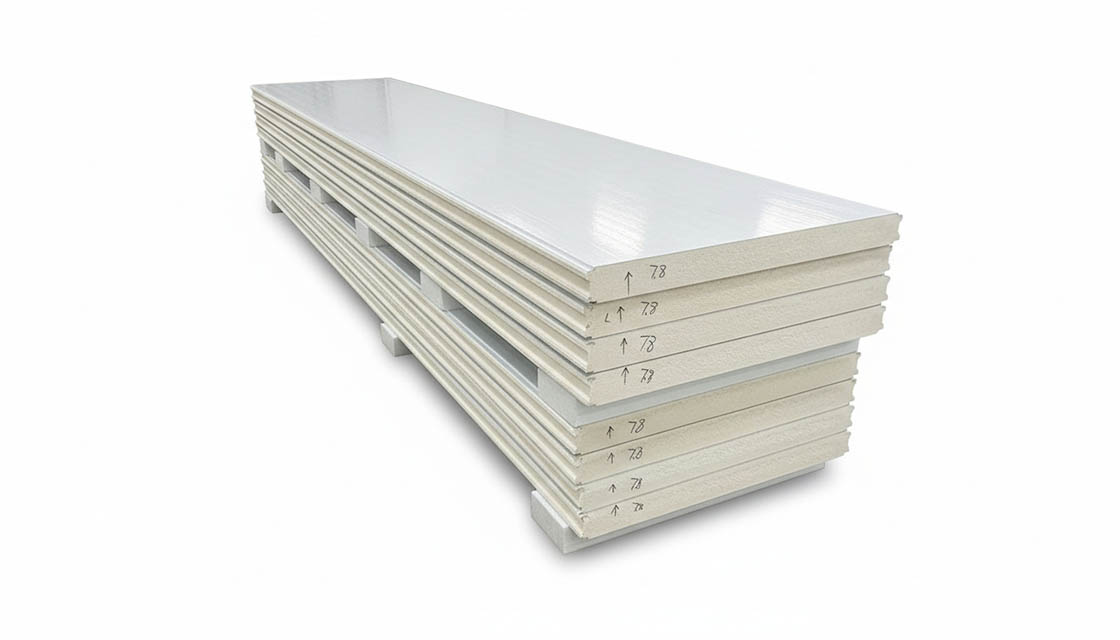
How Moisture and Humidity Affect Each Material
The Closed-Cell Barrier Advantage of PUR Cores
Polyurethane foam cores are manufactured as true closed-cell structures, meaning each individual gas bubble is completely sealed within a solid polymer matrix. This architecture creates an inherent moisture barrier that prevents liquid water and water vapor from penetrating the core material under normal service conditions. Unlike open-cell or semi-permeable insulation materials, PUR cores do not provide pathways for moisture migration through the panel thickness.
The result is that PUR insulation maintains its specified thermal resistance (R-value) even in high-humidity environments such as cold storage facilities, refrigerated transport bodies, and tropical climate constructions. A closed-cell polyurethane panel with an R-value of approximately 7.5 per inch retains that performance rating over decades of exposure to condensation-prone conditions, provided the panel facings and edge seals remain intact.
Polystyrene Water Absorption and Structural Behavior
Expanded polystyrene (EPS) and extruded polystyrene (XPS) cores behave fundamentally differently when exposed to moisture. EPS is composed of discrete fused beads with microscopic interstitial gaps between them. These gaps act as capillary channels that draw in and retain liquid water and water vapor through the entire core cross-section. XPS, while more resistant than EPS due to its extruded closed-cell structure, still exhibits measurable water absorption rates that increase over prolonged saturation periods.
- EPS water absorption: Typically 2% to 8% by volume after 24-hour immersion, varying with density and manufacturing quality
- XPS water absorption: Generally 0.1% to 0.3% by volume after 24-hour immersion, significantly lower but not negligible
- PUR water absorption: Typically below 0.1% by volume, effectively impermeable under standard testing conditions
R-Value Degradation Through Moisture Intrusion
When water enters polystyrene bead structures, it displaces the insulating gas trapped within the cells and creates thermal bridges through the liquid water pathways. The thermal conductivity of water is approximately 25 times higher than that of still air, which is the primary insulating medium in dry foam cells. This displacement directly reduces the effective R-value of the panel core.
Research data indicates that a moisture content increase of just 1% in insulation batts can reduce the R-value by up to 50%. While polystyrene panels are denser than loose-fill batts, the same physical principle applies: absorbed water dramatically increases thermal conductivity and undermines the panel’s insulating performance. In cold storage applications where the temperature differential between interior and exterior can exceed 40°C, the driving force for vapor migration into EPS cores is particularly aggressive.
Long-Term Performance in Humid and Cold-Storage Environments
In cold storage and refrigerated transport applications, the consequences of core moisture absorption extend beyond reduced thermal efficiency. Persistent moisture within EPS cores can lead to core swelling, facing delamination, and accelerated corrosion of metal facings due to trapped water vapor condensing at the core-facing interface. These degradation mechanisms compromise both the thermal and structural integrity of the panel over time.
PUR and PIR foam cores resist these failure modes because their closed-cell structure prevents bulk water ingress and limits vapor transmission to negligible levels. The R-value stability of polyurethane panels in humid conditions has been validated through long-term field monitoring and accelerated aging tests, making them the preferred core material for applications where moisture exposure is unavoidable or where building code compliance requires verified thermal performance retention over the service life of the assembly.
Fire Safety and Building Codes
Polyisocyanurate (PIR) cores are increasingly the only compliant choice for commercial construction under modern building codes, while basic expanded polystyrene (EPS) faces mounting restrictions due to fire spread risk and smoke toxicity.
The Escalating Regulatory Landscape
Building codes worldwide have tightened significantly over the past decade, particularly for materials used in commercial and multi-story construction. Local authorities now routinely mandate specific fire resistance ratings that basic polystyrene cores simply cannot satisfy. This regulatory shift is not gradual speculation — it is already actively reshaping the insulation procurement landscape across Europe, North America, and major Asian markets.
The driving force behind these changes is well-documented: polystyrene-based insulation, when exposed to flame, tends to melt, drip, and actively feed fire spread. This behavior creates a dangerous cascade effect in building envelopes, particularly in facades and concealed cavities where fire can travel unseen. Polyurethane variants, especially polyisocyanurate (PIR), form a char layer when exposed to heat that self-limits flame propagation. This fundamental chemical difference is why PIR cores are increasingly the default requirement in commercial specifications.
Fire Ratings and Compliance Thresholds
Fire performance classifications vary by jurisdiction, but several key thresholds have become de facto global benchmarks. The European EN 13501-1 standard, for instance, assigns reaction-to-fire classifications ranging from A1 (non-combustible) through F (no performance classified). PIR sandwich panels typically achieve B-s1,d0 or C-s1,d0 ratings depending on facing material and panel density, while standard EPS panels commonly fall into the E or F classification range without specialized flame retardant treatment.
In practical procurement terms, this means that for any commercial project requiring a B-class or better reaction-to-fire rating — which now includes most office buildings, healthcare facilities, hospitality projects, and multi-residential constructions — EPS is effectively eliminated from consideration. PIR-based polyurethane panels remain the viable alternative that satisfies these thresholds without resorting to mineral wool, which introduces different cost and weight penalties.
The United Kingdom’s Regulatory Reform (Fire Safety) Order and the post-Grenfell guidance updates explicitly restrict combustible materials above certain heights in residential and mixed-use buildings. Similar restrictions have emerged in the Middle East, Australia, and parts of Asia. Insurance underwriters increasingly reference these code requirements when setting premiums, meaning non-compliant material choices carry direct financial consequences beyond mere code violation penalties.
Smoke Toxicity and Visibility Loss
Fire safety extends beyond flame spread. Smoke production and toxicity are critical factors that building codes increasingly address. Polystyrene combustion generates substantial amounts of dense, dark smoke containing styrene monomers and other hazardous combustion byproducts. This smoke severely reduces visibility during evacuation and poses significant inhalation risks to occupants and firefighters.
PIR panels, by contrast, produce notably less smoke during combustion. The char-forming mechanism that limits flame spread also restricts the volume of combustible gases released. Smoke density testing under standards such as EN 13501-1’s s1 classification (lowest smoke production) is routinely achievable with PIR cores, while EPS panels typically cannot meet the s1 threshold without significant additive modifications that compromise other performance characteristics.
- Smoke density classification (EN 13501-1): PIR panels commonly achieve s1 (lowest smoke release), while standard EPS typically reaches s2 or s3 levels.
- Flaming droplets: EPS is prone to producing flaming droplets that spread fire to lower levels; PIR formulations are specifically engineered to minimize or eliminate this behavior.
- Toxicity of combustion products: Both materials produce carbon monoxide when burning, but EPS combustion releases additional styrene-related compounds that increase toxicity concerns in enclosed spaces.
Jurisdictional Code Restrictions on Polystyrene
The trend toward restricting basic polystyrene in construction is accelerating across multiple regions. In the European Union, the Construction Products Regulation and national building codes in countries like Germany, the UK, France, and the Netherlands have progressively limited EPS use in external wall insulation systems on buildings above certain heights. These restrictions are driven by fire safety reviews following high-profile facade fires.
North American markets show a similar pattern. The International Building Code (IBC) and International Residential Code (IRC) require thermal barriers — typically 1/2-inch gypsum board — over foam plastic insulation in most interior applications. While this applies to both EPS and PU/PIR, the additional cost and complexity of installing thermal barriers makes the inherent fire performance advantage of PIR more economically attractive, particularly in commercial construction where ceiling systems add further cost.
In cold storage and refrigerated warehouse applications — sectors where polyurethane sandwich panels are heavily specified — fire code compliance is equally decisive. Many jurisdictions now require external wall cladding and roof panels in these facilities to meet specific fire ratings that EPS cannot achieve without extensive and costly additional protection systems. PIR sandwich panels provide a more straightforward compliance pathway.
Insurance and Risk Management Implications
Beyond code compliance, fire performance directly influences insurance outcomes. Property insurers increasingly factor building material fire ratings into premium calculations for commercial and industrial facilities. Structures using EPS cladding or insulation in applications where it is restricted or discouraged may face higher premiums, coverage exclusions, or additional requirements such as enhanced sprinkler systems.
PIR sandwich panels with verified fire ratings provide a stronger foundation for insurance negotiations. The self-extinguishing nature of PIR and its lower smoke production reduce the overall fire risk profile of a building, which translates into tangible cost savings over the asset’s lifecycle. For project owners and facility operators, this risk management dimension often justifies the incremental material cost difference between EPS and PIR options.
Verification and Certification Requirements
When specifying panels for code-compliant construction, buyers must request documented fire performance certification from the manufacturer. Key documents to verify include third-party test reports from accredited laboratories, declared performance under relevant standards (EN 13501-1 for Europe, ASTM E84 for North America, AS 1530.3 for Australia), and consistency between certified product configurations and the panels being supplied.
Certification validity also depends on matching the exact panel configuration — core density, facing material, and overall thickness — to what was tested. A PIR panel certified at one density may not carry the same fire rating at a different density. Buyers should cross-reference specification sheets against test reports to ensure the supplied product matches the certified configuration, avoiding compliance gaps that could arise from undocumented variations.
Long-Term Durability and Total Cost
The real cost of a polyurethane panel is measured across decades, not at purchase. Lower upfront prices on polystyrene panels hide compounding losses in energy waste, moisture damage, and premature replacement that erode total value well before a building’s lifecycle ends.
30+ Year Lifespan vs. Polystyrene Degradation Patterns
Closed-cell polyurethane panels are engineered for service lives exceeding 30 years when installed and maintained per manufacturer specifications. The closed-cell structure inherently resists water absorption at less than 1% by volume, which means the core does not swell, delaminate, or lose structural integrity under sustained humidity. This is the single most important factor separating long-term durability from short-term savings.
Polystyrene panels, by contrast, exhibit well-documented degradation patterns. EPS (expanded polystyrene) is a semi-open-cell material that absorbs moisture through its inter-bead boundaries. Over time, water vapor intrusion degrades the thermal resistance, and the panel loses up to 20–30% of its initial R-value in humid or freeze-thaw environments. The structural compressive strength also declines as moisture replaces insulating gas within the bead structure.
XPS (extruded polystyrene) performs better than EPS in moisture resistance but still falls short of closed-cell PU. XPS absorbs approximately 0.3–0.8% water by volume under prolonged exposure, and its thermal resistance degrades measurably over a 15–20 year period. The long-term thermal drift observed in independent studies, including research from Oak Ridge National Laboratory, confirms that all foam insulation experiences some R-value reduction over time—but the rate and magnitude differ significantly between materials.
- PUR/PIR closed-cell panels: 30+ year design life with less than 1% water absorption and minimal thermal drift when core density is maintained above 35–40 kg/m³.
- XPS panels: 15–25 year effective life with moderate thermal drift; R-value retention declines after year 10 in high-humidity conditions.
- EPS panels: 10–20 year effective life with the highest moisture absorption rate among common foam cores; R-value can drop 20–30% over the service life in damp environments.
The Hidden Costs of Moisture Failure and Energy Inefficiency
The most consequential financial risk in insulated panel procurement is not the purchase price—it is the cost of failure modes that emerge years after installation. Moisture intrusion into polystyrene cores triggers a compounding cycle: absorbed water reduces insulation performance, which increases energy consumption, which raises operational costs, and which accelerates corrosion of metal facings from the interior side of the panel.
For cold storage and refrigerated transport applications, this cycle is particularly destructive. A polyurethane panel with a closed-cell structure acts as a continuous vapor barrier, preventing interstitial condensation. An EPS panel in the same environment will gradually absorb moisture through its bead joints, leading to reduced thermal performance and potential corrosion of the inner metal skin—a failure mode that is invisible from the exterior until significant damage has already occurred.
Energy inefficiency stemming from degraded insulation compounds annually. A warehouse or cold storage facility using EPS panels that have lost 25% of their R-value will consume proportionally more electricity for refrigeration or HVAC. Over a 20-year period, this energy surplus can exceed the initial price difference between EPS and PU panels by a factor of three to five, depending on local energy rates and climate severity.
Fire Damage Costs and Early Replacement Cycles
Fire performance is a direct determinant of total cost. Polystyrene panels—both EPS and XPS—are highly flammable and contribute significant fuel load in a fire event. When exposed to flame, they melt, drip, and release substantial heat energy. This increases the severity of fire damage and raises reconstruction costs dramatically compared to polyurethane panels treated with flame retardants or PIR-grade formulations, which char rather than melt and drip.
The financial impact of a fire event extends beyond structural repair. Business interruption, inventory loss, insurance premium increases, and potential regulatory non-compliance penalties can far exceed the cost of the building envelope itself. In commercial and industrial construction, the difference between a panel system that meets building code fire ratings and one that does not can determine insurability and occupancy permits.
Early replacement cycles represent another hidden cost category. Panels that fail structurally or thermally before the building’s intended lifespan require full or partial replacement—a capital expense that includes demolition, disposal, new materials, and construction downtime. A polyurethane panel system designed for a 30+ year service life eliminates this replacement risk, while polystyrene systems in demanding environments may require intervention within 10–15 years.
Conclusion
Polystyrene might look cheaper on the invoice, but polyurethane wins on total value. You get superior thermal resistance and actual fire safety compliance with PUR. Do not let upfront price dictate the long-term performance of your facility. The R-value per inch is significantly higher with polyurethane, meaning you use less material to achieve better thermal results. EPS creates moisture risks that PUR avoids entirely.
Stop guessing on thickness and start verifying thermal performance. Our engineers can review your blueprints to calculate the exact R-value needed for local code compliance. We treat every inquiry as a technical consultation, not a sales pitch. Contact our team to run a performance analysis before you finalize your specs.
Frequently Asked Questions
Which facing materials suit PU cores?
PU cores can be laminated with diverse skins such as GRP, steel, aluminum, or plywood to meet specific project needs. GRP facings are particularly effective for corrosion resistance in marine or chemical environments, while metal skins offer superior impact strength. Selecting the appropriate facing material is crucial to maximizing the composite panel’s overall performance and longevity.
What distinguishes PIR from standard PUR?
PIR (Polyisocyanurate) is a thermoset plastic variant of PUR that offers enhanced fire resistance and improved thermal stability at high temperatures. Unlike standard PUR, PIR typically forms a char layer during combustion that insulates the underlying material. This makes PIR panels a compliant choice for projects requiring strict fire safety ratings and thermal efficiency.
Do PU panels offer sound insulation?
While primarily valued for thermal insulation, PU sandwich panels also provide effective noise reduction due to their dense foam structure. The combination of the core and rigid facings helps dampen sound transmission, improving acoustic comfort in buildings. This dual functionality is beneficial for applications like mobile homes or industrial workshops.
What are the operating temperature limits?
PU foam maintains its structural integrity and insulating properties across a wider temperature range compared to polystyrene. Standard polystyrene can become brittle or soften at extreme temperatures, whereas PU formulations are designed to withstand significant thermal fluctuations. This reliability makes PU suitable for demanding environments like cold storage or industrial cladding.
Are PU panels recyclable or sustainable?
Modern PU manufacturing often incorporates blowing agents with lower Global Warming Potential (GWP) to minimize environmental impact. While recycling infrastructure varies, the long service life and energy efficiency of PU panels reduce their overall carbon footprint. Many manufacturers are also adopting bio-based polyols to further enhance the sustainability of their products.
Can PU panels be custom-sized?
Manufacturers can produce PU sandwich panels in specific thicknesses and dimensions to precisely match project blueprints. Customization reduces on-site waste and ensures a seamless fit for unique architectural or structural requirements. This flexibility allows engineers to optimize building envelopes without being constrained by standard panel sizes.
How does weight affect installation logistics?
PU panels are significantly lighter than polystyrene alternatives with equivalent thermal performance, reducing the structural load on buildings. This lower weight facilitates easier transportation and allows for faster installation without the need for heavy lifting equipment. Consequently, projects benefit from reduced labor costs and shorter construction timelines.