
Long-term thermal stability separates specification-grade polyurethane from commodity insulation boards. Specifying polyurethane foam insulation board requires looking past the initial R-value tag to understand aging performance; while thermal drift is a fundamental property of all captive-blowing-agent foams as blowing agents equilibrate with ambient air, high-density formulations with consistent closed-cell structures minimize the rate of drift. This precision allows for thermal conductivity of ≤0.024 W/(m·K) under aged k-value conditions, adhering to Golden Data standards. At RaxPanel, we focus on manufacturing cores with consistent cell structures to prevent the settling and sagging that compromises panel integrity in transit vehicles.
This technical guide breaks down the specific chemistry behind that performance, explaining how closed-cell structure drives both insulation value and moisture resistance. We examine density requirements for specialized vehicle applications, the nuances of fire-rated facings, and the critical manufacturing tolerances that ensure defect-free delivery. You will finish with the exact specification checklist needed to avoid structural failure and compliance penalties on your next production run.
What Is Polyurethane Foam Insulation Board?
Core Composition and Chemical Structure of PU Foam Board
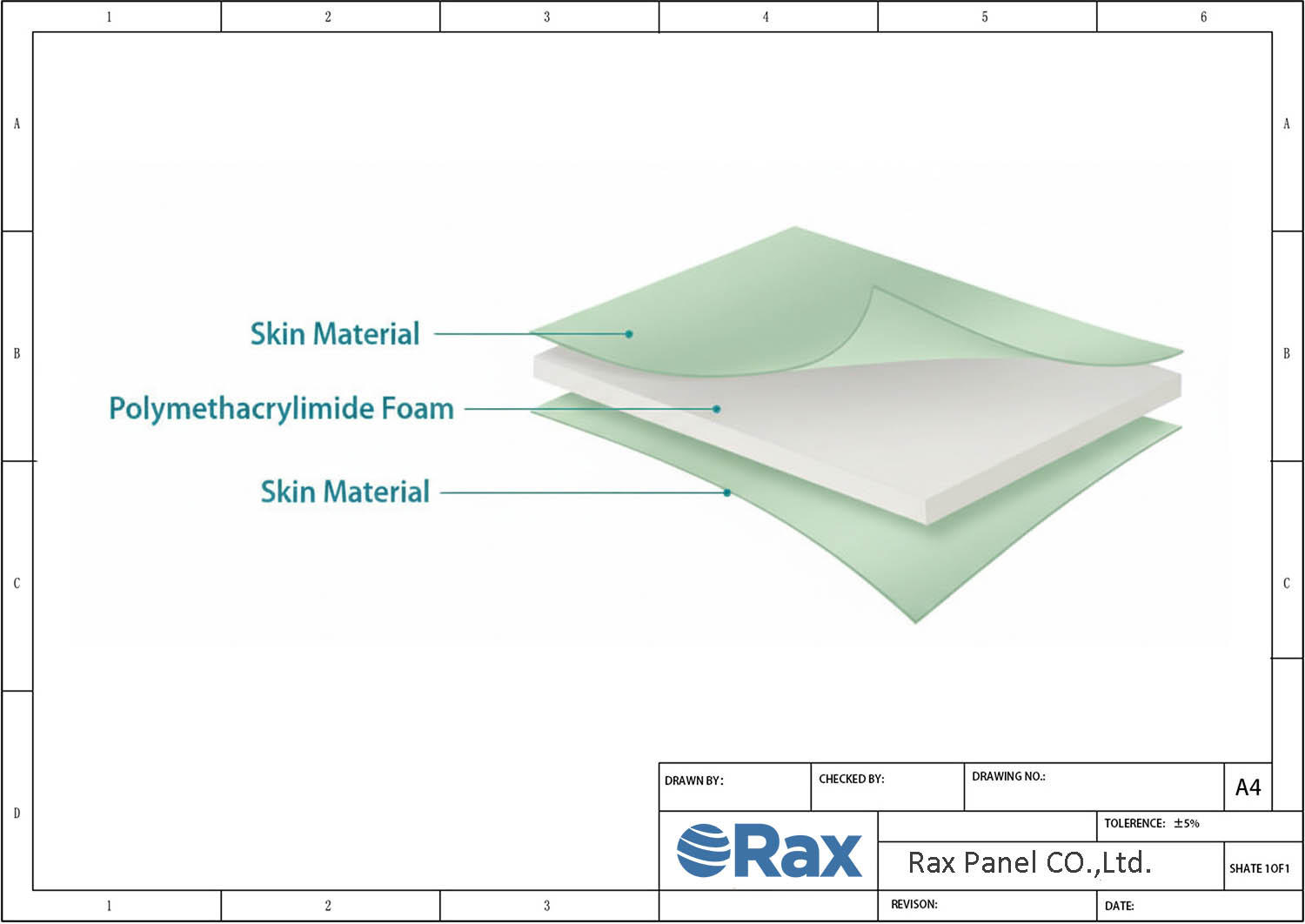
Polyurethane (PU) foam board is a rigid cellular plastic formed by the chemical reaction between polyols and diisocyanates. This exothermic process creates a thermoset polymer matrix filled with countless microscopic closed cells. In a closed-cell structure, each cell is a sealed pocket of gas, which is the fundamental reason for the material’s superior thermal and structural performance compared to open-cell foams.
The core’s physical properties are primarily dictated by its density and cell integrity. High-quality PU foam insulation boards for demanding applications like refrigerated transport and RV construction typically feature a closed-cell density ranging from 30 to 50 kg/m³. This specific density window is engineered to optimize the trade-off between structural compressive strength and lightweight insulation. Our engineers carefully balance the resin formulation to ensure a uniform cell structure with minimal voids, which directly prevents moisture ingress and maintains long-term thermal resistance.
How Polyurethane Foam Is Manufactured in Sandwich Panels
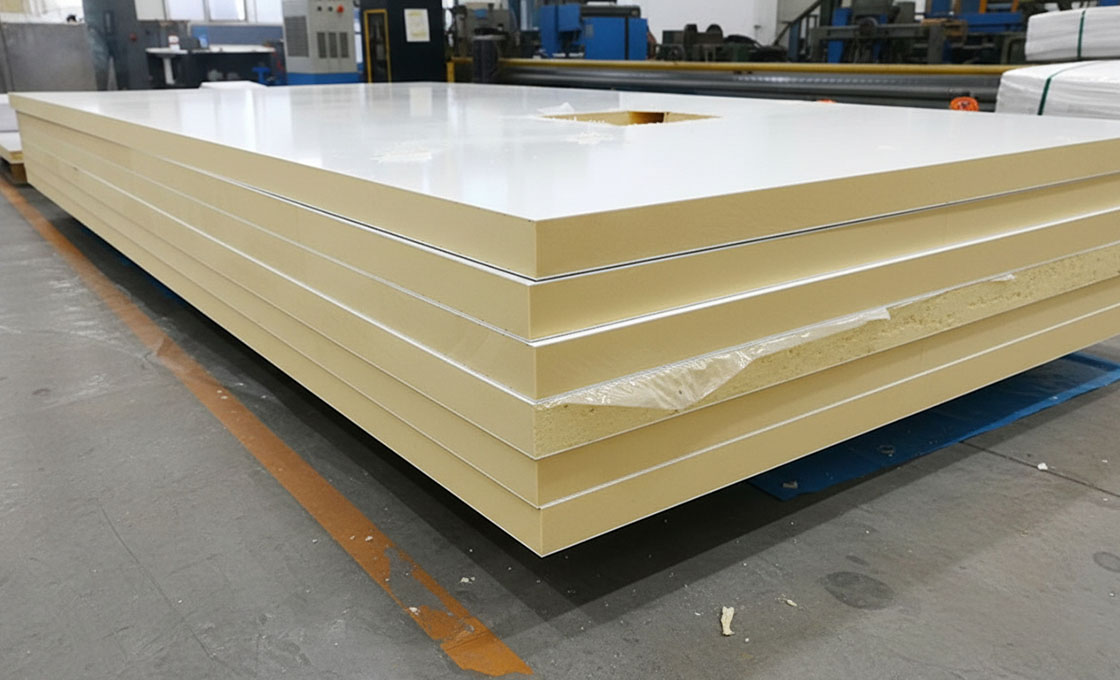
The production of PU foam sandwich panels is a continuous lamination process that transforms liquid chemicals into a solid, bonded composite. In our facility, the two primary liquid components—polyol blend and isocyanate—are metered, mixed, and injected onto a moving bottom facing material. As the mixture expands, it fills the cavity between the top and bottom facings, curing into a rigid foam core that simultaneously acts as the adhesive bond.
Strict process control is non-negotiable for consistent panel quality. We monitor critical parameters such as mixture temperature, injection volume, and line speed in real-time. This precision allows us to maintain a density tolerance of ±5%, ensuring every panel meets exact engineering specifications. The continuous line also enables the direct bonding of different facing materials, creating a single, monolithic composite unit that is far stronger and more insulating than a simple core insert.
Role of PU Foam Core in Thermal Insulation Performance
The PU foam core is the primary thermal barrier in a sandwich panel. Its insulation capability is measured by thermal conductivity, expressed in W/(m·K). High-density closed-cell PU foam achieves an exceptionally low thermal conductivity of ≤0.024 W/(m·K). This means it strongly resists the flow of heat, making it highly effective for both retaining cold in refrigerated units and preserving heat in building envelopes.
Unlike some insulation materials that lose effectiveness over time as blowing agents diffuse out, PU foam stabilizes quickly after manufacture, offering consistent R-value performance throughout its service life. Additionally, the closed-cell structure provides inherent resistance to water absorption. This is critical for below-grade or high-humidity applications, as wet insulation conducts heat rapidly. Our panels are engineered to withstand operating temperatures from -50°C to +120°C without degrading, ensuring reliable insulation performance across extreme climates.
Common Facings Paired with PU Foam Core Panels
The performance of a PU foam sandwich panel is a system; the core provides insulation, while the facings provide structural strength, weather resistance, and aesthetics. The choice of facing is tailored to the specific application demands.
- GRP/FRP (Glass Reinforced Plastic): A popular facing for RVs, trucks, and marine applications due to its excellent strength-to-weight ratio, corrosion resistance, and ease of fabrication. It can be supplied with a gelcoat finish for enhanced weatherability and a smooth surface.
- Aluminum: Offers a lightweight, hygienic, and aesthetically pleasing facing. Aluminum-faced PU panels are standard in food processing, pharmaceutical cleanrooms, and modern architectural cladding. They provide good formability and a reflective surface.
- Steel (including Galvanized and Stainless): Provides maximum impact resistance and structural rigidity. Steel-faced panels are chosen for heavy-duty industrial flooring, roofing, and situations requiring high mechanical strength or fire resistance (with appropriate coatings).
- ACP (Aluminum Composite Panel) & Other Materials: For specialized architectural or decorative needs, PU foam cores can be bonded to ACP skins or other composite materials, combining the thermal efficiency of foam with the specific surface properties of the facing.
When specifying panels, always consider the facing and core as a unified system. A high-performance PU core paired with an incompatible or poorly bonded facing will compromise the entire panel’s durability, thermal integrity, and service life. Our engineering team conducts rigorous bond-strength and weathering tests on every facing-core combination we offer.
What Types of PU Foam Boards Are Available?
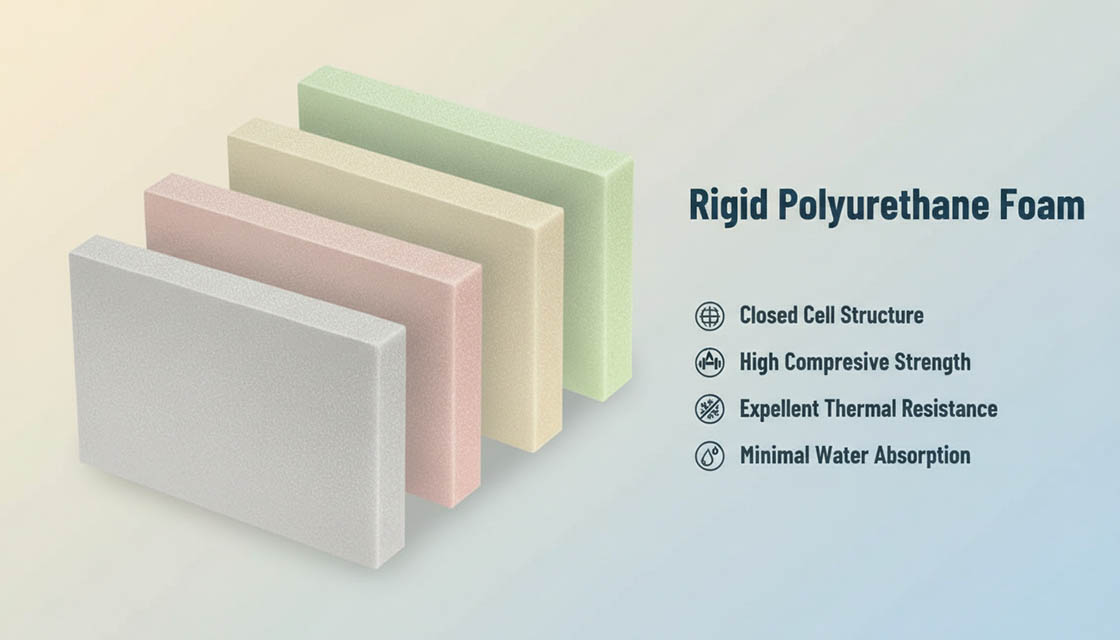
Polyurethane (PU) foam boards are primarily categorized by their physical structure (rigid vs. flexible) and cell morphology (open vs. closed). For industrial insulation and composite panels, rigid closed-cell boards—specifically standard PUR and fire-resistant PIR—are the dominant solutions due to their high thermal resistance and structural integrity.
Rigid vs. Flexible: The Fundamental Distinction
The market splits broadly into rigid and flexible foams, but for B2B buyers focusing on insulation and sandwich panels, rigid foam is the critical category. Rigid PU boards are characterized by a matrix that provides structural strength, making them capable of bearing loads and resisting compression. They are the industry standard for wall cladding, refrigerated truck bodies, and RV panels.
In contrast, flexible PU foams utilize an open-cell structure designed for cushioning and absorption rather than thermal resistance. In the context of insulation boards, flexible types are generally unsuitable as they permit high air permeability. When sourcing for insulation or composite structures, rigid PU boards—with densities typically starting around 30kg/m³ and reaching 40kg/m³ or higher for structural applications—are the required material.
Closed-Cell vs. Open-Cell: The Performance Determinant
The most critical technical differentiator for insulation performance is the cell structure. Rigid polyurethane foams utilize a closed-cell structure where the gas-filled pores are not interconnected. This morphology is non-negotiable for high-performance insulation because the trapped gas within the cells provides the thermal resistance.
From an engineering perspective, closed-cell boards typically exhibit a closed-cell content exceeding 90%. This structure makes the board virtually impermeable to water and air, acting as a vapor barrier. Unlike fibrous insulation materials or open-cell foams that can trap moisture and foster mold, closed-cell PU foam boards prevent water absorption. This property is essential for applications involving high humidity or temperature differentials, such as cold chain logistics or external wall insulation.
PUR vs. PIR: Chemical Composition & Fire Safety
Within the rigid category, buyers must distinguish between standard Polyurethane (PUR) and Polyisocyanurate (PIR). While chemically similar, PIR boards are manufactured with a higher proportion of isocyanate and often contain flame-retardant additives. This chemical alteration results in a “thermoset” plastic that offers improved fire performance compared to standard PUR.
PIR boards generally exhibit better dimensional stability and higher thermal stability under fire conditions. For construction projects and transportation manufacturing (like trains or RVs) subject to strict fire safety regulations, PIR foam boards are frequently mandated despite their higher cost relative to standard PUR.
High-Density vs. Standard Density
The specific application dictates the required density of the PU board. Standard insulation applications might utilize boards in the 30–35kg/m³ range. However, for demanding structural applications—such as RV walls, truck flooring, or industrial equipment housings—high-density polyurethane foam boards are specified.
- Standard Density (30–35kg/m³): Used primarily for pure thermal insulation where structural load-bearing is minimal.
- High Density (40kg/m³+): Engineered for screw-holding capacity, impact resistance, and high compressive strength. These are essential for sandwich panels where the foam core acts as a structural web between facings like GRP (Glass Reinforced Plastic), Aluminum, or Steel.
How R-Value Works in PU Foam
“The R-value per inch metric is where polyurethane foam establishes its competitive advantage in rigid insulation. This advantage stems from the closed-cell structure and blowing agent trapped within the foam matrix. Over time, however, thermal drift occurs as the insulating gas gradually diffuses out and is replaced by ambient air, slightly reducing the R-value.”
Understanding R-Value Fundamentals
R-value quantifies how well a material resists conductive heat flow. The higher the rating, the more effective the insulation. Think of it like thermal resistance—just as a thicker blanket keeps you warmer, a higher R-value material slows heat transfer through walls, roofs, or floors. Polyurethane foam stands out because it achieves superior R-value per inch compared to traditional materials like fiberglass batts or cellulose.
This efficiency stems from the foam’s cellular structure and the blowing agent trapped within. During manufacturing, chemical reactions create a matrix of tiny cells filled with low-conductivity gas. This gas, combined with the foam’s dense closed-cell architecture, creates an exceptional thermal break that prevents heat from migrating through building assemblies.
The R-Value per Inch Advantage
One of PU foam’s defining characteristics is its industry-leading R-value per inch. While conventional insulation materials require thick, bulky assemblies to meet modern building codes, polyurethane achieves comparable or superior thermal resistance with significantly thinner profiles. This spatial efficiency matters enormously in applications where every inch of interior space carries financial value—whether in urban developments, RV walls, or refrigerated truck bodies.
The closed-cell structure is key. When the polyol resin and isocyanate chemicals mix in proper proportions, they form a dense cellular network that minimizes convective heat transfer. The result is a material that delivers maximum thermal resistance per unit thickness, allowing architects and engineers to design thinner wall assemblies without compromising the building envelope.
Thermal Drift and Long-Term Performance
Buyers must understand a critical phenomenon called thermal drift. According to the Building Science Corporation, thermal drift is “the loss of R-value over time in foam that contains captive blowing agents.” This occurs because air gradually enters the foam cells, diluting or replacing the lower-conductivity blowing agent that provided the initial high R-value.
The initial R-value you see on a spec sheet represents the material’s performance when new. Over time, as the blowing agent diffuses out and air permeates the cellular structure, the R-value declines toward a stabilized, lower rating. This is not a defect—it’s a fundamental property of foam insulation that uses captive blowing agents.
Never evaluate PU foam solely by its initial R-value. Always ask about the long-term, aged R-value—the performance level the material will maintain over its service life. The difference between initial and aged ratings can be significant.
Factors Influencing R-Value Stability
Several variables affect how much thermal drift occurs and how quickly it happens:
- Cell Structure: Closed-cell foams retain blowing agents better than open-cell variants, resulting in less thermal drift over time.
- Blowing Agent Type: Different formulations use gases with varying molecular weights and diffusion rates, affecting how quickly the initial R-value stabilizes.
- Temperature Exposure: Elevated temperatures accelerate gas diffusion, while colder climates actually improve R-value performance within the material’s rated operating range.
- Material Density: Higher-density foams typically maintain structural integrity better across extreme temperature variations.
When evaluating PU foam for your project, request both initial and long-term thermal resistance data. Reputable manufacturers provide aged R-value specifications that reflect real-world performance after the thermal drift has stabilized—typically measured over months or years of testing.
| Insulation Type / Factor | R-Value Range | Thermal Conductivity | Impact on R-Value | Operating Range |
|---|---|---|---|---|
| Closed-Cell PU Foam | R-5.0 to R-6.0 per inch | ≤0.024 W/(m·K) | -50°C to +120°C | |
| Open-Cell PU Foam | R-3.5 to R-4.5 per inch | ≈0.030–0.035 W/(m·K) | -50°C to +120°C | |
| XPS (Extruded Polystyrene) | R-4.0 to R-5.0 per inch | ≈0.029–0.033 W/(m·K) | -50°C to +120°C | |
| EPS (Expanded Polystyrene) | R-3.6 to R-4.2 per inch | ≈0.033–0.038 W/(m·K) | -50°C to +120°C | |
| Temperature Effect | R-value improves in colder climates; degrades at elevated temperatures | -50°C to +120°C | ||
| Moisture Absorption | Water absorption degrades R-value significantly in below-grade applications | Maintains performance in humid and wet environments |
Where Are PU Foam Boards Used?
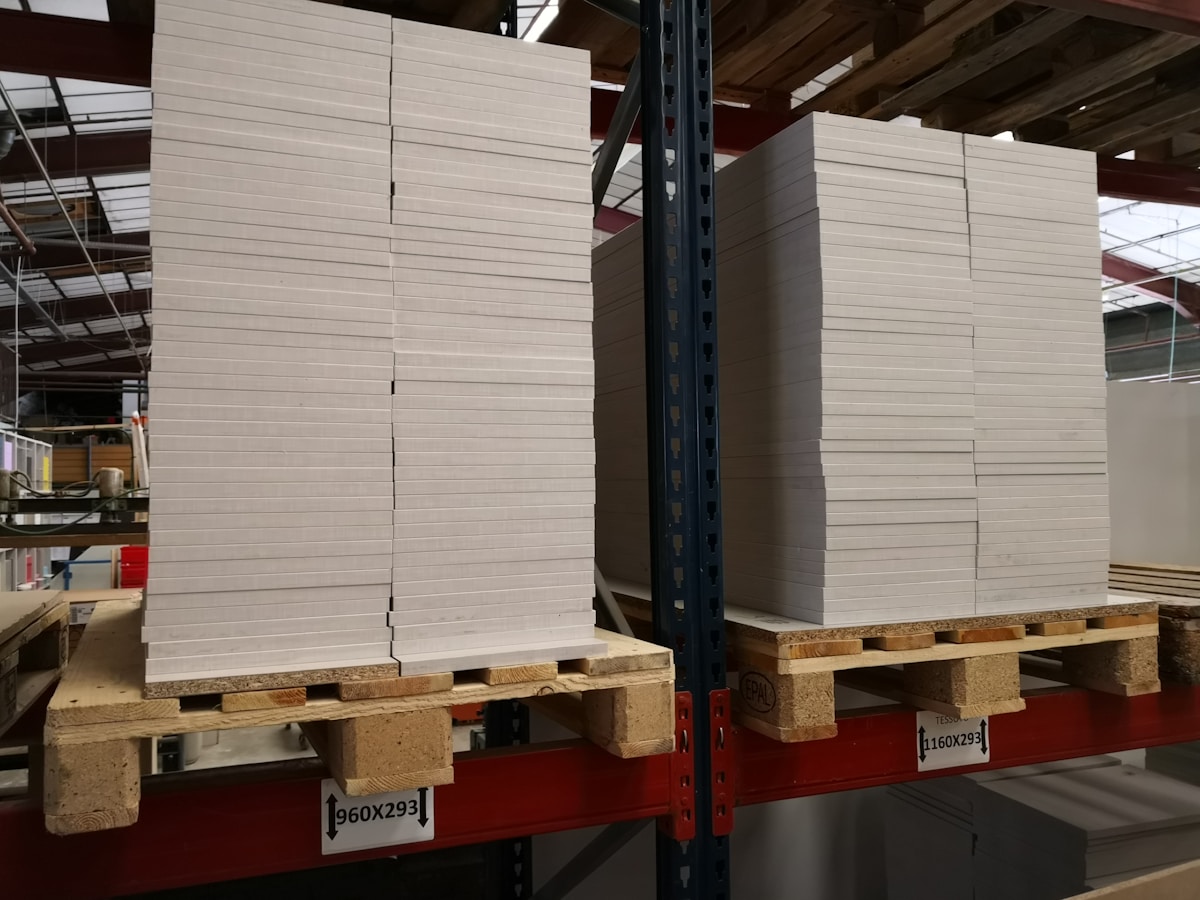
Polyurethane (PU) foam insulation boards are engineered for high-performance thermal control across construction, cold chain logistics, transportation, and specialized industrial environments.
The demand for PU foam boards stems from their unique balance of low thermal conductivity, structural rigidity, and moisture resistance. Buyers in B2B channels select these panels not just for insulation, but for integrated solutions that reduce build time, lower lifecycle energy costs, and meet stringent building codes. This section maps where these panels deliver the most value.
1. Commercial & Residential Construction
In the built environment, PU foam boards serve as continuous insulation (CI) layers that address thermal bridging—a common failure point in conventional framing. They are applied to exterior walls, roof decks, and below-grade foundations to maintain consistent indoor temperatures and reduce HVAC load.
- Exterior Wall Cladding: Installed behind ventilated facades or beneath stucco and siding systems. PU boards with aluminum or steel facings provide a monolithic thermal barrier that meets IECC and Passive House standards.
- Roof Insulation: Used in both hot and cold roof assemblies. Their closed-cell structure resists water absorption, making them suitable for flat roofs where ponding water is a concern.
- Crawlspaces & Foundations: Applied vertically or horizontally to protect slab-on-grade foundations from ground moisture and frost heave, preserving structural integrity.
For projects targeting net-zero energy certification, specify PU boards with a thermal conductivity (k-value) below 0.024 W/m·K. This threshold ensures the required R-value per inch is achieved without excessive wall thickness.
2. Cold Storage & Refrigerated Logistics
Temperature-controlled supply chains rely on PU foam sandwich panels to maintain precise thermal environments. These panels are the standard for cold rooms, walk-in freezers, and refrigerated transport bodies due to their ability to minimize heat transfer and prevent condensation.
- Refrigerated Truck Bodies: PU core panels form the walls, roof, and floor of dry freight and refrigerated trailers. Their high strength-to-weight ratio maximizes payload capacity while meeting DOT and EPA efficiency standards.
- Modular Cold Storage Units: Prefabricated panels with interlocking edges allow rapid assembly of storage facilities ranging from small walk-in coolers to large distribution center freezers.
- Processing Plant Walls: Used in food and pharmaceutical processing where hygiene and thermal stability are critical. Panels with smooth, non-porous facings (e.g., coated steel or stainless steel) resist microbial growth and facilitate cleaning.
Do not substitute PU boards with EPS or XPS in applications requiring fire ratings above Class B. PU foam, when formulated with appropriate flame retardants, can achieve higher fire classifications critical for compliance in enclosed cold storage spaces.
3. Transportation & Mobile Structures
Beyond trucks, PU foam boards are integral to lightweight mobile structures where weight savings directly translate to fuel efficiency and regulatory compliance. Their dimensional stability ensures panels do not degrade under vibration or temperature cycling.
- RV & Caravan Construction: Used in walls, floors, and roofs of recreational vehicles. PU boards provide insulation in a slim profile, preserving interior living space while meeting RVIA and CE standards.
- Marine Vessels: Applied in boat hulls, decks, and cabin structures. The closed-cell structure resists water ingress, preventing core rot and maintaining buoyancy.
- Public Transit & Rail: Utilized in train car bodies and bus frames to reduce overall weight and improve energy efficiency while providing thermal and acoustic insulation.
4. Cleanrooms & Industrial Facilities
Industries requiring controlled environments—such as semiconductors, biotechnology, and healthcare—specify PU foam panels for their ability to maintain temperature, humidity, and particle counts.
- Pharmaceutical Manufacturing: Panels with smooth, non-shedding facings and sealed joints prevent contamination in GMP-compliant facilities.
- Semiconductor Fabrication: Used in cleanroom walls and ceilings where thermal stability prevents equipment drift and product defects.
- Data Centers: Applied in server room cooling systems to isolate hot and cold aisles, improving cooling efficiency and reducing PUE (Power Usage Effectiveness) ratios.
5. Specialty Applications
PU foam boards also serve niche markets where their unique properties—lightweight, strong, and insulating—are decisive.
- Sports & Entertainment: Temporary structures, stage sets, and exhibition booths benefit from easy handling and rapid installation.
- Agricultural Buildings: Storage facilities for grain, feed, and controlled-environment farming operations require moisture-resistant insulation.
- Energy Infrastructure: Used in solar panel mounting structures and wind turbine nacelles for thermal management and weight reduction.
When specifying PU boards for hybrid applications (e.g., construction plus cold storage), verify that the panel’s fire rating, compressive strength, and vapor permeability align with all relevant codes. A panel that meets one standard may not satisfy another.

How to Install PU Foam Insulation
The thermal performance of polyurethane (PU) foam is only as good as the installation. Even high-performance boards with low thermal conductivity fail if gaps or thermal bridges are introduced during fitting.
Surface Preparation and Conditions
Before any boards are cut or adhered, the substrate must be evaluated to ensure long-term adhesion and insulation integrity. The installation surface—whether concrete, metal studwork, or existing sheathing—must be dry, clean, and structurally sound. Moisture is the primary enemy of rigid foam; trapping water between the substrate and the insulation layer can lead to mold growth and a significant reduction in thermal efficiency.
Ambient temperature is also a critical factor. Polyurethane foam expands and contracts slightly with temperature fluctuations. Installation should ideally occur when the board and substrate are at similar temperatures to minimize stress on the adhesive bonds. For high-density boards, such as those rated at 40kg/m³ often used in industrial applications, ensuring the substrate can bear the load without deflection is a prerequisite.
Precision Cutting and Fitting
Achieving a friction-fit is the gold standard in rigid foam installation. Unlike fiberglass batts, which can fluff to fill gaps, rigid PU foam panels are unforgiving. Any void larger than 1/8th of an inch creates a conduit for air movement, effectively bypassing the insulation’s thermal resistance and creating a “thermal short.”
- Tool Selection: Use a fine-toothed handsaw, circular saw with a foam-specific blade, or a hot wire system for thinner cuts. Avoid using blunt blades that can tear or “chunk” the foam edges.
- Measuring Techniques: Measure the cavity at multiple points. Walls and floors in construction are rarely perfectly square. Cutting boards slightly oversized (by approximately 1-2mm) often ensures a tighter seal than cutting exactly to the nominal measurement.
- Handling Irregularities: For complex geometries, such as curved RV walls or truck trailers, specialized templates should be used to trace the contour onto the board before cutting to ensure 100% surface contact.
Never use solvent-based construction adhesives or spray foams that are not specifically rated for polyurethane. Certain solvents can chemically react with the foam, causing it to melt, shrink, or lose its structural integrity.
Adhesion and Mechanical Fastening
There are two primary schools of thought for securing rigid foam: adhesive bonding and mechanical fastening. In many high-performance scenarios, a combination of both is employed to ensure the panel stays flat against the substrate and resists wind uplift or vibration.
- Adhesive Choice: Use a low-VOC polyurethane-based adhesive or a specialized construction adhesive compatible with foam. Apply adhesive in a continuous bead or in large “blobs” (often called the “dollar bill” method) spaced evenly across the board to prevent air pockets.
- Mechanical Fasteners: When securing heavier composite panels or insulation that will support a cladding layer, use plastic-headed cap nails or screws with large washers. The washer distributes the force to prevent the fastener from pulling through the foam, a common issue with lower-density boards.
- Thermal Breaks: When fastening through the insulation into metal or wood studs, be aware that the fastener itself becomes a thermal bridge, conducting heat or cold directly through the assembly. Use thermally broken fasteners where possible to minimize this energy loss.
Seaming and Vapor Retarders
Once the boards are fixed, the system must be air-sealed. While a friction-fit is good, it is not airtight. All joints between boards should be taped with a high-quality foil-faced tape or a specialized foam-compatible construction tape. This step is critical for preventing air infiltration, which can carry moisture and degrade the insulation value over time.
Furthermore, consider the vapor permeability of the assembly. Polyurethane foam has a closed-cell structure that naturally resists moisture, but the facing material (e.g., aluminum foil, fiberglass, or gypsum) dictates the final vapor profile. Ensure that the tape used matches the permeability rating of the facing to avoid trapping moisture within the wall assembly, which could lead to rot in adjacent structural materials.
The Pros and Cons of PU Foam Boards
Key Takeaway: Rigid PU foam boards deliver industry-leading thermal performance (R-6 to R-7 per inch) and near-zero moisture absorption, but require fire-retardant additives and UV-protected facings to mitigate combustion risk and degradation. The trade-off is cost versus performance.
Advantages: Why PU Foam Boards Win on Performance
Polyurethane foam boards are among the most thermally efficient insulation materials available in rigid board form. Their closed-cell structure traps gas molecules that dramatically slow heat transfer, which is why they consistently outperform alternatives like EPS and XPS on a per-inch basis.
- Superior Thermal Resistance: Rigid PU foam achieves an R-value of approximately R-6.0 to R-7.0 per inch of thickness, compared to R-3.6 to R-4.2 for EPS and R-5.0 for XPS. This means a 2-inch PU board provides roughly the same insulation as a 2.5-inch XPS board, freeing up valuable space in applications like RV wall assemblies.
- Exceptional Moisture Resistance: The closed-cell structure of rigid PU foam absorbs less than 1% water by volume, making it highly resistant to moisture ingress. This is critical for sandwich panel applications exposed to humidity, rain, or condensation — such as refrigerated truck bodies or marine environments.
- High Strength-to-Weight Ratio: At a density of 35 to 40 kg/m³, PU foam cores deliver significant compressive strength relative to their weight. A 40 kg/m³ PU foam board can support substantial structural loads when laminated between facings, making it ideal for lightweight sandwich panels in vehicle and mobile home construction.
- Dimensional Stability: PU foam boards maintain their shape and insulating performance across a wide temperature range, typically from -40°C to +80°C, without significant shrinkage or expansion that could compromise panel integrity over time.
- Vapor Barrier Properties: The inherent low permeability of PU foam acts as a built-in vapor retarder, reducing the risk of condensation within wall and roof assemblies — a common failure point in cold-storage and refrigerated transport applications.
Limitations: Where PU Foam Boards Require Mitigation
Despite their performance advantages, PU foam boards have well-documented limitations that buyers must account for during specification and installation. Ignoring these factors can lead to premature failure, safety violations, or costly retrofits.
- Fire Sensitivity: Standard PU foam is combustible and will contribute to fire spread if exposed to open flame. Without fire-retardant additives, PU foam typically achieves only a Class C or unclassified fire rating. Fire-rated PU insulation boards require additives such as brominated flame retardants to reach Class B or Class 1 ratings, which is a mandatory specification for many building codes and transportation applications.
- UV Degradation: Unprotected PU foam degrades when exposed to direct sunlight, turning yellow and becoming brittle within weeks. This means PU foam core panels must always be laminated between protective facings — such as aluminum, steel, or GRP — or coated with UV-resistant paints before any exterior exposure.
- Higher Cost: PU foam boards typically cost 20% to 40% more than EPS boards and 10% to 20% more than XPS boards on a per-unit basis. However, when evaluated on a per-R-value basis, the cost gap narrows significantly, especially in space-constrained applications where every inch of insulation matters.
- Temperature Thresholds: While PU foam performs well across a broad range, prolonged exposure above 80°C can cause thermal degradation and loss of insulating gas, reducing R-value over time. This is a key consideration for applications near heat sources or in high-temperature industrial environments.
- Installation Complexity: Cutting and fitting PU foam boards requires sharp utility knives or hot-wire cutters for clean edges. Rough cuts can create thermal bridges at panel joints. Proper sealing of all seams with compatible tapes or sealants is essential to maintain the continuous insulation layer.
PU Foam Board vs. XPS: The Practical Trade-Off
For buyers comparing polyurethane foam board versus XPS insulation, the decision often comes down to a single question: is space efficiency worth the premium? XPS offers decent thermal performance at a lower upfront cost, but its R-value of approximately R-5 per inch means you need thicker panels to match PU foam’s insulation capacity. In applications where internal volume is at a premium — such as RV walls, van conversions, or compact mobile homes — that extra thickness translates directly into lost cargo or living space.
XPS also absorbs more moisture over time (up to 2% to 3% by volume), which can gradually reduce its R-value in damp environments. PU foam’s near-zero water absorption means its thermal performance remains stable throughout the product’s lifespan, provided the facings remain intact.
Fire-Rated PU Insulation: What Buyers Need to Know
If your application requires a fire-rated PU insulation board, standard grades will not suffice. Fire-retardant (FR) PU foam boards are formulated with halogenated or phosphorus-based additives that self-extinguish when the flame source is removed. These boards typically achieve a limiting oxygen index (LOI) of 28% to 32%, compared to 17% to 19% for standard PU foam.
Common fire ratings for PU foam boards include Class B-s1-d0 under EN 13501-1 and Class I under ASTM E84. Buyers should verify that the fire rating applies to the completed sandwich panel assembly, not just the foam core in isolation — the facing material and adhesive system also influence the overall fire performance.
When PU Foam Boards Are the Wrong Choice
PU foam boards are not universally optimal. Consider alternative materials in these scenarios:
- Budget-constrained projects: If R-value per dollar is the primary driver and space is not limited, EPS foam boards offer comparable performance at a significantly lower cost.
- High-temperature environments: For applications exceeding 80°C continuous exposure, phenolic foam or mineral wool may be more appropriate.
- Extreme compressive load requirements: While PU foam has good strength-to-weight ratio, applications requiring very high compressive strength (above 500 kPa) may benefit from higher-density XPS or composite honeycomb cores.
- Strict flame-spread restrictions without additives: If fire-retardant additives are not acceptable due to environmental or health regulations, consider non-combustible alternatives such as rockwool or calcium silicate boards.
Summary: Making the Right Call
Rigid PU foam boards deliver the best combination of thermal efficiency, moisture resistance, and lightweight strength in the rigid insulation board category. The trade-offs — higher cost, fire sensitivity, and UV vulnerability — are manageable through proper specification: selecting fire-retardant grades where required, ensuring adequate facing protection, and verifying thermal conductivity values at realistic operating temperatures. For RV walls, refrigerated trucks, mobile homes, and marine applications where every inch of thermal performance and every kilogram of weight matters, PU foam sandwich panels remain the industry benchmark.

PU Foam vs. Other Insulation Materials
Polyurethane (PU) foam offers the highest R-value per inch of any common rigid insulation, making it the superior choice for space-constrained applications like RV walls and truck bodies, though it must be carefully managed against non-combustible mineral wool for strict fire codes.
Thermal Efficiency: The R-Value Per Inch Advantage
Thermal conductivity is the primary differentiator when comparing rigid insulation cores for transport and construction applications. Polyurethane foam achieves a thermal conductivity of ≤0.024 W/(m·K), significantly outperforming conventional rigid boards and enabling thinner wall assemblies without compromising thermal performance. For transport manufacturers, this translates directly into greater cargo volume in refrigerated trucks or additional living space in RVs—turning insulation efficiency into measurable revenue per unit.
In practical B2B terms, PU foam’s superior thermal conductivity allows for thinner wall assemblies without sacrificing thermal performance. For transport manufacturers—such as those building refrigerated trucks or RVs—this is not merely a technical detail; it is a critical profit factor. Thinner insulation panels mean increased interior cargo capacity or wider living spaces, directly translating to higher value for the end-user without increasing the vehicle’s exterior footprint. If a project is limited by spatial constraints, PU foam is often the only viable insulation core that meets strict thermal envelope codes within a slim profile.
Moisture Resistance and R-Value Longevity
Moisture is the silent killer of insulation performance. When insulation absorbs water, its thermal resistance plummets, leading to higher energy costs and potential structural degradation. PU foam utilizes a closed-cell structure that acts as a moisture barrier, preventing water ingress far more effectively than fibrous materials like Mineral Wool or more porous foams like EPS.
Furthermore, long-term stability is a major differentiator between PU foam and XPS. While XPS initially offers good insulation, industry testing shows that it can suffer from R-value degradation over time (often 5-15%) as the blowing agents used in its manufacturing slowly escape and are replaced by air. In contrast, PU foam maintains its thermal resistance stability over the lifecycle of the building or vehicle. For cold chain logistics and freezer applications where maintaining sub-zero temperatures is mission-critical, this stability ensures that energy consumption remains predictable and inventory is protected from thermal drift.
Temperature Tolerance and Structural Integrity
Different insulation materials react variably to extreme temperature fluctuations, and choosing the wrong one can result in material failure. PU foam demonstrates a broad operating temperature range, capable of withstanding deep freeze conditions common in refrigerated transport as well as moderate industrial heat. While PIR (Polyisocyanurate) is a close relative, PU foam generally retains better structural integrity and adhesion properties at higher temperature extremes compared to standard P formulations.
Fire Safety: The Mineral Wool Benchmark
An honest industry comparison must address fire performance. PU foam typically achieves a B1 or B2 fire rating (combustible but with limited flame spread), which is sufficient for many transport and industrial applications. However, it does not match the non-combustible A1 rating of Mineral Wool (Rockwool).
This distinction is vital for high-rise construction or tunnels where codes demand non-combustible materials. In these scenarios, Mineral Wool is the mandatory choice despite its heavier weight and lower thermal efficiency. However, for RV bodies, trucks, and prefab buildings where weight reduction is paramount for fuel efficiency, PU foam remains the preferred engineering solution. Manufacturers often mitigate PU’s combustibility by using fire-retardant facings or integrating intumescent coatings to meet specific regulatory standards without abandoning the material’s weight and thermal benefits.
| Feature | Specification | Advantage |
|---|---|---|
| Thermal Conductivity | PU Foam: ≤0.024 W/(m·K) | PIR: 0.022-0.025 W/(m·K) | XPS: 0.029-0.034 W/(m·K) | EPS: 0.033-0.038 W/(m·K) | Mineral Wool: 0.034-0.040 W/(m·K) | PU Foam delivers the lowest thermal conductivity among rigid foam boards, maximizing R-value per inch of thickness for space-constrained applications. |
| Density Range | PU Foam: 30-50 kg/m³ (±5%) | PIR: 30-45 kg/m³ | XPS: 28-45 kg/m³ | EPS: 15-30 kg/m³ | Mineral Wool: 40-150 kg/m³ | PU Foam offers precise density control for structural-versus-insulation optimization in sandwich panel applications. |
| Fire Rating | PU Foam: B1/B2 | PIR: B1-s1,d0 | XPS: E-B2 | EPS: E-B2 | Mineral Wool: A1 (Non-combustible) | PU Foam meets stringent B1/B2 fire codes for clean room and transport use; Mineral Wool remains the primary A1 non-combustible alternative. |
| Moisture & Water Absorption | PU Foam: <1% (Closed-cell) | PIR: <1% (Closed-cell) | XPS: 0.3-0.5% | EPS: 2-4% | Mineral Wool: 1-3% (Hygroscopic) | PU Foam’s closed-cell structure resists water ingress, preserving R-value stability in refrigerated and below-grade environments. |
| R-Value Longevity | PU Foam: Stable | PIR: Stable | XPS: Declines (5-15%) | EPS: Stable | Mineral Wool: Stable | Unlike XPS, PU Foam maintains its thermal resistance long-term, eliminating R-value degradation concerns for owners. |
| Operating Temperature Range | PU Foam: -50°C to +120°C | PIR: -40°C to +75°C | XPS: -50°C to +75°C | EPS: -50°C to +75°C | Mineral Wool: -60°C to +650°C | PU Foam withstands extreme cold for refrigeration and moderate heat for industrial processes, outperforming PIR and XPS at high temperatures. |
| Structural Strength (Core) | PU Foam: High (at 30-50 kg/m³) | PIR: Moderate | XPS: High | EPS: Low to Moderate | Mineral Wool: Low (Fibrous) | PU Foam cores bond to GRP/metal facings to form rigid sandwich panels capable of bearing dynamic loads in RV and transport construction. |
| Relative Material Cost | PU Foam: Mid-to-High | PIR: Mid-Range | XPS: Low-to-Mid | EPS: Lowest | Mineral Wool: Mid-Range | PU Foam offers superior thermal efficiency and long-term stability that offset the initial material investment compared to lower-cost alternatives. |
How to Choose the Right PU Board
Specification-grade polyurethane board selection hinges on three interdependent performance parameters. Thermal efficiency (k-value) must meet or exceed a conductivity of ≤0.024 W/(m·K) to ensure the superior insulation performance that offsets the initial material investment over the board’s lifespan. Structural load (density) should deliver a minimum compressive strength of ≥0.15 MPa, rising to 0.3 MPa for high-density variants, guaranteeing the long-term stability required across demanding applications. Fire safety compliance must be verified against the intended use, as the board must endure service temperatures ranging from -50°C to +120°C without degradation. The optimal choice is never the cheapest, but the one that aligns these measurable properties with the specific environmental stresses of the application.
Choosing the correct Polyurethane (PU) foam board is rarely about picking the “best” product on a shelf; it is about identifying the specific material grade that survives the unique conditions of your project. Whether insulating a refrigerated truck body, an RV wall, or a marine vessel, the decision criteria shift drastically. A board designed for a dry warehouse will fail catastrophically in a high-humidity marine environment.
1. Define the Application Environment
The first filter for selection is the physical environment where the panel will operate. This dictates the facing material and the core’s resistance to external factors.
- Marine & High-Humidity Areas: Prioritize closed-cell PU cores with waterproof facings like GRP (Glass Reinforced Plastic) or stainless steel. Standard facings may corrode or delaminate due to constant moisture exposure.
- Refrigerated Transport: Requires a focus on thermal bridging prevention. The board must maintain dimensional stability at sub-zero temperatures without becoming brittle.
- RV & Mobile Homes: Weight is the critical variable. Here, the focus is on the highest strength-to-weight ratio, often utilizing lighter facings like aluminum or specific thermoplastic skins.
2. Density and Compressive Strength
Density is the most reliable indicator of a PU board’s durability and insulating consistency. It is measured in kilograms per cubic meter (kg/m³). While lower density boards are cheaper, they offer poor compressive strength and may shrink over time, creating thermal gaps.
For demanding structural applications, such as floors or high-load bearing walls, a high-density polyurethane foam board (40kg/m³ or higher) is the industry standard for premium performance. This density ensures the foam resists crushing underfoot or under mechanical load while maintaining its cellular structure for insulation. In contrast, lightweight cavity wall insulation might utilize densities as low as 30-35kg/m³ where no structural load is applied.
3. Fire Performance Ratings
Safety codes often dictate the material choice more than performance metrics. Standard polyurethane is organic and combustible. To meet building codes for public transport or commercial buildings, you must specify modified boards.
- PIR (Polyisocyanurate) Modified PU: Offers superior fire resistance compared to standard PU. It forms a char layer when exposed to flame, significantly slowing the spread of fire. This is often mandatory for building cladding and HVAC ductwork.
- Fire-Retardant Additives: Some PU boards are infused with halogen or halogen-free fire retardants to meet specific standards like Class 1 or Class A fire ratings. Always verify the test standard (e.g., ASTM E84 or EN 13501-1) matches your local jurisdiction.
4. Selecting the Right Facing (Skin)
The PU core provides insulation, but the facing provides protection, aesthetics, and structural rigidity. The “sandwich” structure is only as good as its weakest layer.
| Facing Material | Best Use Case | Key Advantage |
|---|---|---|
| GRP / FRP (Fiberglass) | Marine, Chemical Plants | High corrosion resistance, impact strength |
| Aluminum (Aluzinc/Coated) | Cold Storage, HVAC Ducts | Hygienic, smooth, lightweight, reflective |
| Stainless Steel | Food Processing, Pharma | Maximum hygiene, extreme durability |
| Plywood / OSB | Temporary Structures, Site Offices | Easy to modify, cost-effective, high screw-holding |
5. Comparative Analysis: PU vs. XPS
The PU versus XPS comparison centers on thermal performance per unit thickness and application-specific trade-offs. PU offers superior bonding with facing materials during the lamination process. Choose XPS for below-grade waterproofing, but choose PU for insulated panel systems prioritizing space efficiency and fire safety.
Furthermore, PU typically offers better fire resistance characteristics than standard XPS and bonds more effectively with a wider variety of facing materials during the lamination process. Choose XPS for below-grade waterproofing where moisture contact is constant, but choose PU for insulated panel systems where space efficiency (insulation per inch) and fire safety are priorities.
📋 Selection Checklist
- Step 1: Verify the maximum operating temperature range. PU can degrade at high temperatures (>100°C) unless specifically formulated.
- Step 2: Calculate the required Lambda value (k-value) to meet local energy codes.
- Step 3: Confirm the fire rating requirement (e.g., B-s2,d0) and specify PIR if necessary.
- Step 4: Select the facing based on the environmental exposure (corrosion, impact, hygiene).
Conclusion
Selecting the correct board isn’t just about the advertised R-value. You must verify the density matches your specific structural load, particularly for high-density applications like RV walls or cold storage. While XPS offers a lower price point, polyurethane provides superior thermal efficiency at thinner profiles, which saves valuable interior space. The core manufacturing quality and facings ultimately determine the long-term durability.
Our engineering team is available to review your specific project requirements and thermal calculations before you finalize specs. We can help clarify the technical differences between fire-rated options and standard grades to ensure compliance with local codes. Let us double-check your technical variables so you secure the right performance for your application without over-engineering the cost.
Frequently Asked Questions
What is the difference between closed-cell and open-cell PU foam?
Closed-cell PU foam has a dense, non-porous structure that provides superior thermal insulation, moisture resistance, and compressive strength. Open-cell foam is less dense, more flexible, and offers better sound absorption but lower R-value per inch. For sandwich panel applications, closed-cell PU foam is the industry standard due to its durability and insulation efficiency.
Is PU foam moisture and mold resistant?
Yes, closed-cell PU foam is inherently moisture-resistant due to its non-porous structure, which prevents water absorption and inhibits mold growth. This makes it ideal for refrigerated transport, marine applications, and humid environments. However, proper installation and sealing of joints are still essential to prevent moisture ingress at panel edges.
Does PU foam provide air sealing properties?
Yes, rigid PU foam boards act as an effective air barrier when installed correctly, reducing uncontrolled air leakage through walls and roofs. The closed-cell structure limits air permeability, which complements its thermal insulation performance. Seams and joints should be properly sealed during installation to maximize this benefit.
How does PU foam perform in extreme temperatures?
PU foam maintains stable thermal performance across a wide temperature range, typically from -50°C to +120°C. Its thermal conductivity remains consistent even in sub-zero conditions, making it suitable for refrigerated trucks and cold storage. At elevated temperatures, the foam retains structural integrity without significant degradation.
What fire ratings are available for PU foam boards?
PU foam boards are commonly available with B1 (flame retardant) and B2 (standard flame resistance) fire ratings, depending on additives and manufacturing processes. These ratings comply with international building and transport safety standards. Always verify fire performance certificates with your supplier for project-specific compliance requirements.
What compressive strength should I expect from PU foam cores?
PU foam cores for sandwich panels typically range from 150 to 350 kPa in compressive strength, depending on density and facing materials. Higher-density cores (40–50 kg/m³) deliver greater load-bearing capacity, which is critical for flooring and roof applications. RaxPanel engineers test and customize core density to match your specific structural requirements.
Can PU foam boards be recycled or disposed of safely?
PU foam is not easily recyclable through standard municipal programs, but some manufacturers offer take-back or industrial recycling solutions. Proper disposal involves following local construction waste regulations. At RaxPanel, we advise clients on environmentally responsible disposal methods and support sustainable practices where feasible.